
There are two issues facing our nation–high unemployment and undocumented people in the workforce–that many Americans believe are related. Missing from the debate on both issues is an honest recognition that the food we all eat – at home, in restaurants and workplace cafeterias (including those in the Capitol) – comes to us from the labor of undocumented farm workers. [link]
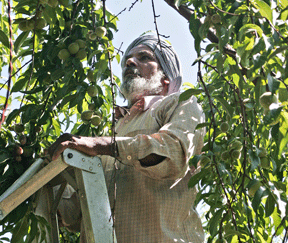 Tired of being blamed for stealing jobs from unemployed Americans, and hoping to spark realistic discussion of immigration reform, United Farm Workers is teaming up with Comedy Central’s Stephen Colbert for a cheeky campaign called Take Our Jobs.
The union has created a website where you can sign yourself up for fieldwork. Experienced field hands will train legal residents and hook them up with the many seasonal harvest openings in California, Florida, and elsewhere.
Farm workers are tired of being blamed by politicians and anti-immigrant activists for taking work that should go to Americans and dragging down the economy, said Arturo Rodriguez, the president of the United Farm Workers of America.
So the group is encouraging the unemployed — and any Washington pundits or anti-immigrant activists who want to join them — to apply for the some of thousands of agricultural jobs being posted with state agencies as harvest season begins.
All applicants need to do is fill out an online form under the banner “I want to be a farm worker” at http://www.takeourjobs.org, and experienced field hands will train them and connect them to farms. [link]
Take Our Jobs will be featured on the Colbert Report on July 8. Many members of the Punjabi Sikh community are farmworkers and some would even be impacted by potential policies surrounding immigration so what are your thoughts on this discussion?
 Many years ago, I attended a demonstration where thousands of Sikhs gathered in the city. Onlookers were curious as to who we were and why we had gathered. As I was handing out information pamphlets, a passerby approached me, took one of the pamphlets, quickly looked it over and in a thick British accent said, “Ah yes…Sikhs! Wonderful religion…wonderful people…brave soldiers…” Then he leaned over to whisper something in my ear and said “…but whoever handles your public relations sucks!”
As I see patterns and trends on the way Sikhs are portrayed in the media, that incident always comes to mind. Seeing how positive acts from Sikh individuals rarely mention the word “Sikh” yet negative acts from Sikh individuals turn in to an “exposé” of our community, I started to wonder how non-Sikhs were learning about us and what can we do to proactively present a more accurate image.
Here in North America, our approach to public relations and education is largely reactionary. After a violent event at a Gurdwara, we explain to the public how Sikhs are not violent. After September 11th, we explained how we’re not terrorists. It seems we spend more time explaining who we’re not rather than who we are.
There are some positive efforts as well. Traditionally, many Sikh communities flood the interfaith networks as a means of outreach. I’ve participated in many interfaith events over the years, and although it may be beneficial for relationship building and dialogue, its impact on educating large parts of society over time is debatable.
In the past few months, somewhere in the plethora of press release emails I receive from Sikh organizations, I learned of two significant initiatives by the Sikh Coalition that seemed to pass quietly without much fanfare.
Throughout the weekend, numerous reports have been circulating throughout the Punjabi language press of a ban being enforced by the management committee of a Gurdwara in Rochester, NY. We have received a large number of emails with regards to the matter (Pagh Salute: Balmeet Singh). Various press reports suggest a local power dispute was largely the cause, where one group suggested that the Gurdwara was their ‘private property.’ Subsequently they have rejected that the Sangat is supreme and have thus attempted to gain a court-order ban on attendance by Amritdhari Singhs and Singhnis. Details are still rather sketchy, hopefully locals can give us some perspective.
Numerous commentaries can be viewed on youtube. The topic has been the discussion on various Punjabi language radio shows. A vigorous conversation within the community is occurring. One video has pictures that suggested there was a protest last week.

Looking for historical parallels, many groups are calling this group of so-called ‘owners’ – ‘mahants’ recalling the vocabulary during the Gurdwara Morcha movement in the early part of the 20th century. What do our Langar-readers suggest as the correct course of action? Granted, the Gurdwara in question (that of Rochester, NY) is not a historical Gurdwara. Should Singhs and Kaurs in the community attempt to press the committee to rescind its decision or would it be better to open another Gurdwara in the area, one where the Sangat truly is supreme? Are there other options?
 Last year, Maple Leaf Sikh highlighted a revolutionary event which occurred in Toronto and brought together young Sikhs to pay homage to 1984. The event, hosted by the Sikh Activist Network, returns this year and brings together artists such as Hoodini, Mandeep Sethi, Selena Dhillon and Yudh Gatka Akhara and more. For those of you who are dealing with post-Sikh-conference-blues – When Lions Roar II promises to be yet another excellent event bringing together Sikh youth in an impactful way.
A Night of Hip Hop, Poetry, Spoken Word, Gatka and More…
To Remember 1984
Friday June 25
Mirage Banquet Hall
Admission: Pay What You Can
All Ages – Doors Open at 6pm
Here on TLH, we’ve recognized accomplished Sikhs who have excelled in their field, and by doing so – presented a positive image of Sikhs and the Sikh way of life – academics, athletes, politicians, artists, the list goes on and on. Often unnoticed though are everyday people, who build individual relationships with those in their community, and spread a spirit of goodwill through their kindness and generosity. Unfortunately I learned of this gentle soul, Prabhjot Singh, too late. May Waheguru always be with him and strengthen his family while overcoming this terrible loss.
Guest blogged by Ajj Kaim
The fact that heavy use of pesticides in farming has left lot of farmers affected with Cancer in Punjab has been well documented. In fact almost a year ago, The Langar Hall had highlighted this sad state of affair in Punjab.
I came across a heartwarming documentary about the situation faced by the farmers called “Cancer in Punjab” by Amarpreet Mann. (See Part 1, Part 2 and Part 3 below). It is tragic to see the plight of the farmers who have become unemployed or daily laborers because they have spent all their savings in getting treated for the disease.
As luck would have it Chief minister’s wife, Surinder Kaur Badal, is in the U.S. these days getting treated for Cancer in NY whereas a common man is at the mercy of God.

 World Cup 2010, which kicks off today, is expected to be the most-watched TV event in history. While football soccer has not historically been a largey followed sport in the U.S. – it does seem like more people want to be part of the global experience this year.
Tomorrow’s USA vs England game will be watched by many. England, a contender to win the tournament, is heavily favored, but the U.S. has history on its side. The last time the two teams played a World Cup match was 1950 in Belo Horizonte, Brazil, when the American team beat the British powerhouse 1-0 [link]!
Below the fold you’ll find K’naan’s popular World Cup Anthem “Wavin’ Flag” and the epic Nike “flashforward” commercial (note: Nike isn’t actually a sponsor of the World Cup but this ad has attracted more World Cup-relaed mentions than Adidas, Coca Cola, Sony and Visa). And for those of you who are just beginning to catch the World Cup fever – here’s an overview of what you need to know. So i ask our global Langar Hall audience – what teams will you be rooting for and how will you celebrate the World Cup?
I came across a new movie, “I Am Singh”, which is about the discrimination Sikhs 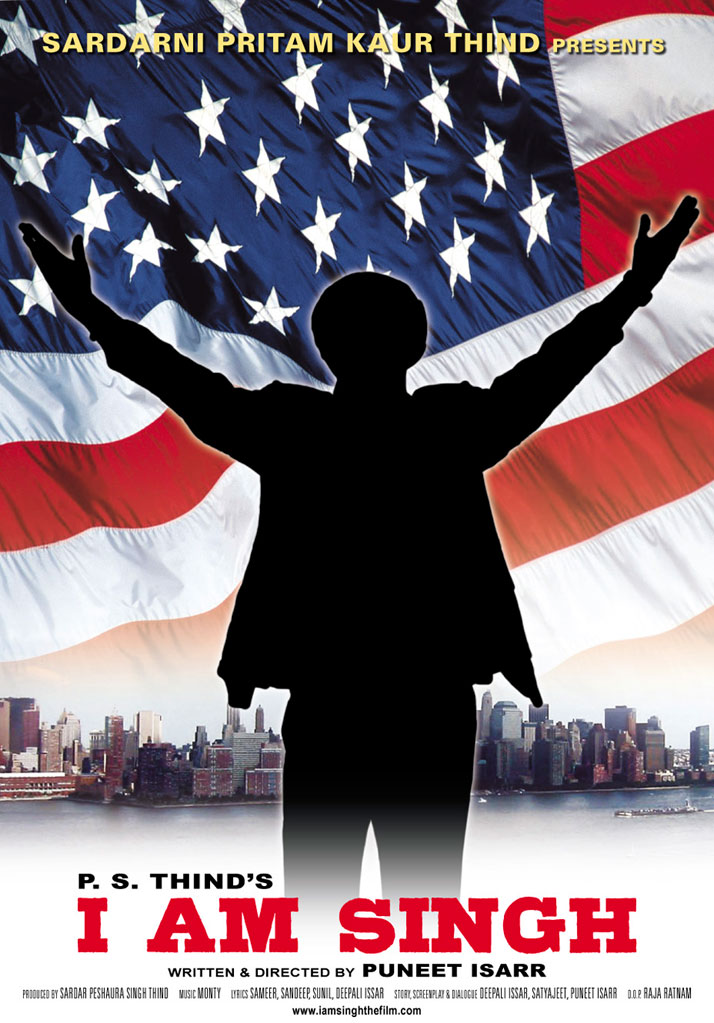 faced post-9/11. Interesting topic indeed.
It is about time the Sikh experience makes it onto the big screen. I have seen “New York” and “My Name Is Khan”. Both decent bollywood films that highlighted the South Asian Muslim experience in the United States after 9/11. Looking forward to seeing how “I Am Singh” fairs as a feature film-we already have a couple of documentaries on the Sikh experience post 9/11.
Guest Blogged by Jind Kaur
The Sikh Research Institute (SikhRI) is hosting a workshop specifically for children called, “Session for Children: Getting to Know Vahiguru” on June 27, 2010 in Windsor, Ontario. The seminar is aimed at piquing children’s curiosity and interest in not just Gurbani, but God. Information on the event can be found here.
The workshop is intended to be interactive with lots of questions that help children pick up new vocabulary, develop thinking skills and leave them with a want to learn more through discussion and self-discovery.
I don’t live in Ontario, and I don’t have children. If I did, I would definitely sign them up for this workshop. When I was growing up, Sunday School classes or home-Sikh-schooling by my grandmother involved exposure to Sikhi focused on memorization of Gurbani, the baseball cards of important Sikh figures (i.e birthday, important stats, a few saakhees, etc.), and two or three shabads our parents could command the singing of at will. There was little to no discussion involving the understanding of Gurbani or the Sikh world view, let alone any metaphysics-related dialogue. I really appreciate and applaud SikhRI for designing a program not for children of Sikh parents, but rather for Sikh children. This SikhRI program is tuning into children’s natural curiosity and helping them discover their spirituality early in life. How wonderful. Reading about this workshop made me reflect on my own upbringing as well as the hopes I have for my future (GodWilling) children.
Guestblogged by Brooklynwala
Yesterday morning I was reading the ubiquitous, free “AM New York” newspaper on the subway on the way to a  meeting and was disturbed and saddened to learn about a protest of 1,000 people in lower Manhattan against an Islamic Center being built near Ground Zero, the site of the 9/11 attacks. Holding signs with slogans like, “No 9/11 Mega Mosque” and “Don’t dishonor my son’s grave,” these protestors represent the growing backlash against the 13-story community center and mosque being built by the Cordoba Initiative.
According to their website, Cordoba “aims to achieve a tipping point in Muslim-West relations within the next decade, bringing back the atmosphere of interfaith tolerance and respect that we have longed for since Muslims, Christians and Jews lived together in harmony and prosperity eight hundred years ago.” The Cordoba Initiative’s proposed Cordoba House located two blocks from Ground Zero “is about promoting integration, tolerance of difference and community cohesion through arts and culture. Cordoba House will provide a place where individuals, regardless of their backgrounds, will find a center of learning, art and culture; and most importantly, a center guided by universal values in their truest form – compassion, generosity, and respect for all.”
A few weeks ago, Tea Party leader Mark Williams, a frequent guest on CNN, stated that “the monument would consist of a Mosque for the worship of the terrorists’ monkey-god.”
The issue was discussed last week, with many of our readers unable to differentiate the difference between private conversation and public discourse. On Sepiamutiny, my brother Ennis Singh Mutinywale also had some great analysis, here, here, here, and here.
On a sidenote, a pagh salute to our brothers and sisters at SALDEF for hearing the calls and giving a statement.
Here you can see Jon Stewart’s take on South Carolina’s politics – The Race to Replace Disgrace (starts 3:23) For those faint of heart, do not go below the fold to watch the video link due to its ‘adult’ humor and language. This may be the first time Jon Stewart mentioned the word ‘Sikh’ (4:35)on his show, unfortunately not under the best circumstance.
The year 1984 saw unimaginable calamities in India. This is the story of the two most well-known.
One was caused by a callous corporation and a complicit government. When thousands of people were exposed to horrendous toxins and poisonous gases in Bhopal, Union Carbide first denied it completely, only to later deny culpability. The Government of India was only to happy to allow destruction to its own citizenry in the name of protecting foreign investments and corporate welfare. Over 4,000 people lost their lives due to the complicit negligence and countless others were permanently incapacitated.
Reported today, an Indian court has found some of the corporate executives guilty. While Union Carbide had been purchased by Dow Chemical in the interim, various activists and community members continued to fight for the guilty to be brought to justice. 8 top of executives have now been found guilty. Details are still sketchy, but one hopes their corporate malfeasance receives the full brunt for its depravity, although activists see too little too late and a light punishment meted to these corporate terrorists.
Meanwhile, another event that saw the death of thousands of lives of lives in India occurred one month earlier. However, this was not confined to a Bhopal backwater, but rather was on the streets of India’s capital – in full view of the press, police, army, and politicians. When the four groups, all co-conspirators, were not actively leading the charge of the pograms, then they remained silent in their complicity. The latest news remains the same – despite valiant attempts by victims’ lawyer, HS Phoolka, the court continues to dither and protect the known culprits. When 4,000 Sikhs are murdered in the streets, led by government officials and their sponsored goons, they receive no solace. It is a lesson learned by the Sikhs in 1984 and the Muslims of Gujarat in 2002.
So while we give a hug to those victims in Bhopal that may now see someone brought to justice (as small as it may be), even if it does not bring back their family members, we can only provide a shoulder of support and solidarity to those that lost their lives due to the pograms of 1984. A callous government may provide something (even after 26 years) when the guilty are corporate, but expect nothing when the murderer is itself.
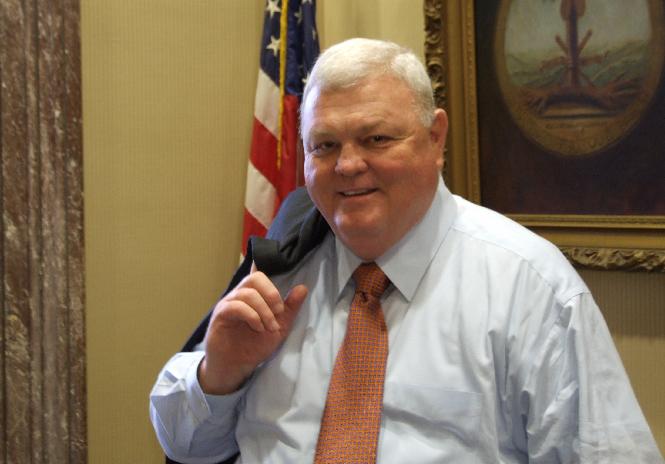 I don’t believe I agree with much of anything when it comes to Nikki Haley’s politics. Nimrata Randhawa (her name before marriage) is currently a Republican gubernatorial candidate in the South Carolina. Again, I don’t care for her political positions, endorsements, that she converted to Christianity, or even if allegations are true that she had an illicit affair. Despite this, recent comments made by a Republic state senator – Jake Knotts – has me standing together with her about the problem with South Carolina politics in particular, but the general direction of American political discourse.
I have been called a ‘raghead’ for so long that I can’t remember. Now Jake Knotts felt it was okay to bring that type of hateful rhetoric in the public sphere. During the 2008 presidential elections, I wrote repeatedly about why Americans of all stripes, but especially Sikhs must stand together against the Muslimophobia (wrongly called Islamophobia) that was entering American political discourse. Now we see the effects for those that remain silent.
Although Jake Knotts has backtracked from the comments, it is not enough:
Republican state Sen. Jake Knotts later apologized for the slur, saying the remarks about President Barack Obama and state Rep. Nikki Haley were meant as a joke.
They came on Internet political talk show, Pub Politics. Co-host Phil Bailey said Knotts said, “We’ve already got a raghead in the White House, we don’t need another raghead in the governor’s mansion.”
No audio was available because of a technical problem, Bailey said.
“If it had been recorded, the public would be able to hear firsthand that my ‘raghead’ comments about Obama and Haley were intended in jest,” Knotts said in his statement. “Bear in mind that this is a freewheeling, anything-goes Internet radio show that is broadcast from a pub. It’s like local political version of Saturday Night Live, which is actually where the joke came from.”[link]
Such ‘jokes’ have no place in the American public discourse and should be condemned by all. South Carolina Republicans have already moved to distance themselves from the comments. I hope that ALL Sikh groups (Saldef, Sikh Coalition, are you listening??? Get on this), South Asian groups, Muslim groups, and just like-minded people come together to call for a real apology from Jake Knotts and not just some justification that it was just a joke.
You can email Jake Knotts a message directly here. Keep it clean AND professional!
Handled well, this may just be one of those ‘teaching moments’ beneficial for the whole country.
Below the fold, you will find the email that I sent. Feel free to use it, edit it, or right your own. Just make sure you do it!
Gone are the days of great public intellectuals in the Punjabi tradition. Whither is our Sirdar Kapur Singh to give intellectual insights, analysis, and voice to the problems of Punjab?
In contemporary Punjab, when crooks rule the halls of power in Chandigarh or even the SGPC offices in Amritsar have become the dens of thieves, we turn to another. For many in Punjab, that has become Babbu Mann.
It was Babbu Mann that caused a storm by telling the truth by merely stating that – while there was one Baba Nanak that on foot became the talk of the world, today’s so-called Babay drive around in fancy cars with red lights attached to the top (as VIPs).
Here at a recent concert at Wembley Stadium, Professor Babbu Mann corrects one of the Indian nationalists’ lies – that of Lala Lajpat Rai.
Lala Lajpat Rai is usually remembered as a ‘freedom fighter’ during struggle against British colonialism. Websites usually laud him in the following way:
In 1928, British Government decided to send Simon Commission to India to discuss constitutional reforms. The Commission had no Indian member. This greatly angered Indians. In 1929, when the Commisssion came to India there were protests all over India. Lala Lajpat Rai himself led one such procession against Simon Commission. While the procession was peaceful, British Government brutally lathicharged the procession. Lala Lajpat Rai received severe head injuries and died on November17, 1928 [link]
As Professor Mann suggests, read your history and learn how this so-called great “hero” died of a heart attack later and was hardly the martyr of Indian legend.
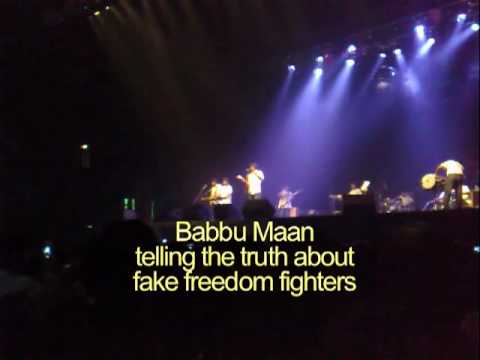
For the video of ‘Ik Baba Nanak Si’ mentioned earlier in the article, click fold and watch below.
The story splashed all over the newspapers. An event that had been purposefully ignored by the US news could no longer be avoided when a number of humanitarian activists were killed (still no official number or names of those murdered??) by Israeli forces on Monday.
Activists from all over the world gathered and collected humanitarian items for Gaza (Palestine) that has been under an illegal siege since June 2007 by Israel and Egypt – a form of collective punishment against the entire people of Gaza.
The BBC has put together an informational site specifically about the blockade and its effects.
I have sampled some snippets of the report:
no specific list of what is and is not allowed in has been published, and items gaining entry vary over time.
The UN relief agency for Palestinian refugees Unrwa’s list of household items that have been refused entry at various times includes light bulbs, candles, matches, books, musical instruments, crayons, clothing, shoes, mattresses, sheets, blankets, pasta, tea, coffee, chocolate, nuts, shampoo and conditioner.
the UN’s Food and Agriculture Organisation says 61% of Gazans are “food insecure”.
According to the UN agency for Palestinian refugees, Unrwa, 80% of Gazan households rely on some kind of food aid.
UNRWA says the number of Gazan that it helps who are unable to buy basic items such as soap, stationary and safe drinking water has tripled since 2007.
A UN survey in 2008 found more than half Gaza’s households had sold their disposable assets and were relying on credit to buy food, three-quarters of Gazans were buying less food than in the past, and almost all were eating less fresh fruit, vegetables and animal protein to save money.
Overall, the UN says the blockade has caused the economy “irreversible damage”. Unemployment has soared from 30% in 2007 to 40% in 2008, according to the World Bank, though it dropped slightly in early 2010. The UN says that when aid is discounted, 70% of Gazan families live on less than a dollar a day per person.
It was against these conditions that a “Freedom Flotilla”, led not by states and governments, but rather by citizenry, including statesmen and Nobel Laureates, set off the coast of Cypress to attempt to break the blockade.
Guest blogged by Brooklynwala
 There’s no shortage of reasons why progressives and people who believe in social justice should be gathering together in the US now more than ever. With US wars raging on in Afghanistan, Iraq, and Pakistan, the financial meltdown taking its toll working and poor Americans, and one of the most catastrophic ecological crises in the history of humanity currently destroying Gulf coast, we have a lot of work to do.
This June 22-26th, thousands of grassroots activists from around the country will be convening in Detroit, MI for the second United States Social Forum. Building off the World Social Forum process that began in 2001 in Porto Alegre Brazil, the US Social Forum was created with the assumption that in order to change the world, we must change the United States (the belly of the beast, as may of us often refer to our home).
Here is a clip of poet/actor Jessica Care Moore plugging the gathering:

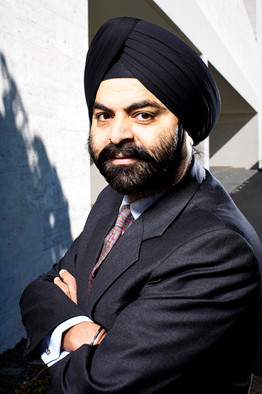 Here on TLH we’ve often highlighted the accomplishments of Sikhs in various sectors of the community. A recent article in the Wall Street Journal discusses incoming MasterCard CEO, Ajay Banga. As of July 1st, Mr. Banga will be heading the second-largest credit- and debit-card processor. His job won’t be easy, particularly during these tumultuous times. Earlier this month, the Senate approved the financial-overhaul bill which includes provisions that could encourage consumers to use cash and checks over electronic payments. If the legislation is signed into law, it also could drain billions of dollars in annual revenue from the banks that issue cards branded with the MasterCard logo.
For the past few months, Mr. Banga has been on a whirlwind tour to promote MasterCard to bankers in Asia, Europe and South America. He is encouraging company executives to follow his lead by getting out of their offices to spend time with customers around the world. About 55% of the company’s revenue comes from outside the U.S.
When he isn’t traveling, Mr. Banga slips into his silver Lexus on the Upper East Side of Manhattan each morning and drives about 45 minutes to MasterCard’s suburban campus in Westchester County. He listens to local radio news for the first 15 minutes and then mentally prepares for his day by switching to Sikh devotional music. [link]
Mr. Banga is known to be a “front-line” executive, and is referred to as being “energetic, open and engaging”. Indian-born Banga graduated with a BA in Economics Honors from Delhi University and is also a graduate of the Indian Institute of Management, Ahmedabad. Before arriving at MasterCard, Mr. Banga worked at Citigroup Inc. for 13 years, including some time in charge of the bank’s global credit-card business. Mr. Banga has an interest in social development issues, and over the period from 2005 to 2009, he spearheaded Citi’s strategy in the microfinance sector across the world. He has undoubtedly accomplished much in his professional career and hopefully will inspire young Sikhs to reach similar heights!
The writing has long been on the wall, but the day seems to be drawing closer. Writers and political analysts see the coronation of Kaka Badal (Sukhbir) as soon approaching. It was only last year that Kaka Badal had a position created just for him – Deputy Chief Minister. Insiders in the present government see undertaking underway to begin the transition from his father to himself.
The ground is prepared for smooth transition of succession to the junior Badal. Presently both father and son are out of India to stay with Mrs. Chief Minister-Surinder Kaur Badal-who is suffering from cancer and ade\mitted in a hospital in New York in USA.
Parkash Singh Badal who became the Chief Minister of state fourth time in 2007 is keen to hand over the command of government to his son before the end of his present term. The advisors to the Chief Minister understood to have impressed upon Badal to change the guard by the end of 2010. The next assembly election in Punjab is due in February 2012. The logic is the change will eliminate anti-incumbency factor. [link]
As the once-“Sikh” party now officially becomes nothing more than an instrument of cronyism (granted unofficially this has been the case since at least the 1970s), those that care about Punjab are left to mourn.
Here on young Sikh man cries out asking and pleading what to do for Punjab.
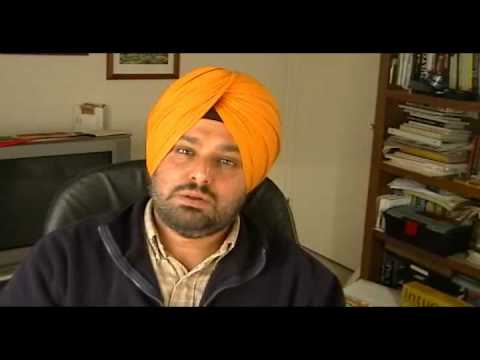
Are there any answers?
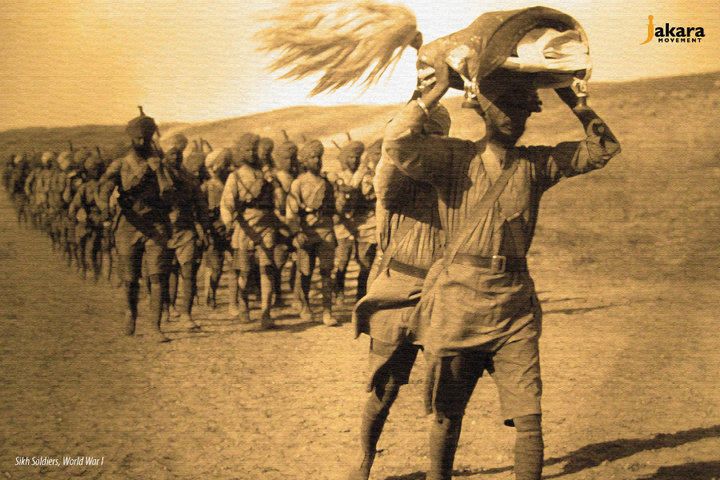
Why pay a late fee, when you can register now! Get off the fence; get a friend to join you; get ready to drive to Fresno
this summer as Sikh youth from throughout Northern California converge to explore, engage, understand, and love our Guru – the Guru Granth Sahib: History of the Sikh Soul.
Register today 5/31/10 by 11:59pm PST to avoid paying a late fee!
CONFERENCE – June 17-20, 2010 in Fresno, CA.
The event is always engaging, stimulating, educational, comfortable, inspirational and fun.
Click below the fold to see the conference agenda.
May is Asian Pacific American Heritage month (APAHM), celebrating the contributions of Asians and Pacific Islanders in the US. [link] Hopefully your schools, employers or communities have been celebrating. The White House joined in the celebration recently and Sikhs got a mention.
“We draw strength from the rich tradition that everybody can call America home because we all came from somewhere else except for the first Americans. “E pluribus unum.” Out of many, one. And there’s no better example of this than the communities that are represented in this room,” Obama said. “Your role in America’s story has not always been given its due. Many Asian Americans and Pacific Islanders have known tremendous unfairness and injustice during our history,” Obama said. The US President said generations of Asian Americans and Pacific Islanders helped to build this country, defend this country, and make America what it is today… “And for this reason, we are here today to celebrate these contributions. But we’re also holding this event because I want to make sure that we are hearing from you so that the government does its part on your behalf, just as you’re doing your part on America’s behalf,” he said. “That’s why we’re always welcoming your input: from meetings with Sikh Americans to Native Hawaiians. [link]
Enjoy the rest of the celebrations!

