
I always get nervous in October because, although I love Halloween and all the imagination and candy involved in its celebration, it scares me a little bit. But not because of all too realistic vampire costumes or haunted houses.
 This is what really scares me:
Every year, at least one person comments on my supposed “costume” when I’m not dressed up. Is wearing a turban in New York City still so foreign to people that it looks like a Halloween costume? Or does the holiday gives people an extra excuse to flaunt their racism? Two years ago, I was at a party (not dressed up) the week before Halloween, and a guy came up to me and asked me where my flying carpet was. For real. One of the first times I remember this sort of thing happening was an October afternoon when I was 13 or 14, hanging out at the mall in the suburbs of Phoenix, AZ with a good (Sikh) friend. An adult stranger said to us, laughing, “Nice condom head costumes guys!”
Now, on to the actual costumes people wear (and that stores often sell) with intention. Last year’s most notorious was the Illegal Alien costume (pictured here), sold at chains such as Toys R Us, Walgreen’s, Target, and more. After an uproar from immigrant rights groups, many stores pulled the costume off the shelves late in the season. But fear not, you can still get some laughs, as the product’s description states, this year as it is still available online and at K-Mart.
Guest Blogged by J. Singh-Sohal
Meeting the Head of the Roman Catholic Church is a once in a life time opportunity, one I fulfilled during the Holy Father’s recent State visit to the UK. I was privileged to be a part of a small gathering that represented all the major world faiths.
It was a special occasion particularly coming so soon after the launch of my recent film Sikhs@War highlighting the role Sikhs Soldiers played for Great Britain during the Great War. I was invited to say a few words, and below is the speech I gave, one which sums up perfectly how I view my Sikh faith and its place in British society.
Meeting Of Religious Leaders and People of Faith with His Holiness Pope Benedict XVI
St Mary’s University College, Twickenham, 17 September 2010
Your Grace. My Lords, ladies and gentleman.
It’s a great pleasure to be here today. To represent the Sikh community at this auspicious occasion is a humbling experience. To be surrounded by the saintly, the religious and the scholarly is a blessing.
I was asked to speak about how being a Sikh influences my daily life. You can see for yourself the greatest way my faith manifests itself. In accordance with being a Sikh, I maintain my outward appearance – with uncut hair under my turban and a beard. They represent living in accordance with God as instructed by the Sikh Gurus. They represent spirituality and discipline.
Not just a symbol but a constant reminder to be upstanding and devote, while always thinking of God. It means wherever I go and whoever I meet I stand out from the crowd – a call to be a responsible Sikh and to help those in need. For me, there’s no hiding my faith. My clothes might change but my identity means people always know I am a Sikh and that I seek to abide by the highest of principles. My Sikh faith has a deep and personal meaning for me, and it shows in everything I do.
Being a Sikh I can never forget those thousands of Sikhs before me who were loyal servants of our country for more than a century and a half. Their Sikh faith instructed them to be saint soldiers – to defend those less fortunate and the weak, to protect the saintly, to stand up against tyranny. Their historic example reminds me daily that faith in God and selfless service to a higher cause is the highest form of living.
One I’m sure we all aspire to. Nor do I forget as a British Sikh that the principles I believe in are Universal Principles – ones that all of the world faiths represented here today share. Belief in God. Selfless service to His Creation. Helping others in need. Being honest and just. The list is endless – a good thing as it shows there is much that unites us all in our devotion to our faiths and to God.
I’ll end by giving the salutation that all Sikhs give – offering their victories, however great or small to the One Lord who is himself the dispeller of Darkness and the true salvation for us all.
Vaheguru Ji Ka Khalsa
Vaheguru Ji Ki Fateh.
I just came across this great campaign to urge the American public to stop calling immigrants “illegals.” Brought to us by the racial justice media organization Colorlines, the “Drop the I-Word” Campaign website states, “The I-Word creates an environment of hate by exploiting racial fear and economic anxiety, creating an easy scapegoat for complex issues, and OK-ing violence against those labeled with the word.”

Did you know the names?
When our elders don’t know, who will teach the kids?
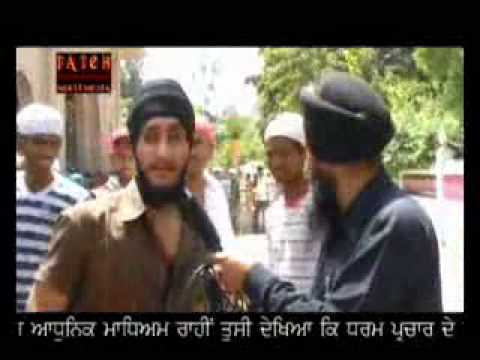
A new film, by Turbanology filmmaker Jay Singh-Sohal, discusses the presence of Sikhs in the World Wars. Sikhs at War is a free online educational short-film exploring one young person’s journey to discover the invaluable contribution made by his community during the First World War. This documentary has been made specifically with young people in mind. Educators can use the film as a resource to find out more about Sikhs who fought during both World Wars for Great Britain.
From their simple village life in the Panjab regions of modern day India and Pakistan, the Sikhs volunteered in their thousands to fight for Britain. During the Great War their numbers rose from 35,000 at the beginning of 1915 after the crisis in Europe turned into War, to more than 100,000 who were in active service by the time it ended in 1918.
The Sikhs formed 20% of the British Indian Army in action despite being only 2% of the population of India. They fought on all fronts in Europe, from Turkey and in Africa to the fields of Flanders. Their bravery is legendary – of the 22 Military Crosses awarded for conspicuous gallantry to Indians during the conflict 14 were rewarded to Sikh soldiers.
But for the thousands that left their homelands to join the fighting many did not return. During both the Great War (1914-18) and World War Two (1939-45) Sikh soldiers killed in action numbered 83,005 with 109,045 more wounded. One again despite being a minority in British India.
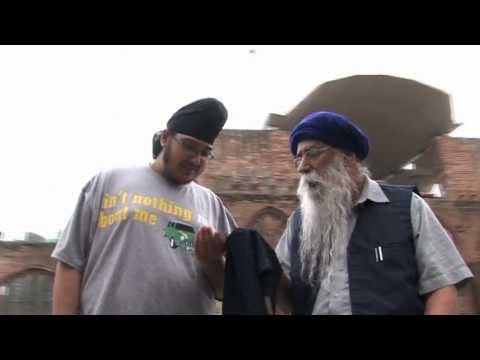

I write this as it is the truth as I see it. Not out of spite or rancor, but out of a desire to caution others and promote the path of critical self-reflection. I write about peddlers of self-promotion.
The topic is hardly new. In fact, Jodha beat me to the punch years ago, but here is my own contribution to the list.
Valarie Kaur. We have all seen her movie…..at least a half a dozen times (coming again and again and again and again to a Sikh event near you). We have all heard her speak….my head still reels from the vacuousness. We have read her writings….still hoping for a point beyond her ceaseless self-promotion. We have all heard her heart-wrenching, tormented, and soul-searching story as she climbed out of the pits of hell, all for being named…Valarie (shudder!).
Today we remember human rights activist, Jaswant Singh Khalra. Jaswant Singh Khalra discovered cremation records that proved Indian security forces illegally killed thousands of Sikhs in the 1980s and 1990s. Khalra connected the police to the disappearances of over 2,000 Sikhs in Amritsar district, located in the northwestern Indian state of Punjab. The police allege they lawfully killed the Sikhs in “encounters”, or in an exchange of gunfire. Khalra’s investigations, however, demonstrated that these Sikhs had been abducted by the police, killed in custody, and then secretly cremated as “unidentified/unclaimed” bodies at various municipal cremation grounds. The municipal cremation ground records recorded the date the bodies were cremated, the identity of the police stations and officials who deposited the bodies for cremation, and, in many cases, the identity of the victims, despite being labeled as “unidentified”. Khalra estimated that over 10 times as many Sikhs were killed throughout the entire state in this manner.
On the morning of September 6, 1995, witnesses saw uniformed and armed Indian police personnel abduct Khalra from outside his home, who had previously been warned by the police to discontinue his efforts or he too would be disappeared. Police tortured Khalra for weeks before killing him. Five police officers were eventually sentenced to life in prison for his abduction and murder, but the chief architects of systematic killings, including Punjab Police Chief KPS Gill, remain free. Khalra’s widow, Paramjit Kaur, who has been pursuing justice for her murdered husband, remarks: “We continue to seek the prosecution of the murders in Court but a communal judiciary only harasses us. It is unlikely that I will see justice served in my lifetime.” For more information, go to Ensaaf or Khalra.org
The video below is one of Khalra’s final speeches – it’s an incredibly inspiring video which should be watched by all.
 I received an email from a friend and wanted to share it with the rest of the Langar-ites. Congratulations to the whole team of Seva Food Bank from all of us at the Langar Hall.
Monumental events usually flash by at such a speed that those involved rarely have a chance to appreciate what has just taken place. Wednesday September 1st, 2010 was just such a day. The opening of the Seva Food Bank to clients was, of course, a big day in the lives of those who have worked to make it a reality and those families being served. What made yesterday even more significant is what it means to Sikh-Canadians across the country. We believe the Seva Food Bank provides us with a template on how we engage with the rest of Canada and how we develop our next generation of leaders.
To our knowledge, this is the first permanent physical Sikh institution designed solely to serve the greater non-Sikh Canadian community. Serving families in need provides us with an opportunity to demonstrate our Sikh values on a daily basis – not through a PR campaign, but through personal displays of charity, humility and service. Every interaction with client families allows volunteers to demonstrate the best of Sikhi, not just with kind words, but with loving meaningful actions. Canada has given us so much and we need to give back in a visible, impactful way. This is why the parent organization of the Seva Food Bank is simply named Sikhs Serving Canada.
Saanjh Sikh Scholarship has announced its 2010 Saanjh Scholars and awarded scholarships to four California high school students entering institutions of higher education. The 2010 scholarship recipients are Amandeep Kaur, Harmanpreet Kaur, Harsimratpal Kaur, and Kamalpreet Sahota.
The Saanjh Sikh Scholarship was commenced by a group of college students who attended Saanjh—the Bay Area Sikh retreat, in 2009. The Saanjh Sikh retreat is held annually in the San Francisco Bay Area, where college students and young professionals come together to learn and discuss Sikhi and contemporary Sikh issues. This year’s retreat will be from October 7-10, in Santa Cruz, CA.
The impetuous behind this effort was to actually start supporting higher education in our community rather than only lamenting the lack thereof. At the Saanjh retreat in August 2009, while discussing the pressing needs of our community, participants organized into different seva groups. The scholarship group took it upon themselves to raise money and support for four modest scholarships to encourage higher education in our community. They then used their various networks—SSA, Gurdwaras, Facebook—to solicit applications from deserving Sikh high school students.
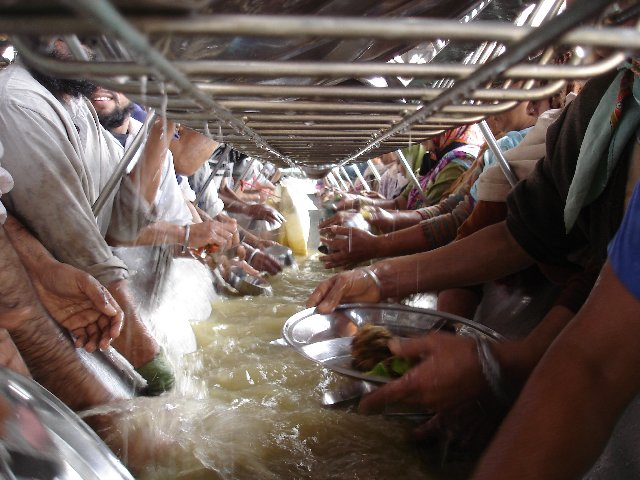 Anyone who has been blessed enough to visit the Darbar Sahib in Panjab will always speak about the amazing experience of Langar that takes place there. A free meal is provided to about 80,000 people each and every day. For those who have not visited the “Golden Temple” or perhaps are not familiar with this unique aspect of Sikhi, this NYTimes article provides a great overview of how souls are nourished in this small complex in Amritsar. The video below is titled, Peace and Roti at the Golden Temple and highlights how langar brings people of all faiths and backgrounds together as equals.
You can view the VIDEO here.
You can view the PHOTO GALLERY here.
As the debate over the so-called “Ground Zero Mosque” wages on in the media with plenty of misinformation and a whole lot of fear-mongering, we finally get some worthwhile news from The Daily Show on the subject.
| The Parent Company Trap | |
Guest blog by: Satinderpal Kaur
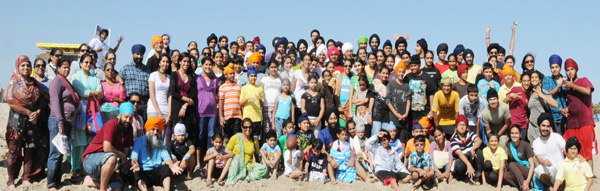
This August the 12th annual Camp Gian, in which approximately 150 youth ages 3 to 20 partook, was held. In its twelfth year, Camp Gian had a new home, the Khalsa Care Foundation, but still had the same mission. Youth attended the overnight camp from August 8th through August 13th and spent five days being instilled with “gian”—knowledge—in various forms. While learning about the history of the period from 1740 to 1850, the youth also learned about discipline, spiritual growth, being part of a “sangat” (congregation/ community), and leadership through various activities throughout the week.
Every morning, campers would be woken up as early as 4:00 a.m. in order to get the day started on time. All of the campers would join each other in the main hall for yoga exercises in order to get their bodies ready for the day. The exercises were followed by recitation of the morning prayers, Jap Ji Sahib, Jaap Sahib, and Savaiye, as well as singing of kirtan. During the morning, as well as the evening, divaans all of the activities are facilitated by campers so that they learn how to perform the services that occur at gurdwara. The campers are responsible for making the prashaad, doing ardaas, taking hukam, and handing out prashaad. The theme shabad for this year was “Darshan Har Dekhan Kai Taaee” and the theme song was entitled “I Can’t Wait to See You.” Every year a shabad is chosen to go hand in hand with the history lessons and a theme, or take-home message, is developed. Waking up in the morning and participating in the morning divaan instilled values of self-discipline and personal, spiritual growth in the campers.
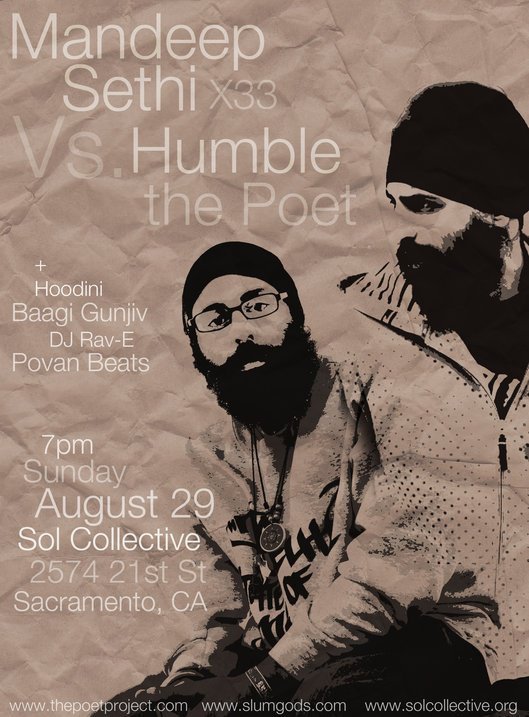 For those of you who will be in or around Northern California [actually, if you’re in or around North America you should come!] be sure to check out this upcoming event featuring Humble the Poet, Mandeep Sethi, Hoodini, Baagi Gunjiv, DJ Rav-E and more.
This is the first event of its kind in the U.S. (we usually are envious about these events when they happen in Canada!). The show will bring together these artists for, what promises to be, a legendary event.
::Slumgods.com Presents::
Humble the Poet VS Mandeep Sethi
::Live Beats::
::Special Guests::
Hoodini & KinG! + Baagi Gunjiv
::Gully Poetry by::
Sasa [Sick Spits]
::Holding Down the Cuts::
The event will be taking place on SUNDAY AUGUST 29TH from 7-11pm at Sol Collective/2574 21st St/Sacramento, CA 95818

Below the jump you can preview Mandeep Sethi and Hoodini&KinG!
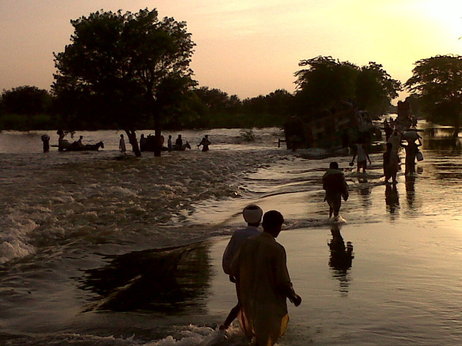
In Pakistan's flood-ravaged Punjab province, roads are impassable.
One-fifth of Pakistan is under water.
900,000 people are now homeless.
Up to 20 million are impacted – more than the number of people affected by the 2004 Indian Ocean tsunami, the 2005 Kashmir earthquake, and the 2010 Haiti earthquake combined.
As many of you know, Pakistan has recently been devastated by floods. The United Nations Secretary-General, Ban Ki-moon, recently visited Pakistan and described the flooding as the worst disaster he has ever witnessed. The UN says six million people desperately need emergency aid but most still have not received it. Tens of thousands of villages remain under water. There are growing health concerns for those surviving without proper shelter, food or clean drinking water leading to a potential public health “catastrophe”. And all of this is still occurring almost three weeks after the country’s worst natural disaster began.
The numbers are staggering – almost unbelievable. Given the magnitude of this disaster, one would expect to see an outcry of sympathy for the victims from the global community. Then why does is seem that the world has become complacent when coming to the aid of this region? Perhaps the region’s geographical/symbolic proximity to the “war on terror”? Perhaps we’re suffering from selective giving?
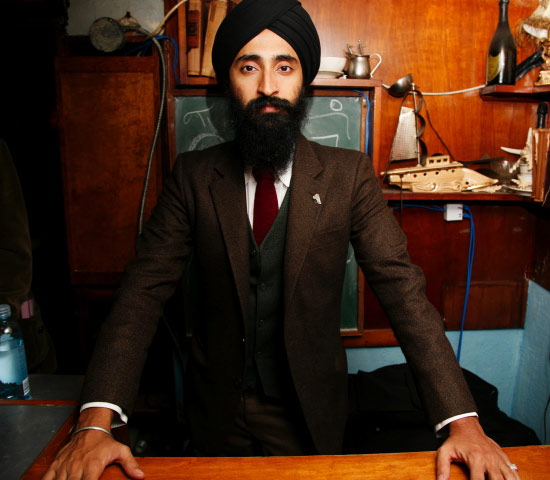 Having just been named as one of the international best-dressed honorees by Vanity Fair, Waris Ahluwalia is getting noticed not only for his dynamic sense of style but for his versatile portfolio. Best known for being a unique jewelry designer, Waris is also an actor (having starred in Wes Anderson and Spike Lee films) and recently co-wrote a book, To India with Love.
I never get tired of talking about Waris Ahluwalia by the way, but apparently i’m not alone. Blogs and articles are abuzz discussing his jewelry company, House of Waris, his sartorial taste and even his interest in Bollywood.
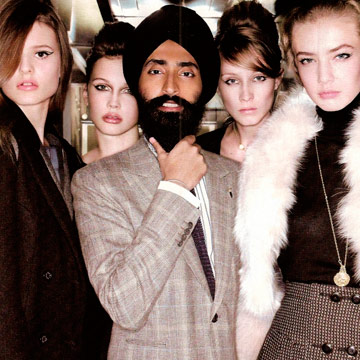 Wait, Bollywood… really?
…Despite his turban and beard look, Waris says that he has never been stereotyped in Hollywood. “Everyone likes to put people in categories, whether its Hollywood, Bollywood or the media in general. Whenever I meet agents their big concern is that I’ll be stereotyped. Well, I haven’t been stereotyped yet. “Some of the roles I’ve played; camera man, a bank hostage, a Republican, a hypo-chondriac, none of these roles called for an Indian.” [link]
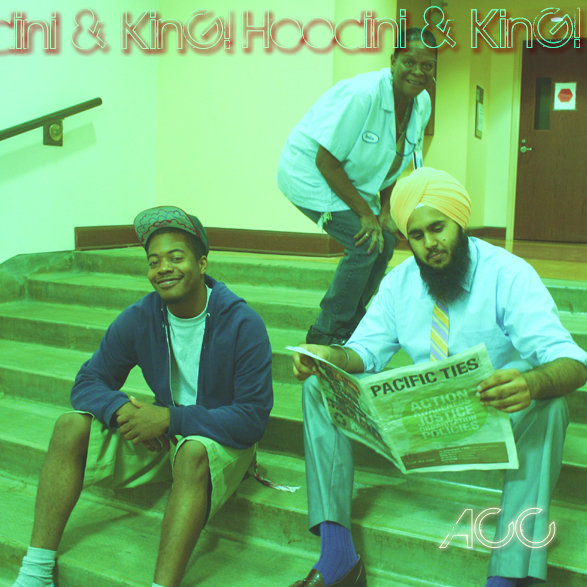 Here on TLH, we’ve covered a variety of talented musicians including Sikh Knowledge, Mandeep Sethi and Humble the Poet. We’ve been following these individuals, their music, new collaborations and of course new albums. I am a huge believer that youth (yes, we have a particular interest in Sikh youth here in TLH) should be encouraged to pursue their talents regardless of what may be expected of us. These musicians are doing just that – and they are creating incredible music that speaks to the masses.
This post is for Hoodini & KinG. I have to say Hoodini is one my favourites. Not only is he extremely talented (listen to track 6/Keep it Rollin’ and track 10/Til I’m Through of the mixtape) but he’s a nice guy (a really nice guy)… and the kid has serious style. It’s like he knows he’s going to make a mark on the world, and is dressed for the occasion…
So i didn’t mean to just mention this mixtape in passing – you really have to download and listen to it yourself. It is a really dynamic piece of work. Hoodini & KinG! Present: A California Classic, is available here. While Hoodini is the emcee, the album was produced by KinG! né Keith Rice – a 21 year old producer from the San Fernando Valley in Los Angeles (he’s really really talented). Even though the two went to different high schools, their mutual love of hip-hop was destined to bring their forces together so that they could make music that would “make people fall in love again.”
I asked Hoodini what inspires him and what he told me was this,
A documentary titled, “Stranded in the Strait” discusses the plight of young men and their dreams to emigrate to Europe (hat tip: JSB). This particular story focuses on a group of Punjabi men who are stranded in Ceuta, an autonomous city of Spain located on the North African side of the Strait of Gibraltar and claimed by Morocco.
In the densely forested hills above Ceuta, a Spanish enclave on the Moroccan coast, 57 young Indian immigrants await their fate in a shanty community they’ve built to avoid deportation. With lush visual style, the film accompanies them in their daily trials as they scramble to survive, waiting to cross the last 14 km that separate them from Europe. Will they make it there? [link]
“After the Indian ambassadress visited the city in 2007,” says Gurpreet, spokesman for the “rebels,” “the situation became ever worse; almost 50 percent of us were repatriated immediately. Thus, as sign of protest, we decide to take shelter to the forest. We hoped to come to the attention of the community, but, as you can see, after one year, we are still here.” [link]
These men have essentially given up everything to pursue their dream of reaching Europe. For many of these men, there is no alternative but to do whatever they can to cross those final 14kms. Returning to India might be the natural suggestion, but for many of these men, this is not an option as they have used all their savings to get to this place. Khalsa Aid, a non-profit organization based in the UK, has offered humanitarian assistance – but what these men need is political assistance.
Another clip below the jump:
And some brave Sikhs that won’t buckle for the whims of one self-righteous judge.
Bolay So Nihal! Sat Sri Akal!

 I’ll admit…when I first saw emails and facebook posts titled “Save The Gurdwara”, I immediately dismissed it, thinking it was yet another mismanaged Gurdwara falling in to bankruptcy or one group trying to overthrow another. But after I read the website and confirmed some of the details with contacts in Austin, I was shocked by what had occurred.
By now most of you know that in 2007, the city of Austin, Texas approved the building of a permanent Gurdwara on land the Sikh community had purchased back in 2003 and where they’ve since been having regular weekly services in a makeshift home. Shortly after construction began, a couple who recently moved nearby the Gurdwara (the Bollier’s), filed an injunction to block construction on the grounds that it would be an eye-sore, increase traffic, and lower property value. In March 2009, a district court denied the couple’s injunction in favor of the Austin Sikh community and construction of the Gurdwara was allowed to proceed. Unfortunately, this victory would be short-lived. Sixteen months after the original victory and construction now complete, an appeals court has overturned the lower court’s ruling and has ordered the entire structure to be torn down – needless to say, the Austin Sikh community is devastated!
As many of us would, I immediately thought this was a blatant act of racism, but as I read the website several times, I noticed there is no accusation of this being racially-motivated. I applaud the Austin sangat for taking the “high road” and not pulling the race card until there is clear evidence of racism or bigotry, but I must say…it sure does smell like it! I mean, “Lower their property’s value?”…really?
Somewhere in all the disappointment and frustration of this situation, I am still impressed with how Sikhs manage to come together in a time of need. Emails are circulating through all the networks, people are dedicating their facebook pictures and statuses to the “Save the Gurdwara” movement, and some of our talented MC’s have written songs to help rally and inspire the community.
The French government is at it again. France’s lower house just passed a law that would m ake it illegal for women to wear the full Islamic veil (burqa or niqab) in public. It would fine women 150 euros for not complying. Sundari posted on this issue back in February, and now this attack on religious freedom has come one step closer to being the law of the land as the bill passed 335 to 1 in the National Assembly this week. The bill would have to be ratified in September by the Senate to become law.
Proponents of the law say the National Assembly vote is a victory for democracy and French Values. Justice Minister Michele Alliot-Marie stated it was a victory for, “Values of freedom against all the oppressions which try to humiliate individuals; values of equality between men and women, against those who push for inequality and injustice.”
What about the value to practice your religion freely and express your identity (religious or otherwise) through what you wear? Madeline Bunting, in a great column in the UK’s Guardian today, stated: “Women wearing the skimpiest of mini-skirts sit down on buses next to other women in saris, business suits, salwar kameez. None of these cultural codes expressed in dress are regarded as the business of the state. Nor should they be.”

