I love food. I love to cook. I love to gather with friends, community, and sangat and share a meal together.
Because food it our most primal need and our common bond to the earth and one another, it can ground us as we stretch ourselves to draw in all the interlaced threads—so we can weave a whole, meaningful picture for ourselves. I still believe food has this unique power. With food as our starting point, we can choose to meet people and to encounter events so powerful that they jar us out of our ordinary way of seeing the world, and open us to new, uplifting, and empowering possibilities. – Frances Moore Lappe and Anna Lappe, from Hopes Edge: The Next Diet for a Small Planet
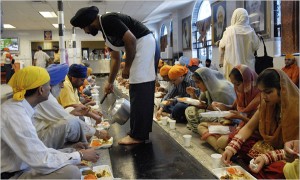
The Sikh institution of langar has always been something near and dear to me, partially because of my borderline obsession with food, but also because it really gets to the heart of Sikhi. The practice of langar, our free community kitchen, was started some 500 years ago by Guru Nanak to meet a basic human need – eating – and to create a space for community-building that reflected the Guru’s radical vision of equality. Rules about food preparation and eating were (and still are) one of the central ways that caste oppression was enforced. Langar turned this all on its head. With everyone sitting together on the same level (on the floor) and eating the same simple food, which was prepared by people from all caste backgrounds, langar was nothing short of a revolutionary accomplishment.
It is with this lens that I want to discuss the food of langar itself.
Guest blogged by Navdeep Singh Dhillon
The reformist, humanitarian wife of Franklin D. Roosevelt (32nd President of the United States) – and “first lady of the world” – Eleanor Roosevelt once famously said, “Great minds discuss ideas, average minds discuss events, small minds discuss people.”
Over the past few years, I have become quite disheartened over the state of the discussion of 1984, based on conversations I’ve had with seemingly well-educated people and what I’ve seen in the media. The record seems to be stuck on “events” and has barely moved an inch into the arena of “ideas.”
A few months ago, an entire issue of India Abroad was devoted to 1984 and I was initially interested to read it. But after reading just a few paragraphs, I realized it was the same ole, same ole: a recap of the events by people who were narrating their experiences during 1984 and shortly thereafter. The experiences themselves were very vividly told, but the articles didn’t seem to have any real purpose, other than to keep the conversation within 1984.
It is obviously extremely important to know the facts, the history, the events that took place, the backdrop, and of course the people involved. But there should be a “now what?” aspect put into place that involves something more than mentioning the names of Jagdish Tytler and Sajjan Kumar, rehashing the timeline, the people involved, holding a few film screenings and handing out fliers. Shouldn’t there?
 There was an interesting whimsical read in the Wall Street Journal by a Yale Law Professor, titled “Why Chinese Mothers Are Superior” The article states that the ethnicity has some possible substitutions, so I indulged, as its main opposition is suppose to be something called “Western.”
Here are some of its insights:
A lot of people wonder how Chinese parents raise such stereotypically successful kids. They wonder what these parents do to produce so many math whizzes and music prodigies, what it’s like inside the family, and whether they could do it too. Well, I can tell them, because I’ve done it. Here are some things my daughters, Sophia and Louisa, were never allowed to do:
- attend a sleepover
- have a playdate
- be in a school play
- complain about not being in a school play
- watch TV or play computer games
- choose their own extracurricular activities
- get any grade less than an A
- not be the No. 1 student in every subject except gym and drama
- play any instrument other than the piano or violin
- not play the piano or violin.
For more discussion, click below the fold
Guest blogged by Ajaib Kaur
Amrita (Ami) Kaur Dang’s sound often is described as a “blend” of the classical (traditional) and the experimental (non-traditional). Tossing together her North Indian vocal training with impressive sitar skills, she playfully builds collages of inquiry. Also creating the feel of a fireside gathering for trans-national, digital, post-modern sound to question everything. While a blend or an intersection might be an easier way to describe Amrita’s style to a western audience, I find her sound to be an embodiment of the everyday Sikh experience.
Click here to listen to her track “Strange Community.”
The mesmerizing loops and samples, of each track on Amrita’s full length debut album “Hukam” capture the repetitive daily dance we each participate in. Within each track there are varying sensibilities of bargaining, or even resignation, but often vigor and passion that all listeners can relate to.
Guest blogged by Navdeep Singh Dhillon
 For my first post as a guest blogger, I wanted to address an issue that has been irritating me since September, when I first read about it. [An anonymous] Mehmaan wrote a post titled “Valarie Kaur, the peddler of self-promotion.” Mehmaan’s claim is essentially that Valarie Kaur is a big pakhandi.
Mehmaan’s singular criterion for reaching the conclusion that Valarie Kaur is not just a pakhandi, but a big pakhandi, is that she is using social media and her website to promote herself as a speaker and to sell her documentary, “Divided We Fall,” inaccurately called a “movie” in the post.
I have never met Valarie and don’t know her family, but do want to clarify Valarie Kaur’s achievement, relegated to the realm of frivolity with the express purpose of making money, by Mehmaan in order to prove a point.
On September 11, the mood against anyone brown, especially Sikhs, changed drastically, and it culminated with the murder of Balbir Singh Sodhi on September 15. At that time, there was no Twitter. There was no Facebook. Even text messaging wasn’t normal everyday behavior. So there was no immediacy with information. I remember receiving emails through newsgroups I happened to be a part of documenting the steadily rising violence and blatant racism towards brown people. And then switching on my television to see zero updates on the “backlash.” Instead, it was just the same devastating image of planes crashing into the Twin Towers, followed by a turbaned and bearded Bin Laden. So what Valarie Kaur did at 20-years-old is nothing short of phenomenal. Along with her cousin, she went to document the brown experience on a cross-country trip, armed with plenty of panache, zero technical skills and a video camera. The fact is that there is no other documentary, which I am aware of, that weaves such a powerful narrative, intermingling a compelling personal story, and creating the link between not only Sikhs, but anyone of color, including the Japanese-American survivors of camps in the United States.
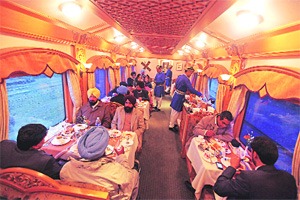 A luxury train, costing about $10,000 per passenger, and traveling to the five takhts throughout India has begun it’s journey. The nine-day trip will begin in New Delhi and will stop at Keshgarh Sahib, the Akal Takht, Damdama Sahib, Hazoor Sahib and Patna Sahib.
The 21-coach train includes two presidential suites, five-star rooms, a spa, a salon, gym, two restaurants, a conference hall and a business center! [link] There are currently 88 passengers on board from both India and abroad including the US, Canada, the UK, Germany and France. The trip is being managed by the Taj group of hotels.
It sounds like the trip is not necessarily directed towards Sikhs and is not simply a “pilgrimage” but apparently will include additional stops in Rajasthan for sightseeing. One article notes that,
Different legs of the journey will have performances by traditional artists onboard. “Kirtans” (holy songs of Sikhs) by Sikh hymn singers called Raagis will also be an attraction.
The next trip is planned for March 2011 with an ultimate goal of doing four trips a year. What are your thoughts – would you pay $10,000 for a trip like this?
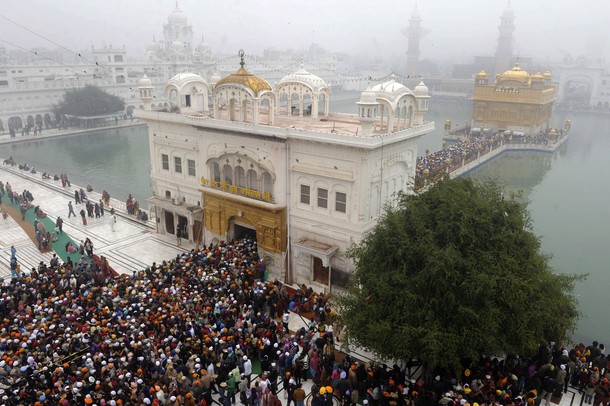
New Years Day at the Darbar Sahib
From all of us here at The Langar Hall, we’d like to wish all our readers a very happy new year! As you may have noticed, our posts have been intermittent lately. This is a result of committment changes and transitions occuring in the lives of many of our bloggers. As is the case in all communities, change is inevitable, and TLH is no exception.
While the basic premise of this site will remain the same (see more here), 2011 is bringing us some fresh new voices and exciting changes. You can expect to see more posts by a number of guest bloggers (Mehmaan) and by February several new permanent bloggers. We are excited about the new writers who will be contributing to TLH this year, and we continue to encourage readers who are interested in participating in this process to send a note to admin[at]thelangarhall[dot]com.
Also, as previously mentioned, we hope TLH can be a place where Sikhs all over North America (and hopefully even beyond!) can find out about Sikhi related events happening in their areas. We are still working out the technology to make this happen, but we hope to get an events calendar up and running early this year.
Let the conversations begin,
Fateh!
Last week I attended a diwan of about 50 people on a Thursday night on the east side of Manhattan, in New York City. The Manhattan Sikh Association (MSA) has been organizing monthly diwans in NYC for years now in apartment buildings and other temporary locations, but recently the group opened up a permanent space on East 30th street and Park avenue in Manhattan, making it the island of 2 million inhabitants’ first gurdwara.
I’ve always enjoyed attending the intimate MSA diwans, which tend to attract a lot of young Sikh professionals who live or work in Manhattan and the surrounding areas. Even the New York Times was intrigued by MSA and did a story on them last year. As I sat in their new space last Thursday, I felt calm and at peace, no one was yelling at me about the latest gurdwara politics**, and my peers, many of whom were second generation Americans like myself, were the ones doing kirtan, leading Rehras Sahib and Ardas, and in short, running the show. One young Sikh did a brief and conversational viakhia (commentary) in English of his shabad before he started singing. I thought to myself, this is a spiritual space.
Sadly, a spiritual space for sangat to come together, reflect and grow is a far stretch from what most gurdwaras I’ve attended in North America feel like.
Guest blogged by Ajaib Kaur
I saw this video recently on a photography project inspired by Rana Singh Sodhi and the loss of his brother after 9/11 to a bias-motivated crime, or ‘ hate crime’. The project aims to capture photographs of one child from every country in the world, residing right here in New York.
I was inspired to do this project in 2003, when I was driving across the United States and I stopped at a gas station in Mesa, Arizona and I met this gentleman named Rana. A couple days after 9/11 Rana’s brother was planting a tree in front of a family owned gas station, and someone drove by, saw a Sikh who was like Rana wearing a turbanand a beard and shot him.
He further reflects on the characteristics of the children he captures:
What I was capturing was not the ethnicity of the child or the fact that they were a New Yorker, but a very specific emotion about that person, so that it represents a spectrum of emotion that we all know.
The piece is an interesting take on combating bias in one of the most ethnically diverse cities in the world. Since the U.S. Census has found that the next generation of Americans will be considerably more diverse than the previous generations with more immigrant communities making their way out to ethnic enclaves in the suburbs [link], and since the ethnic makeup is in constant flux across spaces and neighborhoods [link], projects on how mixed communities can relate to each other in these spaces are needed.
The project is also an example of how Sikhs can engage in new media and platforms where Sikh representation is in dialogue with other ethnic and religious communities, rather than in isolation.
Thank you Danny Goldfield, for your contribution.
 So, in the new year we’ll be bringing about some changes to TLH and we hope that one of these changes will be a better way of highlighting events happening in and around North America.
In the meantime, for our California Langar Hall family, you can catch Sikh Knowledge + Mandeep Sethi + Humble the Poet + Hoodini & King! + Povan Beats + Baagi + Push at Sol Collective on December 22nd starting at 9pm. The event will be hosted by the very funny AKA Amazing.
Please view the facebook event page here and a video below highlighting many of these artists. The video is filmed by the very talented, Digitology.

 After the massively successful Sikholars 2010 conference in February of this year, graduate students will be congregating again next February for Sikholars 2011.
After speaking to organizers, I have been informed that the deadline for proposal submissions (due to massive requests as many students were taking finals) will be extended until December 31, 2010.
Visit the Sikholars website, check out pictures from last year, and most importantly make sure you are there at:
The Second Annual
Sikholars: Sikh Graduate Student Conference
A Community on the Move: Global and Local Sikhs
February 25-27, 2011
Continue below the fold for some general information about Sikholars.
 The Chair of the US House of Representatives Foreign Relations Committee, Rep. Howard Berman, is trying to push a resolution through Congress today “condemning unilateral declarations of a Palestinian state.”
The United Nations has long recognized the sovereignty of the Palestinian people in the Occupied Palestinian Territory, including East Jerusalem as a matter of international law. Since 1975 the UN has recommended that the Palestinian people be able “to exercise their inalienable rights to self-determination, national independence and sovereignty; and to return to their homes and property.”
There is growing consensus around the rest of the world in support of Palestinian sovereignty and statehood, yet two countries stand in the way: Israel and its fiscal sponsor, the United States.
I just received notice from the US Campaign to End the Occupation about this horrifying resolution that will be voted on today.
I recently got turned on to this band BlackMahal from the San Francisco area, fronted by the legendary dholi Ustad Lal Singh Bhatti.
According to the band’s website, “BlackMahal is steeped in Old California, a Punjabi-American experience that started in the 1890s when the first Punjabi-Americans settled in the Great West and forged a new identity combining elements of Mexican and African-American influence. BlackMahal also represents the new California feel: hippy hybrid hip-hop and hysterical hi-jinks. ”
The band also features the talented and righteous Sikh rapper Mandeep Sethi.
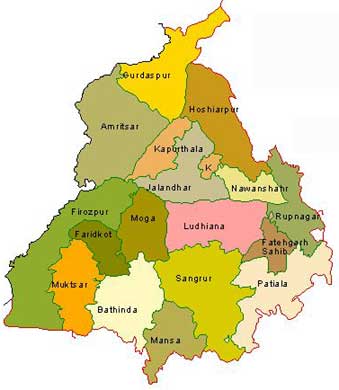 The following video, from the BBC, shows a sad reality of the growing drug problem in Punjab. High unemployment rates have inevitably contributed to this problem. While the video only highlights Punjabi men, it is well known that young Punjabi women are also suffering from this addiction. I can’t embed the video, so please click here to view it.
There is growing concern in India about the rapid rise in drug addiction cases in Punjab, one of the country’s wealthiest states.
The main university in the region has claimed that 70% of young Punjabi men are hooked on drugs or alcohol.
The problem is at its worst along the border with Pakistan where heroin originating from Afghanistan is smuggled into the country.
The BBC’s Mark Dummett reports from Amritsar.
For those of you who are following the Sikh hip-hop scene, Navdeep Singh Dhillon’s blog has a good overview of each of the musicians who’ll be in attendance at the upcoming Lahir 2010: Move the Movement event in New Jersey. Here’s an excerpt about one of the rappers whose name means Rebel,
Baagi Gunjiv is one of the very few rappers out there who raps in Punjabi. The only other one that I can think of is Bohemia, and his songs are all about “thug life” in Oakland and Sacramento. Not that there’s anything wrong with that =) So just the fact that he is rapping in Punjabi and rapping about social issues like farmer suicides, droughts, and 1984, is hopeful, but he doesn’t really have very many songs out there to draw a conclusion from. The only other one I have heard, “Baagi di Vaari” was produced by Sikh Knowledge so it sounds very professional, but content-wise, it is a bit vapid. In his defense, the chorus “Bubbe noon kanna, te Gugge noon bihari” which details the two punctuation marks required to write his name in Gurmukhi, falls in line with any other debut rapper. “What’s my name? Snoop Doggy Dog.” “I’m Bushwick Bill, but you can call me Richard.” “Vanilla Ice Ice Baby,” “Hi, my name is. Slim Shady.”
So I am looking to forward to seeing what else he comes up with and remain optimistic that he will be the breath of fresh air for Punjabi music, both in Punjab and overseas so we can move more towards heightening the consciousness of the masses rather than songs like Diljit’s deep lyrics: “Chandigarh vich kudi milli, chocolate vargi” which I can’t even bring myself to translate. [link]

Though Sikhs have settled all around the world, roughly 20 million Sikhs still reside in Punjab. There, and elsewhere, Sikhs are facing serious problems including, but not limited to: farmer suicide, female infanticide, drugs and alcohol abuse, domestic violence, economic disasters, disease, poverty, illiteracy, and much more. [Lahir Press Release]
Many of my most recent posts have been about upcoming events happening in the Sikh Community. I think this is a positive sign – that rather than idly discussing and debating issues that inflict our panth, we are actually doing something about it! I would like to highlight two upcoming events occurring in North America. These platforms will bring together talented youth to raise awareness and by doing so, will aim to address important issues within our community. Please support these endeavors so that we can continue to move our panth in the right direction.
Lahir: Save Punjab. Save Ourselves | New Jersey | November 20th | 6pm
Lahir: Move the Movement 2010 is a night of spoken word, poetry, music, and the arts. Artists will include G.N.E., Hoodini, Mandeep Sethi, Gunjiv “Baagi” Singh, MC G-Singh and Humble the Poet. The event will kickoff the movement to respect and protect Punjab by donating all profits to the Baba Nanak Education Society (BNES), an organization which provides humanitarian assistance in rural Punjab to next of kin of suicide victims. These are families with small children left completely destitute by the death of bread-winners and have been neglected by the government. A donation of approximately $350 can help support one family for a year. For more information, visit the facebook page.

This morning the Sikh Coalition, SALDEF and United Sikhs issued Alerts advising the community that Sikhs should now expect turbans to be searched 100% of the time at American airports. The alert has been copied below so that community members are aware of this prior to arriving at airports around the country.
(Washington, DC) October 22, 2010 – Earlier this month, Transportation Security Administration (TSA) officials told representatives of the Sikh Coalition, UNITED SIKHS, Sikh American Legal Defense and Education Fund (SALDEF), that Sikhs should now expect turbans to always be searched at American airports.
While procedures which allow Sikhs to pat down their own turbans and have their hands swabbed by a TSA screener shall remain in place, what has changed is that Sikhs must go through an additional hand wand of the turban as an additional screening procedure 100% of the time. This is true even for Sikh travelers who voluntarily choose to be screened by going through the new Advanced Imaging Technology (AIT) machines. The AIT machines (otherwise know as whole body imaging machines) are being placed in airports nationwide over the coming years.
SALDEF, Sikh Coalition and UNITED SIKHS oppose this policy and question its necessity. Targeting turbans for additional scrutiny sends a message to other passengers that Sikhs and their articles of faith are to be viewed with suspicion by fellow travelers. The policy is a serious infringement on our civil rights and liberties.
What to Expect at the Airport
Air travel checkpoints in the United States employ different screening technologies.
While most checkpoints only have metal detectors, many airports are now installing AIT machines. The AIT machines are new whole body imaging devices that will be installed in every airport in the United States over the coming years.
According to the TSA, regardless of whether a Sikh clears the metal detector or the new AIT machines, they will still have to go through an additional procedure in which their turban will be checked for non-metallic items. During this second screening procedure, a Sikh will have a choice of either:
- a pat-down of their turban by a TSA screener;
- patting down their own turban and having their hand swabbed for traces of chemical explosives; or
- requesting a private screening (in a room outside of public view) of their turban.
In addition, after this extra screening of the turban, a third screening procedure (under AIT screening policies) will subject Sikhs to a metal detecting wand that will be scanned over the turban.Please remember, that under current procedures, a Sikh can always ask that they pat down their own turban rather than have a screener pat it down.
If a Sikh traveler opts out of the AIT screening, they will immediately be subjected to a full body (rigorous) pat-down by a TSA official plus a hand wand screening. If you are asked to undergo a full-body pat down, you have the right to ask for this screening to occur in a private room or other setting away from the rest of the traveling public.
The TSA’s Rationale
The TSA says that because a turban is “non form-fitting,” it is more capable of concealing dangerous items than other forms of clothing. The TSA also says that its new AIT machines cannot see through the folds of a turban to determine if it is concealing a dangerous item.Our organizations vigorously question these rationales. First, the Department of Homeland Security’s own website states that the AIT machines are capable of screening threat items “concealed under layers of clothing.” Second, on Christmas Day 2009, a person was able to smuggle explosives onto a plane headed to the United States in his undergarments. If explosives can be concealed in undergarments, all garments should be targeted for extra scrutiny, not just turbans.
Going Forward
Each one of our organizations will continue to oppose this unjust policy. We will call upon Sikhs in the coming weeks to communicate directly with the TSA and their members of Congress.Each one of our organizations are also aware that the Sikh American community is as invested in the national security of the United States as any other community.
Nevertheless, the TSA cannot target turbans for extra scrutiny without cause. We will continue to vigorously question the necessity of this policy given the weak rationales presented for it.Coordination Amongst Sikh Organizations
Our three organizations would like the community and government to know that it is our intention to work hand-in-hand to combat unlawful profiling of Sikhs by the TSA. We will jointly strategize and communicate with both the government and the Sikh community about our work on this issue.
We have previously written about SikhLens, an art and film festival which brings together Sikh filmmakers, authors, artists and actors. For those of you who support the development of Sikh arts, you will be pleased to know that the second annual Sikh Art and Film Festival (SAFF) will be held from November 19th-21st, 2010 at the Dodge College of Film and Media Arts at Chapman University in Orange, CA. SAFF provides a venue for artists to present their “Sikh-centric” films, art, and music to the broader community with the intent of showcasing their talents and generating increased Sikh awareness.
The Festival begins Friday, November 19th with a red-carpet Opening Night starting at 7:30 pm. A youth-focused cluster will start off the Saturday events. This cluster focuses on films and live book readings intended to incite interest and inspire youth, while teaching about Sikh history. The focus then turns to creative Sikhs in the Visual, Audio and Entertainment Industries. Hear their stories, watch and listen to their craft, and interact with and support Sikhs breaking ground in these unique areas. Also introducing for the first time an interactive segment on “Introduction to Film-making,”to demystify the film-making process. Rounding out the day’s events are a series of short films featuring a wide variety of genres, an eclectic mix of filmmakers, and a unique blend of topics, including special selections from the SikhNet Youth Online Film Festival. Sunday’s events start with an international flavor, with an emphasis on Sikh films and artists from all over the world. The concluding cluster of the festival will touch upon Social Issues within the Sikh Diaspora. This segment is aimed to bring upon a meaningful and insightful look into the surroundings of the Sikh Community today.
I am especially interested in this final cluster which brings together films addressing the social issues that inflict our community. We have spoken many times on this blog about how media and film are critical to dialoguing about important issues.
By now, most of you have likely heard about the controversy surrounding Obama’s potential visit to Darbar Sahib (aka the Golden Temple) in Amritsar. The Sikh Coalition reported this week that the President’s travel plans in India are still not finalized and is encouraging community members to write to the White House to urge President Obama to include Darbar Sahib in his schedule. You can send a message by clicking here.
SALDEF and United Sikhs representatives were quoted in yesterday’s New York Times article about Sikhs’ frustration with Obama for canceling the visit out of fear of being perceived as Muslim (which according to the Times, one in five Americans perceive him as such).
“There’s a xenophobic trend in this country, where some people are calling him Muslim,” said Jasjit Singh, associate director of the Sikh American Legal Defense and Education Fund, a Washington-based civil rights group. “If he gives in to this trend then effectively he’s emboldening them.”
Apparently, the White House fears the right wing’s ever-increasing Islamophobic backlash. Indeed, pundits on Fox News would likely have a field day with photographs of President Barack Hussein Obama with his head covered surrounded by brown, bearded men in turbans. While this concern is understandable, Jasjit from SALDEF’s point gets to the heart of the matter: canceling the trip to Darbar Sahib only emboldens the Anti-Muslim bigots and in fact perpetuates anti-Muslim and anti-Sikh bigotry.
Let’s hope that Sikh and Muslim Americans alike can work together, along with our supporters, to convince the President to not back down to bigotry. Tell the White House what you think.
A friend recently sent me this short documentary on the Punjabi Dalit activist and singer, Bant Singh. Surprised that I had never heard of him, I was not only blown away by his singing, but by his revolutionary lyrics and fierce commitment to resisting caste and class oppression.
“If we’re to starve,” he states, “we may as well fight for our freedom. At least we’ll be remembered. Move away from living on the streets, or our thatched hovels. Let’s all become Bhagat Singh, become masters of this nation, stop this looting, stop the violation of our wives and sisters.” (source)
His righteous activism led to him being beaten almost to death a few years back, resulting in the loss of 3 of his limbs. But as you’ll see below in this video, a result of a new collaboration of artists called The Bant Singh Project, he still sings. And is not backing down on his message either.