I just came across a great article on the work of Baba Sewa Singh of Khadoor Sahib, Amritsar District, and his remarkable campaign to plant trees across rural Punjab. Well worth a read.
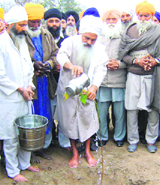
According to [Baba Sewa Singh], they will adopt another 100 villages this year in Bathinda, Jalandhar, Patiala, Amritsar, Gurdaspur and Tarn Taran districts. “We are targeting plantation of at least 500 trees in each village, which would make a total of 50,000 trees in 100 villages every year,” he added.
Forests are vital to maintaining ecological balance in air, water and soils across Punjab. At present, only 6.5 percent of Punjab is under forests, which is even lower than the desert state of Rajasthan at 9.5 percent. Though the Punjab government plans to increase forest cover to 15 percent by 2017, ensuring that forests benefit the average person in Punjab will an important indicator of success in any afforestation effort financed by the state. Planting indigenous and native species like kikar, tahli, jamun, and neem trees, along with fruit trees in homes across villages will help ensure that the benefits derived from healthy, productive forests reach the many who still live in Punjab’s rural areas.
A Review of Mandeep Sethi’s Poor Peoples Planet, released January 2011. 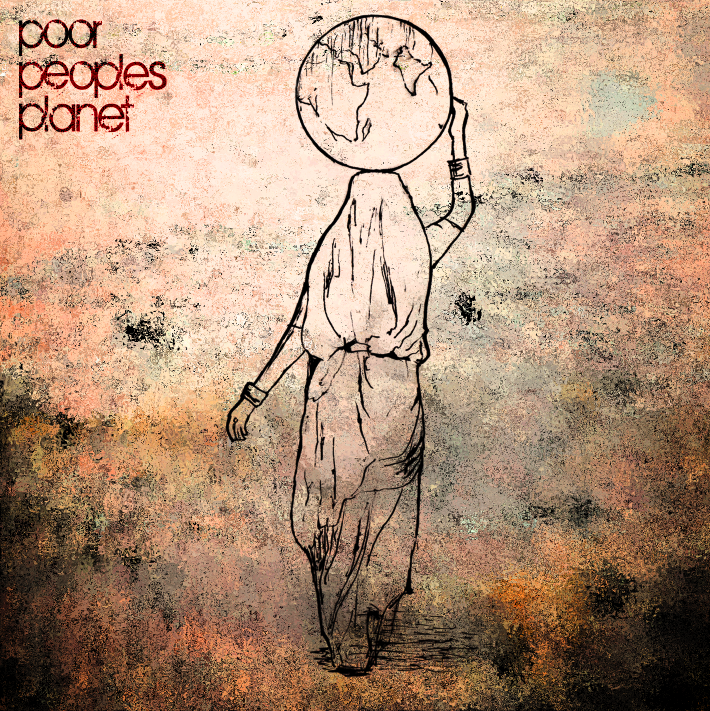
With an unmistakably laid-back, West Coast hip hop sound, 22-year old Sikh rapper Mandeep Sethi brings us the dynamic and often incendiary (while maintaining the mellow Bay area vibes) Poor Peoples Planet. Inspired by the gypsy hip hop teachings of Xitanos Matematikos and the history of gypsies in Punjab, Sethi, a San Francisco-based artist, flows over meditative and at times haunting melodies and samples not typical of a hip hop record.
Embodying the Khalsa spirit, the album (Sethi’s third) begins with a twist on a jakara, with the track, “JahKaRa.” The jakara was originally a revolutionary call and response battle cry—a call to arms in a sense—that is of course used today to end Ardas and in times when we need some extra Guru-inspired enthusiasm and courage. This album’s “JahKaRa” begins in Spanish and flows into Sethi welcoming the listener to “the pueblo” before a series of Punjabi jakaras propels us into the experience of Poor Peoples Planet.
[Moving Swiftly::][GuerillaTactics][POORPEOPLESPLANET by Mandeep Sethi
Continue Reading »

Since the Green Revolution was introduced in the mid-1960s, the Sikh spiritual homeland of Punjab has been faced with mounting soil erosion, water table decline, widespread chemical contamination, and continued loss of biodiversity in agriculture and forests. The Cold War era anti-revolutionary plan transformed Punjab into the breadbasket of the Indian nation state but left Punjab’s ecology in a critical state and set the agricultural economy on a path of long-term decline. Without Sikh institutions on board with the ecological reality of Punjab, the serious degeneration of the environment will continue to accelerate, and the marginalized and the poor will burden the costs of shortsighted statist policies that have exploited the natural resources of Punjab.
The week of March 14, the Gurpurab of Guru Har Rai Ji, Gurudwaras across Punjab and the Diaspora will participate in the first ever global day of reflection on the environment to reach the masses in Punjab and the world. On ‘Sikh Environment Day’ Gurdwaras across the world will focus kirtan and katha on the environment, participate in tree plantings, install environmental notice boards, start pesticide-free vegetable gardens, and host Khalsa School lessons on the environment. The SGPC, DSGPC, AGPC, are all in support of this day and celebrations will be underway at Anandpur Sahib (‘pani bachao, rukh lagao!’). We have prepared a Gurdwara Guide and shabad compilation for participating Gurudwaras and the Sikh Research Institute has also created Sikh environmental education lesson for Khalsa Schools across the diaspora.
Major outreach efforts are underway across the world, but WE NEED YOU to invite your Gurudwaras to join Sikhs across the world. Please take ten minutes of your day, ‘like’ EcoSikh on facebook, download an English or Punjabi versions of our invitations, pass them on to your Gurudwara heads, and encourage your Gurudwara to REGISTER today. We can make this happen for the future generations and create a shift in thinking on the serious degradation of Punjab’s rural and urban ecology before the process becomes irreversible.
Please visit www.ecosikh.org to learn more about Sikhism’s contribution to a sustainable future. May the Khalsa ever remain spiritually exalted, and always in service of humanity.
I recently came across information about Speaking in Tongues, a documentary which follows four diverse children on a journey to become bilingual. As the website states, “At a time when 31 states have passed “English Only” laws, four pioneering families put their children in public schools where, from the first day of kindergarten, their teachers speak mostly Chinese or Spanish.” Before I continue, take a peek at the trailer:
The film discusses the growing need that parents are feeling to raise their children multilingual.
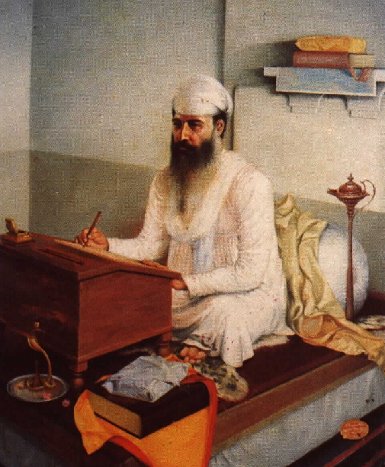 Guest blogged by Pataka
As a student interested in Sikhism, visiting the library can be a somewhat dismal affair. Searching for academic works on Sikhism leads to few results. Searching for specific topics within Sikhism – for example, gender and Sikhism, lead to even fewer results.
The elitist institutionalization of scholarly research has often excluded marginalized groups and voices: those whose native language is one other than English, members of the working class who cannot afford to pay tuition and fees, single parents, seniors, people living with disabilities, immigrants, refugees and so on. It’s no stretch to imagine that one of the reasons that there is such little research available on Sikhism is due to the fact that we are a marginalized community, both in India and in the diaspora.
While many ‘professional networking’ organisations targeting Sikhs exist, the elitist spin on these events exclude those who may not be ‘professionals’ – students, stay-at-home parents, the unemployed or retired. A push towards inclusive, collaborative open-access community events highlighting Sikh research can foster healthy debates, increase social interaction between different generations of Sikhs on topics of interest, and ensure that Sikh history and Sikh thought are included within the large canon of scholarly literature. Democratizing academic research can also facilitate collaborations between academics and Sikh community groups on issues of concern.
I will write more later. There are reasons to be excited; there are reasons to be cautious. Today I am inspired.
Visit the Sikholars website and choose to register for the entire weekend or just for the conference. There are a number of exciting presentations by leading scholars in the community. Mark down your calendars from February 25-27, 2011 as Sikh professionals, academics, and activists come together in the Bay Area. Hope some of our Langar-ites can also attend!
Malcom X once designated the term ‘house negro’ to describe the African American slaves that were unwilling to leave their marginally comfortable lives subjugated by their white slave owners and very likely to support the oppressive system of slavery. These ‘house negros’ continued to exist throughout history helping perpetuate atrocities against their fellow African Americans, conspiring to no end to keep oppressive systems in place. Nowadays, we have a house Negro as a president, and in Canada, we have house Sikhs.
The last few years have been vital for the right wing in Canada. Canada has taken an unprecedented role in the international stage in upholding oppressive regimes and systems and continuing its role in the war on terror and the war in Afghanistan. Two wars which have produced over a million dead bodies, tens of millions more displaced and dispossessed, and countless lives traumatized. But we all know this; we all have been witness to the horrors of these wars and there’s no need to continue on exploring their horrors, but what is important is to see where our own Sikh leaders have been while millions of innocent lives were destroyed. What we find, surprisingly, is a lack of concern or at the extreme, complicity and support.
Being a Canadian and being sensitive to our communities suffering and that of other communities, I find myself pitted against a majority that is suffering from apathy. I see a Panjabi, Sikh community consistently disenfranchised from Canadian polity yet being consistently utilized as a major voting bank by exploitative politicians who invest in our communities apathetic and introverted nature. They see a community willing to throw support to any tom, dick and harry that greets them with a ‘sat-sri-akal’ and a half assed smile and we all too willingly welcome them in our homes and institutions. This is a narrative we find almost universally everywhere and though it does not necessarily imply a problem relative to only our community, it is a systemic problem that has to be recognized and corrected. But even with these corrective measures, we, in Canada, have begun to see these ‘house Sikhs’ prop up and this is going to be a struggle onto itself.
Kicked off by Tunisia’s Jasmine Revolution last month, the massive uprisings against U.S.-backed authoritarian regimes throughout the Arab world have grown into an undeniable and unprecedented force for real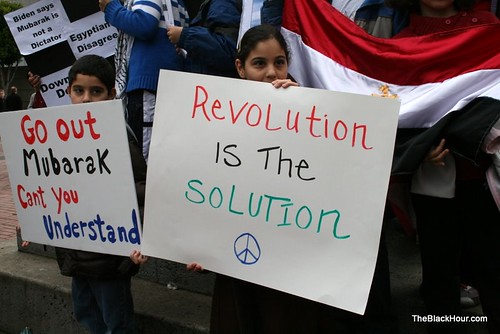 democracy.
Since the dictators being targeted have close ties to Washington, the leaders of our government are finding themselves in a rather uncomfortable position. Senator John McCain was a little more blunt than the Obama adminstration when, on Fox News last week, he called the rise of democratic movements a “virus…spreading throughout the Middle East,” referring to this as “the most dangerous period of history…of our entire involvement in the Middle East, at least in modern times.” Obama and Clinton talk a smoother, more diplomatic talk, but the take home message is the same: “Change” in the Middle East must be on our terms.
In a column in the Guardian on Friday, Noam Chomsky wrote, “Washington and its allies keep to the well-established principle that democracy is acceptable only insofar as it conforms to strategic and economic objectives: fine in enemy territory (up to a point), but not in our backyard, please, unless properly tamed.”
Indeed, while the Obama administration pays lip service to supporting “democracy” in Egypt (after backing and funding Mubarak for the last 30 years), it has lined up long-time Mubarak aide Omar Suleiman to lead the so-called transition to a new government. The New Yorker reported that Suleiman “has served for years as the main conduit between the United States and Mubarak… [H]e was the C.I.A.’s point man in Egypt for renditions—the covert program in which the C.I.A. snatched terror suspects from around the world and returned them to Egypt and elsewhere for interrogation, often under brutal circumstances.”
That’s democracy for you, American style.
For Sikhs in the United States today, what does it mean for us to pay taxes to a government that actively works against the freedom, self-determination, and sovereignty of millions of people around the world, including our brothers and sisters in Egypt whose relentless protests have been met with violent, state-sponsored repression?
This is of course a question that I would ask all citizens of the United States, but for us Sikhs, I don’t think it is simply a political question, but also spiritual one.
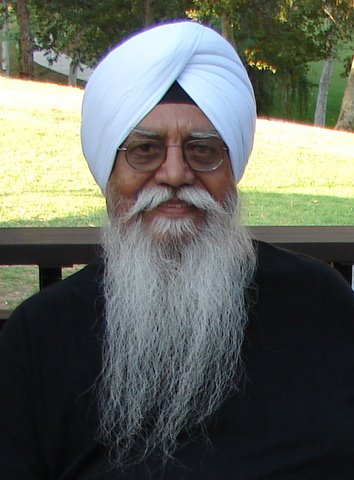 Rare are those sevadars that give their entire life to the Qaum. They are our jewels. Earlier this week, we lost one.
Captain Kanwar Harbhajan Singh, popularly known as Papa Ji, was the tour de force behind the International Institute of Gurmat Studies (IIGS). His family, friends, and network taught a generation of Sikhs how to connect with their Guru. They held camps throughout the world – from India, to Punjab, to California, to Canada, and many other countries in between.
He had his detractors; he had his critics. Yet, no one ever questioned his nishkam seva and dedication to his community. He inspired so many and we hope that through them his spirit will live on. A website has gone up allowing people to share their memories. It can be visited here.
It also gives some summary of his incredible journey
With great sorrow in our hearts, we inform you that our dear Papa Ji, Captain Kanwar Harbhajan Singh, has completed his worldly journey. He passed away on January 30, 2011. He will be greatly missed by the entire IGS family around the world. Papa ji dedicated his life to spreading the message of the Gurus, constantly motivating the future generations to maintain their Sikh identity. We will miss him dearly and pray that Waheguru ji give us all the strength to carry on his message.
Click below the fold for information on his bhog and ardas that will be held on February 5, 2011.
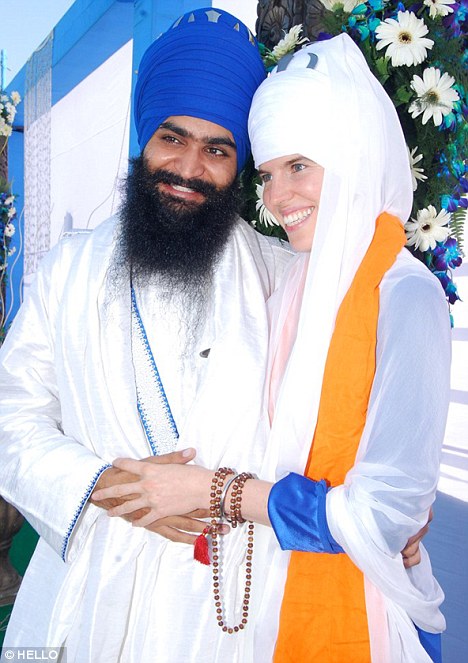 So it is my mother use to tell me. This particular marriage, however, seems to have been made at Darbar Sahib (as close to heaven, as I’ll ever get!). UK’s tabloid press has reported on the wedding of Harvinder Kaur Khalsa (formerly Alexandra Aitken, daughter of disgraced Torty politician Jonathon Aitken) and Inderjot Singh. The picture speaks a thousand words.
Just as interesting has been her interest in Sikhi. Below the fold, you’ll find some of her thoughts/observations about her transformation, well worth a read!
Frankly, if someone had told me ten years ago, when I was living the party girl lifestyle in London, that a decade later I’d be a teetotal vegan, I simply wouldn’t have believed them.
If they’d gone on to tell me that I’d also have converted to Sikhism, changed my name to Harvinder Kaur Khalsa and be married to an Indian warrior whom I fell in love with before we even exchanged a single word, I’d have laughed my head off.
After all, I was positively allergic to organised religion. It just seemed so grey to me. But then I don’t really think of Sikhism as a religion, more a path for anyone who is looking for something more spiritual.
While many have heard about SikhRI’s Sidak program, too few have enriched their lives through this unique opportunity to explore and engage with Sikhi. Make this the year you attend – head over to San Antonio from Jun 25 – Jul 9, 2011.
Here is a video promo from last year – mind the date change!. Below the fold, you’ll find some information on the curriculum.
Yes, I am going to indulge in imposing what I believe our priorities are onto those of you reading this. Our priorities should be where the ground touches our feet and not the vast mansions seating established masands who rake in millions and output redundant declarations commemorating our great history year in and year out.
I’ve seen it happen all across the world. I’ve seen individuals and organizations scrambling to raise moneys for the poor widows in Delhi who need justice and security. I then went on to see that those widows still anguished within a glimmer of hope. Exploited, used and molested by westerners, that glimmer of hope will soon fade. Those widows will die, their children already disenfranchised from Sikhi and thrown into the wallows misery, poverty and drug addiction are turning to Christian missionaries for support. All the while, our masands erect massive, superfluous houses to promote Sikhi and create focal points for Sikhs to congregate. Because, that is what should attract Sikhs: massive Gurdwaras and not the love of our Gurus or our need to lay our heads on their laps.
Watching protests erupt all over the Middle East and North Africa gave me hope; if these seemingly apathetic peoples can rise against heavily oppressive systems of governance then we, too, can rise against this unjust use of finances and take our community back and direct it toward a path of Sarbhat da Bhalla.
These are some of the Gurdwaras in question:

A report from the BBC:
http://www.bbc.co.uk/news/11818769
Guest blogged by Navdeep Singh Dhillon
My wife’s family is Hindu, with varying degrees of connections to the religion. Some of them have statues of deities like Krishna and Ganesh scattered throughout the house, others have entire rooms sectioned off for bhajans and pujas, and then there are those, who shall remain nameless, that go on random fasts they can’t explain. “It is a potato diet. I will eat potatoes today. Who else wants aloo parantha and aloo pakodas?” is the only explanation given during fasting for the nine days of Navratri. I still don’t get it. Nor do I get why some Sikhs don’t eat certain foods on Thursdays, or why Jains have such a problem with potatoes because living organisms might be killed, but have no qualms about dousing their bland food with ghee, or eating vast quantities of paneer.
Many of my wife’s family live in a concentrated area in Central Jersey a few minutes from each other. In the neighborhood, there is a Hindu temple, which they visited once, and never returned to. No, not because of politics, or religious differences. The reason: they didn’t like the food. It is a Gujarati Hindu Temple, and they are very Punjabi. So they go out of their way, driving through the most industrial and uninspiring landscape New Jersey has to offer, to eat Punjabi food at the Gurdwara.
The irony is not that they are Hindu and attending a Sikh Gurdwara when a Hindu temple is a few minutes away. Sikhism has, from its inception, been welcoming to all religions, and many of the verses in the Guru Granth Sahib were written by Muslims and Hindus. The four openings at the Harimandir Sahib invite people from all directions and walks of life. The irony is that through their food, which Gujaratis and Punjabis take very seriously, both communities have been the hardest hit by ailments like heart disease and diabetes, affectionately known as “sugar.”
My post is an expansion on Brooklynwala’s post “Working for Langar Justice,” which talks about making the move for our Langar Halls to go organic, a move I highly encourage.

On a recent visit to Amritsar, one of the topics of interest was the newly approved plan by Chief Minister Badal for the revamping of the entrance to the Darbar Sahib. The plan includes a “state-of-art” restructuring of the entrance plaza.
According to one article, the new entrance would address accessibility for pedestrians and eco sustainability. It was also noted in this article that a timeline for completion and budget for this project has not been planned.
While the Panjab government is clearly looking to increase their tourism value, it was made clear to me that many Panjabis are not huge supporters of a project that will change the existing architecture around the Darbar Sahib. There is a strong sentiment that religious buildings should be treated as such, rather than as tourist spots.
The Darbar Sahib complex does rely on funds to ensure sustainability but with plans to enhance the Darbar Sahib with tourism in mind, the Panjab government will be treading a fine line to make sure that the holiest of places for Sikhs does not become impacted by visitors. Nevertheless, the Darbar Sahib is not the first place to be affected by increased tourism. Other “wonders” around the world are also working to address how to balance the sustainability of history with the growing inquisition of visitors.
What do you think? Should the Darbar Sahib be redesigned with tourism in mind or should efforts be made to keep the area intact as an important religious place?
Book your flight, complete your registration, and plan on attending Sikholars 2011 now. This wonderful event will be held at CSU East Bay (Hayward, CA) from February 25-27, 2011. Having attended last year, I can say that this is one of the few forums in the community to engage in critical thought, intellectual stimulation, and meet other like-minded people in the community. The event is geared towards Sikhs, ages 25+.
In addition, this year there will be a number of evening dinners, mixers, and functions to allow young Sikhs to network and make important connections. I will definitely be in attendance and hope many of our TLH readers will be too. Visit the Sikholars website and REGISTER NOW as I have been told there is limited seating and they will fill up (especially by Canadians!).
Vancouver-based hip hop artist Saint Solider and singer Sukhraj recently released a moving single about farmer suicides in Punjab. I won’t editorialize, as the song (and video) speaks for itself. You can download the track on iTunes and by donation at bandcamp.
Since 9/11, Sikh advocates and community members have been proactive about providing training for law enforcement officers to educate them about our religion and articles of faith and to foster positive relations between local police and Sikhs. My feelings about the role of the police in our communities aside, the Village Voice is reporting that New York City cops have been doing some learning about the Muslim community lately. But not the kind of learning that SALDEF and other Sikh organizations have been facilitating across the country.
At a recent counter-terrorism training, NYPD officers were shown a full-length, Muslim-bashing film called The Third Jihad. According to the Village Voice, the film “is 72 minutes of gruesome footage of bombing carnage, frenzied crowds, burning American flags, flaming churches, and seething mullahs. All of this is sandwiched between a collection of somber talking heads informing us that, while we were sleeping, the international Islamist Jihad that wrought these horrors has set up shop here and is quietly going about its deadly business.”
During the film, the narrator says, “Americans are being told that most of the mainstream Muslim groups are moderate when in fact, if you look a little closer, you’ll see a very different reality. One of their primary tactics is deception.”
Guest blogged by Hunny Singh
Recently I went home to the East Coast and had som e inspirational time with my family. While snowy conditions prevailed outside, inside the house, a pizza soon to be shared joined a confused and yet open love for a dance. I had an interaction with my mother that got me wanting to share with y’all. Here’s the story…
As Ma Ji pokes her head out from behind the curtains, she pauses ever so slightly, and says:
“Remember the Guru with every passing day.”
She returns to being with the Sri Guru Granth Sahib, glasses on, focused gaze settling back in. Especially endearing to me are her engaged brows, lifted eyelashes, and soft thought.
In the dim light, I see the reflections of the Guru’s words bringing meaning upon her eyes.
Yup, I’ve seen that look before so many times.
She is in Baba Ji’s room.
I don’t remember when the Baba Ji’s* room became a part of our house and our lives, but I do remember it always being there. That’s the only name I have ever known for the room. I think this room is something that many Sikh folks share, in some way or form–a special intimate space.
Today marks the 82nd birthday of Reverend Dr. Martin Luther King, Jr. Most of us learn about Dr. King’s influential role in the Black Civil Rights Movement in the United States, and have heard his “I have a dream” speech. But less do we hear about his opposition to the Vietnam War and his revolutionary calls for an end to U.S. militarism, calling his government “the greatest purveyor of violence in the world today.” As a man who was deeply driven by spiritual motives who used religious institutions to organize millions, Dr. King is a constant inspiration to me, and I hope to other Sikhs.
Check out the below video to hear his powerful and righteous “Beyond Vietnam” speech from April 4, 1967, exactly one year before he was murdered.
I am convinced that if we are to get on the right side of the world revolution, we as a nation must undergo a radical revolution of values. We must rapidly begin…the shift from a thing-oriented society to a person-oriented society. When machines and computers, profit motives and property rights, are considered more important than people, the giant triplets of racism, extreme materialism, and militarism are incapable of being conquered.