
Co-blogged by Sundari and Camille.
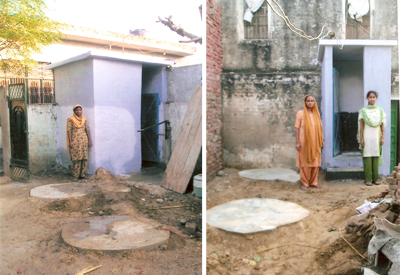 While many LangarHall moments are spent bringing awareness to adverse issues impacting our community, we believe it is equally important to highlight solutions to these problems. There are several people and organizations who are working to improve the social development and health of communities around the world. One example of a simple yet life changing initiative is a toilet. Yes, toilets. A facility taken for granted by many and something that over 2 million people around the world are in need of. The Punjab Lioness Toilet Foundation was created to provide awareness of communities in need of basic toilet and sanitation facilities,
As a family initiative the Punjab Lioness Toilet Foundation wants to empower people to take action in providing basic toilet needs to less fortunate families in Punjab, India. The foundation was started in the memory of our late mother Pritam Kaur Bahia who passed away on November 18th, 2004. She was known as the “Sherni” a.k.a. Lioness. [link]
Founded by Mandip Kaur Sandher, one of the goals of the organization is to break the “toilet taboo,” which comes from people’s lack of comfort speaking about a subject which they consider dirty. This stigma is impacting global health and as a result, basic sanitation needs for hundreds and thousands of people around the world.
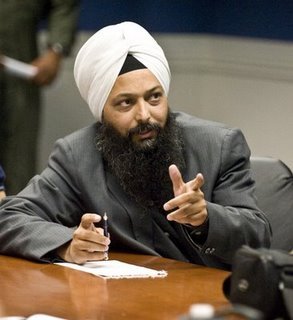 In a previous blog, I wrote about Jarnail Singh Journalist – Sikh Folk Hero. I also mentioned about his action as an act of rebellion that needs the support and institutions to become a revolution. In this post, he, himself, needs support.
Unfortunately this week, as he flung his shoe demanding justice, he, himself, was victimized as he was terminated from the Hindi news daily Dainak Jagran, after more than a decade of service.
“As a journalist, I regret what I have done. It was not proper for a journalist to act in that manner. I was emotionally overtaken and exasperated, just like so many Sikhs are,” he said today.
“But I thought the chapter was closed because of the way the home minister had reacted and had accepted that not enough people (who were behind the killing of Sikhs in 1984) had been punished,” Jarnail said.
“Now I feel that I am being victimised, punished for raising my voice against the injustice of 1984 and the CBI’s and the government’s unwillingness to prosecute those who were responsible for it”, Jarnail said. He said he was even more resolute now.[link]
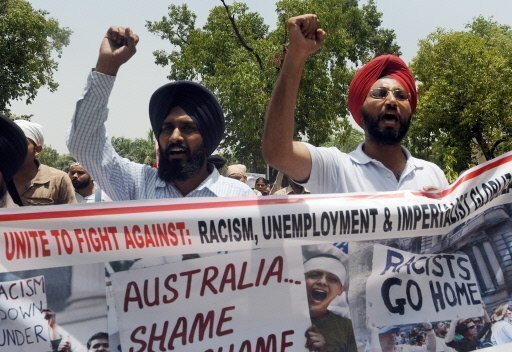 A Sikh exchange student from Punjab became the 20th victim, this year, of a hate crime in Australia. His attackers attempted to rip off his turban and forcibly cut his hair. According to the AFP, this is the latest in a wave of attacks against desis in Australia.
These attacks have been the subject of public protest, both among university students in Australia, and among others in India. Australia has been under pressure to address these hate crimes, and has been deploying police while claiming that these attacks are uncommon. The sheer number, however, indicate a wider tension between victims of racial hatred and violence, and their attackers. The last attack on a desi student, for example, has left the victim comatose. While the Australian government denies that these are racist attacks, the particular nature of these incidents seem to contradict this position. Does this spate of violence, then, expose the seemier underbelly of Australian race relations?
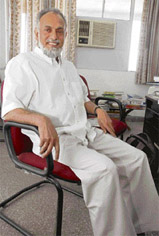 It is with saddness that we report on the passing of Ram Narayan Kumar, a human rights activist who actively and vocally worked on the dissapearances and killings in Punjab. He was 56 years old.
Kumar was a born human rights activist. He had engaged himself with human rights activism since 1975 when he was jailed for 19 months for protesting against the imposition of emergency. Though he belonged to Andhra Pradesh, his conscience dragged him to protest against the wide spread human rights violations in Punjab. There he co-founded Committee for Coordination on Disappearances in Punjab (CCDP) and co-authored a voluminous edition called ‘Reduced To Ashes’, a compilation of about 600 cases of human rights violations in the state. This report prompted the National Human Rights Commission to take cognizance of the large scale custodial disappearances and deaths in Punjab during that decade. [link]
In Terror in Punjab, Ram Narayan Kumar traces the roots of Sikh dissent in India that eventually culminated in the armed confrontation in 1984. Kumar also addresses the post-1984 period of Sikh militancy and the Indian state’s success in countering this militancy.
Kumar…documents and pays tribute to the Akali tradition of non-violence. He refers to the Akali Dal’s peaceful struggle for a Punjabi-speaking state, and makes an important point of historical value by highlighting that the Akali agitation of the 1980s for Punjab’s demands constituted “the largest non-violent movement in the sub-continent, including both the colonial and the independent periods, with over 150,000 volunteers courting arrest within a period of three years.” [link]
Ram Narayan Kumar worked extensively with several human rights organizations, including Ensaaf and his contributions to the field of human rights justice were invaluable. He played an important role in defending the rights of families who had been affected by the violence in Punjab. We will remember his work, his contributions and his value to the very important work being done for justice in Punjab.
“Barter” marriages are not uncommon. My grandfather’s generation did it in Punjab because it was wise to marry two sisters to two brothers; particularly, if the family was large or wealthy. My parents’ generation did it through the “middle-person” during family negotiations in an effort to bring more relatives abroad.
What is uncommon in our generation is that “bartering” is very upfront. It is included in matrimonial ads along with height, skin complexion, and age.
Raveena Aulakh reports for the Toronto Star that some families abroad are pressured and guilted by relatives in India to figure out a way to bring their children to Canada. Siblings in Canada are accused of not wanting their nieces and nephews to have a good life. The only resort left is to run a matrimonial ad requesting a “barter” for their children or nieces/nephews in prominent Punjabi newspapers.
Aulakh writes about Jaspal Singh, a cab driver in Vancouver, who was guilted into running such an ad by his brother in India.
Finally, Singh agreed to place an ad for his own 21-year-old son and 20-year-old daughter in hopes someone, somewhere would reciprocate with Canadian matches for his niece and nephew in India.
It is not only a long shot, it is also unethical, Singh admits. He says he has told his kids he will not force them to do something they are not ready for and that weddings would take place only after they have met their prospective partners and are ready.
He has paid for the ads to run for four weeks. If things do not fall into place by then, Singh says he has no intention of following up with more ads. “How long can you do it? I will not force them to get married for the sake of it.”
Singh knows it will put a strain on his relationship with his brother, and is already dreading that conversation.
We’ve all sat through it before…or…stood through it, that is.
As Anand Sahib ends, we stand for Ardaas and collectively reflect on the lives and accomplishments of the Gurus and the 18th century martyrs who gave their lives to preserve our Sikh way of life. Somewhere in between this reflection, and wishing for “Sarbat da Bhala“, we take a bizarre detour in to the “ins and outs” of our community.” Yes…I am referring to the lengthy list of births, birthdays, graduations, anniversaries and other milestones we find in the middle of our Ardaas.
I’m not sure when this practice started; where a member of the sangat would make an offering to the Gurdwara so an “Ardaas” can be done on their behalf. Birthdays are most common week to week, but I have heard more creative ones – celebrating a new job, new car, first mother’s day, wishing someone well on an upcoming exam, or safe travels for someone’s trip to India. Some even taken advantage of this process, by doing an “Ardaas” on behalf of their business week after week – essentially advertising their local store, while they have the entire community’s ear. I’ve raised this issue to the committee that perhaps there needs to be a better way to handle these “community announcements” rather than during Ardaas…I mean, seconds after we recount the martyrs who were cut limb by limb and scalped, we collectively thank Waheguru for Tinku’s new Benz? It just doesn’t seem right.
The Sikh Gurus never believed in the exclusivity of their teachings. The Gurus undertook travels to spread their message to peoples of different cultures in their own native languages. The Gurus did not believe in the ideas of any language being ‘sacred’ or ‘special’. [link]
I found the above quote to be quite interesting given a recent conversation I’d had with a close friend of mine. She felt that the Guru Granth Sahib was not accessible to most Sikhs and this inaccessibility was actually detrimental to those Sikhs who wanted to understand the teachings of the Gurus. She recently found herself, on several occasions, wanting to refer to the Guru Granth Sahib in order to obtain some enlightenment on things occurring in her life. There were several obstacles she felt that prevented her from doing so. First, she doesn’t read Gurmukhi (although she is learning) and second, having a sound understanding of Gurmukhi doesn’t necessarily translate to comprehension. While I agree that it is important for each of us to learn Gurmukhi, to help deepen our understanding of Gurbani, I wonder how many Sikhs of our generation are able to truly do so.
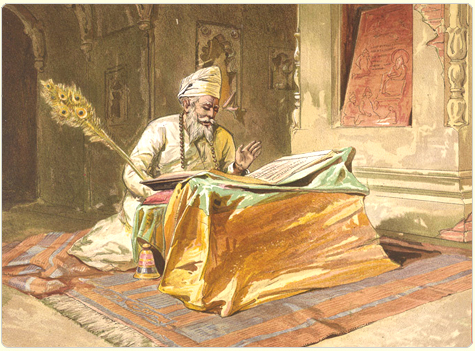 The Christian faith, for example, focuses heavily on bible study and encourages youth to participate in these groups at a young age. In our Gurdwaras, we place a large emphasis on learning Punjabi – an important element in having the tools to access our scriptures. However, we hardly pay any attention to teaching youth how to read and understand Gurbani. The Guru Granth Sahib is the only religious scripture in the world which contains ideas and thoughts of great saints from non-Sikh backgrounds. Without a doubt, it is unique in all sense of the word. If the Guru Granth Sahib is the most important source of wisdom for Sikhs – then why can’t the majority of Sikhs understand it?
Last week, I wrote a wrap-up about the 10th Annual Jakara Movement Conference. Sikh Knowledge, a previously featured artist, wrote his thoughts on his blog.
However, an especially important post was written by Pashaura Singh Dhillon. For those that are regular langa(r)-eaders, then you need no introduction. In a post during last year’s presidential election, I introduced a Fresno Punjabi landmark – one of our many great poets.
At last week’s Jakara Movement Conference, Pashaura Singh delivered a powerful poem at the farewell banquet. On his own blog, he introduces the piece, written with a contemporary problem using a traditional Mirza meter. I quote at length:
I was invited to share a poem I wrote at the closing banquet of Jakara Movement. Jakara began in 2000 with a mission to call the next generation of Sikhs from all places, backgrounds and points of view to reflect on their past and prepare for the future. In 2009, they came together as the next generation of Sikhs to continue the process of empowering, engaging , and educating the Sikh community.
Kanwar Anit Singh Saini (Sikh Knowledge) and Kanwar Singh (Humble the Poet), two Canadian rappers and participants of 2009’s Jakara said it best. “1984 is all around us. It is happening in Rwanda. It is happening in Palestine. We should try to find connections with people who are also victims because then the minority becomes the majority.”
But I was not there to repeat what had already been reported or was going to be reported on this subject. As a poet I wanted to invite them to a different plane, whereby they not only take the message of what happened to the Sikhs 25 years ago but also what is happening all around the world today and how it relates to us all. A big picture where these compounded atrocities and excesses not only of humans on humans that are happening everyday but also collectively of humans on this planet Earth, which threatens its very survival. The victim of human’s inhumanity the Earth pleads with the princess of the Skies whose domain the fugitive from Earth is now so impatient to intrude. Without further adieu, here is “Umber Di Shehzadi De Naa: To the Princess of the Skies”
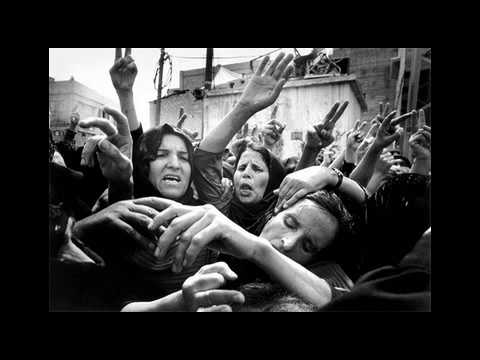
 Two articles over the weekend got me thinking. I’ll get to them soon enough. Be patient!
The issues aren’t new. I remember back to the late 1990s, when the community here in the Bay Area was moving to build the new San Jose Gurdwara. The Evergreen community protested and raised the typical objections – traffic, architecture that doesn’t ‘fit’ into the community, and sometimes the ‘undesirable neighbors’ argument.
Wherever Sikhs try to build something, these three arguments follow. The latest case…..Southall?
 International news outlets are a flutter with the latest: in the wake of an unseasonably hot, dry summer, the Bhakra Beas Management Board has decided to cut irrigation water to Punjab, Rajasthan, Haryana and Himachal Pradesh. The Punjab government has tried to alleviate the demand for water by curtailing its use of electricity, as well (many segments of the state run on hydroelectric power). Officials have a delayed monsoon has kept the reservoir behind the dam from being recharged. They insist the heat, and dryness, are unrelated to El Nino and a number of other weather-related phenomena.
But what if the impending drought and the water shortage are products of a more permanent weather shift? What if they are related to climate change?
As the economic down-turn leads to increased joblessness, many countries are paying immigrant workers to return to their home countries. Japan, Spain, and the Cezech Republic are paying immigrant workers to return home with the stipulation that they not migrate back to the aforementioned countries for an x-amount of years. Thus, freeing up jobs for citizens and creating a bandage solution to crime and homelessness-as if these issues are only an “immigrant problem”.
BBC’s “World Have Your Say” reported this week that Czech Republic is offering just under $1,000 per immigrant; the Spanish government has offered six months of unemployment benefits, around $18500; and Japan is offering $3,888 per Latino worker plus an additional $2,000 per dependent.
According to The Wall Street Journal, large numbers of immigrants are actually taking up the offers; however, some are choosing to bypass the pay-off. Many find that the money they borrowed to arrive in these countries far exceeds the amount being offered. It would be very difficult for them to return home and find jobs that would help them repay their loans-the very reason they immigrated abroad. Jobs at home don’t provide a reliable and sustainable source of income.
Ultimately, these “pay-offs” frame immigrants as the root cause of problems in foreign countries. Not only do immigrants take-away jobs from local citizens; in a declining economy their joblessness leads to crimes and homelessness. Once again, the scapegoat is immigrants. The Economist reports that paying off immigrants to return to their home countries is a temporary solution to deeper problems.
What do you think?
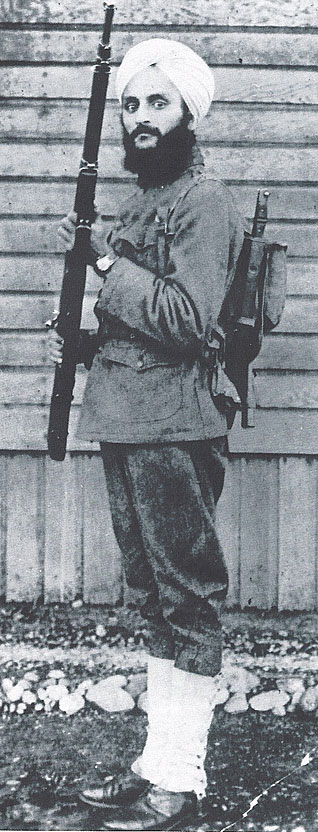 The Sikh Coalition recently announced that three Congressional representatives from New York and New Jersey wrote to Defense Secretary Robert Gates on behalf of their Sikh constituents regarding the Coalition’s “Right To Serve” campaign.
In their letters, Congresswoman Carolyn Maloney, Congressman Rodney Frelinghuysen and Congressman Joseph Crowley asked Secretary Gates to allow Sikh soldiers to serve with their articles of faith intact. The letters cited other Sikhs’ service in the US Armed Forces and in our allies’ militaries to support their argument that these men should be permitted to serve.
This an important milestone in what is likley to be a long and difficult process. In reference to this, I’d like to share a piece I wrote on sikhchic.com shortly before the launch of this campaign, titled – This We’ll Defend [The motto on the official seal of the United States Army. ]
Last fall, I went to an NFL game to watch my team face their arch rival on Sunday Night Football. As we were watching the pre-game warm-up, the gentleman next to me asked “So what do they think of football in your country?” I paused, and politely replied “Well, considering my country is America…we think pretty highly of it.” He attempted to re-phrase his question and after a few awkward exchanges, I yielded, and answered “Oh…you mean my ancestors, they are from Punjab…I’m not sure what Punjabis think of football.” We changed the topic to the upcoming game and ended our conversation.
I run in to these dialogues a lot. As I’ve gotten older, the occasional taunts and racial slurs I receive due to my articles of faith no longer faze me. I can always blame that on ignorance and lack of education. But the exchange like the one at the football game unsettles me. They are typically with people who are both educated and polite, but it is their perception that is troublesome…their presumption, that because of the way I look…I am not an American.
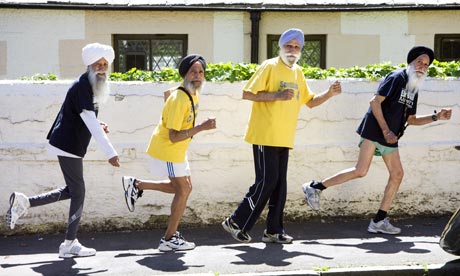
I am inspired. With the growing prevalence of cardiovascular disease, obesity and diabetes in our community – it is important to be inspired. Fauja Singh, Amrik Singh, Ajit Singh and Karnail Singh (with a combined age of 336) recently took part in the Edinburgh Marathon as part of the relay Sikhs in the City team. How have they stayed so healthy? The quartet agrees that a combination of a positive frame of mind, keeping the company of people who are forward looking, not indulging in any excesses, appreciating what God has provided them with and keeping active is the key to being healthy.
All four members of Sikhs in the City share an infectiously positive outlook and lust for life that is key to their ongoing success. Ajit Singh, 79, for instance, has just learned to ride a bicycle, so one of his goals now is to complete a triathlon. He and his lifelong friend Amrik Singh, also 79, have completed more than 1,000 races between them and acted as mentors to Fauja. Karnail Singh, 80, is the newest member of the team and the least experienced runner. His “experimentation” with course routes means that his teammates have to keep an eye on him, but what he lacks in kilometres he more than makes up for in providing the focus for a little gentle mickey-taking. [link]
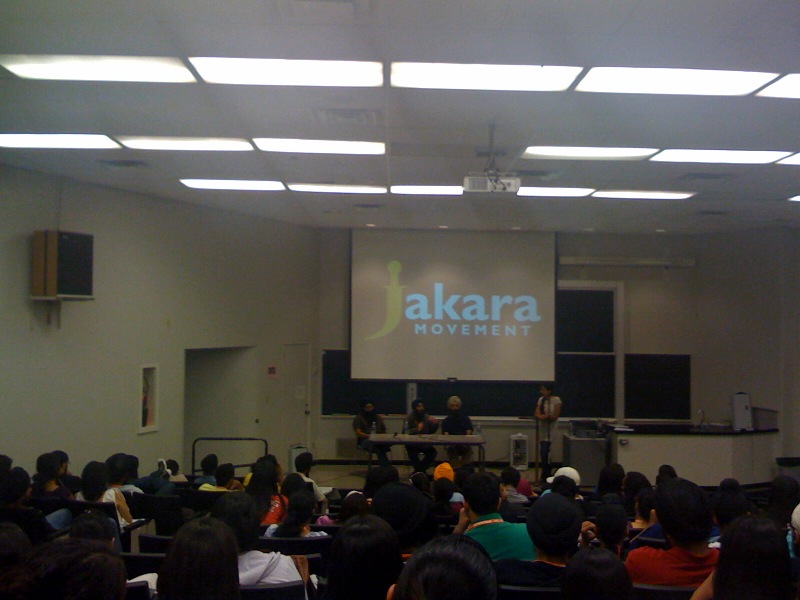 10 years ago the Jakara conference was born;
5 years ago the Jakara Movement was born.
This year was the 10th annual Jakara Movement conference. This year we Remember 1984.
From remembering the past, reflecting on Gurbani, reconnecting with the voices of the people, rethinking the role of the media, and revering our heroes and sheroes – it was an eventful Friday! Saturday included recognizing the lessons of 1984, reaffirming our commitment to the Sarbat Khalsa and Gurmata tradition of consensus building, recollecting with our brothers and sisters, reacting to their personal histories, responding to the past, and finally realizing a new reality is possible.
From evenings of recreation to days of reflection, the Jakara Movement Conference 2009 aimed to be inspirational, not only for those participating, but for the greater Sikh Qaum as well.
However, merely increasing one’s knowledge about 1984 is not enough. The Jakara Movement is providing avenues to respond and to engage with your community.
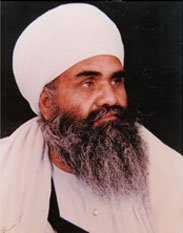 Earlier this week in B.C., hundreds of Sikhs protested the arrival of Mann Singh Pehowa, a granthi accused of rape, misconduct, and blasphemy.
There is, of course, an underlying issue here regarding whether or not Pehowa supports his own dera, has encouraged blasphemy, etc. There is pretty widespread criticism of him, as an individual, as well as of his behavior. I do not want to use this opportunity to get into the nitty gritty of deras and blasphemy, but rather, to focus on the issue of religion and exploitation.
Earlier in the year, Sundari discussed sexual assault in the context of a larger community-level failure to ensure gender equity. Sexual abuse is not new to faith communities, but it evokes jarring feelings of betrayal, condemnation, and deep psychological trauma, both among those who are abused and among their loved ones.
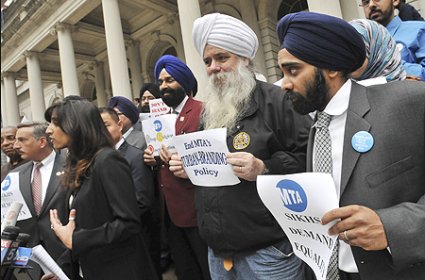 Things are heating up as Sikh transit workers organize against the MTA’s requirement that Sikh workers wear an MTA logo on their turbans. The rationale? The MTA’s position is that this policy is necessary for customers to identify their employees. However, neither the NY City Council, nor the U.S. Department of Justice, is buying this baloney. The 27 of the City Council’s 51 members recently voted to sign onto a letter to the MTA President, opposing the policy, and the Department of Justice has revived an employment discrimination case against the MTA.
There are, of course, many ways that customers can identify MTA workers, from the badges they may wear, to a uniform vest, to a standard outfit. So why attempt to brand the turban, specifically? This policy shift, along with previous failed attempts, is indicative of the MTA’s general hostility to religious inclusion and work staff diversity.
Oh India. You can’t hide the skeletons in your closet forever.
It appears that the US Commission on International Religious Freedom was on its way to India this week. (The USCIRF is a federal group that works to promote freedom of thought, conscience and religion; protect people from abuses like detention, killing and torture; and challenge religious intolerance and repression throughout the world.) Well, they were scheduled to go, had their tickets ready and their bags packed. But India’s administration decided that they weren’t welcome in India.
It’s really quite ironic. The Congress party’s recent Parliamentary win over the BJP has been seen as an explicit rejection of the religious intolerance that the BJP represents (though it may have had more to do with support for Congress’ economic policies). Yet it is the Congress party administration that has refused USCIRF entry. Maybe the Congress party’s sound defeat of the BJP has swelled the Congress Party’s confidence a little too much.
New Delhi knew that the USCIRF team was scheduled to leave on June 12, but the visas just didn’t get stamped in time. Was it just a rare and regrettable oversight? [After all, with so many tourists flooding the country, a few visas could fall through the cracks right? (HA!)]
 Play along with me here…imagine this Sunday you walk in to your local Gurdwara – remove your shoes, wash your hands, and as you make your way to the main darbar hall, you read the notices on the wall – “Education Committee holding Kirtan Classes Wednesday Night @ 6pm.” Next to that, another sign “Cultural Committee hosts Punjabi night next Saturday!” Further along, you see “Public Affairs Committee presents Interfaith Meeting on Friday.” Then right before you enter the darbar hall, you see…
Human Rights Committee holding urgent action letter-writing workshop for two Indonesian prisoners of conscience, Sunday after Langar – and don’t forget the “Justice for Darfur” rally this Saturday morning, bus leaves at 8am Sharp!
Whoa! What kind of radical Gurdwara is this? What are the youth up to now? Is this one of those extremist Gurdwaras?
Or…is it the kind of Gurdwara Guru Sahib had intended?
Guru Nanak’s mission was based on the fundamental principle of human rights. We see this not only through his Baani, but throughout significant historical events – whether it was speaking out against the caste system and refusing to the wear the janeoo or his challenge of the tyrannical ruler Babar. Even in his ninth form, Guru Tegh Bahadur gave his life speaking out for a people whose practices he disagreed with, but supported their right to practice religion freely. He gave his life for the freedom of choice and the freedom of religion. There are several amazing stories of the Guru’s activism in the area of human rights and social justice…but strangely, this subject in the context of current events has now become taboo.
Continue Reading »
A recent article out of Surrey, Canada discusses an education and prevention video targeted at alcohol abuse in the Punjabi community. The video, titled Kharaab Daru-Bad Medicine, was created by Peace Arch Community Services – a social service agency based in British Columbia, Canada.
Kharaab Daru-Bad Medicine, which premiers this week in Delta, is hoped to become a resource in the prevention and reduction of alcohol misuse and abuse within the Punjabi community, said director Kevin Letourneau, PACS’ manager of addiction services.
The video is in Punjabi with English subtitles and aims to address the prevalence of alcohol abuse in our community.
In Bad Medicine well known Punjabi speaking professionals along with individuals impacted by alcohol, share their knowledge with respect to the harms and risks associated with problem drinking, mistaking alcohol as medicine, how alcohol impairs mental and physical functioning, drinking and driving, addiction and family violence, and the benefits of recovery.
The Director of Peace Arch Community Services (PACS) rightfully notes that alcohol abuse is one of those “closet things” in the Punjabi community and is often used as a way to cope with various societal pressures. The need for the video came about after group counseling at PACS which involved Punjabi men who were court-ordered to get help after committing crimes while under the influence. A similar video was launched by Drug and Alcohol Action Programme (an organization addressing these issues for our community in the UK) last year and addresses the issue of both alcohol and drug use. The video, which I have included after the jump, was also presented in Punjabi with English subtitles. I think it’s vital that this education continues to be provided using Punjabi to provide greater awareness and accessibility to the community. We need to wake up and start facing our problems and we need to start holding our community accountable.
I wanted to take the time to highlight two issues (Part 2 to be posted soon) which have plagued the Punjabi Sikh community for many, many years. I know that discussing these issues over and over again is overwhelmingly tedious for the majority of people. Quite frankly, I agree. However, if I didn’t believe that having these important discussions and bringing awareness to these issues over (and over, and over) again added some value to potential solutions – then I wouldn’t waste the space. Needless to say, these issues don’t seem to be going away which means these conversations are that much more important to have.
A recent article in the NYTimes expresses surprise at the fact that female feticide is occurring within immigrant communities residing in the United States. The thought seems to be that preference of male children should ideally disappear with assimilation into western societies. (For those of us hanging out in The Langar Hall, we know this isn’t always the case in the Punjabi community). The article uses US Census Data to provide quantitative evidence that there exists a bias for male children in certain Asian American communities.
Demographers say the statistical deviation among Asian-American families is significant, and they believe it reflects not only a preference for male children, but a growing tendency for these families to embrace sex-selection techniques, like in vitro fertilization and sperm sorting, or abortion.
New immigrants typically transplant some of their customs and culture to the United States – from tastes in food and child-rearing practices to their emphasis on education and the elevated social and economic status of males. [emphasis added]
This latter point is especially significant. Is the problem of sex-selective abortions purely cultural and is that why it continues to be an “acceptable” problem?

