
 The issue of the loss of Sikh heritage sites and documents has long been lamented by many Sikhs. In fact, one of my fellow langa(w)riters blogged about the need to ‘preserve what history we have left.’ One group has been silently seeking to remedy this problem – the Nanakshahi Trust.
Quietly working on a massive project for over the past 6 years, the Nanakshahi Trust, along with the Sikh Research Institute, have inaugurated the Panjabi Digital Library:
For the first time ever a searchable collection of millions of rare pages on the Sikhs and the region of Panjab has been made available. Panjab Digital Library (PDL) will include texts of manuscripts, books, magazines, newspapers and photographs and will be available to anyone with Internet access at www.PanjabDigiLib.org. This launch was made possible in part by The Nanakshahi Trust and the Sikh Research Institute (SikhRI).
In today’s society, digitization is the key to immortality. While Sikhs have to be equally wary of those that claim Sikhs have no history as well as those that come up with their own ludicrous interpretations, a project such as the Panjab Digital Library allows Sikhs to access their own primary and secondary sources. Nanakshahi Trust has done a tremendous boon to Sikhs, researchers, and all that are interested in the preservation of history and man (and woman’s) historical past.
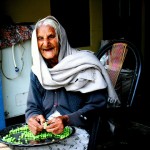 Often times the elderly are considered “high-cost” because they take money out of American system. They are seen as a “liability” because they withdraw medicare and social security benefits. Foriegn elders are similarly viewed as a group that “takes” through government benefits, but is not expected to serve the American system for very long.
However, in a recent study at the Center for Intergenerational Learning at Temple University, scholars found that “older immigrants are not inert drains in the U.S. system but an invisible force of community contributors in the United States”.
The study found that immigrant elders contribute to community cohesion by playing leadership roles in families. Also, their sense of interconnectness, rooted in religious and cultural values, forces them to look out for the collective good. They are also a good source for motivating the younger generation to support community members.
It used to be the case that women who came to the US as dependents on their husbands’ immigration status were 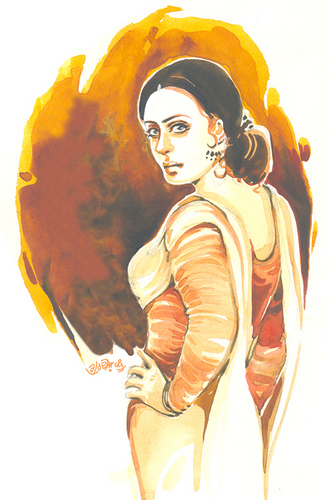 sometimes caught between a rock and a hard place. In cases where one spouse was abusive, the other spouse wouldn’t leave the relationship for fear of losing their immigration status and being sent back to their original country. If they returned to their original country empty handed and without their spouses, they would be perceived as failures. And so, many women have just endured extremely abusive relationships.
One option that has been available if the abuser is a permanent resident or a US citizen is a self-petition under the Violence Against Women Act. But this wasn’t available if the abuser was in the US on a temporary visa, as many immigrants initially are, or to women outside the US.
Thus, a recent development in asylum law has the potential to open a door to safety for at least some women who are most seriously abused in domestic violence. To qualify for asylum (or refugee status), one must have been a victim of persecution, or have a well founded fear of persecution based on their race, nationality, religion, political opinion, or “membership in a particular social group.” Before this summer, women who were victims of horrendous domestic violence were not recognized as a particular social group, though the issue has been argued for 14 years in a battle to allow battered women to seek asylum in the US. [link]
The government’s prior position under the Bush administration was illustrated in the case of R-A-, a woman who suffered horrific violence at the hands of her husband, a former soldier of the Guatemalan army. She was kicked, whipped, and beaten unconscious, nearly had an eye pushed out, was repeatedly raped, sodomized, threatened with machetes and guns, dragged by her hair, and had windows and mirrors broken on her head. [source 1, 2]. The Guatemalan police refused to help each time she went to them, deciding that hers was a domestic matter. RA fled Guatemala and her husband, seeking asylum in the US.
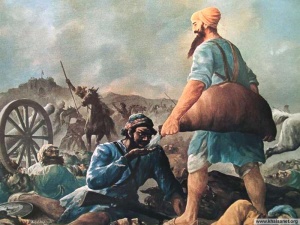 I’ve always enjoyed a good story…and amongst all the depressing news lately of our declining economy, raucous town hall meetings, and corrupt politicians…I often turn to StoryCorp’s podcasts for a quick “pick-me-up”. A few months back, I came across a beautiful piece titled “Finding El Dorado.” It’s the story of Gus Hernandez and the unique friendship he developed with Siddiqi Hansoti as a result of the current economic crisis. I was moved by this simple story of compassion and the power of the human spirit. Take a listen…it’s only 3 minutes [link].
This story got me thinking about compassion and what it means to a Sikh. After some brief research, I found dozens of references to Daya (and its variations – Dayal, Dayala etc.) in the Sri Guru Granth Sahib Ji. Depending on the context, it is loosely translated as compassion, mercy or pity. Several times it is used as an attribute of Waheguru:
miharavaan kirapaal dhaeiaalaa sagalae thripath aghaaeae jeeo |3|
He is Merciful, Kind and Compassionate. All are satisfied and fulfilled through Him. ||3||
Other times it is used in the context of an Ardaas:
jath sath chaaval dhaeiaa kanak kar praapath paathee dhaan |
Please bless me with the rice of truth and self-restraint, the wheat of compassion, and the leaf of meditation.
But what I connected with the most was how compassion was described as a necessary attribute of the GurSikh:
dhaeiaa kapaah santhokh sooth jath gantee sath vatt |
Make compassion the cotton, contentment the thread, modesty the knot and truth the twist.
eaehu janaeoo jeea kaa hee th paaddae ghath |
This is the sacred thread of the soul; if you have it, then go ahead and put it on me.
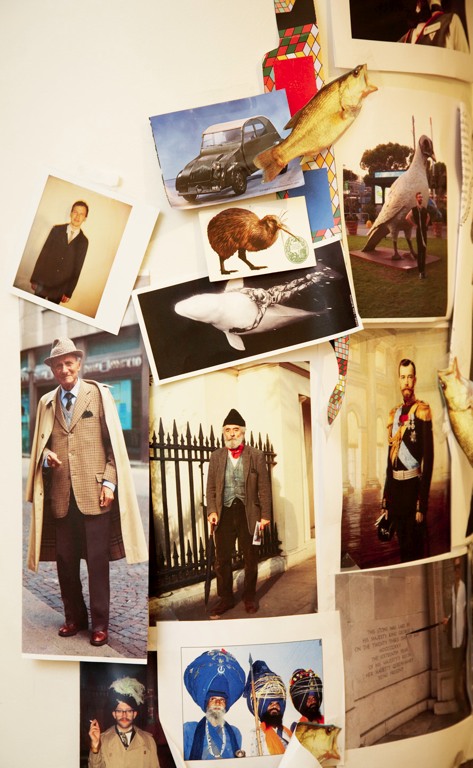 We live in a global world and there are images around us that constantly stimulate us. Once in a while we’ll see images that also inspire us – whether it be musically or artistically. For Lucas Ossendrijver, Dutch-borh Lanvin’s men’s wear designer, a familiar image appears on his inspiration board. [See bottom of picture].
Nihangs have often been an inspiration for many photographers, and it’s clear why they are also an inspiration for designers. A recent article from Punjab Heritage News titled, “Mesmerised with the world of Nihangs” speaks to this,
Today, some people see Nihangs as a relic, but others recognise them as a colourful and important part of the Punjabi heritage. Gurbir Singh Brar, a photo artist also feels that there is no colourful subject as compared to Nihangs.
Nick Fleming, a UK-based photographer also spent time with Nihangs and has a photo exhibit titled, “Nihang Singhs of Punjab.” I have included a few of his stricking images after the jump.
While there is much to worry about in the world (and plenty of blog space devoted to that), from time to time it’s valuable to enjoy those things that inspire us and of course, it’s always important to appreciate art!
Blogged by: sikhpulse
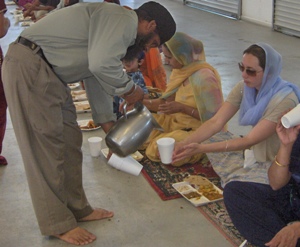 The Christian community is confronting the development of the “Sixth American:” those individuals who do not exist in or identify with any particular space and ultimately congregate together. These integrated congregations are hopeful signs that the elements of discrimination and racism which infiltrated most churches over the last two centuries are slowly being eradicated.
Strangely enough, Sikh-Americans aren’t evolving in the same direction. In less than fifty years, Sikh-Americans have (get this) provided an anti-model for our adopted culture by dividing into self-identifying congregations, sects and denominations!
This may in part be explained by our natural connection to our social networks. Like members of other faiths, we choose to go to a place of worship that is attended by our families. We go where our friends attend. We go where our language is spoken. We are segregated by whether we are brand-spankin-new-citizens or third-generation Sikh Americans. We are separated by our interests and our jobs.
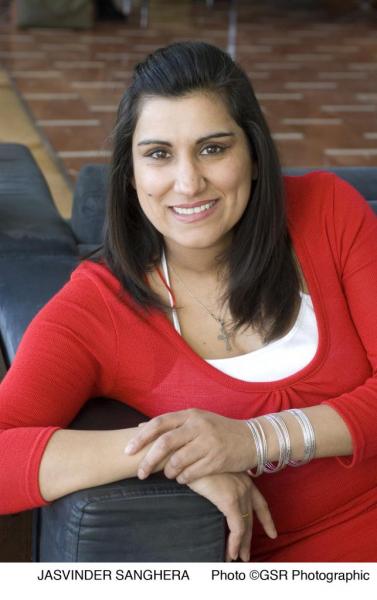 The issue of marriage is complex and has as many circumstances as there are combinations of people in the world. Recently, a langa(r)eader wrote:
Hi I as just wonderingif you are familiar at all with a sikh girl marrying a non sikh guy who is caucasian. Her parents banished her forever about 7 years ago and then finally contacted about 2 years ago but are still hung up on the fact. Just wondering what we can do to help them get over this faster. [received email]
Well I can’t make the parents ‘get over this faster’, but I can raise some observations and thoughts on marriage.
Blogged by: Amol Singh
A new generation of Sikh youth is coming up to age in a diaspora still unable to decently reflect or respond to the tragedies that have befallen the Panth. Although, cognizant of the injustices done to Sikhs, we have categorically failed at identifying a half-way legitimate vision for our institutions.The following is a humble attempt at one such institution, hinted at by an older post.
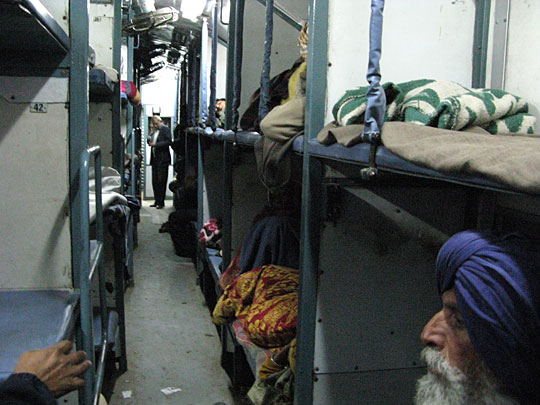
Much of Punjab’s money flow is due to remittances from family members scattered across the globe. However, remittances are easily subjected to ebb and flows in the world’s markets and these flows of money to Punjab can be easily disrupted by economic downturns. In addition, Punjab receives little attention from international development agencies. For instance, there are currently a total of two World Bank projects targeting the state. Unfortunately, Punjab is receiving more attention from MNC’s and the introduction of SEZ’s inside the state is unnerving to many who believe that they foreshadow an increase in neoliberal market practices favoring large corporations.
In my opinion, Punjab needs an insertion of human and financial capital that can ignite a grassroots based economic revival that quantifies development on the creation of ecologically friendly infrastructure. To being the process for these goals, I propose the creation of a development bank.
 Gatka is becoming popular amongst Sikhs and non-Sikhs in the West. Raveena writes that this resurgence in the Toronto area is primarily because of The Annual International Yudh Gatka Tournament that originated in Toronto in 2003. This year the tournament is being held in New Jersey. The Toronto leg of the tournament will on August 23rd the Rexdale Gurdwara Sahib. You can find out more information at Yudh.net.
Why is Gatka becoming so popular? Yudh.net writes that, “Not only does Gatka emphasize the physical training of martial arts, but it puts a special focus on ‘mental’ training which is needed to be successful in any sport”. Thus, this traditional Sikh martial arts from the early 17th century is a place to relieve stress, heighten awareness, but also learn sportsmanship and respect-for both people and weapons.
For those of you who attend the Tournament, please let us know how it goes.
On your next trip to India, how will you travel? Train, car, metro? How about in a solar-electric powered cycle rickshaw? Because now you can. 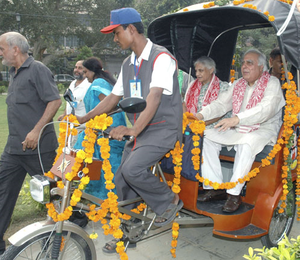
The Council of Scientific and Industrial Research, a government body, made a motor powered by a solar powered battery to decrease the effort required to pedal a cycle rickshaw. They call it a Solekshaw. It originally unveiled last year and has been testing in Delhi. [link] The Solekshaw can either be pedaled like a normal rickshaw or run on the solar powered battery for 30-42 miles before it needs to be recharged. Used batteries are recharged and replaced for a small fee at solar-powered stations. [Discovery]
Improvements on the original model are set to debut next year “with better aesthetics, ergonomics, speed and recumbent driving position.” [link]
The Solekshaw is made to carry 2 passengers (or 200 kg) and maxes out at 15 mph, which sounds normal for a cycle rickshaw (though I’m definitely not the best at gauging speed or weight). [link]
 Years ago, I watched this beautiful documentary called Amandla (Xhosa word for “power”)
It chronicles the struggle of the Black South Africans when the apartheid government came to power in 1948. It also covers the decades of increasing violence and repression, then finally “victory” in 1994 when Nelson Mandela became South Africa’s first democratically chosen president.
I’ve always been fascinated with the Black South African movement against apartheid and have read, listened, and watched much about it. What was so unique about this film was it focused on the music of the movement, and how the power of song was used to communicate, motivate, console, unite and, ultimately, beget change.
I really connected with this film as it made me think about Shabad Keertan and in particular – Vaars, and how it may have been used to motivate and inspire the Khalsa during battle. I would strongly recommend this documentary for a film discussion at any Gurmat camp or retreat. If anyone has seen it, I would love to hear your review!
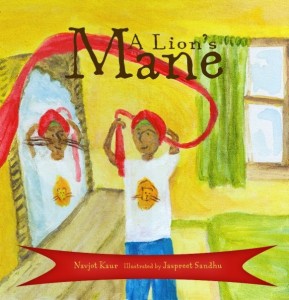 African American publishing houses were born out of a need – the need to fill a void in the industry. Bookshelves needed to share stories of their struggles and to give children a stake in their evolving identities. In turn, they gave rise to a new generation of diverse voices, with Asian-Pacific and Latino publishers following suit. They all have the same goal – to represent stories of their respective communities and give readers some authenticity and a sense of belonging. Now, consider this, how often did the covers of the books you read as a child have children who looked like you? Did these children’s books offer you a sense of belonging or importance? As our children enter into such a global community, it is clear that having access to authentic literature representing their heritage can only help ease the numerous challenges of peer pressure and to elevate self-esteem. Literature is perhaps the strongest avenue to enable us to realize our commonalities while teaching us about the idiosyncratic nature of one another.
This is why we are so excited to bring you news about a new children’s book that promises to be “a staple on the shelves of young visionaries.” A Lion’s Mane, being released this month, is written by Navjot Kaur and illustrated by Jaspreet Sandhu. The book is published by Saffron Press, an independent publisher, aiming to encourage children to deepen their understanding of positive self-identity.
In this beautifully illustrated story, young readers journey to cultures around the world to explore the meaning of the dastaar, or turban of the Sikhs. Allusive words placed within a vibrant red dastaar help promote our connections as global citizens and encourage dialogue around issues of identity and kinship. [link]
This book certainly moves beyond the traditional in several ways. A Lion’s Mane brings a global perspective to the often misidentified image of the Sikh turban. It is printed on 100% recycled paper as well as displaying an Eco-Libris badge – 625 trees were planted for the first edition! In addition, a portion of proceeds from the sale of each book will support Seva Canada’s work to restore sight and prevent blindness in children. By shopping at Saffron Press, you really will be contributing to a green and ethical experience! We spoke with the author, Navjot Kaur, about the book and the challenges she underwent to have this story published. After the jump is the book trailer and the author’s first interview. As you view the information, consider this – how important is diverse and multicultural literature on the shelves of every library and school? Did you or do your children have access to this type of literature?
 The US Congress is on their August recess and most have returned to their home constituencies. The atmosphere throughout the country is becoming increasingly polarized over the issue of healthcare. From Palin’s stupidity in labeling Obama’s plans “downright evil” (I almost don’t know what is worse – her attempt to ‘inflame’ sections of the public through such incendiary language or the fact that she is still unaware that there is NO “Obama plan” – Obama has left the process to the branch of the government that is suppose to make laws – the Congressional legislative branch) to Obama’s call for sanity and an end to “outlandish” claims against the process, the partisan hackery has already begun.
So now I open up a discussion here in The Langar Hall. What we are going to attempt to do is what, unfortunately, is not happening in the rest of the country – an honest discussion. Instead, we have had partisan hacks yelling “Socialism” and others yelling “Fascism” with divisions based on well-known party allegiances, rather than real interests. Will we be successful in The Langar Hall?
Healthcare has been discussed before, but as the topic is taking center stage in the United States, it is an opportunity to use our community capital. In the United States, Sikhs are far over-represented in health services. From doctors to nurses to physical therapists and everything else, we occupy a broad expanse of the health care sector. What are our opinions on health care? What are the opinions of our brothers and sisters from UK, Canada, India and other countries, which have very different systems?
We are seeing how political power is harnessed and used by the Sikh community as we engage in more civic engagement projects initiated by our own Sikh institutions. Civic engagement is not new to our community per se. The first Asian congressman was a Sikh-Dalip Singh Saund. As a child I remember local Sikh business leaders and professionals brought governmental representatives to our Gurudwaras to give speeches. These politicians were later recogonized with a saroopa and more opportunities to address their Sikh constituency at mela award ceremonies that seemed to last longer than the actual musical performances. Often these politicans were talking in English to a community that primarily understood Punjabi. It seemed more like an opportunity for the local Sikh leaders to secure their political connections for their own business interests than really an opportunity to hold politicians accountable to meeting their Sikh constituency’s needs. These political connections were often rooted in the capacity of the Sikh “leaders” to donate money than actually represent the needs of the Sikh community in a sustained way. I don’t want to paint this picture with too broad of a brush stroke because there are some Sikh business leaders, professionals, and activists who did build political power in our community to meet our needs; but they are definitely a minority. These Sikhs pushed along despite all the obstacles of being immigrants, They should serve as inspiration for the new generation of Sikh activists. This new generation needs to remember that we are not breaking as much untouched ground as we sometimes think we are doing. Our work should attempt to build off of those who came before us.
Coblogged by Camille and Reema
This week is Energy and Environment week. The environment has been front page news for a while now and one Sikh group is getting involved. 
Recently, SCORE launched a new initiative called EcoSikh, a project driven towards promoting environmentalism and environmental stewardship particularly in Punjab, but in the Sikh community at large. EcoSikh is the Sikh contribution to a larger project between the UNDP and the Alliance for Religions and Conservation (ARC, a UK-based NGO). UNDP and ARC are funding many religious communities to develop plans and ideas to integrate environmental consciousness into their members’ communities and personal behavior.
The program plans to work through 5 areas it has identified as: assets (using existing skills, time, resources for environmental projects), media/advocacy, eco-twinning (developing relationships of mutual benefit between various Sikh communities by sharing environmental ideas), celebration, and education. Each of the 5 program areas has been rooted in Sikh theology as a reminder of the historic import and connection with the environment in the Guru’s bani. A draft of the plan can be found here.
 I’ll admit…Bollywood movies were boycotted and banned in my household as far back as I can remember, so maybe these “religious sensitivity pre-screenings” are common…but the course of events surrounding this new movie is still quite strange…even for Bollywood’s standards.
Last week, a new movie titled “Love Aaj Kal” was released, with Saif Ali Khan playing a Sikh as the lead male role. However, shortly before the release, the Punjab Cultural and Heritage Board objected to his portrayal of a Sikh.
Explaining their stand, Charan Singh Sapra, President of Punjabi Cultural And Heritage Board informed a tabloid, “We are objecting on the grounds that Saif is shown with a very trim beard.”
Long story short, after Khan’s formal apology and a paparazzi-filled press conference at Guru Singh Sabha Gurdwara, Dadar – 15 seconds of a questionable scene was cut from the movie and Khan declared he would not portray a Sikh “incorrectly” again in future roles. All smiles, the Punjabi Cultural And Heritage Board gave the movie “two thumbs up” and the green light to proceed.
I guess I should be happy that an organization is concerned enough about the image of Sikhs to raise such a fuss…except for the fact that we’re talking about fantasy-land. My question is…where is the organization that cares about the Sikh image in real life?
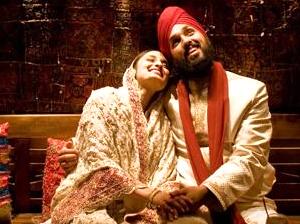 Since I exist in the age bracket where many of my friends are married or getting married, I am aptly aware of the concerns couples have about adjusting to one another after marriage. For example, how will living habits change? How will your husband/wife fit into your family? It’s a pretty daunting concept – especially for individuals who wait to get married later on in life, after years of education and commitment to careers, and along with this, years of being single. I’ve known many couples over the years who have had a difficult time adjusting to being part of a union. How can we blame them? Our community offers very little as far as pre-marital counseling for Sikh couples. In fact, a quick google search for “Sikh Marriage Counseling” doesn’t bring up anything pertinent.
For many, it is also very important to know that your partner is on a similar spiritual path. This may be one of the most important elements to think about prior to marriage – as it impacts your day to day living and the way you may raise your children in the future. Some religions actually require couples to go through marriage counseling prior to marriage. We don’t seem to have this in our community but it’s not a bad idea. How many couples do you know who have gone to the Giani at their local gurdwara to elicit marriage advice? If any, i’m sure the number is small. Nevertheless, i feel this is integral to the success of marriage as there are certain questions which should be discussed before marriage.
What I did come across, however, are the following two tools. First, the Sikh Research Institute organizes the Grihast Retreat which,
is a 2-day event for young couples to strengthen marriage and family relationships by offering deeper communication between wife and husband. Grihast incorporates diverse themes that are at the foundation of a married life. New perspectives provide insights on building meaningful relationships while workshops and discussions offer a glimpse of the Gur?’s vision and ideals on marriage.
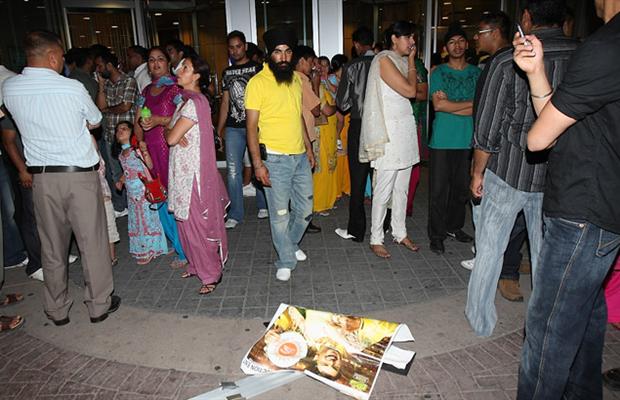 For diasporic Sikhs, it seems routine and almost expected to wake up to news about an incident where a Sikh was banned access to an event because of his or her kirpan. Many times, we blame this on the ignorance of law enforcement, who often have never heard of a kirpan. We tell ourselves, “Don’t worry, we just have to teach them and they’ll understand.” However, when Kirpan wearing patrons at a Gurdas Mann concert are barred entry, then we must stop for pause.
When a kirpan wearing citizen is blocked access from exercising their civil liberties, we as a community go into uproar mode. We file lawsuits, organize protests, and launch mass public marketing campaigns in order to exercise what we believe to an unalienable right and an articulation of our personal sovereignty. When a Bollywood movie comes out with a Sikh hero sans beard, our institutional bodies outrun and out-leap each other to be the first to cry foul. When a Baba in a Dera dresses up as Guru Gobind Singh Ji, we bring the state of Punjab to a halt.
However, at the point where cultural icon and repository Gurdas Mann, goes so far as to write “No Kirpans or Sharp Objects Allowed” on tickets being sold at a VAISAKHI show in England, then what do we do? We let him carry forward and WE outrun and out-leap each other so we can be first in line at his next concert.
Now when his concert bans an entity which is legally allowed in the public spaces of Canada, then what do we do? Do we ignore and slowly sweep this incident under the rug, like so many of our cultural problems? Or, do we stop and say, Hey, standing next to K.P.S Gill and lambasting “Sikh terrorism” is not ok; banning kirpans in UK is not appreciated; and throwing out concertgoers in Alberta, is simply no longer going to work.
One of the three Khalsa schools in Vancouver burnt to the ground yesterday. Arson is suspected. The fire started in 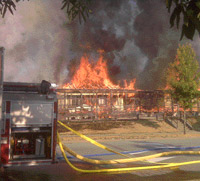 the main building and two portable classroom buildings simultaneously, and spread rapidly. The Elementary School had been broken into as well. When the school secretary called 911 to report the break-in, she saw smoke coming from one of the schools. The 911 operator told her to get out of the building and that firetrucks were on their way. [Globe and Mail]
Firefighters brought the fire under control in 90 minutes, but of the 9 buildings that made up the Khalsa school, only one remains. They were able to save the Guru Granth Sahib Ji from the fire, making a touching scene when they carried it out to the sangat.
With so few details, it may be premature to begin writing some thoughts, but that hasn’t really stopped me before.
Although each incident has its own genesis, with the recent spate of shootings this week, a discussion forum is needed. First I begin with an analysis of various Indian media coverage and then shift to a broader discussion then just the two events.

