
 It seems to be the talk of the community. Two Sikh men are claimed to have been beheaded by the “Taliban”. I do not have any independent details, but do believe we should make sure we understand all the information.
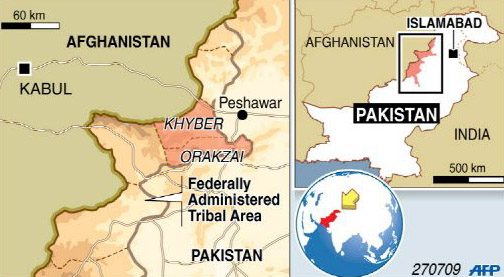
The BBC has reported the beheadings of Jaspal Singh and Mastan Singh in the Khyber and Orakzai areas. The two men had been abducted and extortion money was demanded to the family. The BBC has made no mention of the Taliban, although this is widely being reported by the Indian media.
With the breakdown of law and order following the 2001 invasion into Afghanistan, we have seen a complete deterioration of law and order. Many seem to be claiming that the Taliban caused this, but in a situation without security, it will be difficult to find out who are the real culprits. The area is infested with criminals.
The Taliban is hardly a united grouping. Scholar, Juan Cole, states that there are at least 4 different groups. Further confusing the situation, it must be remembered by the Sikhs that the “Taliban” in the same region rescued Sikhs before.
With this in mind, I am eager to hear thoughts.
A while back I remember someone posing the question, “Can you be a good person without being part of a religion?” What an excellent question! While recently talking to a government official about allowing Sikhs to work in his agency with our Sikh articles of faith, he told me that he always felt judged by people of faith for not self-indentifying with a religion. What an interesting situation!
Now, I am neither a theological expert nor a saint-I would identify as a Sikh who is a “work in-progress with many moments of procrastination”. However, in both situations, the bottom-line for me is the power of Waheguru. Of course, a person can be “good” without being part of a religion. However, in my opinion, the difference between being an atheist and a good person vs. aspiring to be a good person and being a Sikh is that as Sikhs, we should attribute our goodness to something higher and more powerful than us-Waheguru. An atheist can attribute his/her goodness to himself/herself, which from my perspective can become a very selfish act that feeds ego.
My response to the government official was that the aim of a Sikh is not to judge the level of “goodness” in any person, but to focus on identifying his/her good characteristics. For Sikhs, those good characteristics are the sources of Waheguru’s existence in each person. However, our existence in this world often feeds our ego, lust, greed, attachment, and anger which prevents us from seeing the good in others. Thus, the goal of Sikhs is not to judge someone else, but to be in control of these five vices so we can see the “good” in others and identify with Waheguru. And, taan-tah-dah, he should allow Sikhs to work in his agency with our articles of faith because we would not judge him. 🙂 (Of course, I did not say that to him.)
While thinking about these experiences, I started to realize how as Sikhs we have become very judgmental and selfish. Is it because we are more likely to have a stronger political and cultural affiliation with Sikhi than a spiritual one? Then how can we identify as Sikhs when the fundamental premise of Sikhi is how we relate with each other?
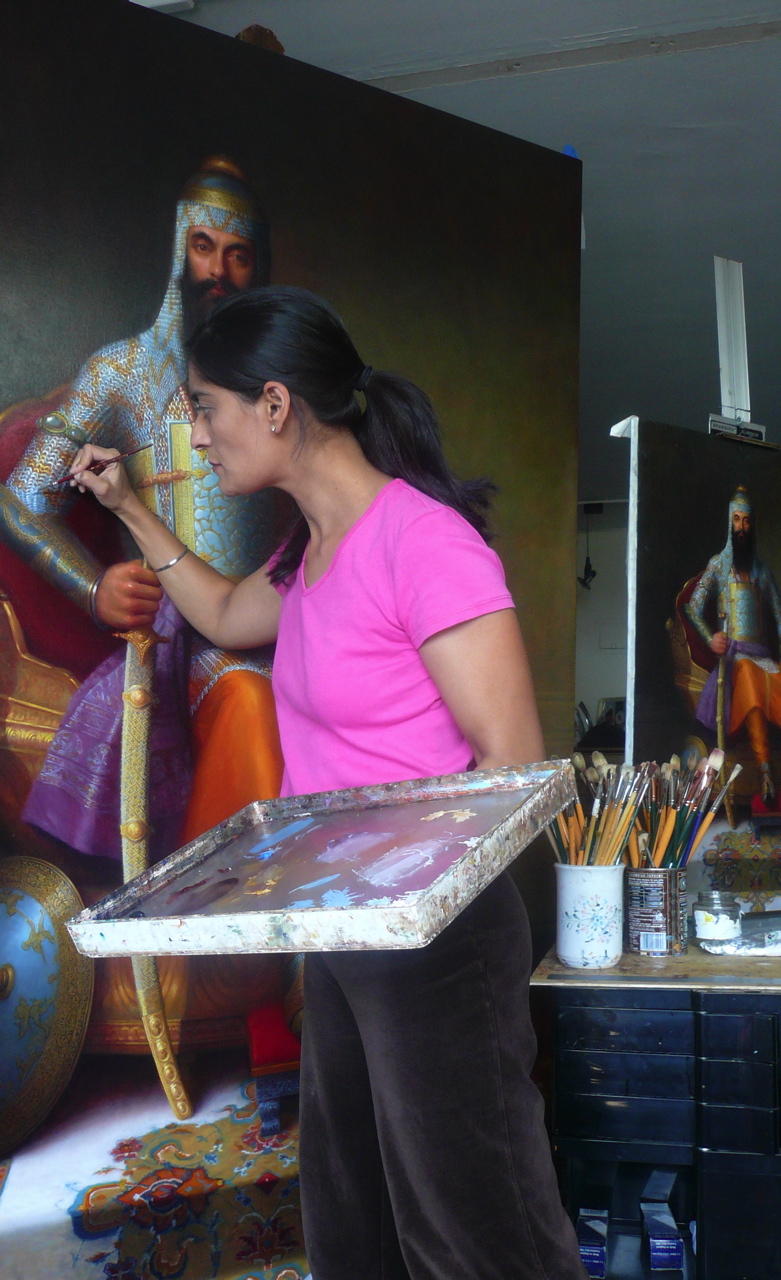 If you’re in the Toronto area this weekend, a wonderful event awaits you! The Royal Ontario Museum will be celebrating South Asian Heritage Day which will bring together artists, authors, performers and filmmakers to showcase South Asian culture. The event will showcase Manu Kaur Saluja’s Kings of the Punjab portraits at the Sir Christopher Ondaatje South Asian Gallery. Children will have the opportunity to enjoy a special reading by author Navjot Kaur of her children’s book “A Lion’s Mane” which explores Sikh identity and the many connections we share as global citizens. Event details can be found here.
South Asian Heritage Day 2010
Royal Ontario Museum
Sunday, February 21, 2010
11am – 4pm
We’ve occasionally touched upon the choice that today’s youth make in choosing a career or path. Enough of our peers are already in, or heading towards medicine, and no encouragement is needed in that direction. But good news- now you pre- med students have more options in the U.S.!
There has long been an imbalance in the demand for seats in medical schools, and the supply of seats available. Bright students have had to travel internationally to study, sometimes learning to study without reliable electricity. However, during the 80s and 90s, only one new medical school was established. This is finally changing. Nearly two dozen medical schools are opening, or might open in the near future. [NYT]
The proliferation of new schools is also a market response to a rare convergence of forces: a growing population; the aging of the health-conscious baby-boom generation; the impending retirement of, by some counts, as many as a third of current doctors; and the expectation that, the present political climate notwithstanding, changes in health care policy will eventually bring a tide of newly insured patients into the American health care system. [NYT]
The interesting aspect of this growth is that many of the creators of these new programs aim to create doctors different from today’s. They claim they will produce doctors who aim to serve immigrant and underserved communities.
Many of the developing medical schools are well aware of such arguments, and are billing themselves as different from traditional medical schools, more focused on serving primary care needs in immigrant and disadvantaged communities. Administrators say that they expect that approach to be buttressed by a shift in state and federal reimbursements from specialists to primary care doctors. [NYT]
In any case, they’ll be closer to home!
Just as I posted the previous picture, I came upon this interview of Am Johal on Democracy Now!
About Am Johal – Chair of the Impact on Communities Coalition, an Olympic watchdog group. He also initiated Canada’s 2010 Homelessness Hunger Strike, a rolling, nationwide hunger strike calling for a national housing program in Canada. He has worked on inner-city issues and has completed a human rights internship in Israel in international advocacy with the Mossawa Center, the Advocacy Center for Arab Citizens of Israel. He is currently working on the book The Grand Dissonance about the Israeli/Palestinian Conflict.
A brief excerpt:
Social activists who have been critical of the Olympic Games have been visited at their homes by the Integrated Security Unit, which is the unit responsible for security around the Games. Chris Shaw, a prominent anti-Olympics activist, was visited at a coffee shop near where he works at UBC. People that he knows, friends, acquaintances of his, were also visited and asked to do background on him. So I think this kind of thing that you would never suspect would exist in Canada is happening under this exception around the Games.
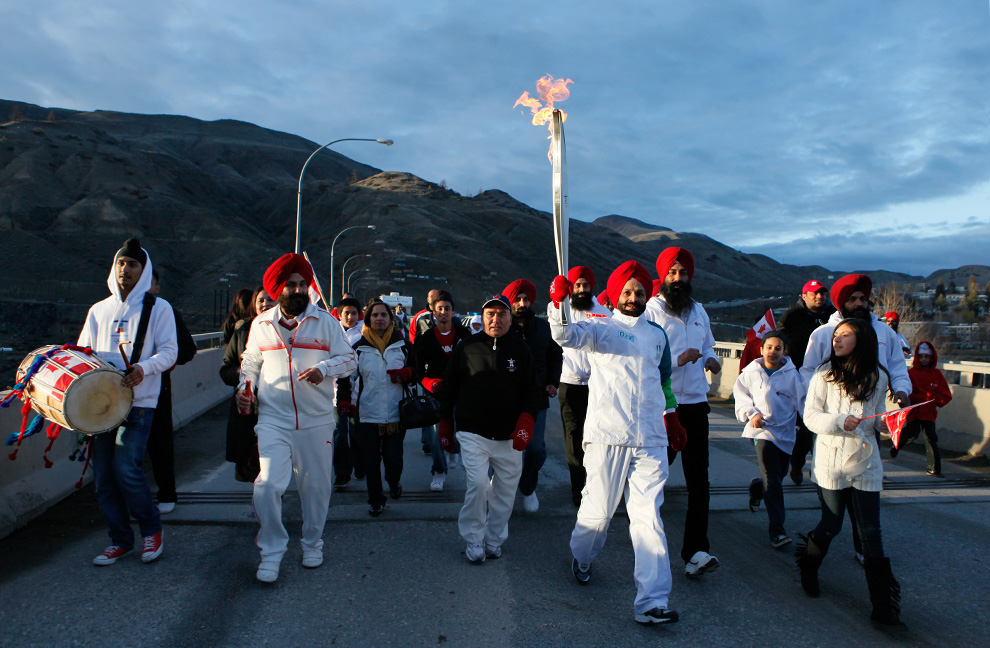
The Olympics in Vancouver are in full swing. This context of this particular picture was well-advertised via Facebook. Still it is worth posting (pagh salute jag): Click here to enjoy others
The caption reads:
Jarnail Sahota carries the torch across a bridge in Ashcroft, British Columbia on Day 100 of the relay, February 6th, 2010.
“Grand harmony aims at elevating every unit of social and cultural life to the height of heroic majesty”
– Harinder Singh Mehboob (1937-2010)
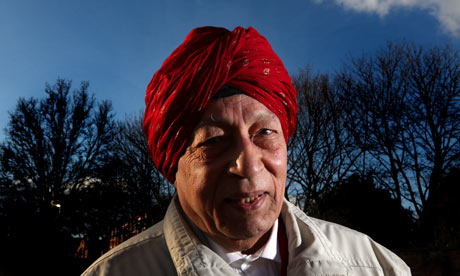
Revered Punjabi poet, Harinder Singh Mehboob, passed away on Sunday night leaving behind a significant mark on the map of Punjabi literature. Mehboob, who had also worked as Principal of Khalsa College Gardhiwala, had written Sahji Rachio Khalsa and Jhanan Di Raat, a book on poetry which he received an award for in 1991. The Sahiyta Award was not without controversy. Regardless, Mehboob’s work will continue to be appreciated by the community:
Jhanan Di Raat which wins Sahitya Akademi Award for Punjabi is his second major publication. A collection of over two hundred poems, written over a period of three decades, in seven anthologies of poetry now published as one volume, Jhanan Di Raat is a formidable work both in conception and in content. The stylistic range and virtuosity reflected by this 828 page volume is enormous; and while the ideological orientation and the concerns of the age as reflected in the poems change gradually, the poet’s warm humanism is always extent.
The poet’s synthesis of the folk poetic traditions with contemporary trends is a distinctive feature; and a recurrent theme is his deep nostalgia for the past glory of Punjab. For its variety of styles, images and metaphors, its vastness of scope, its amalgamation of modern diction with folk-forms and its poetic intensity, this work is regarded as an outstanding contribution to Indian poetry in Punjabi. [link]
He will be remembered and appreciated for elevating Punjabi literature and for his important contributions to the Qaum.
As previously announced, the Sikholars: Sikh Graduate Student Conference is OPEN to the general public. All members of the public are cordially welcome and invited to attend the conference.
The conference will be held at the Cypress Lounge in the Tressider Union on the Stanford University Campus. Directions can be found here.
The schedule for SATURDAY, FEBRUARY 20th, 2010 is as follows:
9:00-10:00am – Welcome and Introductions
10:00-12:00pm – Beneath the Surface (Erik Resly, Iqbal Kaur Gill, Kamal Kaur Arora) Resp: Puneet Kaur
12:00-12:45pm – Lunch
12:45-2:45pm – Locality: Past and Present (Mette Bach, Bandana Kaur, Preet Kaur) Resp: Naindeep Singh
2:45-3:00pm – Break
3:00-5:30pm – Beyond Borders (Ajeet Matharu, Harjant Gill, Arvinder Kang, Mandeep Kaur) Resp: Rahuldeep Singh
5:30-5:55pm Open Discussion
5:55-6pm – Closing Comments
6pm – Stanford SSA Event
Abstracts can be viewed here. Hope those in the Bay Area can attend!
 In some way I know I shouldn’t even be writing this. I am giving an idiot the fame that he seeks, but doesn’t deserve. Oh well, here we go.
So Rajinder Singh is an idiot. Rajinder Singh wants to be the first non-white to join the British National Party (BNP) in the UK. To those from elsewhere, the BNP is similar to the KKK, without the sheets and ropes. For years they had limited (if that’s the right word) their membership to people of “Caucasian origin.” The Equality and Human Rights Commission had threatened them with a court injunction if they did not open up their ranks.
Playing on the issue of anti-immigration and Muslimophobia, the fast blinkers (read conservatives) are making some noise in the wake of the economic downturn. However, due to a court ruling and a willing lackey, it seems the BNP is about to gain Rajinder.
For the cameras, Rajinder has decided to label himself a Sikh and wear a turban.
Singh – admits he’s only wearing it for my ¬ benefit. He’s not a religious man and is clean shaven, but he wore a turban the first time he ever had “media exposure” – on BNPTV, the party’s online ¬channel – and has decided to do so whenever speaking to the media because “the message carries more weight” coming from a turban-wearing Sikh.[link]
My question – does wearing a turban give him more ‘weight’ amongst Sikhs or non-Sikhs?
We know there is a sizable Sikh population in Pakistan, despite many Sikhs who were forced to migrate to India during partition. In 2008, the Pakistani Sikh Anand Marriage Act was passed in Pakistani, which allowed Sikhs in their marriage certificates as Sikhs. Currently in India, Sikhs are identified as Hindus in marriage certificates.
Interestingly, I came across this music video by Jassi Singh Lailpura (i.e. Jasbir Singh) , a Pakistani Sikh.
He also gave an interview on a morning Pakistani television show where he talked more abut his music and life. Lailpura believes that a Pakistani is not defined by a religion or race, but by someone who believes it to be their country. It is obvious from the interview that he is a proud Punjabi Sikh from Pakistan. He talks about the impact of Partition on a Sikh woman. You can watch his interview below.

College bhangra competitions used to be rare. Now, every region is home to multiple competitions.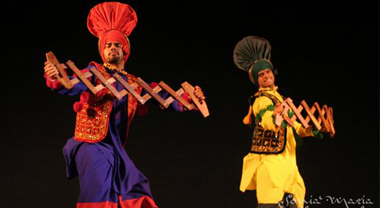
It’s great to see bhangra, as an artform, thriving. Though as a competition, it sometimes feels as though the art is lost amongst the flips and pyramids. However, the last few years have seen a movement going back to the basics of the traditional art form, which has been wonderful to see.
In the crowd of competitions, it is natural to try to distinguish oneself. This year, DC will play host to an invitational bhangra competition called the “Elite 8.” It won’t change bhangra competitions, but it may heighten the profiles of the teams who were invited.
Check out more info for the competition and teams competing, here.
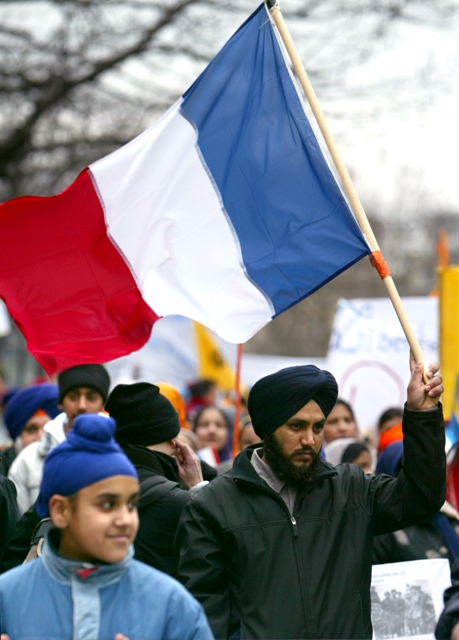 French legislators are currently considering a ban that would prevent Muslim women the right to wear full-body veils in public areas such as buses, trains, hospitals, restaurants, schools and other public places. Since 2004, head scarves and other signs of religious affiliation have been banned from public schools by a government determined to enforce France’s tradition of strict secularism amid fears of growing fundamentalism. Although Sikhs have also been fighting for their right to wear turbans in France – what will an overt ban, which sends a clear statement to its citizens about religious tolerance, mean to other minority groups in the country?
Identifying the burqa as alien to French culture, say the ban’s critics, also fans xenophobic sentiment. What will be declared un-French next? The sari? The Sikh turban? Day-Glo bicycle shorts? [link]
Interestingly – there are only about 2,000 Muslim women in France who wear these veils. Many say that France, a country that prides itself on liberal democracy, is simply taking away the individual freedom to make a choice. As an Op-Ed piece in the NYT asks, “Why the French obsession with the burqa? After all, as the French government itself has conceded, only about 1,900 women wear the full-body covering. So why are over half of the respondents in recent public opinion polls in favor of a ban on it?”
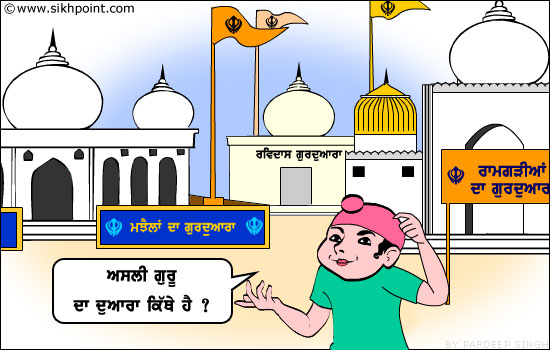 There has been much in the news in Sikhdom with repercussions for years to come. The news of Professor Darshan Singh Ragi, former head of the Akal Takht, and even the Nanakshahi deserve time and commentary. I will leave those for another day.
In some ways with even greater repercussions has been the announcement by members of Dera Sach Khand Ballan of the removal of the Guru Granth Sahib from their places of worship. It is key to point out that NOT all people that identify themselves as Ravidasia are part of Dera Sach Khand Ballan and many vehemently oppose some of their policies and tenants. Still their following is significant and important. Talk of the removal of the Guru Granth Sahib had been in the works since the unfortunate events in Vienna last year. Even at that time, I had asked the question, “How large is the tent that is the Sikh Qaum”?
I commended the Singh Sabha for their achievements in their time and place:
Despite the various attacks on the Singh Sabha movement for only promoting Khalsa hegemony and other spurious slanders by neo-Sanatans, post-colonialists attempting to form neo-Brahman ‘intelligentsias’, those that believe they ‘own’ the Sikh identity, some Hindu chauvinist groups, and various beatniks, the movement was in fact very broad-minded and fought to enlarge the tent that is the Sikh Qaum.
They understood the difference between public and private aspects. In private, people may have their own practices, beliefs, etc. and while the Singh Sabha sought to bring these more in line with the practices and principles of Gurbani, they did allow some diversity in private. In public, we come together and stand by the Panthic rehat maryada.[link]
The Dera Sach Khand Ballan has now made the political move to ‘declare’ a new religion and call for the removal of the Guru Granth Sahib. It is important to NOTE that the move is being pushed by a section of the Ravidassia community and has found much opposition as well.
Amarjit Kaur, 39, was critically shot on Wednesday afternoon in Vallejo, California as she sold ice cream out of an ice cream truck near a school. The Bay Area television news reported last night that police believe the reason for the shooting was two fold. First it was a robbery by a 15-year male. Secondly, Kaur’s inability to understand that the English-speaking 15-year old was asking for money caused him to shoot her out of frustration and anger.
As a widowed mother of three and a recent immigrant to the United States, Kaur’s case highlights the struggle that immigrant woman go through to support their families. Her strength to sell ice cream out of a truck while not completely understanding English shows perseverance during adversity but also highlights the risk new immigrants take to build lives for themselves and their families in the United States.
You would imagine that selling ice cream to primarily children would not be high risk. However, Harish Joshi reported that he was held-up twice while operating an ice cream truck in Richmond (California Bay Area).
Kuldeep Malhan, Kaur’s brother-in-law said a fund has been set-up to help support the family at Bank of America, account No. 488019845001. Please donate to help with Kaur’s medical bills and other living expenses while she is unable to work because of her injuries.
Two years ago, a group of friends started this blog to create a platform where we could discuss issues concerning the  Sikh community, in a reflective, self-critical, and progressive way. We envisioned it as a way to continue the conversations that happen in many Sikh conferences around the U.S., between the sporadic and short times that we are able to meet face-to-face.
We wanted to create a safe space for conversations that we felt were critical, but didn’t see happening as much as they were needed.
Since that beginning, our readership has grown, our vision has grown, and now, so too must our capacity.
We are looking for passionate Sikhs who share our dedication to our community and faith, to join in contributing to the broad array of conversations that take place on The Langar Hall’s pages. Do you enjoy writing? Are you interested in engaging in conversation with other Sikhs from throughout the world? If so, send an email to admin@thelangarhall.com and let us know you’re interested.
We don’t always talk about Sikh issues, but instead, share the common thread of being Sikh. Our Sikh heritage shapes our worldview. Our interests and perspectives, however, are as varied as any group of individuals. Whether you’re interested in art, music, literature, politics, movies, or social activism, if you’re rooted in Sikhi, and have an inclination to write, we want to hear from you.
We’d love to have contributors that are as global as our diaspora. In the past, most of our bloggers have been from North America. However, we post about events that happen all over the world. We want to hear from you whether you’re in Australia, Kenya, India, the U.S., or anywhere else in the world. No matter where you are, if you’re interested in blogging for The Langar Hall, let us know! Email admin@thelangarhall.com.
Over the past few months, we have come across various articles in the media depicting the state of affairs for students of Indian origin living in Australia. Attacks against Indians (allegedly racially motivated) and, what was perceived to be, a poor response by the police and leaders sparked protests in both Australia and India. Widespread media coverage in India has been especially critical of Australia’s handling of this violence. On the other hand, however, the Indian media’s coverage has been likened to hysteria by many in Australia. Many are saying that the Indian media has done more harm than good in their coverage of the events, and in doing so, have shadowed the real problems faced by students in Australia.
So what exactly is going on? A few days ago we received an email from a TLH reader in Australia who wanted to share his perspective on the situation:
I am a year 12 student from Australia about to go into university and I would just like to express some opnions which I hope you could take to the readers of The Langer Hall. Recently there has been much uproar in the Indian media and community about these so-called racist attacks on Indian students in Australia. It really pained me to hear how such events could occur in what has developed to be one of the most multicultural countries in the world. Having just finished school I can say that the range of cultures and backgrounds which I have been exposed to…has been awesome. In my fifteen years as a turbaned boy I have not once felt like this country holds any form of racist ideas against me. My father has been a turbaned bus driver, and now a train driver for many years and he expresses similar ideas to me… Just recently the news begins to appear through investigations by Australian Police that many of these attacks on Indian students..were in fact carried out by other Indian students. I am not saying that all the attacks that occur…are by Indians…but i am raising the point that Australia is not as bad as many people make it seem. I see in Indian newspapers everyday that there was some attack on an Indian and they request Indians to stop going to Australia. Yet not one paper made mention of the fact that it was Indian students who had been arrested for the murders. Well I suppose that is expected in India… [-KS]

The Multifaith Calendar is looking for art submissions under the theme “Celebrating Diversity”. They would like to feature art from as many different faith groups as possible. This calendar is a great educational tool that lists and explains holidays that are important to 14 different world faiths including Sikhism.
The theme for the 2011 edition is: Celebrating Diversity. Work can be of any medium. The interpretation of the theme will be determined by the collection, so we invite artists to submit images that capture a unique or poignant expression of art or people celebrating their faith. We are looking to showcase a diversity of faiths in the collection. We encourage all artists to submit images, including artists who have had their work showcased in past Multifaith Calendars. [link]
Sounds like a great project and a wonderful opportunity for the many developing artists in our community. Submissions are due by February 28th, 2010. For more information, please see: www.multifaithcalendar.org
I came across this amazing video of a white guy singing a traditional Punjabi song, while playing a drum, in an outside mall area (hat tip: Satwinder). Often we wonder how Punjabi will be preserved. I think one of the unique ways is through music.
I hope you enjoy it as you begin your weekend!
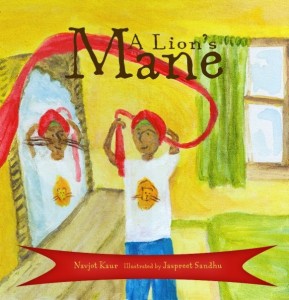 On our weekly library trips, I find myself going through shelf after shelf of children’s books trying to find something both entertaining and challenging for my young and enthusiastic readers. Often times, the books we find are one-dimensional; either instructive, or funny, or downright silly. Rarely do I come across a book that strikes a balance of being both educational and inspiring…this is what I found in A Lion’s Mane by Navjot Kaur
A Lion’s Mane is about the journey of a young Sikh boy who while discovering why he has his long mane (kesh), also learns about the principles of his faith. Concepts like patience, generosity, wisdom, and courage are all woven in to his beautiful red dastaar that guide you through the story.
In addition to the captivating illustrations, it is the simple messages that are reinforced throughout the story that I found particularly meaningful and easy for children to process. Statements like,
“When we learn something new, it makes each of us stronger”
“Being a Khalsa knight gives me the courage to stand up to bullies”
Although I have read several children’s books that touch on the Sikh experience, what I appreciate most about A Lion’s Mane, is how Sikh religious and cultural principles are raised in the context of other cultures and communities with similar principles. I had no idea of the symbolic role the lion played in Native American Hopi culture. In explaining who we are to non-Sikh communities, I think it is just as important to share how our traditions are similar as it is to show how we are different. This pushed me to learn a bit more about some of the other people and cultures mentioned. I found the glossary most useful in explaining to my children who is Wangari Mathai and what the Anishinaabe tribe is.

