
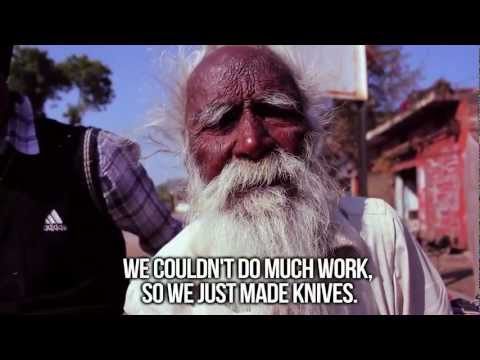
As a community, we have an incredibly rich history and yet we often know so little about it. The first time I learned about the Sikligar community was after watching Mandeep Sethi’s documentary at a local film festival, about this community of Sikhs known to be the weapon makers of the Khalsa army. Unfortunately, very little is known about the Sikligars by those living both within and outside of India and Mandeep’s film will be a first glimpse into the community for many. The Sikligars are found across India – displaced through years of colonization and government oppression. It is known that the community was given the name Sikligar by the 10th Guru of the Sikhs, Guru Gobind Singh Ji and yet even this honor has not prevented the community from struggling – Sikligars now live in extreme poverty in the slums of Rajasthan, Delhi and Agra. There are also encampments in Punjab. Although this community has been largely illiterate for the last 300 years (focusing on their trade and thus livelihood), the Sikligars are beginning to empower themselves through different means such as education. For the first time, the full length documentary is available online! Over the past few months, I’ve joined Mandeep at several film screenings of his documentary and I’ve asked him some questions about SIKLIGAR which you can find after the jump.
Guest blogged by Nina Chanpreet Kaur
August 5th, 2012. 1:33pm. A text message from my best friend: “hostage situation at sikh temple in wisconsin. on al jazeera right now.” We pulled over and exchanged glances, holding our breath it wasn’t an attack perpetrated by someone within the Sikh community. Earlier that morning we rowed in unison, kayaking down the Hudson. Her voice coaching my every movement. Later, riding side by side, we biked to the tennis courts. The wind blowing in our faces and trailing behind our backs, sheer joy and pleasure breezed through me. We had been riding our bikes home when we pulled over. After we said our goodbyes and went our separate ways, I went to hit some tennis balls. The news hadn’t yet sunk in. Once home, my entire being collapsed. I couldn’t avoid the flood of emails, messages and calls. I kept replaying the last few hours. The extreme contrast of the deep pleasure of my morning and the tragedy of Oak Creek felt like some sort of betrayal.
As the shock lifted and the news sunk in, I laid my forehead against the naked floor of my Manhattan apartment and wept. I wept for children, little bare feet hitting cement pavement running for safety. I wept for women crammed into a closet, gunshots threatening to penetrate their bodies. I wept for the pain of separation. I wanted to be there, I wanted to hold each of the bleeding victims in my arms. I wanted to sit next to Wade Michael Page. Make him stop. Have a conversation, maybe a cup of tea. I wept for the memories of the safe gurdwara that cradled me with kirtan as a child. Such a place no longer existed.
News from Wisconsin consumed me. Guilt. Grief. Why wasn’t I there? How does the universe exist in such extremes? At sunset, I picked myself up and started to write. I wrote emails. Long emails. I asked for a vigil. I planned a vigil. I wrote poems. I published them. I lost my appetite and any desire to eat, sleep or cook. I stayed awake through the night to organize. There was no such thing as comfort or rest for me in the weeks following Oak Creek. Heartbroken, the sadness cut through my very center. Organizing was my only way out.
Last week, two separate brutal attacks against Muslim men took place in Queens, New York. On November 24th, 72-year-old Ali Akmal was nearly beaten to death while going on his early morning walk and remains in critical, but stable, condition.
CBS New York reports:
Akmal’s tongue was so badly swollen that he couldn’t talk for two days. When he finally could, he told police that when he first encountered the two men, they asked him, “are you Muslim or Hindu?”
He responded “I’m Muslim,” and that’s when they attacked.
The beating was so savage and personal, Akmal was even bitten on the nose.
Just a few days earlier, 57-year-old Bashir Ahmad was beaten and stabbed repeatedly as he entered a mosque in Flushing, Queens early in the morning on November 19th. The attacker yelled anti-Muslim slurs at him, threatened to kill him, and also bit him on the nose. Ahmad was hospitalized and received staples in his head and stitches in his leg.
These vicious attacks come just a few months after the white supremacist rampage that left six Sikhs dead in Oak Creek, Wisconsin in August, followed by a string of at least 10 separate anti-Muslim attacks around the country in the two weeks that followed. And just over a year after the elderly Sikh men Gurmej Atwal and Surinder Singh were shot and killed on their evening walk in Elk Grove, California.
Needless to say, I was horrified last week when I heard about the attack on Ahmad and am even more horrified today after learning about Akmal,  a grandfather, nearly being killed in this act of violent hatred a few days later. The trauma of the Oak Creek shooting is still fresh for us Sikhs in, and there is little doubt that these recent attacks on Muslim men in Queens are rooted in the same type of bigotry that has so often made Sikhs targets since 9/11. As I’ve said before, our struggles are deeply connected.
The way I heard about the attack on Ahmad last week, though, was almost as troubling as the attack itself. I read this headline on NBC New York’s website: “Queens Mosque Stabbing Victim Says He’d Retaliate if Given Chance.”
At least 21 Palestinians in Gaza have been killed and hundreds more injured in the last week by the Israeli “Defense” Forces. Three Israelis have  also been killed in this latest escalation of violence in the region. The situation is dire, as Israel is now ramping up for a full on ground invasion of Gaza, an area of only 141 square miles inhabited by 1.7 million residents. One of the most densely populated areas in the world, it has also been called the largest open air prison in the world. (Read Ten things you need to know about Gaza for more).
Let us be clear: Israel is not defending its citizens. It is on an aggressive, offensive, politically-charged rampage. We must read beyond the deceiving mainstream media coverage to get the to reality of the situation (see this timeline of recent events). This isn’t about Hamas rockets or any dangers to the existence of the state of Israel. Phyllis Bennis wrote in the Nation:
So why the escalation? Israeli military and political leaders have long made clear that regular military attacks to “cleanse” Palestinian territories (the term was used by Israeli soldiers to describe their role in the 2008-09 Israeli assault on Gaza) is part of their long-term strategic plan. Earlier this year, on the third anniversary of the Gaza assault, Israeli army Chief of Staff Lt. Gen. Benny Gantz told Army Radio that Israel will need to attack Gaza again soon, to restore what he called its power of “deterrence.” He said the assault must be “swift and painful,” concluding, “we will act when the conditions are right.” Perhaps this was his chosen moment…
This is primarily about Netanyanu shoring up the right wing of his base. And once again it is Palestinians, this time Gazans, who will pay the price. The question that remains is whether the US-assured impunity that Israel’s leadership has so long counted on will continue, or whether there will be enough pressure on the Obama administration and Congress so that this time, the United States will finally be forced to allow the international community to hold Israel accountable for this latest round of violations of international law.
If you pay taxes in the United States, you are helping fund Israel’s invasion. Just a few months ago, President Obama announced the addition of $70 million in military aid to Israel. We Americans are literally funding the atrocities being committed against our brothers and sisters in Gaza right now.
Guest blogged by Nina Chanpreet Kaur
In September, I attended a Sikh awareness training at the Department of Justice in Washington, D.C. Sitting in the audience, I watched and listened as the presenter referred to Sikh women in passing and brought the Sikh male experience and turban to the center of the stage. During the Q&A, a woman behind me stood up. It was evident that she had heard Kaur for the first time during the presentation. She pronounced it “hora” then “whore” until she was finally corrected to “Kaur” as in core. It reminded me of how obsolete Kaur has become. I was also reminded of a dear friend of mine who recently told me about a reunion visit she had with some of our long time, mutual friends. As the usual gossip and updates ensued, someone mentioned my change of last name to Kaur and whispers and glances shot around the room. One woman surmised that I had gotten married. I had at that point received many Facebook messages congratulating me on my marriage. When my friend assured them, despite their insistence, that I had not gotten married another woman speculated that I had just become suddenly religious and so of course I changed my last name.
Across the globe today, our last names generally link us to patriarchy through kinship reference and in many cases ethnic, national, religious and class ties as well. In India and the South Asian diaspora, someone’s last name alone indicates what village or city she is from, her religious affiliation, familial ties, and even her family’s occupation and class status. In 1699 Guru Gobind Singh Ji, the 10th Guru of Sikhism and my spiritual father, asked Sikh men to take on the last name Singh meaning lion and Sikh women to take on the last name Kaur meaning prince. This request was intended to bring equality to a society then entrenched in inequality through caste, classism and sexism. Our world today remains entrenched in inequality.
Guru Gobind Singh Ji’s call for Singh and Kaur was more than a request to fight classism and kinship preference, it was a demand to subvert the structure of patriarchy and class structure as we know it. It was a call for revolution, the type of revolution that happens every day when we make choices that force us to stand out and stand up for our values. The type of revolution that happens each time large numbers of people choose to do something different and effect change through subversion. You can imagine, then, my surprise and amusement at the irony of being congratulated on my marriage when I changed my last name from Singh to Kaur.
 Following the assassination of Prime Minister Indira Gandhi in 1984, the Indian government employed orchestrated pogroms against Sikhs. Mobs, equipped with weapons, kerosene, and the addresses of Sikh homes, chanted “khoon ka badla khoon se lenge! (Blood for blood)” as they hunted innocent Sikhs, and those protecting Sikhs, throughout Delhi. Suddenly, Sikh Indian citizens were left stranded in their homeland with no protection and no exercise of control by the Indian government.
“Murderous gangs of 200 or 300 people led by leaders, with policemen looking on, began to swarm into Sikh houses, hacking the occupants to pieces, chopping off the heads of children, raping women, tying Sikh men to tires set aflame with kerosene, burning down the houses and shops after ransacking them. Mobs stopped buses and trains, in and out of Delhi, pulling out Sikh passengers to be lynched to death or doused with kerosene and burnt alive. In some areas, the Sikh families grouped together for self-defense. The police officials then arrived to disperse them, by force when the persuasion did not work. In other areas, the police searched the houses for weapons including ceremonial daggers, and confiscated them before the mobs came. Over the next five days, nearly 3,000 Sikhs were killed.” -Reduced to Ashes, pg. 42
Guestblogged by Mewa Singh
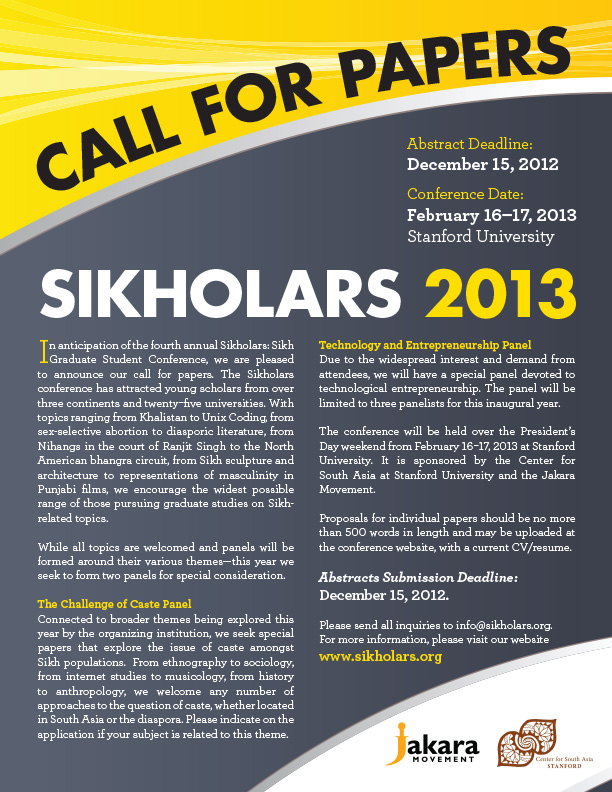 Few events are as anticipated as the annual Sikholars conference, held annually in the Bay Area. Now returning for the fourth year, the event continues to grow, generate new interest, and excite Sikh sangats from the Bay Area and beyond. A showcase for young Sikh scholars and others working on Sikh-related topics, the venue provides an intellectual space for engagement, discussion, and debate.
The conference has already announced its “call for papers”:
In anticipation of the fourth annual Sikholars: Sikh Graduate Student Conference, we are pleased to announce our call for papers. The Sikholars conference has attracted young scholars from over three continents and twenty–five universities. With topics ranging from Khalistan to Unix Coding, from sex-selective abortion to diasporic literature, from Nihangs in the court of Ranjit Singh to the North American bhangra circuit, from Sikh sculpture and architecture to representations of masculinity in Punjabi films, we encourage the widest possible range of those pursuing graduate studies on Sikh-related topics.
The deadline to apply to present is December 15, 2012.
The event is being hosted by Stanford University’s Center for South Asia and the Jakara Movement.
Co-blogged by Sundari and AmericanTurban
Last week, in the context of the significance of California’s 9th Congressional District to Sikh Americans, we sent the major candidates of California’s 9th Congressional District — incumbent Representative Jerry McNerney and challenger Ricky Gill — a questionnaire to learn more about their positions about Sikh American-related issues (see previous post here). Both candidates responded. However, the nature of the responses received were quite different.
Rep. Jerry McNerney’s campaign responded to the questionnaire and Ricky Gill’s campaign declined to answer. As we had stated in our earlier post, both responses will be printed verbatim and are below.
This past weekend, I attended the second annual Sikh Feminist Conference at the University of British Columbia in Vancouver. A friend posted a concise review of the conference here which I would encourage you to read. I’ll just reiterate two points made – the first being the discussion around whether the western concept of Feminism fits within Sikhi. What does it mean to call oneself a Sikh Feminist or even a Male Sikh Feminist? Many participants at the conference felt the words “Sikh” and “Feminist” were redundant and that it was not necessary for us to try to mold to western definitions of feminism when our own faith clearly defines the concept of [gender] equality. On the other hand, others argued that the word is powerful enough to raise and question the issue of patriarchy that continues to exist within the community. The discussion reminded me of a similar conversation that was had at the Faith and Feminism panel, featuring Sikh women, which took place last year in NYC. About the panel discussion, the author writes,
The core values in Sikhism, particularly the human rights element, were what informed [the panelist’s] views on issues, including women’s rights. She has taken the word “feminism” out of the equation, and transplanted the values of it back into Sikhi, and reminded us that anyone who adheres to the principles of Sikhism and to the words of the Guru Granth Sahib has many labels, feminist, humanist, and activist are just some of them.
The second point is the important link between theory and practice within the Sikh community. I want to highlight this in two ways. The first being that while it has been established that the Gurus emphasized living in an eco-friendly way, it’s clear that as a community we are still working to close the gap – from melas to gurdwaras to within our own homes – our practice of living in an eco-friendly way could use some improvement. EcoSikh sponsored the Sikh Feminist conference and it’s presence was felt very thoughtfully throughout the day (biodegradable utensils, compost, recycling etc!) and it was inspiring to see our community not just talk about it in theory, but actually put it into practice.
Another discussion was around the concept of izzat or honor, whether it impacts both men and women, how it manifests differently for men and women and why it continues to be a topic of discussion when theoretically, our Gurus gave us the guidance and tools to live in an egalitarian society. The concept itself has been one of discussion on our blog too – particularly around what it means to a family and to a community. We are once again reminded of this issue with the recent news of Baljinder Kaur, a pregnant woman from Yuba City who was arrested over the weekend, just before the Sikh Women’s conference, for apparently killing her mother-in-law.
Co-blogged by Sundari and AmericanTurban
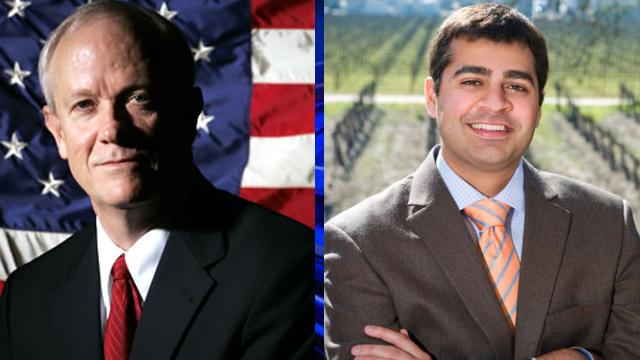 Of recent and recurring discussion on The Langar Hall and American Turban has been the election race in California’s 9th Congressional District. For Sikh Americans, this district’s race is significant.Located in northern California, the 9th Congressional District contains America’s oldest and one of its largest Sikh American communities. The oldest Gurdwara in the United States (which only a couple of weeks ago celebrated its centennial anniversary) is located in this District in Stockton, California. America’s first Asian American and Sikh American member of Congress, Dalip Singh Saund, once resided in this area, and one of the candidates currently running is himself a Sikh American.Given the unique character of the District, we are interested to know the thoughts of the main candidates of the district on the issues affecting their current and potential Sikh American constituents, many of whom have been active in supporting each of the candidates. It is our plan to publish these answers by each candidate to learn more about their positions on issues affecting Sikh Americans.With election day in the US nearing, we have asked the main candidates — incumbent Representative Jerry McNerney and Republican challenger Ricky Gill — to offer their thoughts on Sikh American issues. We are aware that important concerns of the general public on issues like jobs, healthcare, or social issues are often already asked of the candidates, but that their positions on Sikh American issues are not asked of them. Accordingly, these questions reflect Sikh American concerns that do not get the same attention from mainstream media.
The questions that we have sent to the campaigns of Jerry McNerney and Ricky Gill are below the fold, and on Tuesday, October 30, we will publish the responses from each campaign.
Guest blogged by Simran Jeet Singh
This past week, I visited a liberal arts college in Pennsylvania to introduce undergraduate students to the Sikh experience in America. I was pleasantly surprised to see that the professor had assigned Naunihal Singh’s piece from the New Yorker – “An American Tragedy” – one of the most insightful and well-written pieces published in the immediate aftermath of Oak Creek.
The professor had asked the students to submit short reflections on the shooting, and in reviewing their essays, I was struck by the consistent refrain that we have heard all too often: “If Wade Michael Page had only known that he was attacking Sikhs instead of Muslims…”
In other forums, I have discussed some problems with the framework of “mistaken identity,” including the implication of a “correct identity” to be targeted, the displacement of accountability, and the freezing of hate-violence within particular moments of time.
While I still stand by these arguments, I think there is a much more fundamental problem in our application of this idea to the shooting at the gurdwara in Oak Creek. We do not yet know Page’s specific intentions, yet we continue to assume that he actually intended to attack Muslims. For some reason, we have not seriously entertained the possibility that Page entered the gurdwara fully intending to kill Sikhs.
“While Sikh American women do a lions-share of organizing and executing the business of the Sikh community, their experiences of faith, family, and community are under-represented in art, literature, and scholarship. In fact, the experience and image of a Sikh woman is obsolete and – in most cases – invisible in the North American milieu. The modern landscapes and political and social influences that shape Sikh women’s lives as well as the subsequent paths they take have yet to be understood, documented, shared and absorbed by our cultural psyche.”
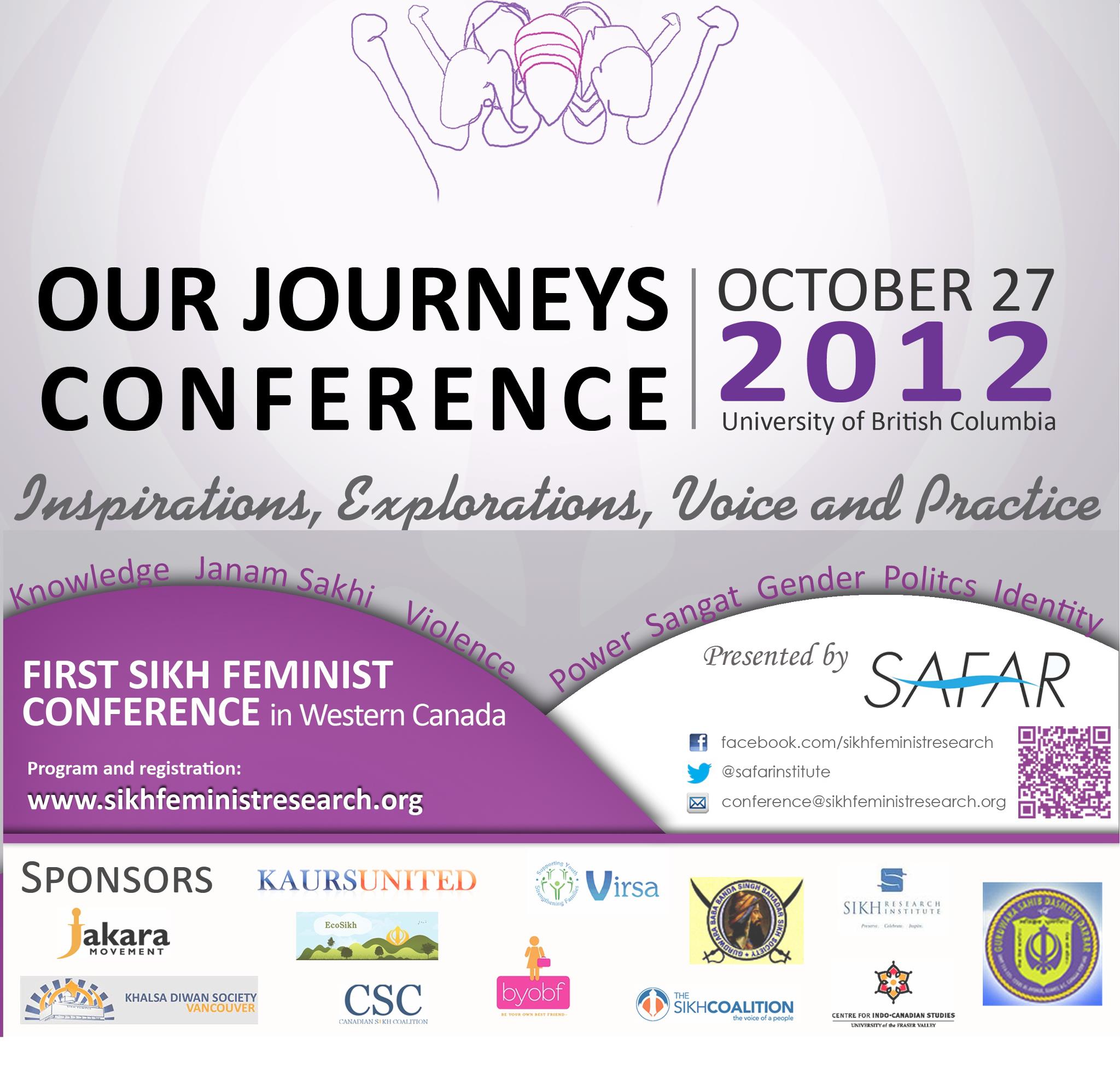 The above description is an excerpt from the “Sikh American Women and Their Love Stories Collection” presentation that will be taking place at this year’s Our Journeys conference, hosted by the Sikh Feminists Research Institute on October 27th. This conference series, the first of its kind, provides a platform to explore the intersections of Sikhi and gender. The goal is to promote research around Sikh feminist issues, heighten participation in critical discourse, promote alliance building and develop partnerships between academic and community organizations.
Often times, conversations about Sikhs, Sikh issues and the Sikh identity start and end with the Sikh male identity. While this conversation is acutely relevant in the climate of ignorance and discrimination that we live in, it’s also critical that we have conversations that include, are about, and are led by Sikh women.
Having attended last year’s inaugural conference, I look forward to engaging once again in a conversation around women’s issues within the Punjabi/Sikh framework. It’s exciting that we have a platform to celebrate the growth and development of the Sikh feminist voice.
Guestblogged by Mewa Singh
Applications are out and will soon be due. Need some assistance? Then here is a service for you!
Here are the Top 5 Reasons You should Use the Jakara Movement’s Sikhiya Service:
- Save money – there are a number of professional services on the market that provide personal statement assistance and help. Websites like accepted.com charge in the thousands of dollars for this type of service. You’re getting it for free!
- Expert Help – Get help from other Sikhs that have successfully already gone through the process. They will edit your writing and share admission tips.
- Fast Turnaround – Most drafts are sent back within 48 hours. Can’t get much faster than that!
- Confidential – Confidentiality is completely respected. After you upload your draft, your name and other personal information is removed before being sent to the editors. All editors also sign confidentiality notes to respect the privacy of you and your writing.
- Pay It Forward – The idea of this type of seva works through the principle of ‘pay it forward.’ Just as you will be using the service today, the hope is that you will provide this service for another young Sikh in the future.
A number of Sikhs have already taken advantage of the Sikhiya program, part of Jakara Movement’s Sikholars initiative.
This weekend, from Friday to Sunday October 19-21st, the Sikh Studies department at Hofstra University will host ‘Sikhi(sm), Literature and Film,’ a conference on literary and visual cultures in the Sikh tradition, both in Panjab and the Diaspora.
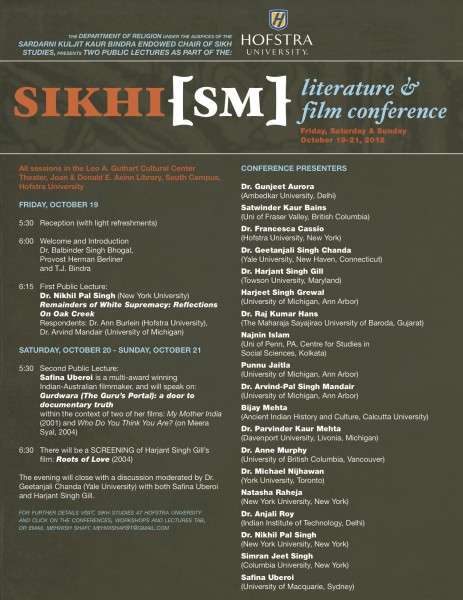 Paper presentations will be given during five sessions, with presentations ranging from de-categorizing the janamsakhis to the poetry of Puran Singh, discourses on secularism to literary representations of Sikhs, Sikh masculine identity vis-à-vis kesh and the dastaar to Panjabi theater, Museum exhibitions to Sikh identity in film and Bollywood, Hip Hop and rap as expressive forms among Panjabi youth to Gurbani sangeet and female kirtaniya. Presentation topics and bios can be accessed via the Sikh Studies website at Hofstra.
This year the conference will also host two supplementary film screenings and offer a forum to deepen the discourse around the recent Oak Creek Massacre. The films include Safina Uberoi’s ‘Gurdwara: the Guru’s Portal: a door to document Truth’ and Harjant Gill’s ‘Roots of Love,’ while the pieces related to Oak Creek include Dr. Nikhil Pal Singh’s ‘Remainders of White Supremacy,’ and Dr. Balbinder Singh Bhogal’s ‘Oak Creek Killings: The Denial of a culture of oppression’ (which can be read online).
Guest blog by: Rocco
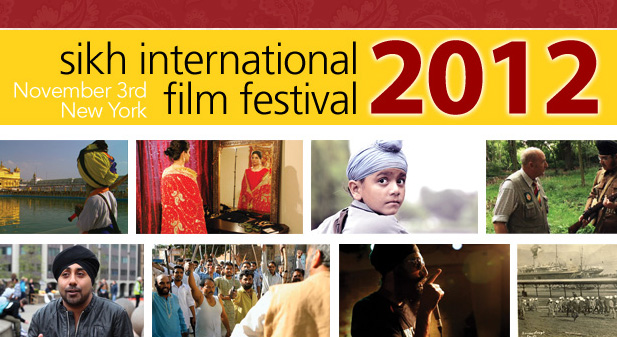 One of the highlights of fall in NYC is the Sikh Arts and Film Festival which showcases the story of our community via films and is being held November 2-3, 2012. Along with that is a Heritage Gala which is being held November 3, 2012 “to celebrate the rich heritage, culture and traditions of the Sikhs.” In the past dignitaries and business leaders have been selected as Chief Guest and Guest of Honors. Unfortunately, The Chief Guest this year is Nirupama Rao, India’s Ambassador to the United States and the Guest of Honors include Prabhu Dayal, Consul General India, New York and Hardeep Puri, India’s Permanent Representative to the United Nations.
For some, Sikhs having Indian Government representatives as honorees poses no conflict and should be encouraged. One may argue that the attack on Darbar Sahib and Genocide in 1984 are distant events that occurred twenty eight years ago and should be forgotten. One may argue that the civil war which ensued for ten years afterwards in Panjab and led to the death of the tens of thousands of Sikh youth were collateral damage and justifiable in order to preserve the unity of India. One may argue that that struggle for an independent Panjab has reached its nadir and it’s important to “re-Indianize” ourselves and take advantage of the current economic environment.
Today is a federal holiday here in the United States — Columbus Day. Many of you probably share my disdain for the continued celebration of a man who helped kick off the colonization of the Americas and the genocide of indigenous peoples over 500 years ago, just as Guru Nanak was laying the groundwork for Sikhi to be born in Punjab. Gloating about his relentless pillaging, Columbus once stated, “I ought to be judged as a captain who for such a long time up to this day has borne arms without laying them aside for an hour.”
We Sikhs are truth-seekers and freedom fighters. Let’s stand with indigenous people throughout the Americas today, mourning those millions whose lives were taken by Columbus and the European colonizers who came after, and celebrating the spirit of resistance and quest for sovereignty which persist today throughout Turtle Island.
 Yesterday’s news about the attack on KS Brar has excited, angered, inspired, and agitated many Sikhs throughout the world.
Many have questioned the Indian media’s initial assumption, before even the facts had arrived. Still others are wondering if the news is even factual. I have seen numerous postings on social media, believing that the attack was just a fabrication in order to make Sikhs appear ‘violent’ and ‘extreme’, especially after the recent goodwill expressed by some channels in the US and abroad after the recent Wisconsin Massacre. Finally, our brothers and sisters at Naujawani have written an intriguing article asking larger questions about a more sinister timing of all events (though not sure if I agree, well worth a read!).
I believe that the case of Kulbir Singh Barapind and Daljit Singh Bittu is extremely important, but that warrants a separate post. I will return to that issue at a future time.
Personally I am quite surprised that no names have appeared yet, as I figure someone would probably take credit and I wouldn’t imagine the names could be held a secret for too long within the community, especially if those that confronted him were young, as the claim is being made. Still I think that I want to take this conversation in a different direction. How do we ‘present’ SikhISM and its implicationsi?
Over the last month since the horrific tragedy in Oak Creek, WI, Sikh civil rights organizations and other leaders in the community seem to have come to a consensus on what our collective demand should be to move forward — getting the FBI to track hate crimes against Sikhs. A few weeks ago Valarie Kaur wrote an op-ed in the Washington Post entitled, “Sikhs deserve the dignity of being a statistic,” in which she convincingly articulates the basic argument that many are making:
The FBI tracks all hate crimes on Form 1-699, the Hate Crime Incident Report. Statistics collected on this form allow law enforcement officials to analyze trends in hate crimes and allocate resources appropriately. But under the FBI’s current tracking system, there is no category for anti-Sikh hate crimes. The religious identity of the eight people shot in Oak Creek will not appear as a statistic in the FBI’s data collection. As a Sikh American who hears the rising fear and concerns in my community, I join the Sikh Coalition and Sikh American Legal Defense and Education Fund (SALDEF) in calling for the FBI to change its policy and track hate crimes against Sikhs.
We’ve all probably gotten numerous action alerts to sign petitions, call our Senators, and, most recently, to attend tomorrow’s Senate hearing on hate violence in Washington, DC. The Sikh Coalition’s email advisory today about tomorrow’s hearing begins, “Be Present and Request that the FBI Track Hate Crimes Against Sikhs.”
It seems like a sensible request. The FBI is a government agency responsible for investigating hate crimes, so of course they should be looking specifically at attacks targeting Sikhs and have a category to enable them to do so. While I am sympathetic to this cause, I am a bit troubled by it, or have some questions about it, as well.
While I am not necessarily against the idea of a Sikh box for the FBI to check in the case of a hate attack against a Sikh, I am very skeptical of the FBI being an agency capable of working in the best interests of our community. To put it directly, I don’t trust them. And I’m not sure there is any reason for our community at large to trust them. Isn’t trust a prerequisite to inviting someone with a whole lot of power and resources into your homes, your schools, your houses of worship?
Co-blogged by Sanehwal and Mewa Singh
In an easily missed bit of North American Sikh intellectual bloodsport, IJ Singh and a graduate of UC Berkeley debated ideals about graduate education, the panth, and the academy. It is worth reading through for their different orientations towards the discussion, if at the very least to see how two people with very different positions in life (gender, education, class, age) interpret the issues at stake.
In IJ’s article, he mentioned the National Science Foundation Graduate Research Fellowship Program, an American government program that funds graduate research. I had to Wikipedia it. At the time I was an undergraduate interested in applying to PhD programs in the social sciences, and despite the wealth of resources at my university, I ended up scouring the internet for advice on how to successfully apply to doctoral programs that routinely get upwards of 400 applications for 5 or 6 seats. The National Science Foundation’s graduate research fellowship was part of the deluge of items to tackle: letters of recommendation, emails to potential advisors, picking programs, and the dreaded statement of purpose. To make matters worse, my primary advisor was on leave, and unlike many of my peers, I had few friends or places to turn where I felt comfortable getting honest and expert advice on how to craft applications that best demonstrated my accomplishments and abilities.
 The history of the Sikhs in the United States is known well in specific circles. Bhagat Singh Thind’s famous failed case for legal recognition by the US Supreme Court, iconic images of Stockton Gurdwara, traces of the Punjabi-Mexican experience, memories of the Ghadari Babas are generally remembered in this context. However, this is merely the tip of the iceberg.
A fascinating tale that is rarely discussed is that of Pahkar Singh. In our new post 9/11 fad to ad nauseam repeat that we are a “peaceful religion,” we tend to dismiss those heroic Sikhs that also faced racial discrimination in their own way. In the case of Pahkar Singh, the young Punjabi Sikh farmer living in the Imperial Valley (East of San Diego) in 1925. After being robbed of his crops and cheated by whites that took advantages of the racist laws in the land, Pahkar Singh picked up his gun and gandasa and killed two of them. He only stopped from killing a third, when the man’s 8 month pregnant wife, literally stood in the face of the barrel to protect her husband. At that point, Pahkar Singh turned himself in. At his defense, along with other Punjabi farmers, many even white small farmers came to sympathize with Pahkar Singh. He spent 15 years in San Quentin before he was released. It is these lesser known instances of the Sikh-American experience that I find so much more interesting.
In this vein, a number of Sikh organizations led by Stockton Gurdwara and the Sikh Information Centre have come together to host a series of events in celebration of the Sikh-American Centennial. Beginning on SEPTEMBER 22, , there are a series of events to commemorate, remember, and reflect on the Sikh-American focus. YOU DO NOT WANT TO MISS IT! With the recent events at Oak Creek Gurdwara, this may be a more prescient time than ever.

