
Lakh Lakh Vaidhayan!
On behalf of the TLH family, I’d like to wish all our readers the very best for 2009.
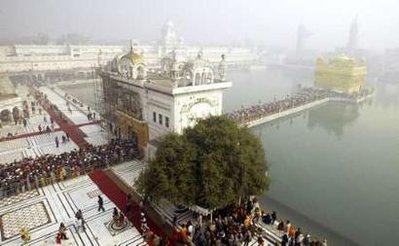
“Devotees throng the fog-covered holy Sikh shrine of Golden Temple in the northern
Indian city of Amritsar to offer prayers for the New Year January 1, 2009.” [Link]
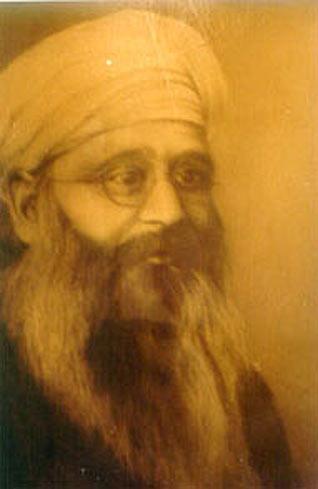 The digitization of books has created a whole new way for Sikhs to access their history. I’ve stumbled onto a lot of historical Sikh literature that I had never heard of. For example, through Google’s Book Search function, I discovered a tourist guide to Punjab from the 1880’s (here’s an excerpt on visiting Amritsar).
Over the holidays, I found a scanned version of a first edition of The Life and Teachings of Sri Guru Tegh Bahadur. It was written by Puran Singh and published by The Khalsa Agency in Amritsar in 1908. Puran Singh has a way with words like no other Sikh author I’ve ever encountered. His books The Spirit Born People and The Ten Masters are essential readings for anyone interested in Sikhi. In his book on Guru Tegh Bahadur he writes:
He looks upon the world with that far-seeing vacant eye with which a mariner, having lost his boat, looks upon the broad sea, seated on a rock in the middle dashed by the waves of the angry sea. The world to him is lost in the constant vision of the higher Reality of its soul. There is an intense spirit beating within his heart, which weeps ard cries at the sight of a man who is lost in the tempest of passions and remembers not the glorious life of his beyond this little life and the glorious inheritence of his in ideals of God, Love, and Truth.
He is a high abstraction in the love of God, and whenever a single thought of the world lowers his consciousness from those ethereal heights, he at once sings of God-consciousness and soars again.”Remember thy God, remember thy Lord, this is thy one duty, thy only duty,” says he.
However, what I really want to share is his opening introduction. The words are 100 years old, but just as or probably more relevant today.
In a significant development, the Government of Iraq has decided to rebuild the 15th century Sikh Guru Guru Nanak Dev’s shrine which was destroyed in the 2003 war in Baghdad. [link]
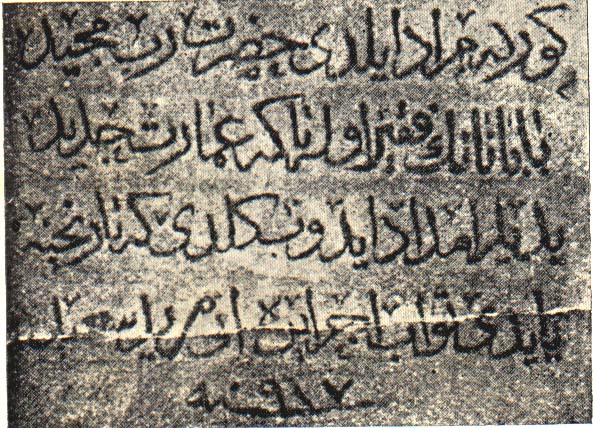 Guru Nanak Dev Ji is said to have visited the place on his way back from Mecca where he stopped to speak with religious leaders including the caretaker of the mausoleums of Abdul Qadir gilani and Bahlol the Wise, who were greatly impressed by his views on God and religion. A monument, in the form of a platform, was raised where Guru Nanak had sat and provided these discourses. It is documented that Sikh soldiers who went to Iraq during the First World War, 1914-18, raised a Gurdwara here, but now only a room exists which is visited by Sikh and non-Sikh Punjabis who work in Iraq. In addition, it is noted that since the gurdwara is located within a graveyard, visitors are banned from staying overnight, cooking meals or holding Langar and Kirtan. I was not able to locate any information regarding who is currently in charge of the gurdwara or what the dynamics of the gurdwara are (without Langar or Kirtan). I do wonder if a Guru Granth Sahib is kept there and, in that case, who does the seva.
As we approach the calendar year 2008, it also marks a year of our existence.
Looking at our top 10 posts in terms of the number of hits, I guess it is sort of a mixed bag on how The Langar Hall is finding its voice. Our top hit getters were usually part of the “first comers” rule. Our bloggers were the first to put up the Kenneth Cole Sikh Ad and our comment board became a one of the first internet hubs for fans to mourn the loss of Ishmeet Singh.
Still our breakthroughs, in my opinion, were our original commentary that sparked various discussions – whether it was about Sikhs and the Media in “Will the Revolution be Televised?”, the issues of drug distribution in our community in the still popular Balbir Dhami article, looking at the role and effects of Punjabi Sikhs in the ensuing mortgage crisis, or even in creating our desi list in “Sikh Medicine.”
For the full list, see below the fold:
When I was a little girl, I remember the hostile glares my father used to get as we drove together across town. Pretty much anytime the U.S. had gotten entangled in anything remotely related to Iraq, Iran, or Afghanistan between the 1970s and 80s, you could bet your bottom dollar papa would get stopped at least four times on his 10 mile commute home by the police, who wanted to check if he was a “real American” who knew where his loyalties should lie.
If we flash forward to the 2000s, it had been a weird repetition of my early childhood to see open hostility resurface again over the course of the U.S. “War on Terror.” So imagine my surprise, when I found this holiday gift on one of my favorite timesucks, etsy (hat tip to Ennis!):
Although other bloggers have touched upon different aspect of Christmas and the holiday season, while viewing Sepia Mutiny I saw an interesting video of the NORAD-tracked Santa at the Taj Mahal.
However, at the end of the video (cue to :24), I couldn’t help but notice a very familiar Sikh site. Heading north through Punjab, it seems that the NORAD tracking has Santa flying through the Darbar Sahib complex. While they never show Harmandir Sahib (incorrectly called the Golden Temple), they do show Santa flying by the the Langar Hall, passing next to the Ramgharia Bunga, above the Langar Deori, making a quick right that allows us a great view of the Ghanta Ghar Deori, and in the distance the Akal Takht and kesri Nishan Sahib.

Have a wonderful weekend!
I. Introduction
My last post, which addressed the First Global Sikh Civil Rights Conference held by the non-profit group United Sikhs, generated significant discussion. In an attempt to re-focus and reinvigorate that discussion, I wish to first clarify what the post was not about — it was not intended to serve as an indictment of the United Sikhs’ work overall, to criticize specific projects or initiatives other than the conference, or to compare their efforts to that of other Sikh organizations with greater financial resources. Some of the comments did touch on these subjects, though this was not my intention.
My sole interest was and remains the manner in which the United Sikhs decided, on its own, to describe the conference and the report to the public, including necessarily the Sikh members of it. I wrote that it was “the United Sikhs’ characterizations of the conference and report” that I found problematic. Regrettably, the comments to my post — some made spiritedly by United Sikhs Director Mejindarpaul Kaur and others working for or affiliated with the United Sikhs — have done little to assuage my earlier concerns.
 Are how I usually spend December 25th (unless, like this year, Gurpurab services fall on the same day). When I was younger, my family and I would spend the week of Christmas collecting items for donation, volunteering with the local soup kitchen, and generally reflecting on, and brainstorming, how we could help others during a sometimes lean time of year. I like to think this tradition has morphed as I’ve grown older (into a year-long commitment to service), but something about December always makes me feel more thoughtful.
My parents also went out of their way to explain that as Sikhs we did not celebrate Christmas, but they explained the significance of the Sikh religious holidays that tend to fall around this time of year. I didn’t feel like I had to trade — presents were not really an expectation or feature of the season after I passed the age of 7. Instead we spent loooooong hours at the gurdwara for services.
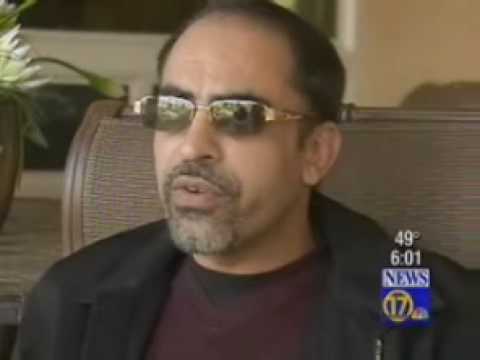
Two steps forward and one step back. Just when you think we’ve made some progress in terms of creating awareness about who we are as Sikhs, you hear of incidents like this. Here’s the story on NBC’s KGET.
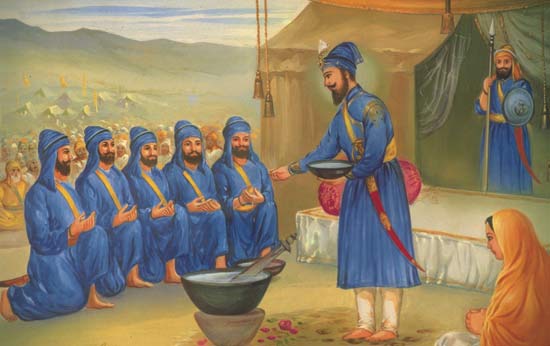

This past summer I was sitting in a group-discussion, with fellow 2nd generation Sikhs (amritdhari and non-amritdhari) in the West, where we were asked to share the first thoughts that came to mind when we thought of the term “Khalsa”. Here are some:
masculine, extremists, ego, amrit, air india bombings, khalistan, rules, khandha/militaristic, collective brotherhood, fiercely independent, love, panj pyare, historical of the past & raj karega khalsa
For myself, I thought it was interesting to see how the media (i.e. newspaper articles, calendars, and television) along with the politicalization of religion and translation of Sikhi between generations is influencing our perceptions of the Khalsa.
What are your thoughts? What do you think they reflect about the state of the Khalsa?
Hope all of you are enjoying your holidays with family and friends! Here is a “Punjabi” take on a Christmas and one of its infamous songs from my favorite British Comedy Show …. “Goodness Gracious Me”!
Some of you may have already seen it (GGM aired long ago, but is available on DVD-sets) … hope you have a great laugh after watching it!

Last night, I watched a great awards program. No it wasn’t the Emmy’s or  Grammy’s (I only know one person that watches those!). It was far more meaningful.
It is called CNN Heroes.
CNN launched its second annual global search for ordinary people accomplishing extraordinary deeds in February. The network has aired weekly CNN Hero profiles of those people, chosen from more than 3,700a nominations submitted by viewers in 75 countries.
I am sure it will be replayed to death on CNN over the next few days. It will be airing at 2pm EST on Christmas Day.
With the calendar year 2008 coming to an end (the Nanakshahi Calendar year 540 still has some time to go), I have been reflecting a bit on the subject of heroes and sheroes. I know I have blogged on some, some, some, some, and some this year.
Still I wonder who are your Sikh heroes and sheroes? Tell us who and why? I’d love to hear about those truly unheralded sheroes and heroes that do various seva with love without any expectation of recognition.
 I saw this article?on BBC online and thought I’d share it with your guys. Basically, the BBC did a composite of six interviews with people of non-Christian faiths and asked them how they spend the time they have off for Christmas.
The Sikh interviewee noted that during this time of year, Sikhs mark the martyrdom of the Sahibzadey and that it is important to remember the significance of our holidays. Agreed.
Last year Anandica wrote a post about Santa Singh and the Khalsa Tree and explained how some families have incorporated Western traditions into Sikhi, to give new meaning to common symbols, but what about Sikhs participating in the religious celebrations of others?
During this holiday season of hard times, not even houses of God have been spared. Some lenders believe more churches than ever have fallen behind on loans or defaulted this year. Some churches, and at least one company that specialized in church lending, have filed for bankruptcy. Church giving is down as much as 15% in some places, pastors and lenders report.
An article in today’s Wall Street Journal highlights the financial pressures being faced by many churches across America. From my perspective, there’s two implications for Sikhs here, one a threat and the other an opportunity.
“There have been too many churches with a ‘build it and they will come’ attitude,” says N. Michael Tangen, executive vice president at American Investors Group Inc., a church lender in Minnetonka, Minn. “They had glory in their eyes that wasn’t backed up with adequate business plans and cash flow.”
We tend to complain a lot. Really, we do. We complain about the lack of activisim by Sikh youth. We complain about not being able to understand Gurbani or be able to do Kirtan. We complain about the disconnect between Sikh elders and Sikh youth. It’s the status quo – to spend time dwelling on what’s wrong in our community rather than celebrate what’s actually going right.
However, in recent years we’ve been seeing an increased number of Sikh student or Sikh youth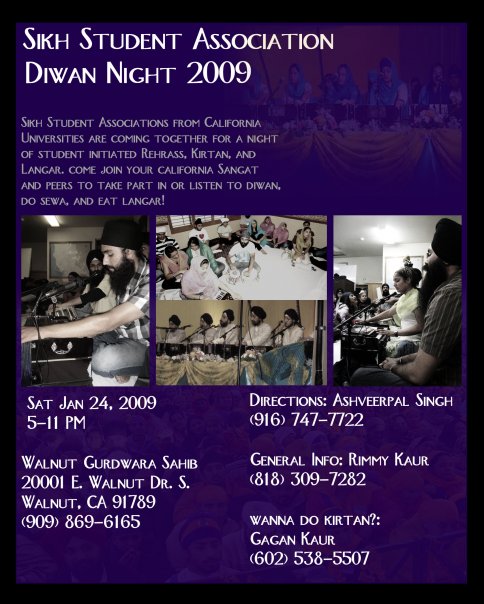 run events – which means it’s becoming clear that the status quo is no longer okay. I think it is not only important, but necessary, for Sikh youth to take more of an active role in their community. So it was refreshing for me to hear about this student initiated event which is being planned in collaboration with the Sikh Student Associations across California. This Diwan Night, which is to be held on January 24th 2009 in Southern California, will bring together Sikh students from across California for a night of Rehraas, Kirtan, Sewa and Langar. It’s important to support these types of initiatives and encourage Sikh youth to participate in coordinating these events. I hope this is one of many student initiated events which brings various organizations together in the hopes of actively involving youth in Sikhi.
The event is on January 24th, 2009 from 5-11pm at Walnut Gurdwara. If you would like to participate in Kirtan, call Gagan Kaur at 602 538 5507. For general information, call Rimmy Kaur at 818 309 7282.
 The phone rings and its the call you dread as an uncle or older cousin. A desperate parent is on the other end asking for your help. Your teenage nephew/cousin wants to cut his hair. Can you please talk some sense into him.
This happened to me last week with my cousin and, I have to admit, I was woefully unprepared. While I’ve given lots of talks on Sikhi at Sikh camps and to non-Sikh audiences, I’ve never had to actually have this kind of discussion. One where I may be the determining factor in an individual’s major life decision.But what could I offer that he hadn’t already heard? How could I change the mind of a guy that’s already decided? He’s grown up in a Sikh family, his entire family keeps their hair. He has lots of Sikh friends and lives in a Sikh part of town. He should have picked up Sikhi through osmosis, but he hasn’t.
His parents have tried their best but working multiple jobs and struggling financially, putting food on the table has been their priority. And like many Punjabi Sikh parents, they’ve assumed that being surrounded by Sikh culture would be enough. So they’re shocked, betrayed, angered, hurt and deeply saddened when they’re son finally musters up enough courage to talk to them.
The Sikh blogosphere is still very young and still in its incipient phases. While one 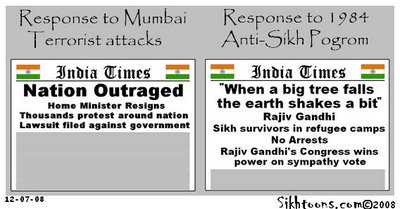 day I hope we will have something like this (ahem, Mr.Sikhnet any takers?), for now, we will try to (at times) highlight some of the best of the blogs.
SidhuSaaheb’s blog has been a favorite of mine for years. While at times disagreeing, I find his voice refreshing and a unique perspective.
His most recent post, reproduced here in its entirety below the fold, would be my vote for “post of the year.” Contrasting the most recent tragedy in Mumbai with the Sikh Pogroms of Delhi 1984, the differences are truly tragic. Please leave your thoughts on the post here as well as take a moment to visit the author’s own blog to leave your comments.
I know not whether it is an ‘old tradition‘ or a ‘family tradition’; I only know it seems to be a great tradition. Last 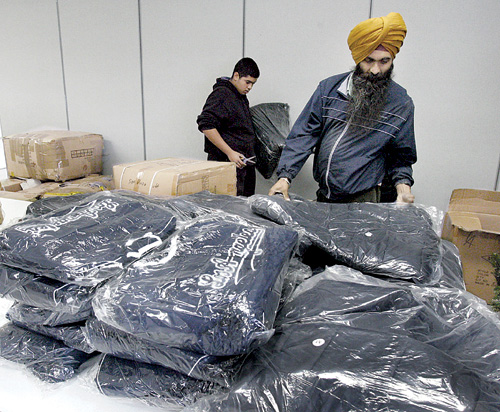 week, Camille bulletin board-ed a winter clothing distribution in Central California being sponsored by Mike Sandhu of Sandhu Brothers Farms.
The Tracy Press published some pictures of the distribution that saw some 1200 jackets (over $50,000 in value) go out to anyone that needed. Mike stated that this was a family tradition in honor of the 2 youngest Sahibzadas.
“So we do this to keep other children, other families, warm in their honor,” he said. “It’s just something my family has done here for about six years now.”[link]
I hope that other local Sikh sangats take Mike Sandhu and the Tracy Sikh Community’s lead in making such events more regular. More than any donation of rumaals to the Gurdwara, this is one of the best ways to honor the Qaum’s shaheeds.
I like to spend winter catching up on all the reading I’ve left by the wayside, but imagine my surprise when I came across these op-eds. The first argues that the Sikh youth slate (an all amritdhari slate) that won in Surrey is “fundamentalist,” while the other article argues that Sehajdari Sikhs are, by definition, not Sikhs at all.
Both of these op-eds are a little insane to me. The first argues that the Surrey gurdwara’s prior practice of allowing uncovered heads, shoes, and tables/chairs in the langar hall somehow constituted a “moderated” practice of Sikhi, and it effectively calls for a stand against the amritdhari youth slate, which it maligns as fundamentalist, orthodox, rigid, etc. The second article argues that there is no room in Sikhi for Sehajdari individuals, and then proceeds to trace the history of in/exclusion of non-kesdari Sikhs in SGPC elections.
 A recent study by Heriot Watt University (UK) has published some “ground-breaking results”. A group of psychologists that study family and personal relationships studied 40 romantic-comedy “rom-coms” [always women’s favorites] box office hits between 1995 and 2005, including You’ve Got Mail, Maid In Manhattan, The Wedding Planner and While You Were Sleeping [and I am sure many other titles that I have fortunately escaped seeing].
The studies found:
“The problem is that while most of us know that the idea of a perfect relationship is unrealistic, some of us are still more influenced by media portrayals than we realise.”
The study had 100 student volunteers watch the 2001 romantic comedy Serendipity [a “rom-com” that I did NOT have the fortune to avoid], while 100 others watched a drama [I know which group I would’ve wanted to be in].

