
Is it just me or are we seeing Giddha increasing in popularity these days?
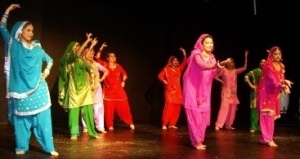 Giddha was the folk dance of choice for our Grandmothers and Mothers. It allowed them a platform to get together with other women, and through boliyan talk openly about their daily lives. I asked my Mum if this was a form of therapy for them, and she said “yes”. It was a release for these women to be able to have this time for themselves and openly release supressed feelings in a joyful manner.
We see a great number of young women in Universities joining the “Bhangra” team and peforming these rather masculine dances at Bhangra competitions. Where is our traditional Giddha? I found this video which shows a performance by the UC Davis Giddha Squad at a competition this year. It was nice to see that these girls decided to create some uniqueness to the monotony these Bhangra competitions have began to display. Hopefully this will be a continuing trend and we will see more incorporations of Giddha for women at University levels. There is a sense of elegance and femininity that Giddha has, and which Bhangra lacks for women.
I look forward to the day when young girls are able to immerse themselves in Giddha and learn Boliyan and truly appreciate what our culture has to offer. Maybe we will see a Giddha Academy some day? I am hopeful.
With Teeyan season upon us, we can take the first step in going and attending these events in our areas. In the California we have these events scheduled annually and it’s become larger every year. Please make sure to attend if you know of Teeyan happening in your area. It would be a great way to take your Grandmothers, Mothers, Aunts, Sisters, Daughters, and Friends out to spend an afternoon together. (And it’s a great workout!)
How do you all feel about this subject? How can we begin to make a progressive change towards incorporating Giddha into the lives of younger women?
Recently I was having a conversation with a non-Sikh about names and how you can tell the gender of a Sikh individual just by looking at their name. I told her that there really wasn’t a fool-proof way of doing this since many Sikh names can be used by both men and women. However, I told her, when you see “Kaur” and “Singh” used in the name, you have a better chance of identifying the gender since it tells you if the individual is female or male, respectively. (Just to confuse her, I did mention that Singh is often also used by women). We were later joined in our conversation by another Sikh woman who basically refuted my explanation of Sikh names by telling our non-Sikh acquaintance that in fact, she and a growing number of Sikhs in our community actually don’t use “Kaur” and “Singh” at all in their name. The whole conversation reminded me of another similar discussion I happened to have with a Sikh friend of mine who, having married a non-Sikh, said that she had no intention of using “Kaur” or “Singh” in the names given to her children.
Now, while I realize that these are two unconnected conversations and I am by no means suggesting this is a trend of any sort – I do wonder how common this is and what (if anything) it means for the Panth. If, for example, my friend chooses not to raise her children Sikh, then I feel ike it is less problematic that she does not use “Kaur” and “Singh” in their names. However, it is interesting to me when people who identify themself as Sikh choose to shed this identity. I am aware that a name by itself does not necessarily establish an identity. However, I wholeheartedly believe that having “Kaur” and “Singh” bestowed upon us by our Guru was no small thing and in fact, it does establish an identity for Sikhs. By not continuing to use “Kaur” and “Singh” in the names of Sikhs, how much of our identity is being diluted? I do believe that there are enough Sikhs who are conscious of this. Many young Sikh women, including myself, who use “Kaur” as a last name now intend to keep it as a last name after they get married. This is also a significant step in solidifying one’s identity.
Thoughts on this?
It’s men like David Addington and John Yoo that give lawyers a bad name. Addington was Vice-President Cheney’s enabler. Yoo authored the infamous torture memo stating that in order to qualify as torture, pain (resulting from interrogation techniques used on detainees) had to reach a level produced by ‘death, organ failure, or permanent impairment of a significant bodily function’ (see bottom of page 38 of the memo). The memo was later withdrawn and eventually released as part of an ACLU lawsuit, forcing the Bush administration to turn over documents related to the war on terror [link]. Together, these two men are considered the chief architects of the “enhanced interrogation techniques” implemented by the Bush administration.
They were subpoenaed to testify in front of the House Judiciary subcommittee recently regarding detainee treatment, interrogation techniques and their views on Presidential power. They stuck by a strategy to reveal nothing, basically wasting the Judiciary subcommittee’s time (which Congressmen pointed out).
One thing that distresses me about their testimony and this administration is that they make a mockery of the dream that brought my parents to the US. My parents left India after 1984 seeking shelter- a place where government officials didn’t violate the fundamental rights of the people and where officials were held accountable for their actions. They came to the place where Nixon handed over incriminating tapes upon order of the Supreme Court, with the entire American army at his command. Even if their dream was romanticized before, now it’s a joke. Yet my father is as stoutly patriotic (of his adopted country) as ever.
It was reported this week that a Court in Belgium has overturned a ban that had been established for five Sikh students wearing Patkas. This case began in May 2005, when these Sikh students were banned from attending KTA Domein Speelhof school in Belgium due to the implementation of a new uniform rule banning head coverings.
The court said that the ban on the religious head covering was a violation of the Sikh students’ right to manifest their religion under article 9 of the European Convention on Human Rights, of which Belgium is a signatory.
In a judgment handed down today, Judge Madam H. Coenen said that by excluding young people because of their religious beliefs the Domein Speelhof school in St Truiden had violated their right to practice their faith.
United Sikhs took up this case and are applauded for their great work.
The news comes at a time when our community is faced with many cases of injustice for practicing our faith as Sikhs. This is a positive step and shows that the fight for our rights as Sikhs is not a lost battle. It will take time, but we are progressing toward educating people who we are as a community. There are many more cases to be fought, but we will persevere.
Few of us are probably well versed in Afghani music, unless you’re in close proximity to a sizeable Afghani population, or unless you have Afghani friends. I don’t know if I’ve ever heard any, except maybe in independent films. (On a side note, how many Afghanis even consider themselves Afghani instead of Pashtun, Tajik, Hazara, etc.?)
Soon, we’ll be able to hear an Afghani-Punjabi fusion album…
Amritsars [sic] playing host to two Afghan singers who are shooting for an Afghani-Punjabi music fusion album. Ariana Sayeed, a London-based Afghan female singer along with Germany-based Afghani singer Javed Sharief arrived here to shoot the first Indo-Afghan music album. The album titled ‘Second Chance’ contains four songs, two of which are duets in Afghani and Punjabi sung by Javed Shareif and Holland-based Punjabi singer Balli Kalsi. [link]
In theory, this sounds like it could be really interesting, even for those who normally dislike fusion music. I bet folk music from the two regions, mixed, would be beautiful. However, a quick glance at Balli Kalsi, and a glimpse into the artists’ intent shows that this album, which may have had potential in someone else’s hands, is more likely to just be offensive to the intended audience.
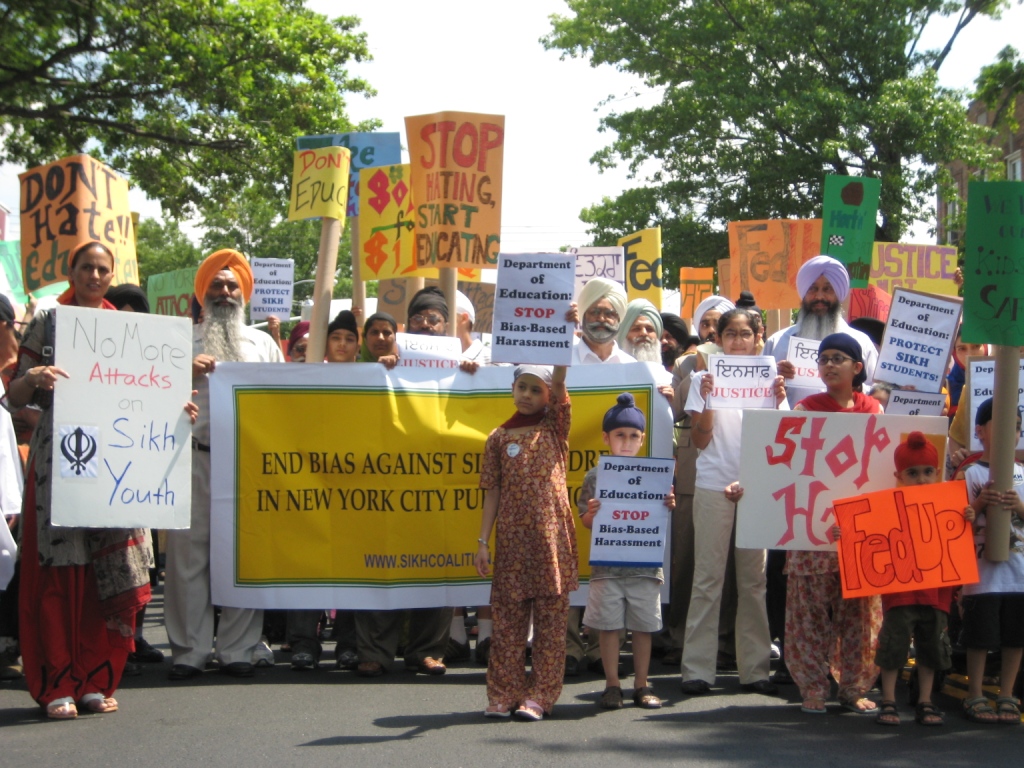 I’ve mentioned before how much I enjoy belonging to such a pro-active community. I don’t know whether it’s the Punjabi, the Sikh, or some combination of the two influences that makes people speak out, but whatever it is, I love it.
This picture, I think, portrays why. It speaks volumes. Hundreds of men and women of every age group walked together and made their voices heard in Richmond Hill today.
“Don’t Hate, Educate” and “Fed Up” (says the chotu in the front row on the right).
The girl in the front, center stole a piece of my heart too.
From the Sikh Coalition:
REMINDER– If you’re in the New York area, take the morning off work/school on Monday and join the Sikh Coalition in a march to end harassment against Sikh students in public schools:
When: Monday, June 30th, 11:00AM
Where: Meet at Sikh Cultural Society: 95-30 118th Street or Gurdwara Baba Makhan Shah Labana: 113-01 101st Ave.
Why: 1) Sikh students have a right to attend school without fear of harassment for being Sikh, and 2) you can help future students have a better experience in school than you, your siblings, or your friends may have had!
————————————————————————————–
The violence against Sikhs in New York that the Sikh Coalition tracks, and reports is a representation/reflection of the violence that young Sikh students undergo in many areas of the US. In areas where we don’t hear about such violence, it’s not because it doesn’t occur, but because organizations like the Coalition don’t exist to track, report and respond to the violence.  Ideally, we should all be able to respond to the needs of our local community, and I hope that we are building the capacity to do so in the near future. In the New York area, the Coalition is responding.
In the latest of a spate of attacks on Sikh students in New York, 12 year old Gurprit Kaur had part of her braid cut off and thrown in the trash. This occurred about a little over a year after another student’s hair was forcibly cut in the New York area in May of 2007. In response to the series of attacks on Sikh students in the New York (especially Richmond Hill) area, in the face of inaction by authorities after the group’s troubling findings on harassment in the school system, the Coalition is organizing a march on Richmond Hill High School. [Click on flyer for details.]
A blogger recently mentioned that many of us switch back and forth between English and Punjabi in conversations, and how it’s sometimes more comfortable to speak Punjabi. Have you thought about how your mental frame of reference shifts when you switch languages? Do you think this affects your personality? A recent study seems to think so…
Bicultural bilingual individuals have incorporated two cultures within themselves and speak the languages of those cultures. When cued by a particular language, these individuals activate distinct sets of culture-specific concepts, or mental frames, which include aspects of their identities. Three studies show that language-triggered frame switching (i.e., switching from one set of mental frames to another) occurs only with biculturals, not with bilinguals who are not bicultural. The studies uncover frame switching at the within-individual level, and they include both qualitative and experimental evidence. They also provide a methodology to identify the relative activation strength of specific mental frames in different languages. [link]
Researchers found that women classified themselves and others as more assertive when they spoke Spanish than when they spoke English. The study was based partly on women’s reactions to television commercials shown in English and Spanish.
One part of the study got the volunteers to watch TV advertisements showing women in different scenarios. The participants initially saw the ads in one language – English or Spanish – and then six months later in the other… “In the Spanish-language sessions, informants perceived females as more self-sufficient and extroverted,” they say… For example, one person saw the main character in the Spanish version of a commercial as a risk-taking, independent woman, but as hopeless, lonely, and confused in the English version. [link]
I haven’t read this paper yet so I don’t know the entire methodology, but from the TV-ad experiment, I wonder if the perceived assertiveness is a reflection of the level of comfort within the culture that the individual was responding to. If you’ve noticed a shift in mental frames when you switch from English to Punjabi (or French, or whatever else you speak), how does the shift in mental frame affect your personality?
SCORE has already come under scrutiny here in The Langar Hall, and I don’t wish to scrutinize the entire organization further. But their list of honorees from the 2008 Heritage Dinner does deserve some attention. This year, the following individuals were honored:
1. Sandeep Singh Caberwal, a Sikh entrepreneur in Silicon Valley and a model, wears a turban, has a beard and was chosen by designer Kenneth Cole in its recent fashion campaign
2. Ms. Tami Yeager and Preetmohan Singh for their film documentary “A Dream in Doubt,” which explores the real life story of Rana Singh Sodhi’s family, whose brother was murdered as the first hate crime victim in AZ in the 9/11 aftermath
3. Darshpreet Singh, a recent graduate of Trinity University in San Antonio, Texas. was co-captain of the Men’s Basketball team and fan favorite, and believed to be the only turbaned Sikh to play in a National college basketball game
4. Dr. Jagjit Singh Khalsa is the Chief of Medical Consequences of Drug Abuse at the US National Institutes of Health
5. Gurvendra Singh Suri, founder & CEO Optimal Solutions Integration, Inc., a successful technology consulting Company in Dallas, TX
6. Raghbir Singh Subhanpur, business owner from New York and President of New York Shiromani Akali Dal was honored with Community Service award
7. Surinder Singh Chawla, Nassau County Human Rights Commissioner, was honored for Social Activism and Service
8. Ro Khanna, an Indian American political activist from California was also honored for his role in supporting Sikh issues. [link]
Readers, what strikes you as odd about this list? . . . The only woman recognized is American. How is it possible that no Sikh women made any noteworthy contributions to the Sikh or American community in the past year? (There seems to be an attempt to recognize contributions to both Sikh and American, non-Sikh communities.) Let me tell you- it’s not.
I found this interview with the revered Fauji Singh ji, after completing the Edinburgh daur- a mere chabi (26) miles to be so endearing.
He has a message for the nau-jawan and at the end (it kind of got cut off, but he seems happy that the nau-jawan, both boys and girls, are running these days)…

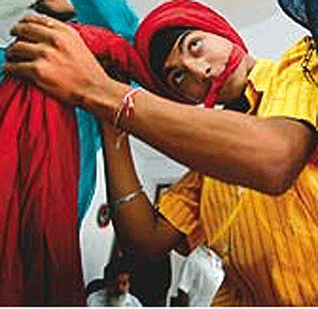 Could the community’s recent rallying in response to hate crimes have similar results (though in smaller proportions) as was seen after Operation Bluestar of people re-committing to their faith?
Many Sikhs today, unfortunately, cut their hair at some time during their adolescence. This is seen amongst Sikhs who are isolated in communities that have little or no exposure to Sikhs (or sometimes anything outside of that particular community) but also in communities with large numbers of Sikhs.
It seems that at least in New Jersey, the increasing number of Sikhs along with recent media exposure is alleviating at least one of the reasons that kids decide not to keep the Sikh roop.
Despite the recent brutal harassment of a high schooler in New Jersey which made international (Indian) news, some Sikhs in Jersey feel that awareness of Sikhs is growing. The media campaign after the incident has also probably contributed to increasing awareness in the area.
Apparently the police have arrested over 70 Sikhs in Mumbai for vandalizing MTV’s headquarters there. The reason for the protest and vandalism? Apparently MTV’s poster promos featured a sardarni massaging a man, which they found offensive to the faith community and its principles.
Now, I typically do not advocate vandalism or violence as a means of protest, but I think this incident brings up a larger issue around representation, especially for minority communities. Is it possible that there is a Sikh girl, somewhere, who is a masseuse? Probably. However, the issue at hand is whether or not such a representation is offensive to the teachings of Sikhi (I have not seen the poster, so I can’t comment on how salacious it is), and if so, what an appropriate response would be.
Like many other minority communities, Sikhs face a unique task in trying to combat stereotypical and lampooned representations in the media while dealing honestly with the diversity of experiences and viewpoints within the broader faith community. This event, while very different, reminded me of the gurdwara incident in the UK a few years ago. Many feel that it is dangerous to “indulge” negative representations because they tend to produce new stereotypes or to violate the ethic core of the community (a good example of stereotypical Sikh representations would be the buffoon/drunkard or villain/nemesis in Bollywood films). So, if this poster was offensive, how should the community have dealt with the issue? I don’t know if they had tried other tactics (e.g., letter writing, phone calls, non-violent protest), but then again, it’s not hard for a non-violent protest to turn to vandalism or other outward action.
In the U.S., SMART (now SALDEF) originally started as an organization to combat misleading and incorrect stereotypes in American media. The Mumbai case is different on many fundamental levels: Sikhs are a much larger and much more visible minority in India, there is less of an “excuse” for ignorance on the part of national media networks (or international, in this case). However, it doesn’t seem like there’s a great mechanism for dealing with incidences like this.
How can Sikhs work to balance negative representations against the reality of community issues without recasting themselves as another stereotype or caricature?
A recent play seems to have caught my attention. I provide the description here in length:
Dangalnama is a gripping account of sectarian rioting in India since the assassination of Indira Gandhi in 1984. It is also the story of a younger generation making sense of their history.
Through the voices and personal testimonies of Indian journalists, students, artists and politicians, director Prasad Vanarase presents survival stories, which shed light on the current social, economic and political climate in India today and the wide disparity between the poor-rural and modern-urban population. Performed in five languages (Hindi, Marathi, Gujarati, English and Kannada), this eye-opening and satirical take on Indian’s recent past also looks forward to a more unified future.
Dangalnama boasts a cast of 14 drawn from across India. Using satire and comedy, Dangalnama shows us the human side of India’s complex and often hidden issues in this powerful 90min production followed by a lively 30min discussion with the cast and director. [link]
Dangalnama A Flame Production directed by Prasad Vanarase
A Lift commission / UK Premiere
Fri 13 – Wed 18 June 13, 14, 15, 16, 17: 7.30pm – 9.30pm
15, 18: 2.00pm – 4.00pm
An immediate observation leaps out at me from the description. It is striking though that the play in being performed in five languages, yet the main language of the victims of the genocide, Punjabi, is left out. I wonder why?
I had a long and interesting conversation with a friend of mine this weekend on different attitudes towards finance and charity between different world religions. We noted that both Judaism and Sikhi require a 10% charitable contribution, in addition to service, which has no upper or lower bound and serves a different purpose. This dovetailed with a conversation I had with a few friends, including one who is an Islamic banker in Dubai, about religious concepts of usury, interest, and charity.
For many low-income and poor communities, asset/wealth creation is a major hurdle, and access to financial/resource markets and services is non-existent. Although Sikhi has strong proscriptions against materialism, greed (moh), and attachment (maya), it also has a redistributive element. While simplicity is embraced, wealth is not necessarily wholly eschewed (if earned honestly and put to just uses).
If a financial institution were opened upon Sikh principles, what would it look like, to you? What kind of services would it offer, or how would it help address the structural exclusion of the poor? For example, I could imagine very low interest or no interest loans, but perhaps other infusions? In other time periods, Sikhs built free clinics and community schools. Khalsa College, on an endowment from one of its funders, still offers free college tuition to local residents (regardless of religion). What are the kinds of “assets,” beyond simply wealth, that could contribute to Sikh principles of economic justice? Do you feel such principles (i.e., economic justice) exist in Sikhi?
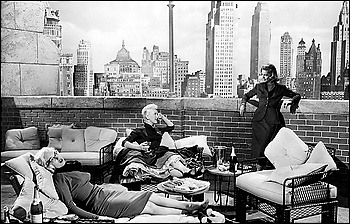 About a week ago, Sex And The City (SATC) hit theaters. Many may resist an association with the dating scene that the movie and show explored with the lives of Punjabi Sikh women, and wonder whether this is appropriate for The Langar Hall. But the stories and characters of SATC reflect broad ideas that apply to all women and since every woman I know has seen or is planning to see the movie, I’m curious about how these themes apply to Punjabi Sikh women in particular and how our experiences compare with other groups. This post does not promote anything portrayed in SATC, but instead explores the stereotypes in the characters and questions how our Punjabi-Sikh-ness affects how much of those stereotypes we embrace. First, what is SATC really about?
the three-girls-in-the-city movie… a cinematic staple since the 1920s, has been an unusually enduring and lucrative one, exploiting each succeeding era’s anxieties surrounding women’s changing roles and helping define those eras’ new ideas of modern life. In them, audiences can watch women negotiate and sometimes subvert the forces that limn and limit their choices. [link]
Prices go up after Monday. Take a moment at work, take a quick break from your finals, but take it now! A commenter asked to for a meet-up at the conference. A few of the bloggers will be in attendance so come meet a few of the faces behind the nonsense we write! Register now at www.jakara.org
———————————————————————————
From our discussions on dividing Gurdwaras to Green Gurdwaras; from confronting the demons within to forging a new consensus; from questions of grassroots movements to moving beyond generation two blues; all are invited to attend JAKARA 2008 and discuss face-to-face these important issues.
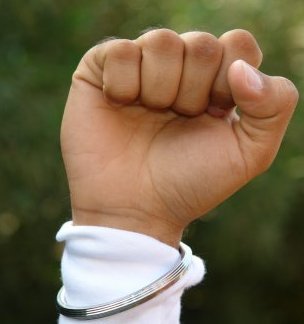 The Jakara Movement Sikh youth conference is only three weeks away with registration closing on June 16th. REGISTER NOW to avoid late fees.
Who: YOU!
What: JAKARA 2008: Growing with our Gurdwara
Where: FRESNO, CA
When: June 19-22, 2008
Why: Because YOU need to be there. Visit the website for more information.
Yes I had urged all to attend in a different post, but consider this a friendly reminder.
Plan to attend, even if you just want to see life beyond bhangra or shoooooooooot, because you just want another Sikh T-shirt (no, you don’t get those ones).
While exploring the Sikh blogistan, I came across this link from Sikhswim (Thanks Savraj!) and wanted to share it with the rest of the Langar-ites.
Late last year, November 2007, a Sikh Seattle taxi-driver, Sukhvir Singh was brutally attacked by a drunken Luis Vazquez. Luis had been placed in Sukhvir’s taxi by two police officers, after he had been denied entry into Husky Stadium for public drunkenness and alcohol-induced bellicose behavior.
The story may have ended with the sentencing of Luis Vazquez, but it doesn’t. The story is also about the Sukhvir’s courage, faith, and forgiveness. Sukhvir was the vehicle for Waheguru’s forgiveness. Luis has been given another opportunity. The video is a bit extended, but well worth the watch.
Reflection for Monday by Guru Nanak from SGGS (p. 223) in Raag Gauri:
Khima Gahi Brath Seel Santokh
Extending forgiveness is the (true) fast, (the true act of) kindness, (the true path of) contentment
So we have seen two (here and here) performances by Signature. Although most Langar-ites did not seem to enjoy the second performance as much, it impressed enough people to propel the duo into the finals of Britain’s Got Talent. In fact they were the first team to be voted in by the public.
Now, in their first interview, Suleman (often incorrectly spelled Suleiman ) Mirza and Madhu Singh shed some light and perspective on their performance:
“Our routine is about togetherness and overcoming conflict,” said the rather handsome Mirza, who has been a Jackson fan since he was six years old. “I start the act with a Western dance, and then Madhu comes on stage. I look down on him because I don’t understand his culture. But he surprises me, and he works really hard, symbolising immigration, and then we work together, and show that everyone can get on.”[link]
Heavy stuff, but I’ll buy it.
The Punjab government has finally allocated funds to assess the breadth of farmer suicides in the state.
The Punjab Government seems to have finally woken up to the need of having a census on farmers’ suicides in the state. The state government, it is learnt, has the [sic] entrusted the arduous task of completing the census to the Punjab Agricultural University. As per Dr R.S. Sidhu, head of the Department of Economics, PAU, “The state government has asked us to do the work and we have taken it up as a research project. Though whole of Punjab is to be covered under the study, the state government has asked us to do a pilot project in two districts of Punjab, Gurdaspur and Sangrur initially.
The census will be conducted by the Punjab Agricultural University (PAU), based in Patiala Ludhiana. During the first phase of the survey, PAU will conduct a door to door survey in about 1,500 villages in Gurdaspur and about 575 villages in Sangrur out of the 12,000 villages in Punjab. The report from this initial phase is set to be completed in four months from the beginning of the survey, which is set to begin in the next couple of weeks.
The census will take into account farmer suicides occurring after April 1, 2005, excluding suicides of farm laborers.
Rising pesticide and fertiliser costs, shrinking land holdings, declining soil fertility and heavily-subsidized farming in wealthier countries are some of the factors blamed for these suicides.
In recent months I have witnessed the ceremonial openings of three new Gurdwaras in the Central Valley area. The number of new Gurdwaras are continually growing. Some people may applaud this action as an indicator of our success for having the ability to build million dollar Gurdwaras. But is this the right direction for our community to be heading?
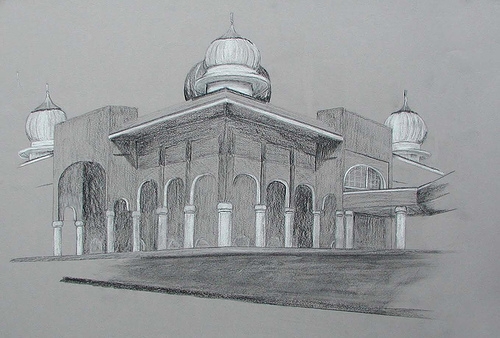 By building more Gurdwaras, we are dispersing as a community rather than emerging as one. Growing up in the UK, all the people we knew growing up attended the one Gurdwara in our town. After some time, the space capacity was too constrained and people began complaining about not being able to sit with the Sangat. Since there was no additional space around this Gurdwara, there wasn’t any expansion work that could be performed. As a consequence, another group opened a new Gurdwara in the same town which fufilled the capacity issues, since it was almost three times larger. So slowly the Sangat at the smaller Gurdwara began to dwindle due to more and more people attending the larger Gurdwara.
Why wasn’t it possible for the community to come together and move as a “whole” to the larger Gurdwara? In the Central Valley there are so many choices of Gurdwaras to attend, but I personally feel this is dividing us. Politics and ego are at play when these associations and groups get together to begin implementing a “bigger, better, more expensive” Gurdwara.
Have any of you witnessed similar divisions happening within your communities and Gurdwaras in your area? Do any of you think this is a positive progression? Is there anything we can do as a younger generation to unite the community?

