
A few months ago, my fellow langa(w)riter asked, “Who Speaks for Sikh-Americans?” While we are still waiting for the exciting conclusion (or atleast a second part), recent news over the weekend, makes me also ponder this question.
The news came from Pakistan and Malaysia.
In Pakistan, it seems a section of the Sikh community there has demanded
”The Sikhs’ problems could be solved if the community is given representation in the government or if a Sikh is appointed an adviser to the prime minister,” said Swaran Singh, candidate for the post of president of the Pakistan Sikh Gurdwara Prabandhak Committee.
He suggested that an adviser to the prime minister should be appointed to attract Sikhs from other countries to invest in Pakistan. Christians and Hindus have representations in the government, but Sikhs have yet to reach the national or provincial assemblies, he said. [link]
In Malaysia, the news rang out:
Malaysian ethnic Punjabi Karpal Singh and son Gobind Singh Deo have created history by becoming the first-ever father-son duo to be elected members of a Parliament in the world. [link]

We know the Britney Spears and Miley Rays of Hollywood tremendously influence the lives of our pre-teen and adolescent girls. The voices we keep hearing on television are those of white, multi-generational American, and suburban teens.

Their experiences are being boxed and represented as THE experience of adolescent girls in America. Rarely on television does the media interview pre-teen and teen girls of color from immigrant backgrounds living in urban/rural areas about their perceptions of life and the future – unless the story is on teen pathology from pregnancy to drugs and violence.
Therefore, I was pleased to see the trailer of a documentary, “Going on 13”, that is about pre-teen girls from minority, immigrant, and urban backgrounds discussing how they negotiate the whirlwind of changes and choices, from body image to relationships, just as girls in the suburbs.

The only distinction is how their social, economic, and cultural contexts add a different layer to the experience that is not a form of “mal-adaptation”, but another way of living. The film-makers’ goal was “… to show the reality of preteen girls and urban minorities, which isn’t often portrayed in the mainstream media” and “… wasn’t just focused on the pathology of urban youth”.
While we’ve heard a recurrent Canadian voice that claims that Sikhi is incompatible with being openly LGBTIQ, a new Sikh-specific support group has grown in Vancouver. There have certainly been South Asian-specific support organizations in the diaspora for the last decade or so (within the U.S., Trikone in SF, and SALGA on the east coast). However, these organizations have been challenged to create space for those at the intersections of regional and religious identity — i.e., between a Punjabi/South Asian ethnic identity and a Sikh religious identity. Similar organizations have recently sprouted up in the queer (South Asian) Muslim community, but this is the first formal Sikh support group I’ve heard about.
This made me reflect on other issues of integration and advocacy across communities. I think it’s vitally important to have community organizations, in part because they play a large role in creating sustainable institutions. However, I also resent that “mainstream” organizations sometimes use these institutions as an excuse for failing to provide comprehensive services for the true diversity within a larger, umbrella community. I also worry that it’s only possible to get this level of specificity in areas where there is a large enough community to achieve a critical mass.
What do you think, readers? Would a Sher in your area provide a necessary safe space? Would it be feasible?
Previous coverage: Towards a Queer ethos, A “Sensible” Religious Response to LGBTIQ Sikhs
While I had contemplated covering some serious news, scouring through Google News, an article caught my attention. Today happens to be the 33rd birthday of David Beckham. Not that I really care, but the article 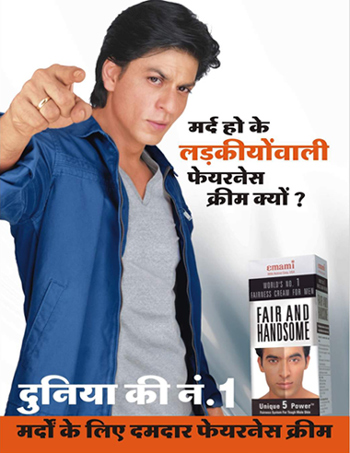 bemoans how David lost his star status over the past few years:
From 2003 to 2004, Google ranked his as the most popular sportsman in the world, by virtue of the number of times his name had been logged in. But in 2008, David Beckham’s popularity has been confined to reports of his luncheons with his wife, Victoria, and her famous girlfriends — Eva Langoria and Katie Holmes. [link]
The article theorizes that Beckham had gotten too large for life. I had my own theory….since Beckham had always been labeled as the “poster boy” for metrosexuals, maybe we finally got sick of him. Maybe, after a decade of this god-awful trend, we have returned to normalcy and are in the post-metrosexual age. Eager to test my hypothesis I devised the full-proof experiment — I would look up the word “metrosexual” in Google News.
As far as my hypothesis goes, I WAS WRONG!
I came across this video, linked from PP about the elections for the mayor of London. For more election coverage, visit Pickled Politics. Check out this video on ‘how to campaign’ in Southall. The desi van is just classic. It is almost exactly as they campaign in Punjab. I wonder if they distribute free alcohol and drugs like Badal’s Akali Dal and the Congress.

I thought I had seen something similar in a movie before. Here it is….forward to 3:10

Poor KP Gill. The ‘butcher of Punjab’ lost his cushy government position, after having been President of the Indian Hockey Federation for fifteen years.
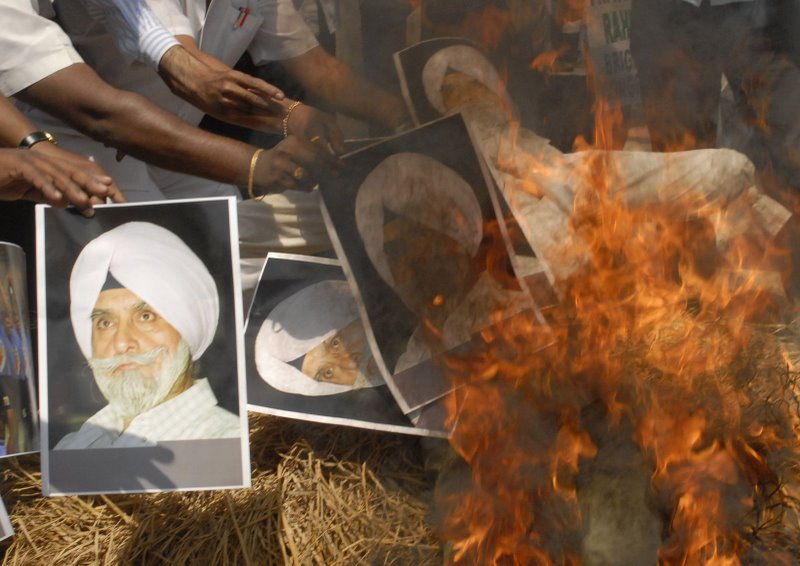 Bribery, corruption, and mediocrity – this is Gill’s legacy as President of the Indian Hockey Federation. After failing to even qualify for the Beijing Olympics in field hockey, for the first time since field hockey’s introduction in 1928, and then finding himself in the midst of an expose where his handpicked Secretary-General was videotaped(!) accepting a bribe to select a player on the national team, the calls for Gill’s dismissal had become too loud. Others had called for his resignation, but the ever prideful Gill has a track record of being unceremoniously dismissed.
Crying as usual, Gill responded:
“Am I to resign based on a concocted sting operation, or simply because some players or a section of the media wants me to? There is a rule of law, a democracy in the country, I am not going to resign when I haven’t done anything wrong,” he said. [link]
Really, what is he going on about? Was his cushy bureaucratic position an ‘elected’ seat? What does democracy have to do with anything in this context? Rule of law? The fact that Gill should ever utter the phrase ‘rule of law’ or appeal to it is beyond absurd. Unfortunately the tragedy upon those families he destroyed prevents me from laughing at the irony. Where was the rule of law for the tens of thousands he made ‘disappear’?
I just saw this video and thought I’d share it with you all. Look out for the surprise!
In keeping with TLH’s agricultural theme, the BBC reported today on the environmental health fallout of the Green Revolution in Punjab (I). The Green Revolution introduced industrial mono-culture farming to small farms. The result was a short and sharp growth in grain production. However, over time this has also resulted in declining harvests. Why? Because many of the “best practices” from industrial farming are also unsustainable. Without crop rotation, most stock grains (corn, soy, wheat, rice, and cotton) leach nutrients from the soil. The industrial solution to this is an over-reliance on both manufactured fertilizer (to re-fix nitrogen) and pesticides (since mono-crops are notoriously more vulnerable to weather or pest devastation). Now declining crops are paired with another negative outgrowth from devastatingly unnatural farming practice: increasing rates of cancer, and possibly pesticide poisoning, among Punjabi farmers.
In agricultural economics, public health, and agrarian studies, the links between pesticide use and health have been clearly documented in the local and international context (1, 2, 3, 4). We know, now, that many of these methods do not post the high crop levels that seemed never-ending in the past. And in the context of — arguably trade-driven — food shortages world-wide, this article raises questions about the disproportionate burden of agrarian “success.” Is it truly successful if it’s unsustainable? Is it “success” if grower booms later severely limit the quality or duration of life? How about the permanent ecological damage? The loss of biodiversity? Punjab has fed the subcontinent for decades, but what will happen if growth continues to fail while the population surges?
Previous coverage: “Nanak Kheti”… and Natural Farming, The Rights of Punjabi Farmworkers, Asian Americans and Rural Development, Farmer suicides continue…
I figured I would start off this week with an odd news story – odd, but deserved of some spotlight. Over the weekend it seems that Taliban-aligned groups saved two Pakistani Sikhs from their kidnappers and are threatening to execute the kidnappers to stifle law-and-order problems in the area.
Two Sikhs, who were abducted from a district in Pakistan’s restive North- West Frontier Province (NWFP), have been rescued by the local Taliban and religious scholars, who decided to publicly hang their nine kidnappers on Monday to discourage crimes in the region. Attar Singh and Sehra Singh were kidnapped by a group of criminals from Dowaba in Hangu district. They were freed on Saturday after the intervention of local Taliban, religious scholars and tribal elders, The News reported. [link]
The news may seem shocking. The Taliban, the same forces that destroyed the Bamiyan Buddhists cave-carved figures, are now saving Sikhs?
While by no means should this post be construed that I am somehow supporting the Taliban, I do believe that this small anecdote helps illustrate the complexities of Afghanistan and beg for us to engage in critical analysis, rather than merely parroting reports in the news media.
Early last month, UNESCO ‘supposedly’ released a report that said Punjabi will become extinct in the next 50 years. Soon our one-man PR campaigners (we have many in our community) came to the forefront. In the lead was Kuldip Nayar, who said:
“I have gone through a report prepared by Unesco which says the Punjabi language will disappear from the world in 50 years. It shocked me. I am out to save Punjabi language and culture… Our roots, Punjabi language and culture, are decaying and none in Punjab is worried about it,” he said, adding, “I have been to Pakistan and people there also feel their new generation feels hesitant to converse in Punjabi.” [link]
Ranked in the top 20 most spoken languages in the world, it created quite a sensation to believe that within 50 years the Punjabi language would go extinct. However, some ACTUAL journalists that took the time to delve into the subject without jumping on the hysteria-bandwagon found that no UNESCO report ever existed. So I guess it begs the question, what was Kuldip Nayar reading when he said he ‘[went] through the report’? What was he reading that ‘shocked’ him?
So while Punjabi does not seem to be endangered for the time being, it is under severe threat due to Punjabi Sikhs’ own lackadaisical treatment of it, as well as it not being a language of commerce. The World Sikh News report has some fine suggestions for its preservations. One of our own langa(w)riters had their own take as well.
So as we get ready for the weekend, I celebrate my maboli as a universal language. Punjabi Maboli Zindabad! Chak De!

So yesterday (4/23/08) for all of our valeti readers was Saint George’s Day. For the rest of us that probably don’t care (including apparently most of England), Saint George is the patron saint of England (sort of like Saint Patrick for the Irish) that:
[Saint George] was a third-century Turkish soldier who supposedly had the power to slay a dragon but likely never set foot in Britain. [link]
Since he was probably Turkish to begin with, it seems like there should be no problem that Chaz Singh should be the Modern Day Saint George.
Modern Day St. George –> click here to watch BBC Video (love the British teeth!)
Chaz Singh is no newcomer to the media spotlight. He has been highlighted in a traveling picture exhibition as well as been commented upon by some popular desi blogs:
Chaz Singh is one of the recipients of the BBC Breeze bursaries that has enabled him to develop his ideas about identity in a series of photographic images and poems. [link]
Is Chaz SIngh trying too hard? Probably, but that he should even be accepted as such should be seen as a move towards cultural pluralism. Chaz Singh is attempting to make the turban very much English. No different than custard and roastbeef.
 For those of you in the LA area planning on attending the Indian Film Festival of Los Angeles, be sure to check out some of the musical talent that will be highlighted throughout the week in conjunction with the festival. Gurpreet Chana, aka The Tabla Guy, will be performing…
Tabla player Gurpreet has been taught in the Punjab Gharana (style) from his Ustad Ji Professor Parshotam Singh. He started by playing at the Gurdawara with kirtan and continues to do so. Gurpreet’s passion for percussion instruments has led him to experiment with other world beats and percussion instruments such as the djembe, congas, cajon, dhol, zarb and daf.
You can listen to some of his beats on his website and here’s a video of him performing during the Toronto Raptors halftime show:

Guest blogged by Mewa Singh
This evening I had the opportunity to view a screening of a new documentary on the tragedy and heroism of the Sodhi Family. From the website of “A Dream in Doubt” comes the synopsis:
“A Dream in Doubt” is an immigrant story in a world in which patriotism has morphed into murder. When Rana Singh Sodhi’s brother is killed in America’s first post-9/11 revenge murder, he begins a journey to reclaim his American dream and fight the hate that continues to threaten his community. This intimate, hour-long documentary of one man’s odyssey from persecution in India to embracing America as his homeland proves that courage and hope have the power to overcome hate.

Last month I attended PolicyLink‘s 2008 Regional Equity Conference in New Orleans. The conference covered poverty and racial inequality in the context of the U.S., but it focused on the connections between living spaces — i.e., between neighborhoods, cities, suburbs, and rural lands.
While cities were at the center of the discussion, I spent my last day at the Rural Equity Caucus, where representatives from some of the U.S.’s rural communities (Hawaii, Mississippi and Georgia, California, Connecticut and Massachusetts, North Dakota, Wyoming) gathered to discuss advocacy, development, and the common issues facing their communities. While the conference took place in the South, the overwhelming number of people in the room were from California’s Central Valley. There was some racial diversity among those present — a handful of African American farmers from the South, and a smattering of Latinos/Latino-Americans from California’s rural core, but there were almost no Asian Americans.
I like T-shirts. I am a self-described ‘scrub.’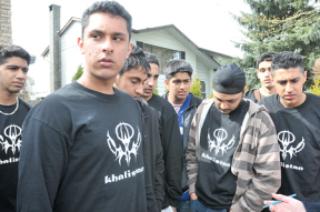
Someone who doesn’t care much about what they do or how they look doing it. Or if you just do something very very stupid.
((Girl walks into classroom for a class one day dressed in XXL sweatpants and a huge baggy sweatshirt, no makeup, hair looks nasty, but shes in perfect good health, just very lazy))
“Wow Anne, you are dressed like a scrub.”
T-shirts are my staple. For every season I have a Sikh camp/organization T-shirt. Need brown, I got it; need blue, I got it; need maroon, I got it. Did I mention I like T-shirts?
Apparently, so do a group of Sikh high school students in Surrey. Recently, the Canadian press reported here and here that:
Thirty students at Princess Margaret Secondary School say they’ve been put on suspension notice after wearing contentious T-shirts to class.
As I was exiting the parking lot of a major grocery store in a heavily concentrated Punjabi area the other day, I saw in my rear-view mirror a woman wearing a salwar-kaamez and holding a Bible with two Indian boys dressed in their “Sunday best” and carrying leather book bags, while they approached a man with a friendly smile. How surprised was I to see a Jehovah’s Witness woman wearing Punjabi clothing while she and these two boys proselytized in this Punjabi-concentrated area.
A few weeks prior, a friend of mine who lives in this same area, shared with me the story of how her family was confused to find a Punjabi couple at their front door delivering the message of God as Jehovah’s Witnesses. She told me that after hearing the door bell she ran to the door and peeped out the window and saw a man wearing a coat-pant and a woman wearing a salwar-kameez. Instantly, she knew they were Jehovah’s Witnesses because of the Bible they were holding and the other paraphernalia in their hands. My friend hollered to her dad that there was an Auntie and Uncle ringing the door-bell, but they looked like Jehovah’s Witnesses so she wasn’t going to answer the door. However, her dad responded rightfully so, “ekaan thaa teekh nahi laghdhaa … ladoo na dhaan ai hon” (that doesn’t look right they might be here to give ladoos).
So the weekend is upon us again. Yesterday, I had a friend tell me about an oh-so-common experience. His name is Harjinder [or something like that] and at work his co-workers asked if they could call him Harry. Something akin to when Barack went by Barry, back in the day. So Harry, ahem I mean Harjinder, stood his ground and insisted that his co-worker learn his real name. So on this Friday, I throw it out there, what are some of the names people have asked to call you?
Also for your viewing pleasure, here is a clip on the subject from one of the GREATEST programs ever: Goodness Gracious Me.

Today I announce the beginning of a new award. It is the ‘Stupidest Headline Featuring a Sikh-related Article.” My first nominee:
“A Temple That Aladdin Would Be Proud Of”
It seems that our friends down-under in Autralia, at the Shepparton News, were reporting the opening of a new Sikh Gurdwara. The article’s first paragraph continues with the obnoxiousness:
There will be no genie or magic lamp, but Harpal Singh described the finished product of Shepparton’s first Sikh temple as something similar to the palace of Agrabah in the Walt Disney animation Aladdin.
I doubt Harpal Singh said anything of the kind. [This assumption was faulty and the author of the article did clarify that Harpal Singh did in fact make the connection. Thank you Kayla!]
In 2008 can you really get away with being this dumb as a journalist?
Do you have any other nominations?
What moves you (both physically and emotionally)? Hip hop, the dhol, or Surinder Kaur? Artists, musicians and dancers often use their skill and art as a medium to promote their ideas.
The music of the Staple Singers soundtracked the civil rights movement: it was their songs that were sung on protest marches; Martin Luther King was a close friend of Pops Staples. “Pop, he always told the songwriters: if you wanna write for the Staples, read the headlines,” she says. “‘Cause we wanna sing about what’s happening in the world.
You’ve probably heard the classics “I’ll Take You There” and “Respect Yourself” by the Staple Singers…
The jazz writer Stanley Crouch once described the sound of the Staple Singers as “joy and thunder”. From the 50s, the family group, led by Roebuck “Pops” Staples, married a rumbling gospel with soul and blues and politics, creating hits such as I’ll Take You There and Respect Yourself.
Music has played a significant role in mobilizing social and political movements- from the Civil Rights movement in the U.S. to the anti-apartheid movement in South Africa by its power to move people emotionally and also to convey information .
We talk a lot about issues our community faces- what music motivates you to face those issues?
Do artists have a responsibility to engage with the issues of their day? Or do activists have a responsibility to make music about their ideas to connect with their audience?
Although my earlier discussion on multiculturalism put forth some of my thoughts, an interesting news item caught my interest yesterday. I guess this can be seen in a way as a part II of that original post.
While many of us spent our weekends remembering the spirit of the Khalsa, attending Nagar Kirtans, making rounds at the Vaisakhi Melas, or buying tickets for the upcoming Gurdas Mann tour, some New York Sikhs did something very different.
Sponsored by the Sikh Coalition, Sikhs in New York gathered at the steps of City Hall in protest. They released a report, “Making Our Voices Heard: A Civil Rights Agenda for New York City’s Sikhs.”
The report provides its own background:
In December 2006, the Sikh Coalition, with the help of several dedicated volunteers, began conducting the first ever civil rights survey of New York City’s Sikhs. The survey intended to gather information on Sikhs’ experiences with incidents of bias, employment discrimination, language access and other issues that hinder full integration into New York’s civic and political life.
This report represents the results obtained from the data we collected from 1,021 Sikhs who live in New York City’s five boroughs. The data presented in this report identifies significant gaps between the promise of the law and the Sikh community’s reality on the ground.

