
Beyond Bhangra
Once upon a time there circulated a stupid joke that the only culture of Sikhs was agriculture. Despite the stereotyping of yesteryears, for too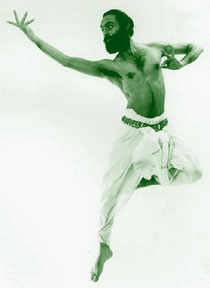 many the only associated culture to be promoted is bhangra (and sometimes giddha).
There is a growing legion that are seeking to promote Sikh arts, such as the classical kirtan tradition in Guru Granth Sahib’s ragas, visual expression (some examples were discussed on an earlier post), the art of gatka, and many more. However, still despite these and other efforts, when promoting to large audiences, we do bhangra.
With full transparency, I must admit I am not much of a fan of Bharatnatyam, but I completely agree with Bharatnatyam dancer Navtej Singh Johar‘s assertion that:
“Punjabi culture is very rich and we are just not about giddha and bhangra. Our folk tales, Sufi music and poetry traverse boundaries.”
Although I don’t agree with his elitist hierarchies of South Asian dance forms, I am intrigued by his production: ‘Fanna: Ranjha Revisited.’
So here is my question. What is life beyond bhangra? Whenever Sikh organizations have an opportunity to exhibit whether to Sikh crowds or non-Sikh crowds, what are other alternatives outside of bhangra (and gatka when certain measures don’t allow for it)? Any other thoughts or ideas?



38 Responses to “Beyond Bhangra”


I wish we could have other things besides bhangra classes and these competitions. For example, I wish there were classes where you could still learn how to make a pulkari or design punjabi clothes. This very much is an art to me, if you watch the people who create our clothing, the technique required is amazing. I wish we had art shows for this kind of stuff, kind of how the native americans always create jewelry and display it at shows.
Also, instead of so many bhangra competitions it would be nice if we could have punjabi poetry readings, where both historical punjabi poetry is presented as well as new creations by people. I remember going to this Sikh seminar and the speaker was late so in order to delay one of the Uncles from our local Gurdwara who is known for poetry got up and started reciting. That’s the closest I have seen to a public presentation of punjabi poetry and that was almost six years ago!
Maybe it would be nice to have a story telling night so often where these traditional folk tales are told and discussed. I feel that most of our community doesn't know these folk tales so how can we present to others what we don't know ourselves.
I wish we could have other things besides bhangra classes and these competitions. For example, I wish there were classes where you could still learn how to make a pulkari or design punjabi clothes. This very much is an art to me, if you watch the people who create our clothing, the technique required is amazing. I wish we had art shows for this kind of stuff, kind of how the native americans always create jewelry and display it at shows.
Also, instead of so many bhangra competitions it would be nice if we could have punjabi poetry readings, where both historical punjabi poetry is presented as well as new creations by people. I remember going to this Sikh seminar and the speaker was late so in order to delay one of the Uncles from our local Gurdwara who is known for poetry got up and started reciting. That’s the closest I have seen to a public presentation of punjabi poetry and that was almost six years ago!
Maybe it would be nice to have a story telling night so often where these traditional folk tales are told and discussed. I feel that most of our community doesn’t know these folk tales so how can we present to others what we don’t know ourselves.
I've never come accross a sikh male bharatnatyam performer / choreographer. I'm intrigued as to how he became interested in a discipline which is 'quite remote(?)' from traditional punjabi culture of today.
Though I guess it's probably annoying for him to be asked such banal questions. It fascinates me because it's so rare to come accross people who follow their own path and choose to ignore social stereotypes.
I think it's admirable yet my first split second reaction to his performance in 'fana ranjha revisted' with another male artist was of surprise – though I'm annoyed that it was. If he weren't a sikh – I probably wouldn't think twice. Shows me no matter how much we stretch ourselves from the norm – it's still deeply ingrained in us – if only at a superficial level it's still there.
I think it's great that punjab and punjabi audiences receive exposure to the depths of sufism / poetry and dance again… something more soulful than the overly repeated references to the 'kala prandha' and the 'mornee di chaal' and the 'ghar di sharab'
It's great that someone's doing something that makes the public THINK! I wonder what the reaction of the masses will be.
I hope he stays true to his art. (sorry I don't know much about him)
I was dissapointed when rabbi shergil went from reciting bulleh shah to bollywood films.
Doh he already answered the question about reaction of the punjabi masses.
His statement about punjabi culture being static is so true. Well it may not be static but it's certainly moving very slowly and in the direction of the gutter along with the 'ghar di sharaab'
I'm not dissing bhangra – it has it's place – I just wish lyrics weren't brain dead and focused on just one or two subjects 'sharab and sabab' 😛
I'm not suggesting that revisting sufi kalam or 'legendary' stories is the way to go – just something more meaningful than… well you get the picture 🙂
oh sorry – I didn't answer the questions – nicole already said punjabi clothes I'd say embroidery too. Poetry and story telling – definate plus. One thing I know I loved as a child was my grandfather reciting sikh sakhis – this could form part of story-telling evenings.
I said above that I thought we needn't revisit sufi kalam – but I think we do need to go back a few years and re-interpret sanatan culture and maybe re- represent that in dance / drama / music / film / animation.
I don't think the key is the meduim – it's the reinterpretation. I say go back a few hundred years because it seems that culture has been stagnent for a while. so go back to a period when it was dynamic in order to progress again.
So I think reinterpretation of tradiditon and also fusion (which is often seen as a dirty word) are good ways to move things forward. I think we need to remember that fushion isn't something that's new. It's centuries old. Traditions have always merged with the integration of people from different backgrounds.
A book by homi k baba called 'liminal space' (which I confess I haven't completed and may say some controversial things) suggests that the progression of culture occurs in a space between set traditions. In a threshold between the boundaries.
one last comment – it seems that there has always been a divide between a 'culture' of the elites / intellectuals and of the labour skilled masses. Their interests are precluded by their lifestyles which are different (for some reason). That reason could be that for example the farmer may indulge in bhangra and gidha and the aristocrat in bharatnatyam, poetry – the aristocrat will have time on his hands to explore depths – the farmer will not.
I don't know – just a thought on the divide.
okay – comment invasion over
I’ve never come accross a sikh male bharatnatyam performer / choreographer. I’m intrigued as to how he became interested in a discipline which is ‘quite remote(?)’ from traditional punjabi culture of today.
Though I guess it’s probably annoying for him to be asked such banal questions. It fascinates me because it’s so rare to come accross people who follow their own path and choose to ignore social stereotypes.
I think it’s admirable yet my first split second reaction to his performance in ‘fana ranjha revisted’ with another male artist was of surprise – though I’m annoyed that it was. If he weren’t a sikh – I probably wouldn’t think twice. Shows me no matter how much we stretch ourselves from the norm – it’s still deeply ingrained in us – if only at a superficial level it’s still there.
I think it’s great that punjab and punjabi audiences receive exposure to the depths of sufism / poetry and dance again… something more soulful than the overly repeated references to the ‘kala prandha’ and the ‘mornee di chaal’ and the ‘ghar di sharab’
It’s great that someone’s doing something that makes the public THINK! I wonder what the reaction of the masses will be.
I hope he stays true to his art. (sorry I don’t know much about him)
I was dissapointed when rabbi shergil went from reciting bulleh shah to bollywood films.
Doh he already answered the question about reaction of the punjabi masses.
His statement about punjabi culture being static is so true. Well it may not be static but it’s certainly moving very slowly and in the direction of the gutter along with the ‘ghar di sharaab’
I’m not dissing bhangra – it has it’s place – I just wish lyrics weren’t brain dead and focused on just one or two subjects ‘sharab and sabab’ 😛
I’m not suggesting that revisting sufi kalam or ‘legendary’ stories is the way to go – just something more meaningful than… well you get the picture 🙂
I think there's also been a divide between some of Punjab's cultural centers (in Pakistan) and identity in Indian Punjab. Lahore, for example, is famous for its woodwork, embroidery, phulkariaa, poetry, etc., but post-Partition it sounds like many of the "historic" Punjabi traditions were divided out as well. I wonder to what extent this "lack of art" or "culture" is an extension of Partition, migration patterns, etc.?
oh sorry – I didn’t answer the questions – nicole already said punjabi clothes I’d say embroidery too. Poetry and story telling – definate plus. One thing I know I loved as a child was my grandfather reciting sikh sakhis – this could form part of story-telling evenings.
I said above that I thought we needn’t revisit sufi kalam – but I think we do need to go back a few years and re-interpret sanatan culture and maybe re- represent that in dance / drama / music / film / animation.
I don’t think the key is the meduim – it’s the reinterpretation. I say go back a few hundred years because it seems that culture has been stagnent for a while. so go back to a period when it was dynamic in order to progress again.
So I think reinterpretation of tradiditon and also fusion (which is often seen as a dirty word) are good ways to move things forward. I think we need to remember that fushion isn’t something that’s new. It’s centuries old. Traditions have always merged with the integration of people from different backgrounds.
A book by homi k baba called ‘liminal space’ (which I confess I haven’t completed and may say some controversial things) suggests that the progression of culture occurs in a space between set traditions. In a threshold between the boundaries.
one last comment – it seems that there has always been a divide between a ‘culture’ of the elites / intellectuals and of the labour skilled masses. Their interests are precluded by their lifestyles which are different (for some reason). That reason could be that for example the farmer may indulge in bhangra and gidha and the aristocrat in bharatnatyam, poetry – the aristocrat will have time on his hands to explore depths – the farmer will not.
I don’t know – just a thought on the divide.
okay – comment invasion over
I think migration / invasion / integration of different peoples / natioinalities definately influence culture (the way of doing things) and art but that art/culture should disappear from a region due to migration is odd. Though the events of partition were extreme it does raise questions about origional ownership / involvement of people in those arts prior to partition.
I think there’s also been a divide between some of Punjab’s cultural centers (in Pakistan) and identity in Indian Punjab. Lahore, for example, is famous for its woodwork, embroidery, phulkariaa, poetry, etc., but post-Partition it sounds like many of the “historic” Punjabi traditions were divided out as well. I wonder to what extent this “lack of art” or “culture” is an extension of Partition, migration patterns, etc.?
I think migration / invasion / integration of different peoples / natioinalities definately influence culture (the way of doing things) and art but that art/culture should disappear from a region due to migration is odd. Though the events of partition were extreme it does raise questions about origional ownership / involvement of people in those arts prior to partition.
Fascinating post Jodha. If we don't begin to appreciate the other art forms that exist within our culture, my fear is that they will die out. My interest is in instruments such as Sarangi, Dilruba, Taus etc but am not sure whether they stem from the Punjabi culture specifically or from the Indian culture in general. It would be nice for our community to give these other art forms more attention.
Fascinating post Jodha. If we don’t begin to appreciate the other art forms that exist within our culture, my fear is that they will die out. My interest is in instruments such as Sarangi, Dilruba, Taus etc but am not sure whether they stem from the Punjabi culture specifically or from the Indian culture in general. It would be nice for our community to give these other art forms more attention.
Sorry I referenced a book inacurately in one of the previous comments – the author was Homi K Baba and the title of the book was The Location of Culture.
another note: I was thinking about the question of the direction of culture / arts … I don't think this is something that can be implemented on society. One may present an idea and people may like it or dislike it – it seems that the ideas of those with 'power' seem to have been accepted through the ages – perhaps this is another factor. Again it raises questions about the vernacular and the 'high' arts.
so the question 'what is life beyond bhangra?' – is not an easy one to answer.
I was reading in 'new insights into sikh art' something that someone wrote 'hopefully this essay will inspire others to research and expand on the field of Sikh art' – the point is that there are people who are interested and already conducting research in different areas of art / architecture / music / drama / etc – it's just a small and silent movement.
Sorry I referenced a book inacurately in one of the previous comments – the author was Homi K Baba and the title of the book was The Location of Culture.
another note: I was thinking about the question of the direction of culture / arts … I don’t think this is something that can be implemented on society. One may present an idea and people may like it or dislike it – it seems that the ideas of those with ‘power’ seem to have been accepted through the ages – perhaps this is another factor. Again it raises questions about the vernacular and the ‘high’ arts.
so the question ‘what is life beyond bhangra?’ – is not an easy one to answer.
I was reading in ‘new insights into sikh art’ something that someone wrote ‘hopefully this essay will inspire others to research and expand on the field of Sikh art’ – the point is that there are people who are interested and already conducting research in different areas of art / architecture / music / drama / etc – it’s just a small and silent movement.
Sikhism is a global religion.
Dances of all hue bharatnatyam,Gidda,Spanish,Barynya ,Ballet,Arkan,Country/western dance ,Gypsy Dance ,Pogonisios , Scottish country dance ,Vesnianka etc etc be known and learnt by Sikhs like the different music and languages Sikhs are learning in the world.
http://en.wikipedia.org/wiki/List_of_dances
It is good to know all form of Wahe gurus expression
Sikhism is a global religion.
Dances of all hue bharatnatyam,Gidda,Spanish,Barynya ,Ballet,Arkan,Country/western dance ,Gypsy Dance ,Pogonisios , Scottish country dance ,Vesnianka etc etc be known and learnt by Sikhs like the different music and languages Sikhs are learning in the world.
http://en.wikipedia.org/wiki/List_of_dances
It is good to know all form of Wahe gurus expression
Kavtej Singh Johar states in the article: "Bhangra is a community dance. Whenever people are happy they break into bhangra, but expressing all emotions through bhangra is not possible."
I completely agree with Johar. I think we need to stop relying on Bhangra in the Diaspora to be THE musical, theatrical, and artistic form of emotional expression. It’s more of a community dance you do to express happiness and joy. It really doesn’t have a formalized routine to it, just some fundamental moves… that’s why it’s great to watch Aunties and Uncles on the dance-floor … they move as it comes! I agree that Bhangra music and competitions have a strong and highly-valued place in the Diaspora, but that’s not our entire artistic and creative heritage. It would be great if we could have more plays and theatrical performances, such as the “musicals” that were traditionally performed in Punjab by traveling-groups composed of marasis. They brought to life over a few days the emotional beauty of folktales such as “Heer-Ranjha”. Instead of just bringing “Pinku” and “Tinku” for five of the ten Vaisakhi melas this year, we should try to bring a theatrical group for at least two melas! 🙂
Kavtej Singh Johar states in the article: “Bhangra is a community dance. Whenever people are happy they break into bhangra, but expressing all emotions through bhangra is not possible.”
I completely agree with Johar. I think we need to stop relying on Bhangra in the Diaspora to be THE musical, theatrical, and artistic form of emotional expression. It’s more of a community dance you do to express happiness and joy. It really doesn’t have a formalized routine to it, just some fundamental moves… that’s why it’s great to watch Aunties and Uncles on the dance-floor … they move as it comes! I agree that Bhangra music and competitions have a strong and highly-valued place in the Diaspora, but that’s not our entire artistic and creative heritage. It would be great if we could have more plays and theatrical performances, such as the “musicals” that were traditionally performed in Punjab by traveling-groups composed of marasis. They brought to life over a few days the emotional beauty of folktales such as “Heer-Ranjha”. Instead of just bringing “Pinku” and “Tinku” for five of the ten Vaisakhi melas this year, we should try to bring a theatrical group for at least two melas! 🙂
[…] to attend, even if you just want to see life beyond bhangra or shoooooooooot, because you just want another Sikh T-shirt (no, you don’t get those […]
tabla&nagada!how can one ignore that,its pretty much part of ur culture and is a must in all the punjabi songs!
tabla&nagada!how can one ignore that,its pretty much part of ur culture and is a must in all the punjabi songs!
Learning assumes a vital part in the advancement of any nation. Education is the foundation of any nation or you can say that now it's the essential need of the whole world. The education claim of each resident of the nation, in this way, the administration of the nation ought to run the projects through which each native of the nation gets to be educated and after the legislature, it's the obligation of the general population to instruct their relatives.
A company doesn’t exist in a very vacuum. Numerous people-a business, hospital, altruistic group, or government agency-is basically shaped from the society where it has been made. The particular ideals, ways connected with thinking, and customs with the culture, between other factors, are reflected inside structure along with behavior connected with organizations inside of that life-style. http://www.thesecretofstyle.net
Diamonds can be in routine and type. Signifying female’s natural splendor, your girl feels overall after increasing diamond arrangements. Diamonds contain extra attractiveness to almost any material for instance gold, silver and even platinum where they are generally fixed. Diamond’s luster is unmatchable and it's also aura have got always driven women. http://www.fashionablysocial.net
In terms of the best in girls’ fashions forever 2 to be able to 6, mix and also match is going and synchronised looks come in. This signifies girls that are styling hold the bases included from check out toe. http://www.fashiondelights.net
There exists a positive side to the breed; like there was clearly a optimistic side in your awful initial kiss. You still wished to go out with Jennifer or perhaps Robbie although they weren’t the most effective kisser, proper? They nonetheless had plenty of positive qualities as well as the American Half truths dog can too! http://www.dating-search.net
Going on the movies is one from your first solutions to show the date your own personal relaxed factor. For many individuals it works a dual purpose – it is possible to spend time using your partner and you may also turn out to be entertained jointly. http://www.homedating.net
There are generally many who’re regarding sophisticated years who want to find enjoy and which don’t desire to invest their particular gold decades on it’s very own. Not almost all retirees have a home in senior villages or remain in senior agencies where these individuals share inside of activities along with meet brand-new people. Some remain viable and need to continue to call home in their particular homes. http://www.seniordatingpersonals.net
The web dating report isn’t as a possible LA Lakers Activity. What never to do while seeking really like online. Online connection has altered massively as the early instances of cyber-dating. How provides internet courting changed in recent times, and what this means for modern day relationship driven singles buying a partner on the web. http://www.hotgirldating.net
Certainly are a person single and buying possible life partner? The net is 1 good destination for a consider the best match in your case. There are generally many online dating sites services accessible. You will see websites furnished by people or kinds of people coming from worldwide and almost all singles may well access these. http://www.datinglook.net
The on the net internet personals internet online dating sites have taken out in reputation by advances and array. With countless singles seeking to discover a special an individual, online partnership sites are generally quickly becoming the right way connected with meeting in the same way singles in a very more arranged method. http://www.adultdatingnewyork.net
There exists a simple key to asking a lady out over a date that wont place a person in that sort of intimidating situation with all the fear regarding rejection coming from her. In reality, this secret increase the potential for getting a lady out over a date simply by 100%. http://www.udating.net