
A recent BBC article titled, “Is there a Sikh code of silence on sexual grooming?” discusses how six men were jailed in the UK for offences including child prostitution – the case receiving significant attention since it was the first high-profile case involving a Sikh victim of sexual abuse leading to convictions.  As a follow up to the article, BBC’s Inside Out London showcased a 30 minute report uncovering the “hidden scandal of sexual grooming of young Sikh girls by Muslim men.”  The show is receiving much attention – particularly within the Sikh community – with much discussion around the tense issue, race relations and what’s being done (or not) to address the problem.
The documentary (which you can view below) showcases real cases where girls courageously discuss their experiences being “groomed” and forced into prostitution. Â Sexual abuse is a serious issue within many communities, the Punjabi community is no exception. Â Unfortunately, a lack of openness to talk about the issue often leaves victims and their families living in isolation. Â The report identifies the work of an organization within the UK called the Sikh Awareness Society that provides some assistance to these young girls and often bringing to light the criminal activity which local law enforcement agencies often neglect. Â The organization has committed to traveling to all the Gurdwaras in the UK to provide information about the issue and to help parents understand what their children may be experiencing. Â While it is unclear how large the issue really is or how long it has been occurring – it is nevertheless significant that this discussion is even taking place (especially in Gurdwaras!).
I found the report to be troubling for several more reasons.
You will be walking in memory of twenty-eight-year-old Darshan Singh who was a young farmer from Amritsar district. On 9 September 1990, Darshan and two other young men went for a motorcycle ride when a group of police officers suspected them of being militants and shot at them. Darshan, the pillion rider, was hit by a bullet and fell down dead. The police took Darshan’s two companions into custody and reported them dead in alleged encounters.
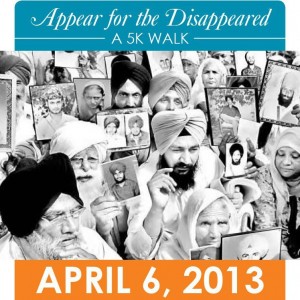 After recently registering for Ensaaf’s Appear for the Disappeared 5K walk, I received the above email with information about the individual in whose memory I would be participating.
Ensaaf has documented thousands of cases of disappearance and unlawful killings in Punjab and in an effort to allow its supporters to connect with victims, Ensaaf is holding a 5k walk, called Appear for the Disappeared, on April 6, 2013 in Fremont, CA. The walk is an opportunity for all participants and virtual donors to commemorate a specific individual who was disappeared in Punjab by Indian security forces from the mid-1980s to late 1990s. Ensaaf’s goal is to commemorate 500 individuals and raise $25,000 to complete documentation efforts.
Between 1984 and 1995, Punjab witnessed thousands of disappearances and unlawful killings, with many victims facing unimaginable torture at the hands of Indian security officials. Rarely were victim families informed of the fate of their loved ones, let alone given a chance to carry out final rites and funeral services. As thousands of men and women disappeared and their families left in the darkness, responsible security officials were awarded promotions and their human rights violations faded into darkness.

We love Sardar Fauja Singh. Â We really, really do.
On Sunday, Fauja Singh will run his final race in Hong Kong at the tender age of 101.  Jezebel recently covered Fauja Singh in a piece about  women’s rights, and just today Jordan Conn wrote a compendious and inspiring article for Outside The Lines on ESPN about Fauja Singh’s life and the “missing” Guinness Book of World Records title.  This article, along with stunning photographs, spread like wildfire on Facebook and Twitter today – reminding us just how much the world loves Fauja Singh and what he represents.
On the first day of training, Fauja arrived limber and energetic and dressed, as he believed was perfectly appropriate, in a dazzling three-piece suit. Harmander told him he needed a wardrobe change. After adamant protests, Fauja relented, ditched the suit and bought running gear. He showed up every day after that, building his routine around his training schedule. His mileage increased as the weeks passed. Race day arrived. After 6 hours and 54 minutes, 4:48 behind winner Antonio Pinto, Fauja crossed the finish line. At age 89, he was a marathoner. Soon, he would be a star.
We will be wishing you well on Sunday, Fauja Ji! Â Thank you for continuing to be such an activist and a positive soul and for reminding us of the importance of health and happiness.
– The Langar Hall
 Guestblogged by Mewa Singh.
Here are some general musings and broader notes/reflections that were sparked by my participation in the camp:
On Parenting – One thing I found quite interesting was changes in parenting styles. I don’t remember having had many choices as a child, when my parents were going to put their foot down, and it seems my own parents confirm this. With the camp, I noticed we had so many parents expressed their desire for their sons to attend, only to begin avoiding our calls as the date approached and telling us our son doesn’t want to go. Many of the same parents often complained – our son doesn’t listen to us and just watches TV all day. I was left wondering, how do these children have the choice? A parent has the ability to parent and limit the child’s television viewing, if they so desire. A parent is not helpless to say our child doesn’t listen so we must accept the status quo. Many parents desire to be the ‘friend’ of their child, or be the ‘good guy/gal’ and never say ‘no.’ With so many of my friends young parents, I wonder how they will be setting boundaries.
On Consumerism – Now members of our community are part of the broader society and one would hardly expect larger sociological issues such as consumerism to not affect us. Still the degrees seem far more now than in my youth. I remember kids having and even getting beat up and their shoes stolen if they had the latest Jordans. With 13-year olds having iPhones, 16-year olds getting BMWs for their birthdays (Jodha had a reflection on this some time ago), and wardrobe prices that went far beyond our $15 jeans from Marshalls, I wonder what are we teaching our children? Ask parents to send their children to a Sikh workshop or even Punjabi/Khalsa school at their Gurdwara and parents will begin about fees being far too high. What do we actually value and what do we wish to teach our children to value?

Amritsar, 1946
I’m going to continue on what appears to be our theme of the week here at TLH — Sikhs and sports. I’m not much of an athlete, though I had a good run of Little League baseball when I was a kid in North Carolina. I remember how goofy I felt wearing my team’s baseball cap over my patka and of course a helmet when I was up to bat. Looking back at the photographs, I looked pretty goofy too.
Fast forward a couple of decades, and I find myself in a related dilemma, though hardly an aesthetic one. This time of year in New York City, my favorite (and most efficient) way to get around is on my bike (the kind that requires pedaling). It’s good exercise, it gets me around Brooklyn and other parts of the city often as quick or quicker than public transit, and it leaves no carbon footprint.
As a dastaar-wearing Sikh, I grapple every day with my decision to ride my bike without a helmet — especially in a place like New York City. I’ve had many friends try to convince me to do otherwise, and I’ve tried many experiments of trying to make a helmet work. After talking to many a bike shop employees, my understanding at the moment is that bike helmets and turbans can’t really co-exist effectively. Even if I were to get an extra large helmet and put it over a small dastaar, it would not protect my skull sufficiently because it would sit too high up.
As a continuation of the conversation initiated by Navdeep’s post “Fatting it Up at the Langar Hall,” I want to share this the trailer for Soul Food Junkies, a film-in-progress directed by African American filmmaker and activist Byron Hurt.

The parallels to the challenges we face in the Punjabi community were striking to me as I watched the trailer. Obesity and diabetes are epidemics in the African American community, just as they are in our community, both in Punjab and the diaspora. And there is no doubt of the central role that diet plays for us all.
Guest blogged by Navdeep Singh Dhillon
My wife’s family is Hindu, with varying degrees of connections to the religion. Some of them have statues of deities like Krishna and Ganesh scattered throughout the house, others have entire rooms sectioned off for bhajans and pujas, and then there are those, who shall remain nameless, that go on random fasts they can’t explain. “It is a potato diet. I will eat potatoes today. Who else wants aloo parantha and aloo pakodas?” is the only explanation given during fasting for the nine days of Navratri. I still don’t get it. Nor do I get why some Sikhs don’t eat certain foods on Thursdays, or why Jains have such a problem with potatoes because living organisms might be killed, but have no qualms about dousing their bland food with ghee, or eating vast quantities of paneer.
Many of my wife’s family live in a concentrated area in Central Jersey a few minutes from each other. In the neighborhood, there is a Hindu temple, which they visited once, and never returned to. No, not because of politics, or religious differences. The reason: they didn’t like the food. It is a Gujarati Hindu Temple, and they are very Punjabi. So they go out of their way, driving through the most industrial and uninspiring landscape New Jersey has to offer, to eat Punjabi food at the Gurdwara.
The irony is not that they are Hindu and attending a Sikh Gurdwara when a Hindu temple is a few minutes away. Sikhism has, from its inception, been welcoming to all religions, and many of the verses in the Guru Granth Sahib were written by Muslims and Hindus. The four openings at the Harimandir Sahib invite people from all directions and walks of life. The irony is that through their food, which Gujaratis and Punjabis take very seriously, both communities have been the hardest hit by ailments like heart disease and diabetes, affectionately known as “sugar.”
My post is an expansion on Brooklynwala’s post “Working for Langar Justice,” which talks about making the move for our Langar Halls to go organic, a move I highly encourage.
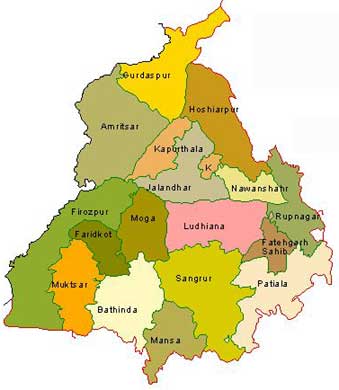 The following video, from the BBC, shows a sad reality of the growing drug problem in Punjab. High unemployment rates have inevitably contributed to this problem. While the video only highlights Punjabi men, it is well known that young Punjabi women are also suffering from this addiction. I can’t embed the video, so please click here to view it.
There is growing concern in India about the rapid rise in drug addiction cases in Punjab, one of the country’s wealthiest states.
The main university in the region has claimed that 70% of young Punjabi men are hooked on drugs or alcohol.
The problem is at its worst along the border with Pakistan where heroin originating from Afghanistan is smuggled into the country.
The BBC’s Mark Dummett reports from Amritsar.
Guest blogged by Ajj Kaim
The fact that heavy use of pesticides in farming has left lot of farmers affected with Cancer in Punjab has been well documented. In fact almost a year ago, The Langar Hall had highlighted this sad state of affair in Punjab.
I came across a heartwarming documentary about the situation faced by the farmers called “Cancer in Punjab” by Amarpreet Mann. (See Part 1, Part 2 and Part 3 below). It is tragic to see the plight of the farmers who have become unemployed or daily laborers because they have spent all their savings in getting treated for the disease.
As luck would have it Chief minister’s wife, Surinder Kaur Badal, is in the U.S. these days getting treated for Cancer in NY whereas a common man is at the mercy of God.

Just over a year ago we read about a Canadian health organization’s apology for accidently shaving off a Sikh patient’s beard. In that case, a 70-year-old patient was admitted into the intensive care unit after a shooting and while under the care of the hospital, had his beard removed by a nurse. At the time of the incident, Fraser Health Authority acknowledged their mistake in not understanding the importance of the beard for the Sikh faith and assured the community that awareness was raised across the organization.
Fraser Health Authority is now apologizing again for a similar incident which occurred at one of their nursing homes, where an elderly Sikh man’s beard was cut.
B.C.’s Fraser Health Authority is investigating why staff at a seniors care facility made the “terribly unfortunate human error” of cutting the beard off an elderly Sikh patient, the second time such an incident has occurred in the past two years. A nurse cut the man’s beard out of what she thought was medical necessity. [link]
The “medical necessity” has not been disclosed. Fraser Health Authority’s CEO, Nigel Murray, appeared on a Punjabi radio station yesterday to apologize for the incident.
Amongst the male youth in Punjab, drugs are a serious problem today. With high unemployment rates, and a  history of violence in the region, the environment is ripe for drug abuse. A Punjab government survey found that one out of three male students use at least a form of tobacco. And on a recent trip to the region, as we were driving between pinds, my relatives pointed out the jeeps, distinctive with their black lights, that carried young drug dealers. The young men sitting inside were all in their teens.
In response, Ajmer Aulakh, a well known Punjabi professor and writer has written a play, “Avesle Yudha Di Nayika” (An Unsung War Heroine), that recently attracted a large audience at the Government College for Boys in Ludhiana.
Aulakh is a noted playwright, artist and winner of Sahitya Akademi Award. He has dedicated his life to theatre and generally works on issues and problems confronting the common man. [TOI]
This much-needed play had students riveted, incorporating Punjabi poetry.
The play highlighted the menace of drugs, delineating how a family loses everything to the evil. Jodha Singh, a villager landlord, is survived by his wife and two children. Satwant Kaur, wife of Jodha Singh, wants their kids to go to school and study, but owing to drugs, the family property is lost. The play portrays the consequent struggle. It depicts how she fights odds to enable her children to continue their studies. The play was performed by artists who are part of Lok Kala Manch and was supported beautifully by Punjabi poetry. [TOI]
Update: The SWAT team provided an update on their progress. See end of post.
The Sikh Welfare Awareness Team is a new charitable organization in the UK focused on bringing awareness to drug and alcohol abuse in our community and reducing involvement in crime by providing youth with activities and organized events to participate in. The organization’s primary goal is “to establish relationships amongst the youth and… aim to bring together the local Sikh Community and focus on projects which benefit the youth of today.” I came across information about this organization after viewing a troubling YouTube video about homeless Sikhs (since the video below has been made private by the owner, log on and you can also watch the videos on Facebook). The Sikh Welfare Awareness Team (or S.W.A.T.) is currently working to bring awareness to the growing number of Sikhs, many who are recent immigrants from Punjab and are homeless living on the streets of Southall.

 A charity based in Southall, called the Drug and Alcohol Action Programme (DAAP) will be joining forces with local Gurdwaras to address high rates of alcohol abuse taking place at Asian, particularly Punjabi Sikh, weddings. Perminder Dhillon, CEO of the charity states that “it is no longer acceptable to ignore the dangerous levels of alcohol drinking at these events.”
There is a mistaken view in Asian communities that religious and cultural backgrounds act as a barrier to the kind of drunken scenes so often seen in so many town centres all over the country. She said: “Many parents feel pressurized to provide a huge quantity of alcohol at weddings even if they themselves are non-drinkers”. [link]
She goes onto say that there are huge expectations on families to provide alcohol at weddings – often demanded by the groom’s side. This problem has become so extensive now that it is likened to demanding dowry and by partaking, “we end up supporting users with alcohol-related health problems during the binge-drinking period”.
Research published in the British Medical Journal suggests that men of South Asian origin in Britain are four times more likely to die of alcohol-related liver problems than other ethnic groups. Eighty percent of those South Asians who are vulnerable to alcohol-related mortality are Sikhs.
The charity has stated that the strategy they will use to combat this issue is simple – they will “name and shame” those involved and publicly condemn individuals on their website.
In the Faridkot centre… Harmanbir Kaur, 15, was rocking gently backwards and forwards. When her test results came back, they showed she had 10 times the safe limit of uranium in her body. Her brother, Naunihal Singh, six, has double the safe level. [link]
 An article in The Observer discusses the link between the dramatic rise in birth defects in Punjab and pollution from coal-fired power stations. Many of the children are being treated in Faridkot and at the Baba Farid centers for special children in Bathinda, where there are two coal-fired thermal plants. Staff at these clinics had noticed an increase in the incidence of severely handicapped children who were born with hydroencephaly, microencephaly, cerebral palsy, Down’s syndrome and other complications. They suspected environmental poisoning.
The healthcare workers rightfully voiced their concerns about this and wondered, if some children were being treated, how many more were being affected? As with governments’ other dirty little secrets, staff at the clinics were visited and threatened if they spoke out. In addition, a visiting South African toxicologist arranged for tests to be carried out and found that the children had massive levels of uranium in their bodies, in one case more than 60 times the maximum safe limit. The scientist was later warned by the authorities that she may not be allowed back into the country.
Co-blogged by Sundari and Camille.
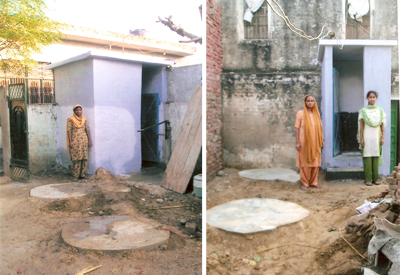 While many LangarHall moments are spent bringing awareness to adverse issues impacting our community, we believe it is equally important to highlight solutions to these problems. There are several people and organizations who are working to improve the social development and health of communities around the world. One example of a simple yet life changing initiative is a toilet. Yes, toilets. A facility taken for granted by many and something that over 2 million people around the world are in need of. The Punjab Lioness Toilet Foundation was created to provide awareness of communities in need of basic toilet and sanitation facilities,
As a family initiative the Punjab Lioness Toilet Foundation wants to empower people to take action in providing basic toilet needs to less fortunate families in Punjab, India. The foundation was started in the memory of our late mother Pritam Kaur Bahia who passed away on November 18th, 2004. She was known as the “Sherni” a.k.a. Lioness. [link]
Founded by Mandip Kaur Sandher, one of the goals of the organization is to break the “toilet taboo,” which comes from people’s lack of comfort speaking about a subject which they consider dirty. This stigma is impacting global health and as a result, basic sanitation needs for hundreds and thousands of people around the world.
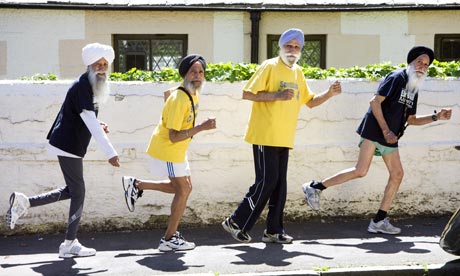
I am inspired. With the growing prevalence of cardiovascular disease, obesity and diabetes in our community – it is important to be inspired. Fauja Singh, Amrik Singh, Ajit Singh and Karnail Singh (with a combined age of 336) recently took part in the Edinburgh Marathon as part of the relay Sikhs in the City team. How have they stayed so healthy? The quartet agrees that a combination of a positive frame of mind, keeping the company of people who are forward looking, not indulging in any excesses, appreciating what God has provided them with and keeping active is the key to being healthy.
All four members of Sikhs in the City share an infectiously positive outlook and lust for life that is key to their ongoing success. Ajit Singh, 79, for instance, has just learned to ride a bicycle, so one of his goals now is to complete a triathlon. He and his lifelong friend Amrik Singh, also 79, have completed more than 1,000 races between them and acted as mentors to Fauja. Karnail Singh, 80, is the newest member of the team and the least experienced runner. His “experimentation” with course routes means that his teammates have to keep an eye on him, but what he lacks in kilometres he more than makes up for in providing the focus for a little gentle mickey-taking. [link]
A recent article out of Surrey, Canada discusses an education and prevention video targeted at alcohol abuse in the Punjabi community. The video, titled Kharaab Daru-Bad Medicine, was created by Peace Arch Community Services – a social service agency based in British Columbia, Canada.
Kharaab Daru-Bad Medicine, which premiers this week in Delta, is hoped to become a resource in the prevention and reduction of alcohol misuse and abuse within the Punjabi community, said director Kevin Letourneau, PACS’ manager of addiction services.
The video is in Punjabi with English subtitles and aims to address the prevalence of alcohol abuse in our community.
In Bad Medicine well known Punjabi speaking professionals along with individuals impacted by alcohol, share their knowledge with respect to the harms and risks associated with problem drinking, mistaking alcohol as medicine, how alcohol impairs mental and physical functioning, drinking and driving, addiction and family violence, and the benefits of recovery.
The Director of Peace Arch Community Services (PACS) rightfully notes that alcohol abuse is one of those “closet things” in the Punjabi community and is often used as a way to cope with various societal pressures. The need for the video came about after group counseling at PACS which involved Punjabi men who were court-ordered to get help after committing crimes while under the influence. A similar video was launched by Drug and Alcohol Action Programme (an organization addressing these issues for our community in the UK) last year and addresses the issue of both alcohol and drug use. The video, which I have included after the jump, was also presented in Punjabi with English subtitles. I think it’s vital that this education continues to be provided using Punjabi to provide greater awareness and accessibility to the community. We need to wake up and start facing our problems and we need to start holding our community accountable.
I wanted to take the time to highlight two issues (Part 2 to be posted soon) which have plagued the Punjabi Sikh community for many, many years. I know that discussing these issues over and over again is overwhelmingly tedious for the majority of people. Quite frankly, I agree. However, if I didn’t believe that having these important discussions and bringing awareness to these issues over (and over, and over) again added some value to potential solutions – then I wouldn’t waste the space. Needless to say, these issues don’t seem to be going away which means these conversations are that much more important to have.
A recent article in the NYTimes expresses surprise at the fact that female feticide is occurring within immigrant communities residing in the United States. The thought seems to be that preference of male children should ideally disappear with assimilation into western societies. (For those of us hanging out in The Langar Hall, we know this isn’t always the case in the Punjabi community). The article uses US Census Data to provide quantitative evidence that there exists a bias for male children in certain Asian American communities.
Demographers say the statistical deviation among Asian-American families is significant, and they believe it reflects not only a preference for male children, but a growing tendency for these families to embrace sex-selection techniques, like in vitro fertilization and sperm sorting, or abortion.
New immigrants typically transplant some of their customs and culture to the United States – from tastes in food and child-rearing practices to their emphasis on education and the elevated social and economic status of males. [emphasis added]
This latter point is especially significant. Is the problem of sex-selective abortions purely cultural and is that why it continues to be an “acceptable” problem?
 Last year we discussed Satnam Sanghera’s memoir, If You Don’t Know Me By Now: A Memoir of Love, Secrets and Lies in Wolverhamptom, and dialogued around the issue of mental health in the Punjabi Sikh community. The memoir was recently awarded the Mind Book of the Year Award for its literary contributions to raising awareness around issues of mental distress. The Boy with the Topknot, as it is now known, was picked from 110 entries by Mind, a non-profit organization in the UK committed to creating a “better life for everyone with experience of mental distress”.
On winning the award last night, Sathnam Sanghera said:”It was such a strong shortlist, and this award is judged by some of the greatest authors in the UK, so this is a real privilege. There are hardly any books about Asian communities’ experiences of mental health problems, so I hope people read this book and it leads to more understanding.” [link]
I would highly recommend this book as I found the story to be sincere and enlightening. However, I would add that while it is important to provide this type of insight to the English-speaking literary community, it is just as (or perhaps even more so) important to ensure this type of literature is accessible to the Punjabi-speaking community. Perhaps we can strive to have these types of memoirs translated into Punjabi or made available via audiorecordings?
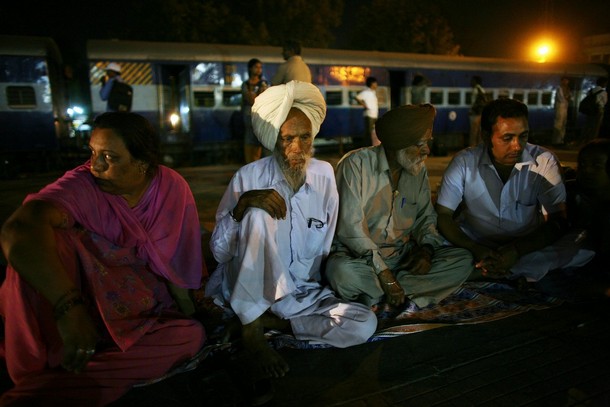 “…the first troubling clues in the late 1980s and early ’90s: Peacocks – India’s national bird – disappeared from the fields.”
A recent story on NPR discussed the “cancer train” in Punjab. The train is so named as it routinely carries about 60 patients and their families from Bathinda to the town of Bikaner in order to get treatment at the government’s regional cancer center. Studies now suggest that populations with high use of pesticides have an increased risk of cancer. This seems to be the case in Punjab, where the introduction of the Green Revolution in the 1960s not only led to increased production of agriculture but also adverse health outcomes. The NPR piece discusses how villages that use pesticides were shown to have higher rates of cancer than villages that did not use pesticides.
On a recent evening, just before the train arrives, waiting passengers wrapped in shawls sit glumly on the bare pavement. Vendors hawk tea and chapattis. “He has blood cancer,” says one man, explaining his upcoming journey by gesturing at his skinny, pale 16-year-old son, Jassa Singh, beside him. Another man points toward his little boy, and says bone cancer has attacked his hip.
A gaunt but dignified-looking man wearing a bright yellow turban says he is going to Bikaner for treatment of cancer in his throat. “It’s difficult to talk,” he says, pushing a button in a device inserted in his throat that makes his voice sound like a computer synthesizer.
It is important to note, however, that as with many public health studies – an association between pesticide use and cancer does not necessarily suggest a causal link. Many people are hesitant to blame the Green Revolution and new technologies on the prevalence of cancer in Punjab. Neverthless, it seems clear that the correlation with the higher rates of cancer can not be understated and suggests that environmental factors could quite possibly be the cause.

