
Traditionally, in the Punjabi culture it is not unheard of or uncommon for a widow to remarry after the death of her husband. 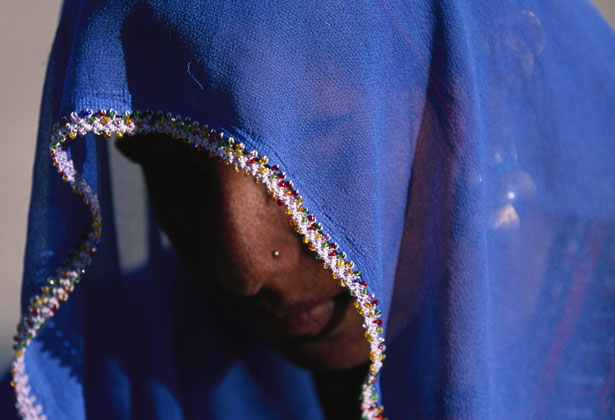 Its seen as a practical idea – the woman doesn’t have to “go back” to her parents home and is encouraged to move on with her life. That women in our community remarry and are encouraged to do so is a point of pride, but its not always the answer
Internet news reported yesterday that:
In a landmark ruling High Court Judge Justice Parker annulled the marriage of a 29-year-old Sikh widow who had gone to India for the funeral of her husband but was kidnapped by his family and forced to marry her father-in-law’s nephew. Source.
I don’t think we hear about situations like this very often – I had certainly never heard nor thought much about it. Usually, stories and articles are written about first-time forced marriages and about women being abused because of dowry, but the way Sikh women are treated is an epidemic larger than we sometimes see. In this case the woman’s family went to great lengths to make sure she remarried her brother in law – keeping her locked up, monitoring her phone calls, and even sedating her.
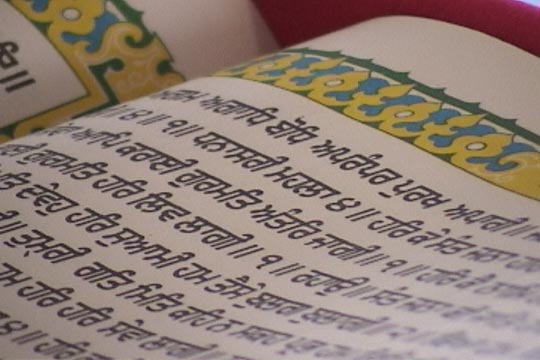
 Although the title of the post sort of says it all, as I believe it is a worthwhile effort, I do want to highlight here. (In full transparency, a few members of The Langar Hall are helping to support this initiative). As the 29th annual Yuba City Nagar Kirtan soon approaches, it is great that so many Californian Sikh Students Associations (SSAs) are coming together to work with one another. I am told that this is a first effort in greater coordination and institutionalization that will be implemented in the following years.
If your SSA is currently not on the list, find out why and place some pressure on your committee members to join the rest in this unified effort. If your school does not have an SSA, join the efforts of these Sikh students and start working to create one at your university.
Below I am enclosing the ‘invitation’ of the united All-California Sikh Students Association group. Contact information is located there as well as on their facebook website. For more uptodate information, also check-out the Sacramento State SSA website.
Some info on the Yuba City Nagar Kirtan:
DATE: Sunday November 2, 2008
TIME: 7am-5pm
LOCATION: Tierra Buena Gurdwara Sahib
CITY: Yuba City, CA
 Blogged by: Mewa Singh
In celebrating 300 years of our Guru Granth Sahib, I thought it might be worthwhile to republish an essay I had written for the Jakara Movement‘s inaugaral issue of its J.Khronicles magazine. Hope you enjoy….
Sri Guru Granth Sahib: The History of the Sikh Soul
Based on the work of the prolific Puran Singh
As the 10th Guru breathed his last, his Sikhs asked him who would be the next leader of the Sikh Nation. Guru Gobind Singh replied that they should put their trust in the infinite wisdom of the Guru Granth and the collective leadership of the Guru Panth. Together, Granth-Panth is the final Guru of the Sikhs. While every Sunday, we bow to the Guru Granth Sahib, how many of us have ever taken the time to understand what has been gifted to us? We are told to respect the Guru Granth Sahib, but don’t even know what it contains nor even have attempted to understand?
Here are some of McCain’s Muslim supporters standing up to Muslimophobia (pagh salute: Chapati Mystery), as well as a campaign delegate, correctly, standing against such behavior.
In America, Sikhs are ‘racialized Muslim.’ Despite Sikhs’ attempts at differentiation from Muslims, they do not wield the power in this society to create the categories. Thus, Sikhs, despite their attempts, do not have the agency to to negotiate some ‘non-racialized Muslim’ identity. The people that usually engage in vandalism, verbal threats, and even physical assaults usually don’t care to have a history lesson.
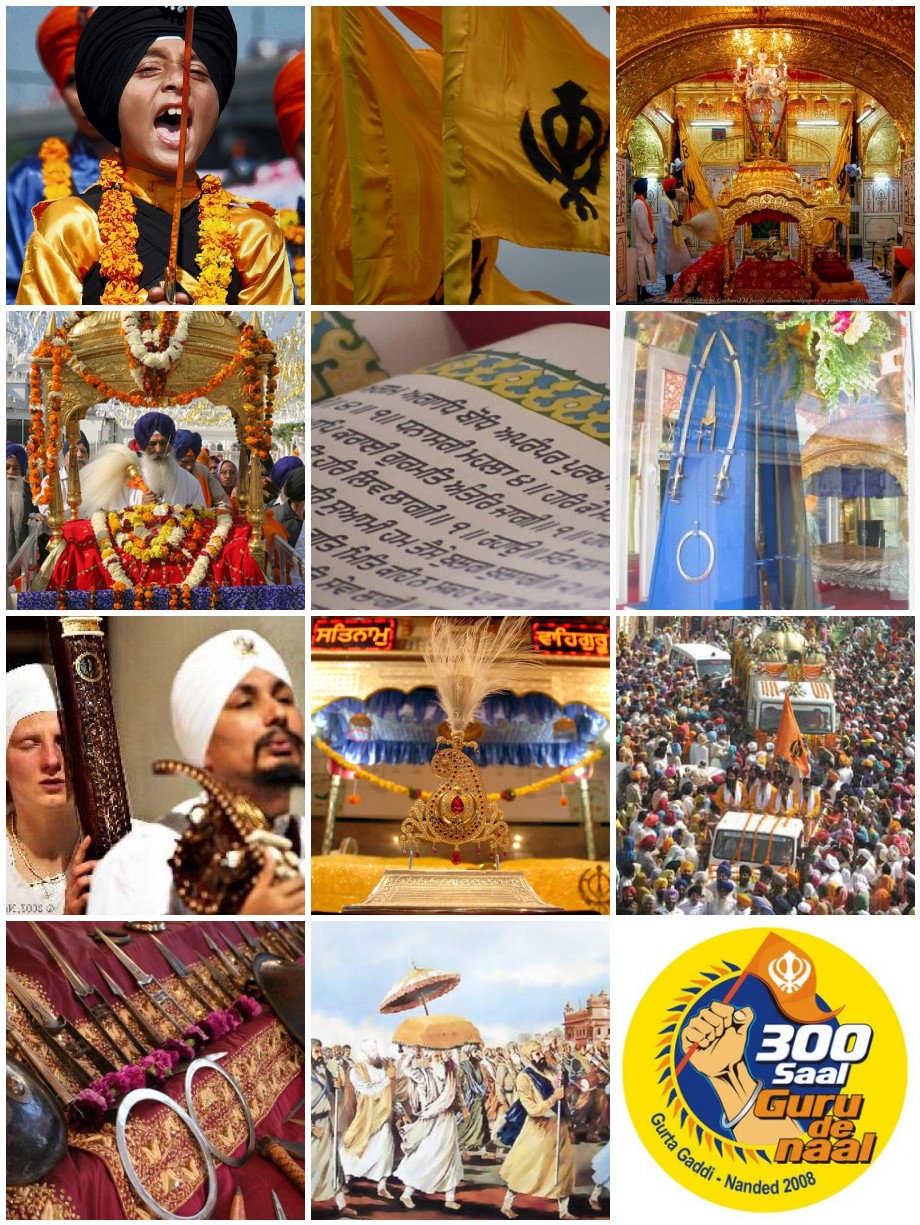
Over the next few weeks Sikhs will join together to celebrate the 300th anniversary of the Sri Guru Granth Sahib. Just like many of you, I’ve been reading articles and stories about the various celebrations and I’ve come across some amazing and enriching images showing how the concepts of Sangat, Seva, and Guru come together. So I thought that in place of writing a post for once – I would instead create a mosaic of some of the images I have come across which represent the celebrations in one way or another. Pictures really do speak louder than words. [You can click on the image for a closer look].
The Presidential election is two weeks away, and before we vote, we should know where the candidates stand on issues, not just whose campaign style we like. Below is a summary of the candidates’ positions on a selection of issues (compiled by the Associated Press). For more detailed information on their positions, check out the McCain and Obama websites.
ABORTION
McCain: Opposes abortion rights. Has voted for abortion restrictions permissible under Roe v. Wade, and now says he would seek to overturn that guarantee of abortion rights. Would not seek constitutional amendment to ban abortion.
Obama: Favors abortion rights.
AFGHANISTAN
McCain: Favors unspecified boost in U.S. forces.
Obama: Would add about 7,000 troops to the U.S. force of 36,000, bringing the reinforcements from Iraq. Has threatened unilateral attack on high-value terrorist targets in Pakistan as they become exposed, “if Pakistan cannot or will not act” against them.
UPDATE: Both authors – Dr. Tatla and Dr. Gurharpal Singh – said that they will participate in some capacity in our first book club. A number of well-known bloggers from some prominent websites have expressed interest as well. ORDER YOUR BOOK NOW! Only 1 week before we begin!
————————————————————
Coblogged: Jodha and Mewa Singh
What we are about to suggest, to our knowledge has never been done before.
We are initiating the first TLH web-wide Sikh Book Club. At this point we are not sure of the frequency as we will gauge the interest from this first attempt.
What are we suggesting?
For the first book of our book club, we are suggesting a simultaneous reading of Gurharpal Singh and Darshan Singh Tatla’s Sikhs in Britain: The Making of a Community.
The two of us – Jodha and Mewa Singh – will facilitate the discussion (unless we can find someone better!). We plan to invite the authors as well as some prominent Sikh activists in our community. We hope Sikhs from all across the globe (especially UK Sikhs) will participate. Please feel free to invite others as well!
The Book:
Over the years we have read numerous academic books on the Sikhs and their history and the works of Gurharpal Singh and Darshan Singh Tatla have always been amongst our favorites. Thus, it was with great excitement that we see these two professors collaborating together. Both have an intimate knowledge of the Sikh community in England and we can think of few others that would be more able to write such a tome. This book, although focused on our brethren and sistren(?) in the UK, will provide us an avenue to delve into that section of our community, but we hope to broaden the conversation to understand other sections of our Sikh diaspora.
For the uninitiated Panthic Weekly is a Sikh portal that provides news and media on various issues that affect the Sikh community. As part of the Panthic Network, my first memories of the team are related to the long-standing Fort Panth Khalsa that especially became popular during the debates centered around the then-Jathedar Ranjit Singh.
The website over the years has developed a formidable presence on the website and is a celebrated by that section of our community that have a leaning towards the strong opinionated slant it represents, especially towards a specific Jathabandi.
For the most part, I applaud Panthic Weekly’s efforts and their abilities to engage with youth audiences with a variety of media. Their Khalsa.tv, Panthic.fm, Kathaa.net and Keertan.net are all efforts that deserve praise.
However, my problem with the network is their derogatory language and uncivil discussions that are promoted, often bordering on bullyism. Whenever, the editors of Panthic Weekly do not like a person, they change their name from ‘Singh’ to ‘Sinh’. Parkash Singh Badal becomes Parkash Sinh Badal; Former Jathedar Darshan Singh Ragi becomes Darshan Sinh Ragi; Prime Minister Manmohan Singh becomes Manmohan Sinh. Allegations of RAW agent, RSS-stooge, “traitor”, etc. and the worst parts of our post-1984 history are relived where Sikhs spew vitriole on other Sikhs.
As Belgian Sikhs celebrated the 300th anniversary of the Sri Guru Granth Sahib Ji, immigration police raided the Vilvoorde gurdwara, arresting 30 [link].
Police swooped on 19 suspected safe-houses in Brussels and surrounding suburbs during dawn raids on Saturday and discovered over 200 immigrants. The gangs ringleaders are said to be among 15 people arrested. Police also found 50 illegal immigrants hiding in a Sikh temple in Vilvoorde, a suburb north of Brussels. [link]
Officials say the raid was to break up an underground ring that was trafficking young, undocumented (Indian) Sikh men through Belgium to the U.K.:
The criminal gang, which charged Asian migrants over £15,000 for their journey from India via Moscow, is thought to have smuggled “thousands” of illegal immigrants in Britain over the last year and a half. [link]
Human trafficking notwithstanding, officials chose to coordinate their sting on the same day hundreds of Sikhs were holding Akhand Path for SGGS Ji’s tercentenary. From the accounts so far, police barged into the gurdwara, boots on, heads uncovered, and went through with their sting operation. By word of mouth, individuals said that even those who showed evidence of documentation were arrested for alleged trafficking.
If individuals in the community were trafficking under the conditions described, their actions are horrific. I am deeply troubled by the police decision to exploit a religious holiday, disrespect the religious observance of a minority, and then proceed to terrorize the congregation by “busting” traffickers and undocumented migrants. It reminds me of the abusive tactics I.C.E. has used in raiding homes and places of worship in Latino communities, preying on both the documented and undocumented. But what does this say for a country’s concepts of sanctuary and protection of minority communities? The gurdwara is always supposed to be a haven, a safe shelter, for anyone, including the indigent or oppressed. If it was used to further ill purposes, I don’t know what to say, but if it was used to protect undocumented migrants who were moving through the country as a matter of conscience, then what does this kind of militaristic and predatory behavior do to the relationship between the state and its people?
The Christian Science Monitor recently ran a story on how the Democratic Party is outpacing Republicans in polls among people of faith [Hat tip, Ennis]. The article emphasized how norms have changed between generations, and how values have realigned towards inclusivity among younger voters who identify with a faith community:
…young adults are more open to religious diversity and cooperation, they are less likely to say that one has to believe in God to be moral…
Young voters are much more inclined to support a larger government that provides more services (57 percent versus 45 percent of the overall population).
Young adults support government involvement most in regard to helping the poor and the environment.
Does this mean we’re seeing a shift against the “Culture Wars” of the Reagan-era? Voters across the board ranked wedge issues — including mariage equality and abortion — at the bottom of their political concerns. In the context of today’s uncertainty, it’s not surprising that people would be more concerned about health care and the economy. That said, I wonder if this shift away from “values” debates indicates a permanent trend for young voters.
While the survey’s analysis focused on divergences between Catholics and Evangelicals, a part of me wonders how much increasing religious diversity in the country has pushed against absolutist morality. Younger voters have shifted their prescription for the government’s role (or non-role) in regulating morality. These voters are also re-opening the door for how we define morality, whether multiple meanings can co-exist, and whether or not these meanings must be rooted in a faith identity or context.
It’s a traditional part of going to gurdwara — giving a dollar (or some other amount of money) as an offering before bowing down in front the Guru Granth Sahib.  Some may not think about this much, aside from how much they would like to offer and what they would like to think about before the Granth. For me, this practice is a bit more complicated. For years now, when I go to gurdwara, I consider not only the amount to offer, but the condition and source of the paper bill itself. Allow me explain:
When I go to, say a fast food “restaurant” or other business where cash is exchanged, I will look into my wallet and will feel a bit “bad” if the dollar bill I am handing over to vendor is crumpled, torn, held together by tape, or has excessive writing on it. For example, there is a $10 bill in my wallet now that has been there for weeks — I have been hesitant to subject a business to its possession. Some may view such reluctance as unnecessary.
But the situation changes dramatically, in my opinion, when we are talking about providing money to a gurdwara, as part of bowing down and expressing love and respect to our living Guru.
Recently on TLH we have had many posts around the 2008 Presidential Campaign. How these candidate make us feel and their policy positions are equally important when deciding, which candidate to support. The qualities and values he brings to the table for organizing support around what he thinks are critical issues is important for identifying which man will make the best key leader in America. We have listened to them debate, create campaign ads, and talk on campaign trails to their supporters. At the end of the day, I personally want to know how McCain and Obama will stand on issues important to me as a Sikh. The  economy, healthcare, foreign policy, and civil rights are important to all Americans regardless of ethnic or religious background; however, the nuances of how each ethnic/religious community is effected by these larger issues is important when their members vote for a Presidential Candidate. Many Sikhs may want to know:
“What is John McCain’s stance on racial profiling? How would an Obama administration address workplace religious discrimination?”
In an effort to answer some of these questions, the Sikh Coalition sent questionnaires to both McCain and Obama campaign offices many months ago. The intention was to have this information available when organizing Sikhs to vote at local Gurdwaras. However, only the Obama campaign responded. In an effort to provide bi-partisan information to the Sikh constituency, the Sikh Coalition is now petitioning McCain to respond, particularly when there are less than 30-days left until election-day. Sikhs deserve to hear his voice when making their decision at the ballot box. In addition, as a non-profit organization, the Sikh Coalition can not solely release Obama’s responses.
Okay, so I know that many of you would rather stick something sharp in your eye than have to watch Oprah. 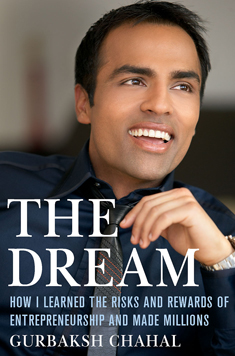 Stay away from sharp objects today then because the word is (thanks M) that Oprah will be interviewing self-made millionaire Gurbaksh “G” Chahal about his memoir The Dream being released later this month [side note: Oprah’s website clearly says her show today is about rudeness so I don’t know what the connection is?!]. For those of you who missed the news a few months ago, Gurbaksh (he actually goes by G because he says he doesn’t have the “easiest first name to pronounce”, but since we can actually pronounce it, we’ll use it) is the 26-year-old founder of ad network BlueLithium and, more recently, the ecommerce startup gWallet. Gurbaksh received much media attention when he sold BlueLithium to Yahoo last year for $300 million. From his website,
G was born in the town of Tarn Taran, near Amritsar in Punjab, India to Avtar and Arjinder Chahal. In 1985, his parents received a visa for America through a lottery-based system in India, and the following year, when he was four, the family settled in San Jose, California. His parents had arrived with only $25 to their name, and they struggled at menial jobs to make a future for their four children. For the Chahal family, as for many immigrants, education was paramount, but G left high school at sixteen to form Click Agents, an Internet advertising company, which he sold two years later for $40 million.
Sundari’s recent post, addressing the portayal of Sikhs in an ad for the upcoming Spinning Wheel festival, brings up an interesting tension for Sikh women- the conflict between modern ideals of beauty, and the requirements of the Sikh faith.
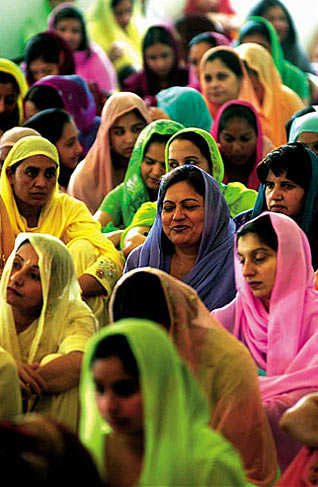 Generally (and unfortunately) women tend to value themselves (whether consciously or unconsciously) according to social valuations placed upon women… which revolve mostly around ideas of outer beauty- trends which vary a bit across region and time, but are all generally superficial. Women who have completely overcome this unconscious embrace of ideals of beauty are extremely rare. For those who think is untrue- think about how many times you’ve heard a female friend talk about the bad day she was having- many of the complaints probably had something to do with the way she felt she looked that day (that might not be the best example, but it’s the first that comes to mind). How we feel is too closely related to how we feel we look.
These social valuations of beauty are especially problematic for Sikh women in particular because these values are totally opposed to an important part of Sikh identity- our kesh. They are also problematic for all women because we’re not valuing what really matters- our thoughts, ideas and actions which really create who we are- but a superficial farce. Finally, these valuations are problematic because many modern ideals of beauty are unhealthy (but enough has been said about these last two points in general gender conversations that I don’t want to dwell on them).
The challenges and overt racism that Sikh men face in the US today because of their kesh are undeniable. But the solutions that address men’s kesh (mostly political responses, creating social awareness) don’t carry over as solutions for women.
Only every so often I come across a petition in my inbox which advocates for an issue that I feel strongly about. I find myself more than happy to take the few minutes required to click on the links and add my name to the “Undersigned.” 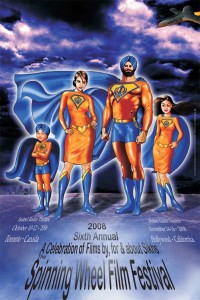 A few days ago, I was sent another such petition, but to be quite honest I didn’t quite know what to make of it.
The petition, drafted in response to an advertisement for the upcoming Spinning Wheel Film Festivals, states that the “superhero” image being used depicts Sikhs in a negative manner. The author(s) suggest that the characters shown in the poster are portrayed in ways that go against the Sikh Rehat Maryada and Gursikh principles.

The current poster diminishes Sikh identity by playing fast and loose with Sikh Rehat Maryada in presenting the lead male and female characters as superheroes and role models. They appear more as villains, abandoning the true Sikh virtues. Going about “saving the world” with the hair uncovered is far from being obedient to Sikh Rehat and to the visible identification as a Gursikh. The Kirpan is supposed to be worn in a Gatra, not attached to a belt. Furthermore, pierced ears as in the case of the young girl are not in the spirit of how Sikhs should raise their children towards principled Sikh living.
I have my own opinions about the SWFF as it stands today, and although I was somewhat surprised by the choice of promotional material being used (from an aesthetic perspective) – I was much more intrigued about the nature and origin of the petition. I don’t know who authored the petition (does it matter?), but it brings up a much larger issue. The petition goes beyond a simple commentary of promotional material. The various comments left on the petition (even the incoherent ones) suggest that many individuals within our community still believe that Sikhs are only defined by certain external attributes:
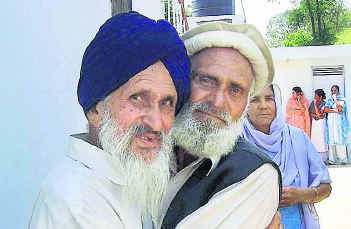 I had been sort of taking a wait-and-see approach to this news (pagh salute: preet) arriving out of England. It seems some punk kids started a blog to stir religio-ethnic hatred amongst Sikhs and Muslims. My hesitation was that I did not want to further enflame the story and further create the sort of reaction that the website had hoped.
The blog of Jerome Taylor of the Independent had first written about the website and its intentions:
The website contains pictures of at least 25 Sikh women which the site’s administrators claim to have seduced alongside highly provocative remarks about the women and the Sikh religion.
Timed to coincide with the start of the university year – described in the site as a time when “[Muslim] soldiers go hunting for Sikh slappers” – the website’s creators encourage friends and readers to send in pictures of Sikh women they have seduced during freshers week.
The most vile part of the website was that it posted pictures of young women (that it claimed came from Sikh backgrounds) and wrote in the most nauseating way that males often talk. I did see the website and it was disturbing.

“I don’t trust Obama. I have read about him and he’s an Arab.”
So said a McCain supporter at a recent rally. To such an ignorant, bigoted, racist comment, McCain could only reply:
“No, ma’am,” he said. “He’s a decent, family man, a citizen that I just happen to have disagreements with.”
McCain did not say that Arabs are decent people, instead we are left to infer that “Arabs” and “decent, family man” are somehow antonyms. Barack Obama should not be let off the hook either as he is just as complicit. Earlier when his Democrat primary opponents were trying to smear him, he distanced himself from being Arab and Muslim (which of course he is not!), but did not stop that conversation and say Arabs and Muslims are just as American as anyone else.
The current economic meltdown has made me reflect more and more on the role of community organizations/institutions during times of hardship and uncertainty. Our current economy is in bad shape, and we’re likely to feel the fallout in lost jobs, lost job openings, and lost homes/assets for months, possibly years, to come.
What are our responsibilities to one another in times of crisis? The response is reliable and familiar for disasters, but with something as pervasive and private as personal finances and wealth, it becomes trickier. I have watched families fall through class brackets and learn to reevaluate their class identities and sense of pride in the context of previous recessions, but this recession seems like a harbinger of a deeper struggle to come.
Sikhi has a relatively clear requirement for service to others and wealth redistribution (daswand) from the more to less fortunate. What do we do when we find ourselves moving across classes or relative wealth? I would argue that now, more than ever, as people of faith our philanthropy, service, and efforts are needed in the same ways they would be for a disaster or catastrophe. We have an opportunity and moment to move beyond our personal egos and create support systems not only for the Sikh community, but for our larger communities. How many of our gurdwaras are located in areas that are impacted by the current mortgage foreclosure crisis and recession? Enough that I think we can make a difference.
I hope that in this stressful time we can rise to the occasion and get to know our neighbors by sharing and providing shelter, comfort, food, and resources. These dire times truly call for chardi kala and sarbat da bhalla, but we will be challenged to figure out what that means and how to make that happen in a time when all of us face uncertainty as individuals and community members.
In keeping with the recent Election 2008 theme on TLH, I ask you the following — which party do you think completes this sentence:
[x] believe that individuals should contribute time and resources to serving the poor, vulnerable, and less fortunate members of our society.
Do you think x refers to:
- Democrats; and/or
- Republicans.
So this past Saturday, Tina Fey, did a great job impersonating Sarah Palin’s “performance” at the Vice Presidential Debate on SNL. The body language, voice, and choice of words were right on and HILARIOUS!
Yesterday, Robin Abcarian, of the Los Angeles Times, wrote about the debate of body languages between Obama and McCain during this week’s Presidential Debate.
Abcarian wrote:
Obama sat like a jazz musician on his chair, one heel hooked at an angle, while McCain sat as if he might leap up at any moment, or stood impatiently waiting for his turn to speak.
Glass, a body language expert said that McCain was, “… like the Energizer Bunny [who] had some batteries put in. “We have never seen McCain so warm and fuzzy and likable and dynamic.”
This same expert thought that, “… Obama seemed unnatural at times. “Somebody coached him and did not do him a favor,” she said. “When he talks about an issue he’s passionate about, his gestures are fluid and real, but other times, he took his index finger and clasped it to his thumb, and it’s phony, it’s not real.”
However, at the end of the debate, body language experts declared Obama as the winner because “… a debate is won in the first 15 minutes and lost in the last two … Obama closed on a higher note than McCain.”
For our readers, who watched the Presidential Debate, what body language or mannerisms did you notice that would be great for another Saturday Night spoof?

