
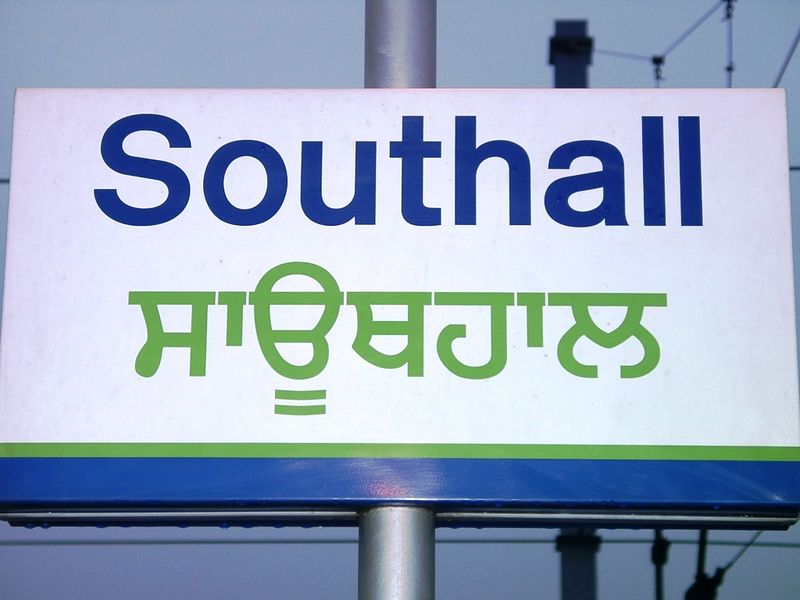
 I was in London last week and stopped off in Hounslow, Ealing and Southall to just walk about and visit family. In the past 50 years, Southall has become a huge pass-through and historic cultural and political center for Punjabis, especially Indian and Sikh Punjabis, in London and the greater UK. I visited the neighborhood a few years ago, and I looked forward to returning.
I was a little surprised to see that the neighborhood had changed. In addition to taking on an ever-growing refugee population from Somalia, there seemed to be a growing Sikh Punjabi underclass. Southall, historically, has been populated by working- and middle-class desis, and with that comes a variety of concerns around resource availability, support, language and social services, etc. Multi-family or multi-worker flats and apartments are not uncommon, but I was surprised by the increased concentration of subpar worker housing. Instead of the more prevalent norm of helping out new immigrants by sheltering them and helping them acclimate to London, there seemed to be a small (but growing) formation of Punjabi-run slum housing, similar to the exploitative workers’ ghettoes and communities of New York in the early- to mid-1900s.
I was really distressed by this development; Southall has amazing local institutions that are nationally and internationally reknowned for their civic engagement and dedication. In many ways, it is the face of the UK Sikh community, for better or worse. I’m not naive; I know that our community has deep and complicated internal issues and challenges. How do we begin to address these basic issues of justice, their connection to Sikhi, and what this means for the reputation and behavior of the community as a body? I don’t think we should dictate or micro-manage people’s behavior, but I do think it’s important to have begin to create ways to mediate conversations and norms/attitudes around how Sikh ethics translate into practice.
Guest Blogged by Mewa Singh.
A bit late, but every bit warranted.
Let me begin. I am a HUGE Rabbi Shergill fan. I went to a Dharmendra/Sunny Deol “concert” two years ago (why they are called ‘concerts’ I have no clue) and Rabbi Shergill was performing. I think I was the ONLY 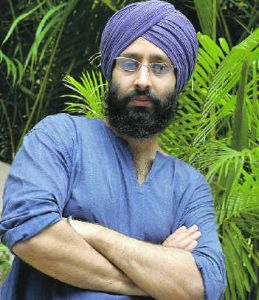 Rabbi Shergill fan in the audience and in certain parts of California that isn’t too surprising. Although my friends and family made fun of me, they were kind compared to the rest of the audience. The audience yelled their ever-so-kind “Eh ki bakwas hai? Bhangra Ga!” (What is this crap? Sing Bhangra!) and began to boo him off the stage in the middle of his ‘Chhalla’ performance. Although I love my hometown, sometimes we are stupid.
Rabbi’s first self-titled album played in my car for months straight. Despite the ridicule of all of my friends, I was mesmerized by his brilliance. In my own version of ‘elitism,’ I just thought they couldn’t “understand” Rabbi. How brilliant was this contemporary music artist not only recreating but reinterpreting classic poetic metrics and musical composition forms with current political and social content. While his “Bulla Ke Jana” garnered critical attention and success, for me his “Jugni” with its political content, “Totia Manmotia” for its social charge and reinterpretation of a whimsical Mughal-period popular dialogue between parrots, and the thrilling rendering of his Shiv Kumar Batalvi in “Ishtihar” sent tingles down one’s spine. Sepia Mutiny’s Amardeep criticized Rabbi’s earlier supposed “Sufi/Sikh spiritualist” image, however, such a reading could only be made by one that had never listened past “Bulla Ke Jana.”
Although three years in the making, Rabbi returns with a new album Avengi Ja Nahin (the website includes song samples, videos, and even lyrics). The album has 9 tracks and I have yet to listen to all of them. The cover song “Avengi Ja Nahin” is a nice love song. The other song to gain much attention is his “Biqlis” that provides a voice to the many voices lost during the anti-Muslim government-sponsored pogroms in Gujarat in 2002. The song is stirring, being both patriotic but critical.
Punjabis can argue whether Gurdas Mann’s classic Chhalla from the movie Laung Da Lishkara is the best or Rabbi’s new rendering. For my vote, I just want to add that Rabbi is on the world stage singing Punjabi (in his Jugni invoking that the solution to today’s problems was to invoke the Guru’s name), while during the 1980s and early 1990s Gurdas Mann went to Bombay and record plenty of Hindi content.
However, especially important for a Sikh audience would be a discussion on his song “Pagri Sambhaal Jatta.”
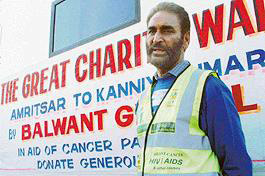 72 year old Balwant (“Bobby“) Singh Grewal is walking 500 miles (800 km) from the Scottish Parliament Building in Edinburgh to the House of Parliament in London in five weeks. He began on June 5th and is scheduled to finish on July 9th. He is raising 100 million pounds for cancer research. (If you can’t tell by the bolded format, I’m rather impressed by this feat.)
Grewal is undertaking the walk to raise one million pounds for research into bowel cancer and other bowel diseases at St Mark’s Hospital, Harrow, a hospital unique in the U.K. [link]
This isn’t the first time Bobby Grewal has walked to raise large sums of money for medical research.
In 2001, he ran the London Marathon in just over five hours, and in 2004-5 (aged 68), he completed a walk covering 2,500 miles across India from the North-West frontier to the deep South…The walk raised 100,000 pounds for research into cancer and AIDS. [link]
Do you think Bobby Grewal is in the same class as the legendary Fauja Singh?
Few programs exist that provide an in-depth study of Sikhi. Fewer exist in the United States. While there are other ventures, such as the Jakara Movement that attempt to allow entry and inspiration, Sikh Research Institute’s (San Antonio, TX) Sidak provides
distinctive learning program for young adults seeking to increase their commitment towards the Sikh faith. This intensive two-week educational experience is a unique program consisting of instructional seminars on various facets of bani (scripture), tvarikh (history), and rahit (discipline). Sessions on leadership development and community building also serve as key foundations for Sidak. [link]
From Harinder Singh‘s esteemed pedagogy, to various learned guest-speakers, and the culmination in a final project, Sidak is an amazing educational and spiritual experience. This year Sidak is being held on 13 – 26 July, 2008. For more information visit www.sikhri.org

Adding onto prior posts concerned about the environment, it’s interesting that the Transport Minister of Punjab made a statement today by riding his bike to work.
In a rare display of a public official and a cabinet minister and that too the transport minister of a state at its austere best, Master Mohan Lal, Transport Minister of Punjab on Thursday chose a rather conventional mode of transportation to reach his office at Civil Secretariat, here… Master rode a bicycle from his official residence in Sector 39 to attend his office. [link]
His one day bicycle ride was in response to increasing oil prices. Like Earth Hour, statements such as these are beneficial, but ultimately ineffective unless backed up by real, sustained efforts to change peoples’ actions on a daily basis. So – great statement Mohan Lal ji, but is it just a show?
Through various posts on this blog, we have discussed the idea of activism (and even lacktivism) within the Sikh community. Recently I have been thinking about what activism meant to our parents’ and grandparents’ generation and in what form they expressed their personal and political thoughts. Twenty four years later, as we remember the events of 1984, we are reminded of how much these events raised Sikh consciousness. It is also a historic event in another sense. The response to the events of 1984 allowed for our parents and grandparents to stand in solidarity with other Sikhs and in doing so, mark their place in Sikh history on both a personal and political sense.
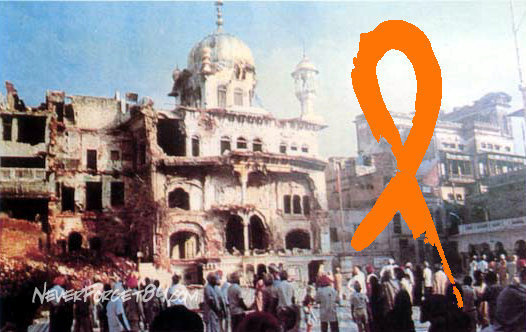 During those days and weeks following the invasion of the Darbar Sahib, hundreds and thousands of Sikhs took part in protests. I remember hearing about these stories from my Dad who ardently took part in these protests in London and Liverpool. However, what was more striking to me, was the role my Mum Mom played in these protests. I remember visiting a museum whilst on a school trip (a few years after 1984) and seeing pictures of the protests on display. I was caught off-guard as I saw a picture of my mother with her fist in the air protesting alongside other Sikh men and women. That image has stayed with me – essentially the activism that has always existed and remains to exist within our community. I wasn’t able to find much press about these protests, but did come across this clip.
Please share your thoughts/memories.

