
Guest blogged by Manpreet Kaur
Recently the Sikh American Legal Defense and Education Fund (SALDEF) announced that they will be honoring Gap, Inc. for taking “pride  in featuring the Sikh American identity†at their annual gala on October 11th in Washington, DC. As you may remember, last year, the Gap used Sikh actor and designer Waris Ahluwalia in their “Make Love†campaign. The Sikh community gave a lot of praise to Gap over social media posting and re-posting the advertisement as even encouraging Sikhs to purchase from and support the company. This support increased exponentially when Gap responded positively to racist vandalism on an ad in New York City.
While having a Sikh model on a mainstream advertisement might be a positive step especially a year after the Oak Creek tragedy, as Sikhs, how can we, as a community, support a company that has carried out horrific labor practices? Gap’s terrible labor practices in South Asian countries have been widely documented, putting employees in extremely dangerous working conditions with less than minimum compensation.
Gap, Inc. literally has blood on its hands, as 29 trapped garment workers died in a fire in a Bangladesh factory that produced clothing for the company in 2010. United Students Against Sweatshops states:
Human rights activists and labor groups have been calling on Gap to fix the factories in the rest of their Bangladesh supply chain since December 2010, but instead Gap is sticking with its own corporate-controlled voluntary initiative that lacks transparency, accountability, and worker voice. Gap initially promised to sign onto a meaningful fire and building safety agreement, but then backed out, announcing their own, go-it-alone initiative. Gap is using the same self-regulatory approach that they and other brands have used for two decades and that has failed to protect the safety of workers in Bangladesh: factory monitoring controlled entirely by Gap, with no transparency, no role for workers or their trade unions, no commitment to pay prices to suppliers that make it feasible for them operate responsibly, and no binding commitments of any kind.
For a long time, it was a distant dream that the Sikh community would create institutional power in the form of Sikh organizations. Having been in America for over 100 years now, we finally are in a place where professional organizations exist in parallel to our Gurdwaras. Now, young Sikhs graduating from college or beginning their professional careers can join organizations representing the Sikh voice as full-time employees (and often, even with benefits!).
Below is a list of organizations that are looking for qualified candidates! Note: Please contact the organizations directly to confirm whether these jobs are still available.
Dasvandh Network – Associate Director, Summer Intern [learn more]
The goal of the Dasvandh Network is to bring Sikh and community giving to the next level. The progress of our community remains stunted due to the lack of consistent funds available to both established organizations and community projects. We must reignite the spirit of Dasvandh and promote humanitarian ideals by supporting innovative projects & organizations.
Seva Food Bank (Canada) – Volunteer & Staff Engagement Coordinator [learn more]
Act on the basic Sikh tenets of sarbat da bhalla (the well-being of all) and seva (selfless service) to provide a sustained supply of safe, nutritious and culturally-appropriate food available for distribution to low-income families.
Sikh Research Institute – Research Assistant/Content Developer [learn more]
The Sikh Research Institute aims to develop a principle-driven community by protecting the core and enlarging the resource pool. Our efforts are divided into three focus areas: Training and Development, Global Awareness, and Strategic Solutions.
The Sikh Coalition – Community Development Manager, Media Associate, Summer Interns [learn more]
The Sikh Coalition is a community-based organization that works towards the realization of civil and human rights for all people. In particular, we work towards a world where Sikhs may freely practice and enjoy their faith while fostering strong relations with their local community wherever they may be.
Ensaaf – Office Manager [learn more]
Ensaaf is a nonprofit organization working to end impunity and achieve justice for mass state crimes in India, with a focus on Punjab, by documenting abuses, bringing perpetrators to justice, and organizing survivors.
Fateh!
 The Junior Sikh Coalition is an initiative of the Sikh Coalition to help develop leaders in local communities, providing young Sikhs with experience in organizing, advocacy, diversity education and civil rights.
In a new project, the Junior Sikh Coalition is harnessing the power of art in advocacy with an unprecedented art collection called the Nirbhau Nirvair Poetry & Art Book to bring attention to issues such as bullying and hate crimes. Young Sikhs across to country are invited to submit their art, poetry, and photographs, to showcase their perspective on the concept of Nirbhau Nirvair (“without fear and without hatred”), as first proclaimed by Guru Nanak in Jap Ji Sahib.
Find out more below about this unique opportunity for young Sikh artists.
Co-blogged by Sundari and American Turban
Courtesy: The Sikh Coalition
Likely unbeknownst to many Sikhs, last Friday marked a historic moment for America’s Sikh community.
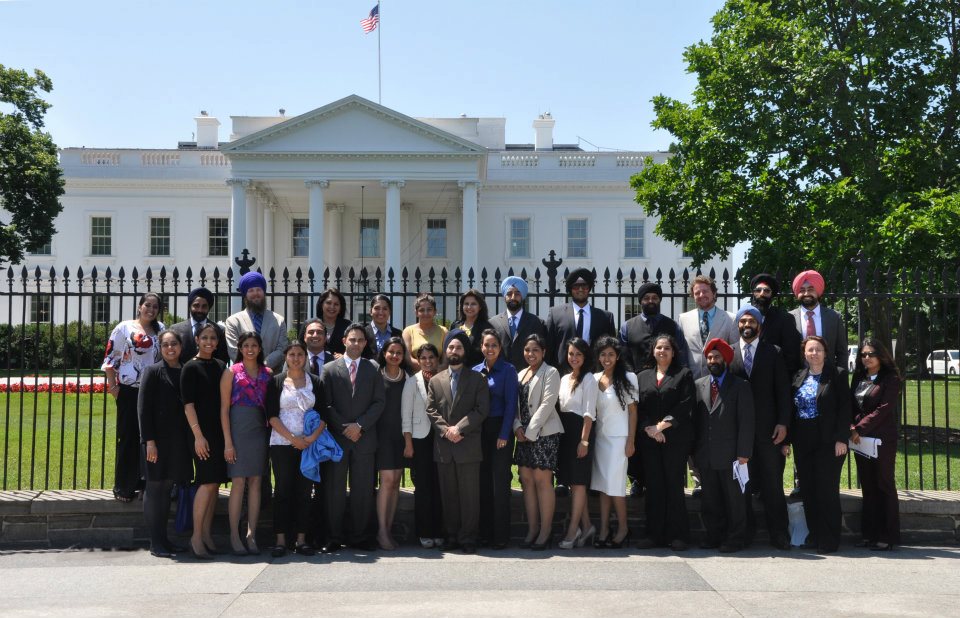
Around 7:30am on that day, about 50 people representing Sikh communities from across the country – California, Texas, Indiana, Ohio, Michigan, Georgia, New York, New Jersey – gathered at the East Wing for a special tour of the White House. These members of the community walked through the historic center of the country, seeing with their own eyes notable places such as the room in which President Thomas Jefferson first held cabinet meetings and the Blue Room which remains the reception room of the White House. Following the tour, community members joined White House administrators for the first-ever White House briefing on Sikh civil rights issues.
For those of us in the audience, it was a deeply moving moment – particularly when the briefing started out with Bole So Nihaal, Sat Sri Akal. Yes, a jakara in the White House!
There was something symbolic in that moment. Once, a long time ago, Sikhs would have made the jakara call while raising their flag at the Red Fort in Delhi, the symbolic capital of India, as Jassa Singh Ahluwalia was proclaimed Sultan-e-Quam (‘king of the nation’) – a gesture in which Sikhs laid claim to their sovereignty as a people in 19th century India. Now, under certainly different circumstances in a land separated by time and distance, Sikhs were making a similar call to claim to their legitimacy as Americans.

FlyRights App from the Sikh Coaltion (photo: fly-rights.org)
By now, you have likely heard of the smartphone app (available for iPhone and Android devices) released by the Sikh Coalition called FlyRights, which was released yesterday (April 30), and is free of cost. The news of this app’s release has spread virally among news outlets and has been applauded by other civil rights organizations and the general public.
FlyRights allows travelers (Sikh or otherwise) to now report complaints to the TSA and Department of Homeland Security (DHS) if they feel that they have been racially profiled by TSA agents.
Based on past experiences, it is an app I wish I had before, but I’m glad that it’s available now.
Credit: Karaminder Ghuman, Courtesy: The Sikh Coalition
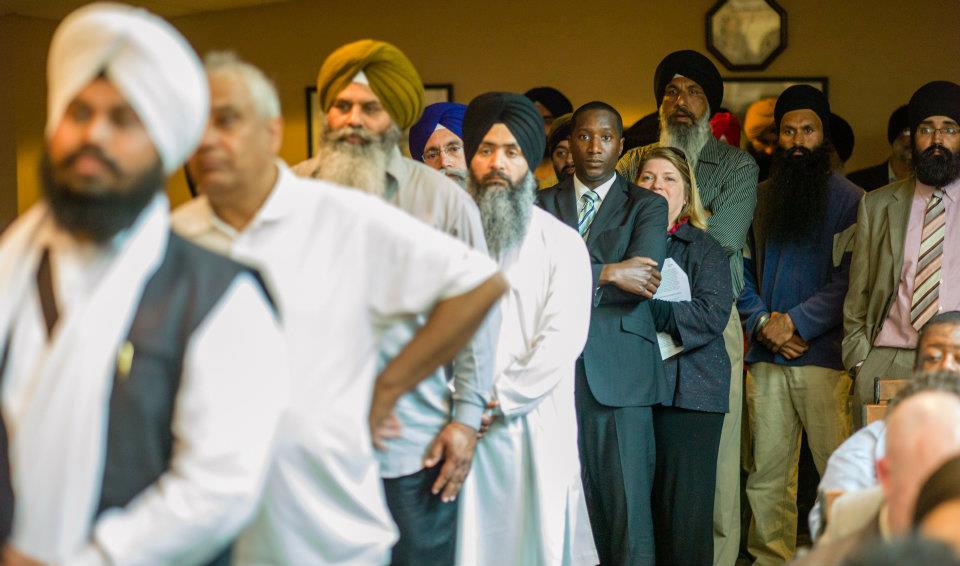
The Sikh community is leading the way to strengthen law that will protect Sikhs and other religious minorities from job discrimination in the workplace. AB1964 – or the Workplace Religious Freedom Act (WRFA) – has been introduced by Assemblymember Mariko Yamada and is co-sponsored by The Sikh Coalition. Earlier this week, in a show of community leadership, the California Sikh sangat packed a hearing room in the California Assembly and testified in favor of AB1964. As a result, the bill passed through the Labor and Employment Committee and will be considered by the Judiciary Committee on Tuesday April 24th. The Sikh Coalition states that,
This is the first time in California’s history that the Workplace Religious Freedom Act has survived a committee vote, and this is a credit to the power of Sikhs to provide leadership on civil rights issues for all Americans. [link]
Why should Sikhs care about WRFA?
Sikhs suffer high levels of employment discrimination because of their Sikh identity. Many are told to shave their beards; others are told to remove their turbans; some are told that they can only work out of public view. If enacted, WRFA would make it harder in each of these cases for California employers to discriminate against Sikhs.
Guest blogged by Sharandeep Singh
Sidak, run by Sikh Research Institiute, is a diamond among jewels. It is one program, which after attending, completely changes your outlook on Sikhi, and life – I speak unequivocally when I say there is nothing else like it!
As a graduate of Sidak 2011, I want to share my experience to motivate and inspire whoever reads this to attend, so that you too can join the ranks of people who have enriched and developed their understanding of Sikh culture and history.
The annual retreat, based in Texas may seem daunting, particularly for me—it being my first trip to the US—I arrived with a feeling of trepidation, not fully aware what awaited me in the two weeks ahead. Suffice to say, I was not disappointed.
Guest post by Naujawani Sardar
The title to this article might have conjured up images of a cowboy-style shoot ’em up between turban-donning, mounted riders, and whilst I would welcome development of such an idea into a film, sadly that’s not what i’m writing about. I am Sikh, Punjabi and Western (English) and like every other person growing up in the West I am challenged by the cultures of all three identities. I am also in my early thirties – if I think i’m having a tough time coming to terms with these uniforms, I am only thankful I am not ten years younger in the modern World.
Growing up in the West can be mentally taxing for young Sikhs. Whether English, American, Canadian or European, there pervades a Western notion of lifestyle, opportunity and prosperity that occasionally challenges the practices most of us engage in as Sikhs, and certainly impinges on the way we are brought up in Punjabi households. There is a wide array of ways in which the cultures denoted to us by birth clash with one another, from career choices to personal relationships, hairstyles to language usage. How we deal with these culture clashes will differ from individual to individual and whilst the maxim that a Sikh is a Sikh irrespective of their nationality, there is a growing need to support young people and help them to deal with life in a way that reflects the road they wish to travel on.
Young people find support from varied sources including friends, family, schools and independent organisations. The latter is what I would like to focus on seeing as this is the least regulated group from that list and arguably can have the most influence. In this context, independent organisations are extra-curricular clubs, societies and charities; places that provide essential skills in team-working, discipline and communication through playing a sport, learning a language or providing a service. Whilst engaging in an activity, young people are at least purportedly provided with guidance on everyday life and this is clearly seen in the confines of the Sikh experience: gatka akhare, Punjabi language classes, Khalsa/Gurdwara football teams, Sikh activist groups, and even online communities such as The Langar Hall.
 This season, Americans are spending $465 billion, according to the National Retail Federation and a substantial portion of that is on gifts. Luckily, the final days of the year are a chance to give in a different kind of way and by doing so, gain a benefit – namely, contributions made to a charitable organization by December 31st count as a deduction on your 2011 tax return.
In Sikhi, there is the tradition of dasvandh – or giving a tenth of your seva, time or profits. The concept of dasvandh was implicit in Guru Nanak’s own Gurbani in the line: One who works for what he eats, and gives some of what he has – O Nanak, he knows the Path (SGGS p 1245).
While it’s not clear how much the Sikh community actually participates in this tradition (perhaps we just don’t discuss it publicly), it’s nevertheless clear that giving is an integral element of our faith. According to the Stanford Center on Philanthropy and Civil Society, the fact that 35 percent of all American giving went to religious organizations in 2010 reflects how closely bound many of us are with our place of worship. In 2011, the United States now ranks the highest in terms of charity in a massive global survey that put the nation in fifth place just last year. According to those surveyed, two out of three Americans said they donated money to charity (65 percent), more than two out of five volunteered their time (43 percent) and roughly three out of four helped a stranger (73 percent). Finally, according to a new study by the Center on Philanthropy at Indiana University in nearly 90 percent of certain households, women are either the sole decision maker or an equal partner in decisions about charitable giving.
Seems to be a rather slow week for me and the fellow langa(w)riters. Maybe we’re at #occupywallstreet, or preparing for Fauja Singh’s appearance at SikhLens this weekend in Los Angeles, or who knows what else we’re doing. Still one thing we all made sure to do is vote for United Sikhs in the Chase Community Giving. As of my posting, they are currently #2. Can’t help but think that the competition has gotten considerably less over the last few years as the money has increased. Other Sikh orgs (read: ENSAAF), where you at!!
Regardless, vote NOW. You have to “like” Chase Community Giving. Many of you probably already have done it from the Jakara Movement’s win back in 2009. So now just go back and keep on voting. Let’s help push United Sikhs to the win. VOTE NOW! The competition ends on November 22, 2011. Let’s push United Sikhs to first place!

When I met Sonny, I felt that his story demanded to be told. I was moved by his willingness to share difficult stories about how racism, xenophobia, and islamophobia impact him in a very daily and intimate ways. But more importantly, I was inspired by how he had turned this hardship into a motivation to fight for social justice for all people. I was welcomed with incredible warmth, and inspired by the Sikh traditions seeing the divine in all people, and fighting for equality. – Christina Antonakos-Wallace, Producer and Director of Article of Faith
To continue a discussion about bullying and bias-based harassment that seems to be appearing both here on The Langar Hall and also within langar halls across the nation, we wanted to take the time to highlight an inspiring documentary which discusses this very issue. Article of Faith is a short film, directed and produced by Christina Antonakos-Wallace, portraying one Sikh activist, Sonny Singh, who organizes New York City Sikh youth to combat harassment in their schools. Sonny shares his own, very personal experience with bullying recognizing how incredibly important it is for us to openly dialogue about these issues, so that other children who are experience similar challenges do not feel like they are alone.
Guest blogged by Naujawani Sardar
 There has been a lot of talk about the SGPC elections recently, even over on our blog. And it got me thinking about a whole range of things from ‘selection vs. election’ to Sikh bodies outside of Punjab. My life in Sikh circles has been positively fascinating for over two decades now, but one of the things I have found most difficult to deal with has been the tension that arises around Sikh representative bodies. Before you stop reading, I’m not going to write about the SGPC – although what I’m writing about could quite easily fit the world of any organisation that represents Sikhs, and specifically those who have had to face false accusations.
“Nishaan is a new organisation consisting of university Sikh Societies across London and the South East of England. It is created on the principle of ‘for the students by the students’.”
That is taken directly from the biography of ‘Nishaan‘ – a body of university students at institutions in London who have been collaborating and working closely together for the last year. In actual fact some amongst this group of students and this movement itself began in earnest four years ago when one particular University Sikh society at Imperial College London established an annual meal and gathering of Sikh socs from around the capital; they called the event ‘Collaborations’. Following that, students looked to ‘collaborate’ more often, but in reality it didn’t work efficiently because communication was poor, organisation was overly dependent on single individuals and the age-old division of jatha-affiliation reared its head.
Guest blogged by Satvinder Kaur Dhaliwal
Admin Note: After completing her undergraduate studies in Anthropology, the author traveled to Panjab to volunteer. She spent her time volunteering at Pingalwara and working with the Baba Nanak Education Society (BNES). Below is an article she wrote for BNES to raise awareness about their impactful work addressing farmer suicides.
::
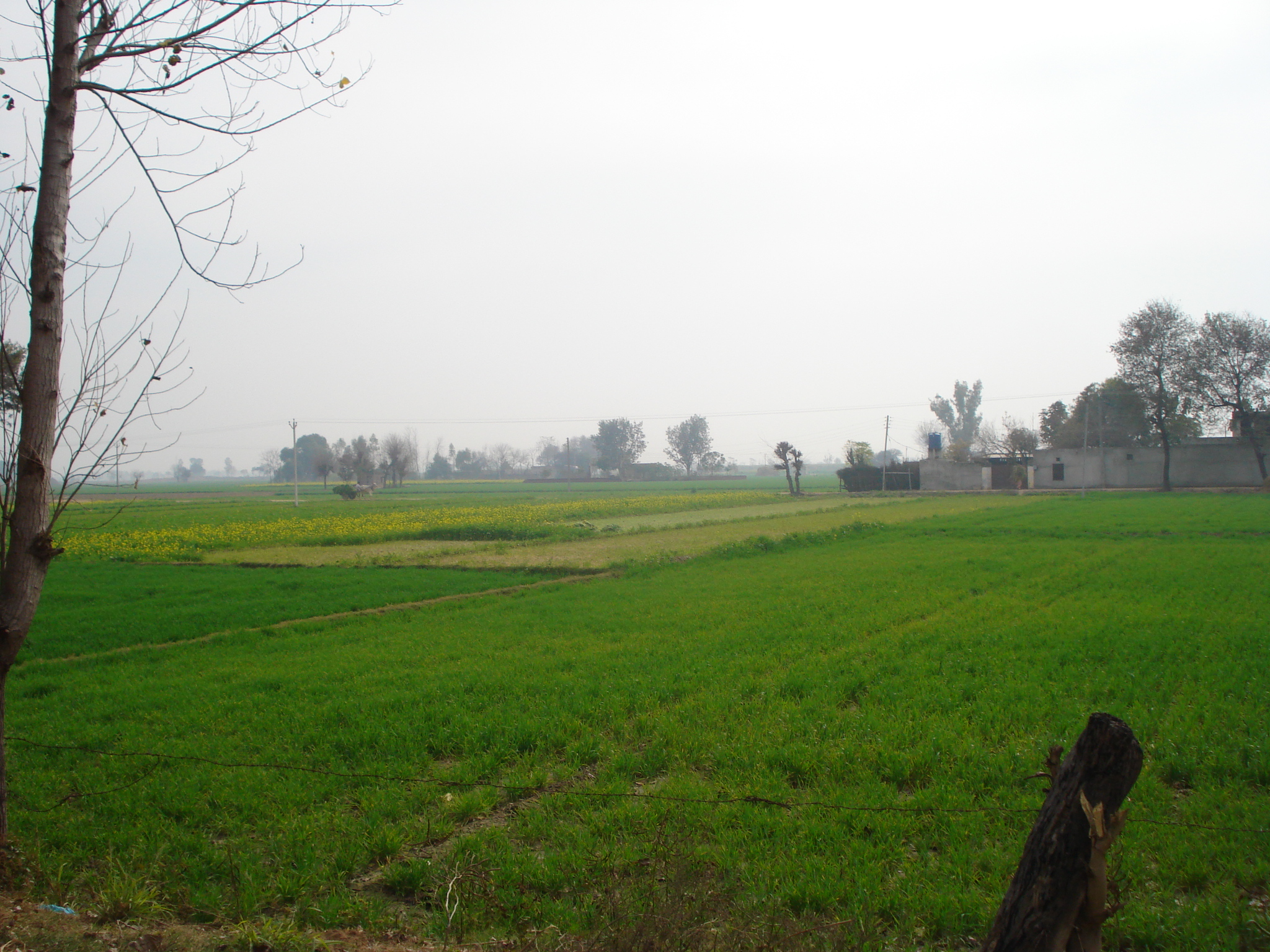 Village Barlan, District Sangrur, located near the Panjab-Haryana border, depicts the prosperous, joyful Panjab that many of us are eager to visit. Roads leading to the village are surrounded by what appearsto be flourishing farmland, stretching as far as one can see. Children have returned from school and are laughing and chasing each other through the streets of the village, the elderly have gathered to discuss recent happenings, and women can be seen carrying various necessities to their homes. This first glance overview of Balran disguises a harsh reality that a growing number of households in the village are facing – suicide.
Suicide is an equal opportunity visitor in Balran and many other villages throughout Panjab. Increasing farming costs, the removal of farmers’ subsidies, and low rates for crops are putting Panjab’s farmers in a never-ending cycle of debt accumulation. Each year, farmers in Panjab face increased agricultural costs and low returns for their crops. In order to cover these costs, farmers must take out loans, which they usually get from their local aarthiya or money-lender. The aarthiya often ends up being the same individual who will buy the farmer’s crop at the mandi or market, and then re-sell the crop on the public market. Sukhjinder Singh, a farmer, described the reason for debt accumulation as, “Let’s say that I sell my crop for 11 rupees per kilogram. When I need to purchase the same crop for my home, I have to buy it for 14 rupees per kilogram. So how can we profit?” Consequently, when a farmer’s costs are constantly exceeding his profits, he must cover his costs by taking out loans. Now, he has increased his debt by introducing extremely high interest rates, which are often decided by the aarthiya.
Unlike the west, the gendered demarcations of males and females in Panjab are much more stark, and it is common for women to be unaware of their family’s financial circumstances. Therefore, when the male becomes consumed in debt and can no longer bear humiliation from the taunting money-lenders, he begins to see only one way out – suicide. His surviving family members are not only left devastated, but they must find a way to provide for themselves and pay off the debt on their family, of which they may never have been aware in the first place. Often times the surviving family members include a wife, children, and elderly parents. In winter 2011, I visited the families of various suicide victims in Balran. Some families had lost their loved one a few years ago, while some had only experienced the loss a few days ago. Although I only visited seven families, the Baba Nanak Education Society has documented 91 suicides and numerous missing individuals in Balran since 1998. Nonetheless, all family members were still grieving equally and struggling to pay off their debt.
 The Sikh American Legal Defense and Education Fund (SALDEF) has announced the Congressional Internship Program (CIP) as part oftheir new initiative called SikhLEAD. The objective of SikhLEAD is to inspire, train, and support motivated and enterprising young Sikh American leaders as they prepare for a lifetime of community engagement and community leadership. The CIP is the first effort under this new and dynamic initiative.
SALDEF’s CIP partners with congressional offices to place Sikh American college students in internship positions on Capitol Hill with members of Congress. Through this program, students will be afforded first-hand perspective into the functioning of the federal government, as a way of providing experience-based training to individuals interested in civic engagement and government affairs.
Through the experience of interning in a congressional office, interns will:
- • explore a potential career track
- • create a network of professional and personal contacts
- • develop real-world skills
- • build confidence and professional work habits
The application deadline for summer 2011 internships is March 27th, 2011!
Visit www.sikhlead.org for more details and to apply. Spread the word and tell your friends about this exciting opportunity.
Update: The SWAT team provided an update on their progress. See end of post.
The Sikh Welfare Awareness Team is a new charitable organization in the UK focused on bringing awareness to drug and alcohol abuse in our community and reducing involvement in crime by providing youth with activities and organized events to participate in. The organization’s primary goal is “to establish relationships amongst the youth and… aim to bring together the local Sikh Community and focus on projects which benefit the youth of today.” I came across information about this organization after viewing a troubling YouTube video about homeless Sikhs (since the video below has been made private by the owner, log on and you can also watch the videos on Facebook). The Sikh Welfare Awareness Team (or S.W.A.T.) is currently working to bring awareness to the growing number of Sikhs, many who are recent immigrants from Punjab and are homeless living on the streets of Southall.

Last weekend I attended the Sikh Lens Sikh Art and Film Festival in Hollywood. I have attended film festivals all over North America and strongly believe in their need and presence in our community. Many times, however, the events get overshadowed by the glitz and glamour – the red carpet, the photographers, the eccentric outfits… I was therefore grateful that my experience at the Sikh Arts and Film Festival was a fulfilling one – I left knowing that Sikh Arts and Films bring value to our community and need to be supported. In addition, I felt the organizers made a special effort to keep the event focused on the directors, artists, musicians, actors, authors and organizations who were present. They recognized the fact that we are all in this together. Sikh Arts and Films are only beginning to be acknowledged, there is so much potential and growth that will still occur. However, this isn’t going to magically happen overnight, and it most definitely won’t happen without the community’s support.
 I was recently told that Sikhs in the UK spend 7 times more on license plates than they do on books (yes, 7 times!). While I’m not sure of the statistic in the US, the point is clear – perhaps we’re not investing in the right places? I think as a community we have begun to establish the need to support non-profit organizations that are working to address human rights, legal, education and activism issues (although we still have a long way to go to enhance our support). However, what goes hand in hand with this is the support and advancement of Sikh Art and Media. Without a doubt, events such as Sikh Lens are helping to pave the path – however, we as a community need to ask ourselves why we are so hesitant to spend money on independent films, children’s books, on historical references and on paintings. When I think about other immigrant communities, I notice that their advancement as a community comes from their support of one another. Whether we like to admit it or not, our community is extremely frugal and competitive with each other, and unless we start to move away from those stereotypes – we will not be creating a better world for our children.
20,000 Butchered in Delhi
25,000 Made “Disappeared” in Punjab
A Community Bruised
A Diaspora Tarnished
STILL WE RISE
A Nation Never Forgets
Remember 1984
On The Langar Hall, the fight for justice is rarely far from our minds. While justice remains elusive and mass-murderers promoted, the community suffers, but not in silence. In this 25th year of the Indian Government-sponsored pogroms, we bear witness to that genocide. We remember not only the lives lost, but call for accountability so that events such as Delhi 1984, Gujarat 2002, and the numerous human rights abuses that occur everyday in the territory that is India are not forgotten. The Indian elite may see the country as a rising economic star, but without political rights, freedoms, and a genuine commitment to justice, slogans such as “Indian Shining” fall on deaf ears.
Here is one such event that inspires us to remember:

Below the fold, see a list of upcoming events in your community. Participate, contribute, stand in solidarity – Remember 1984.
 Guestblogged by Mewa Singh
This past weekend the North American Sikh Medical and Dental Association (NASMDA) held their 17th annual conference in San Diego, CA. The organization’s website provides a brief description:
Started in the summer of 1992 at Poncos, Pennsylvania, NASMDA has grown to an organization of over 1000 Sikh medical and dental professionals spread across North America. NASMDA strives to provide a platform for Sikh medical and dental professionals to network and interact with each other while promoting the ideals and the mission of Guru Nanak. The members of NASMDA have been actively involved with helping out and supporting various Sikh organizations, young medical students and physicians.[link]
NASMDA provides a platform for Sikhs of various ages to engage in medical exchanges as well as be briefed by various organizations that presented. In all transparency, I made one such presentation, along with other organizations, including Sikh Coalition and more.
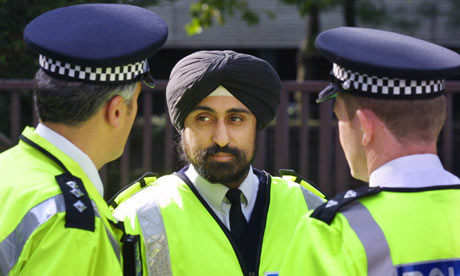 Sikh victims of crime will now be given the option of requesting a Sikh police officer to work on their case. Well, in London at least. The goal of this new service, offered by the Metropolitan Police, is to make use of the “special” knowledge officers have in regards to Punjabi culture to help address issues such as forced marriage and honor crimes. Many police officers believe that crimes have gone unreported and unsolved within the Punjabi Sikh community due to a lack of cultural understanding by police officers from a “white” background.
Palbinder Singh, chairman of the Metropolitan Police Sikh Association (MPSA) said: “It’s about understanding and appreciating difference. I don’t believe a white officer is ever going to be fully conversant with a Sikh for example. We have got evidence in the most serious type of crimes where Punjabi culture itself is the issue, that they haven’t been properly investigated.” [link]
Cringe.
When the British Sikh Police Association (BSPA) was set up, a spokesman suggested that the organization represented an important move towards social cohesion and integration, just like ‘other support networks within the police’. The BSPA did an excellent job at setting up an online service to allow women to report honor-based violence. It’s a completely valid effort to address the needs of minority communities – and something which should be celebrated. However, while I am a huge advocate for providing culturally and linguistically relevant services in all public sectors, I’m not sure that the solution proposed by the Metropolitan Police in England is necessary a good thing. Instead of providing diversity training to all members of the police force, this policy divides justice across ethnic lines.
Early last week, a remarkable thing happened. Sikh children took to NYC streets again- some in strollers- and they were heard.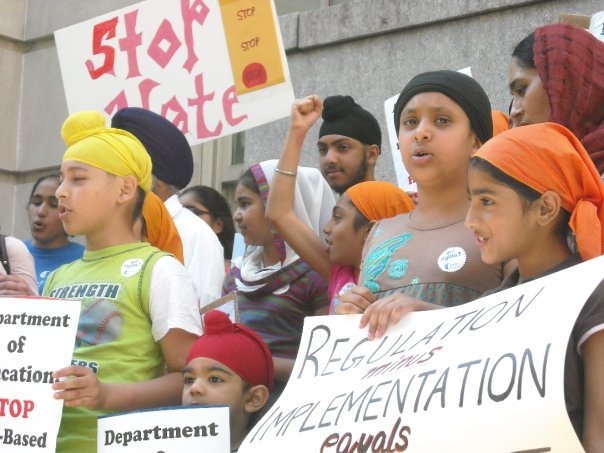
Last fall, the New York Department of Education passed a regulation in response to disturbing findings about the bullying that Sikh children face in schools. The regulation promised to define, track, and prevent bias-based harassment in NYC public schools. So after the first school year in which the regulation was in effect, how did the schools measure up?
The results were made public at a recent press conference by the Sikh Coalition and Sikh youth in NYC in front of the Department of Education’s headquarters. The Sikh Coalition teamed up with area organizations including the Coalition for Asian American Children and Families (CACF) and the Asian American Legal Defense and Education Fund (AALDEF), to release a report card grading the first year of the regulation’s implementation. Speakers at the press conference included representatives from Queens and Brooklyn schools and organizations such as the New York Civil Liberties Union (NYCLU), Desis Rising Up and Moving (DRUM), and Make the Road NY.
Problems remain, the report card shows. Based on the Sikh Coalition’s survey, there was no significant decline in the rate of harassment in the first year of the regulation’s implementation. [pg.9] Perhaps most disturbingly, out of all harassment reported by children, 16% was committed by a school official such as a teacher, school staff member, or security officer. [pg.12] In addition, after 90% of reported incidents of harassment to school officials, the school failed to properly follow protocol for investigation and follow-up. [pg.11]
For the full report card, click here.

