
What Happens When Lions Roar?
 Toronto is abuzz. This weekend the IIFA [International Indian Film Academy] awards are being held in Toronto to many a South Asian’s delight. We are, however, delighted about Toronto for another reason. This weekend, The Sikh Activist Network will be hosting When Lions Roar 3 – a night of hip hop, poetry, R&B and other art to remember the events of 1984.
There is much that can be said about the comparisons between the two events. The IIFA essentially celebrates bollywood – an industry that frustrates many conscious Sikhs living in both India and the diaspora. The representation of Sikhs in bollywood films has been an area of discontent with Punjabis and Sikhs being portrayed as hypermasculine and other cringe-worthy stereotypical roles [read Navdeep’s piece, Media and the Sikhs]. While many applaud the increased presence of Sikh turbans in bollywood films, others may argue that this presence has not necessarily changed the typical Indian’s perception of Sikhs in a positive way. For example, in Indian media – Sikhs continue to be portrayed with words such as terrorist, extremist and radical [read this inaccurate and uninformed article]. I’m not anti-bollywood by any means – there are definite exceptions to the bollywood trend of representing Sikhs in a one-dimensional manner. However, I think it’s important that as a community, we stay informed and expect authentic representation of Sikhs (whether in books or films or other art forms). Bollywood is a huge industry that has an enormous influence on building or breaking down perceptions of groups and communities. [Side note: it’s interesting to me that discussions about Sikhs in bollywood never revolve around Punjabi or Sikh women. This may be a good or bad thing, but perhaps it’s a discussion for another time].
It is clear that the Sikh community cannot rely upon an industry to change overnight – instead, we should focus on supporting and celebrating the immense diversity that makes up our community.
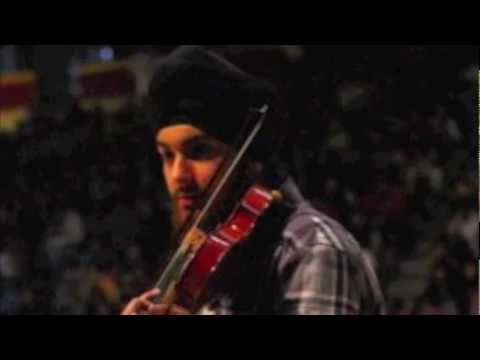
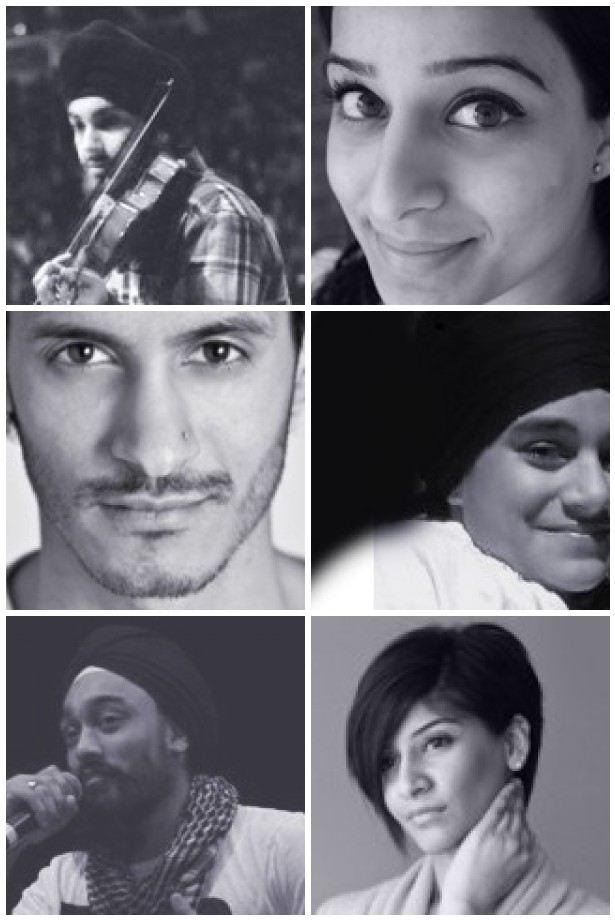 The Sikh Activist Network is one group doing just that. When Lions Roar 3 opens this weekend, it will bring together a plethora of talented young Sikhs who, perhaps unknowingly, are helping to promote non-traditional paths to success in addition to helping to change the stereotype of Sikhs in the media. When Lions Roar 3 is a night of Hip Hop, Poetry, Spoken Word, and Visual Art to remember 1984 and the continuing struggle for justice. In our community, we spend a lot of time talking about the value of discussing issues and not just brushing them under the carpet. I think this event helps to do just that – it’s important for our generation to discuss events such as 1984 in a healthy way and to build a sense of community around it. I hope SAN will invite Canadian media outlets to be present at the event to see that Sikhs can feel strongly about our identity AND feel connected to the countries we call home. In addition, the event should be written up in Panjabi newspapers to show elders in our community that the memory of 1984 will not be forgotten and to show them how we are choosing to commemorate. Be sure to check out the artists [also read For Many, Being a Sikh Means Being an Activist]. In the meantime, here’s a preview of one artist, named “Violinder”.
Event Information:
Friday, June 24th | Dreams Convention Centre | 75 Hedgedale Road; Brampton, Ontario
Admission: Pay What You Can | All Ages – Doors Open at 6pm



42 Responses to “What Happens When Lions Roar?”


Excellent article and info will try to come this Friday to Brampton at least you can get entry to celebrate rather than the IFFA special connection sponsor only tickets.
When “Lions Roar 3” at least we can celebrate
Sikhi Panjabi Community Pride Ability Music Song Acting Dance . I congratulate your group and artists for your hard work organizing most importantly your “Roaring Success”
A positive bridge-building community connecting barrier dropping event.
Brampton,Ontario.Canada……..Violinder looks very professional capable.
Love this! Any chance “When Lions Roar” will become a rotating/traveling show so that others in North America can attend??
Instead of prancing about like nancy boys to hip hop that night…..shouldn't you Canadians actually be at the IIFA awards…..reminding Amitabh Bachan and the watching world that we will never forget what he did and said in 1984 ? I just find it all a bit strange. How you can all have a fun hip hop night in one arena whilst just around the corner, in another arena, sits a man with Sikh blood on his hands, dressed to the nines and having a ball. The whole things pretty ironic. A hip hop night entitled 'never forget 1984'…where the participants can conveniently 'forget' 1984…and dance the night away…..while one of the guilty of 1984 enjoys a night out in Toronto.
I swear you couldn't make this stuff up. The whole thing is a farce.
I disagree. Have we not been doing what you suggest for the past 27 years? How has that helped us? Rather than expecting India to acknowledge the events, we control how we choose to remember 1984. I think this event is a great way of doing that – perhaps you should listen to some of the spoken word pieces or hip hop – it's quite powerful and meaningful to many of us.
I'm curious though… Say you took a flight to Toronto and did what you are suggesting – how would you go about "reminding" Amitabh Bachan?
Not to mention that Hip-hop is lame as sh*te haha.
Well, just as an FYI, Amitabh Bachan is not planning on attending the IIFA awards in Toronto. Not sure what the reason is, but he won't be there. Any other suggestions to cater to India or can we go ahead and celebrate our Sikh youth?
haha Sundari just got told
Blightly Singh; not sure where your skepticism is coming from, and encourage you to go and even perform at one of these events if possible.
I honestly think events like When Lions Roar and Lahir have the power to change the culture of the Sikh community. Here on the East Coast we’ve been doing ‘Open Mic Nights’ since 1997, and they have played such an important role in helping us articulate themselves, experiment with their own talents, be Sikh in a way that is uniquely them.
Also – I just want to mention that so many members of the Sikh community carry baggage from '84 and the post-9/11 climate. Until you have a place where you can talk about it, rap about it, sing about it, draw about it, cry about it, and connect with others about it, we’re silent to our own suffering, and it is a real emotion. When we start to build forums for our youth not only to express the suffering they’ve witnessed in their life, but do so in a positive way that inspires them to embrace their Sikh identity – it’s just a wonderful thing and you just gotta be there to know it, so definitely consider going next year if you can, brother.
Great post Sundari!!
@Blighty Singh: the people who have worked incredibly hard to make When Lions Roar happen also organize langar for the homeless, mentoring programs for young people and they coordinated the very effective campaign against Kamal Nath in his visit to Toronto last year. I personally prefer an evening in with a good book, but i am in awe of what these young people are doing.
There is an old English saying”there are many ways to skin a cat”, lets work together and support each other and not be so ready to critique, for we will skin this cat!
[admin note: last warning to stop using this handle, next time you will be banned. warning no. 3 — and stick to one handle on TLH]
Very well put, Jodha's sister, and a great metaphor, although a disturbing image. I am glad there are organizations like this that have long-term goals in mind.
p.s. I also like evenings in with a good book. But evenings like these can persuade me to leave the comfort of my recliner and warm cup of cha =)
"but surprisingly "art" is not really encouraged in our community as something other than a "time pass."
diagree – art, as in music, painting, writing ect. is a pretty important part of many punjabi sikh families. sure there could be more. Interestingly I see this blog comes at most issues from a "here's the problem but we can do better" angle. I guess that's another way to say….progressive.
" art, as in music, painting, writing ect. is a pretty important part of many punjabi sikh families"
How many Sikh art/music majors do you know?
Can you point to other venues where Sikh youth are encouraged to pursue artistic endeavors?
Also I don't see the connection here between your "many punjabi sikh families" and TLH's use of the term progressive.
I know a lot of sikhs who write, play music, and paint. are they music and art majors? maybe some. I do know many, many people who make an perform art all the time. Is it going to be bought by anyone? probably not, but its meaningful. I question the need to professionalize and possibly commodify art or the practice of creating or participating in artful work.
the connection between the two statements is….if you look at many of the posts here, the start with a premise that something is wrong, missing, or needed in our community, and then end with a spur to change or improve.
its just part of my now-probably concluded attempt to pose a question about some of the underlying assumptions of the ideas I'm reading. I wholeheartedly do not agree that the idea the Sikhi can be said to simply be a "progressive" religion without much more work in developing what is meant by progressive. And I see implications from simply matching "progressive" and Sikh.
If you look at some of what was written about the Singh Sabha movement, it was that they took ideas from British liberalism and then led a movement to reform Sikh practice in a ways that were in some ways a reaction to those ideas. Its not clear to me if that is what happened, but it would be interesting to think about that idea in this context, when a new set of people are trying to reform Sikhi communities possibly in relation to attitudes and assumptions prevailing in the wider society.
that said I am all for more places to practice and perform art. Its just that I do not buy into the idea that there is a lack in the community currently that we need activists to solve. building for the community is not the same as saving the community
and since we're posing questions, match up for me other demographic communities including by economic demographics and college participation levels, and let me know the percentage who perform or create art and how you're going about judging whether something is "art."
maybe also information on percentage of music or art majors versus percentage of these communities who go to college at all, along with the economic position of their families and their earning potential, and also countermatch that with immigration patterns and the history of those demographic communities.
I think you should be informed enough to know that the kind of data you're looking for simply isn't available. I don't think we need to get into judging about what consists of "art" but I don't think its much of a stretch to say that creating "art" among Punjabi Sikhs is considered "time-pass," and that we would have more artists like those at WLR if our community was more amenable to such pursuits, even as hobby. I don't think WLR is commodifying anything, but point taken on professionalization.
Your inquiry to the Singh Sabha has been taken up more seriously in the academic works that you are citing, and you are right that there is little conversation about how Sikhs today might be inhabiting a worldview that is indebted to a reformation movement based in European liberalism. Im taking you seriously here. But there is a different move I think that is being made with TLH, namely that it is not some sort of collective attempting to reform an ethno-religious community. Moreover, I don't think that the contributors of the blog are pandering to attitudes prevailing in the wider society since "wider society" is something in and of itself that is in flux. Sure, there are some ideas that can be more taken for granted than others, but it is still difficult locate this wider society you're talking about. Similarly, the Sikhs as a whole were never in a context that was not heavily influenced and in conversation with wider society. Purdah didn't exist for Sikh women for a long time because Sikhs wanted it that way or because it has a rationale in Gurbani…Many of our grandparents generation and older would easily eat chicken but not beef, etc. etc.
I'm not sure if you are replying to what I wrote.
I don't think you are taking me seriously, I think you are being pretty condescending actualy
I was responding to this:
"its just part of my now-probably concluded attempt to pose a question about some of the underlying assumptions of the ideas I'm reading. I wholeheartedly do not agree that the idea the Sikhi can be said to simply be a "progressive" religion without much more work in developing what is meant by progressive. And I see implications from simply matching "progressive" and Sikh.
that said I am all for more places to practice and perform art. Its just that I do not buy into the idea that there is a lack in the community currently that we need activists to solve. building for the community is not the same as saving the community"
My apologies for coming off abrasively but I was hoping that you would see that im engaging directly with (what I perceive to be) a fundamental issue that you're trying to work through. Challo next time.
Well, a little hard to explain but the condescension is mostly about having a "right" answer and then checking or correcting answers which are not "right".
It seems like too often there is a correct line of thought here and those who stray from that are not so comfortably received. I'm actually a little surprised how unpleasant it was.
Just at the end, to go back to art, if you're talking about art as a way to express emotions that are otherwise suppressed, I'm not sure how professional it needs to be, and I do think that people within our community make music, sing, paint, dance, and participate in storytelling in ways that are artistic and not that uncommon.
I think a key difference in the ideas of how ubiquitous/rare the production of art in the Sikh community in the comments by kantay and sahnewal have to do with locality and generation.
kantay's description seems more apt in Punjab or most of the diaspora (non-US). There is a reason that 'modern' bhangra was 'invented' in Southall and not in San Jose. The uniquely "North American" sound that was added to 'modern' bhangra was due to Inderjit Bains and Jazzy B – both Canadians.
The situation of 'time-pass' that sahnewal describes may have more to do with class. the first immigrants to the US (with continuity) are the post-1965 technocrats. this is hardly a group that would have been artists or even promoting such with their children. So their children, 'created' their own form of 'bhangra', which is what we see in the 'dance entertainment' competitions across North America.
what is unique about WLR is a middle-class setting for such a display of arts (itself a middle-class phenomenon). It makes sense as SAN, the Jakara Movement, etc. are middle-class youth organizations. even if that doesn't describe all of their members, these are largely their values. This can be contrasted with other North American organizations such as SC, SALDEF, etc., which represent 'elite, and upper-middle class values' with concerns for representation and media.
You make a good point there Jodha….about the differences between the various Sikh diaspora and the relevance of class. As the England Sikhs tend to be overwhelmingly inner city living working class……it stands to reason that their way of remembering 1984 manifests itself in the flexing of muscle and, as demonstrated by the events at Dudley Gurdwara earlier this month, violence. Being into 'poetry' and the arts in the kind of inner city neighbourhoods that the UK Sikhs inhabit….is tantamount to coming out and telling the world you are gay.
If I'm honest though….the feeling I get is that the UK Sikhs don't care what other people may think. They get out there and do what needs to be done….in numbers. The Canadian Sikhs seem only to do things which won't upset their image in the Canadian media. They only seem to do things that will sit well with the media. In the worldwide Sikhi battle then…..such as the battle to get justice for 1984….I don't think the Canadians are any use to anybody. in the fight. No use…..because they're fighting their own battle with the Canadian media. A battle to appear 'moderate' and very 'canadian'. They don't have the inner city working class attitude needed to do physical battle with police and security protecting the guilty of 84. So yes…..our sister here is right…there are many ways to skin a cat. As a working class inner city dweller I may not understand the poetry method…..but if that is what motivates suburban kids these days than it has my support.
Blighty – the picture you paint of UK sikhs being more inner-city based and possessing working class attitudes is probably descriptive of the first generation of sikh immigrants to the UK who settled near foundaries/mills/factories in the 60/70/early 80s. In terms of second and now third gen, they are more and more moving out of the old 'ghettos' (witness Southall for example, traditionally a sikh 'ghar', now has more somalis and afghanis, with the younger sikhs moving out into Langley, Isleworth, Gerards Cross etc); they are also less likely due to work ethic and educational achievement to be working class than other minority ethnic communities (I recall a news article on this recently, will try to dig it up).
I don't think the 'physical' approach of the UK Sikhs is useful at all though nowadays. It was appropriate in the 70's and 80's when under threat of physical violence from outfits like the National Front, we had to resort to street battles and using hocky sticks to stop our heads getting kicked in – but today we're not under the same threat, at least not to the same magnitude. We need a much smarter approach that leverages education (internal and external) as well as influencing policy makers – and it's here we fail miserably. I entirely agree with having the annual demonstration, for example. because it serves as a collective remembrance and rallying point – but that seems to be the sum of our achievement rather than just a small part of it. How many MPs have said they'll engage to see lawsuits or cases brought against the individuals in the Indian administration (as our brothers and sisters in New York have achieved). If we need to look at the fallout of our overly-physical approach, one only needs to look back to the 'Bhezti' saga a few years ago. Bhatti wanted attention and boy did we give it to her!
I am fascinated with how activism differs in North American compared to England. Having grown up in the UK – i do recall the sense of a movement and the organizing of our community back in the 80s – particularly around issues in Panjab and 1984. Do you feel that things have changed? Your comment that, "We need a much smarter approach that leverages education (internal and external) as well as influencing policy makers – and it's here we fail miserably" speaks to this somewhat, but i'm interested in hearing more.
I'm still having trouble reading the condescension in my post(s). I don't see where I have offered up an "answer" to anything, and then furthered that answer as being "right" vis-a-vis other answers.
I am much less concerned with the art question than your fundamental problems with the blog, which I addressed above. If you're willing to bracket that conversation for those who are invested in it (see below), would you be willing to discuss this post:
Your inquiry to the Singh Sabha has been taken up more seriously in the academic works that you are citing, and you are right that there is little conversation about how Sikhs today might be inhabiting a worldview that is indebted to a reformation movement based in European liberalism. Im taking you seriously here. But there is a different move I think that is being made with TLH, namely that it is not some sort of collective attempting to reform an ethno-religious community. Moreover, I don't think that the contributors of the blog are pandering to attitudes prevailing in the wider society since "wider society" is something in and of itself that is in flux. Sure, there are some ideas that can be more taken for granted than others, but it is still difficult locate this wider society you're talking about. Similarly, the Sikhs as a whole were never in a context that was not heavily influenced and in conversation with wider society. For example, purdah existed for Sikh women for a long time not because Sikhs necessarily wanted it that way or because it has a rationale in Gurbani…Many of our grandparents generation and older would easily eat chicken but not beef, etc. etc.
I would really hope so.
sure, let me think about it and reply back
ok, my reply. I think the TLH blog is one manifestation of the conversation that is occurring among Sikhs who are familiar with both liberal philosophy broadly defined and Sikh thought. I think there are congruities between liberal thought and Sikh thought including regarding equality, human rights, the nature of a just society, but that there are some ways in which their might be differences.
I think, given that in our current societies in North America the assumptions of liberal philosophy prevail unless explicitly examined, there is a risk of losing the aspects of Sikh thought which may be useful and valuable.
So for people like you and me who are in a dual position in which we have access (in some ways) to more than one way of being or world-view, we should look carefully what underlying assumptions we are using.
I do think at some levels human thought of philosophy can not be delineated into simple categories of liberal or Sikh. But that given we have a highly developed philosophical system in Sikhi, we owe it to each other to be rigorous in examining how we think about it and use it.
Thats pretty much my point, I apologize as well for abrasiveness.
I
and also typos
Thank you very very much for this. I had a feeling this is what you meant, but wanted to be sure. I think if you take this approach with the rest of your posts (if you so choose to) will lead to more fruitful conversation and dialogue rather than making others feel like you're being confrontational (regardless of your intention). Your points are important, and I hope that they can create more meaningful reflections if everyone cools down a bit.
good point, appreciated
Kantay,
What you're describing is art being encouraged as a time pass, a hobby. Something to do on the side, when not engaged in a responsible, practical career path. This is not the same as art being encouraged as something more, possibly even a potential career choice. In the examples you've included above, if there are individual families who have encouraged their sons and daughters to pursue the arts in this manner, that is wonderful. But I am not talking about individuals. I am talking about the community as a whole.
In regards to your second note, I'll bring it up at the next TLH meeting and suggest we remove the word "progressive" and change the tagline to "I'm Okay. You're Okay. The Panth is Okay: A Sikh Blog Discussing How Great Everything is."
sorry, no time to read that I was too bored
Not a problem, mate. By the way, those are two conflicting ideas: not having time vs. being too bored to read, and yet being interested enough to log in and post a comment.
huh, somehow I don't agree
"I am fascinated with how activism differs in North American compared to England. Having grown up in the UK"………………..(message in 3 parts ) part 1: .Activism, Sundari, has always been more extreme in England. This is the land where the muslims are the most radical muslims on gods earth….where the Irish are more Irish than the Irish (the 5th generation Londoners I went to school with used to criticise our teachers for spelling and pronouncing their surnames ' O'Connor'…..insisting on the gealic prounounciation of 'Nogh'er'). These are the streets for which Marx wrote the Communist Manifesto…when he arrived in London (incidentaly…..while both Karl Marx and Engels were writing the communist manifesto in Londonthey worked as freelance journalists in and subsequently wrote some very interesting pieces about the Sikhs in Punjab for the New York Times).
The 'activism' of the Sikhs here differs from those in north America precisely because of the 'flag'. Here, as you will be aware because you used to live here, you will never ever find a Sikh paying respect to the national flag. In fact, you never find anyone respecting, displaying etc the national flag. We can freely spit on, burn and urinate on our national flag. And often do. Thats because, unlike north America, our cities and towns have burn't because of nationalism. We know its not a good thing…….so don't indulge in it. (except during the football world cup which, in our consciousness, is like a world war) Thus…..the sikhs in England have only one flag to rally around……and that flag is the khanda (granted…some rally around the Indian flag…but the point is none of us rally around the British flag).
Thats always been the case even when you lived here Sundari but, since you left, our European borders have been erased,,,,even the supremacy of Parliament has been given away…and we are citizens of a united Europe. On top of that you've got the Scots and the Welsh only a generation away from repealing the Act of Settlement and going their own way….and the end of anything called 'Britain'….which only really existed for the tourists anyway. Our own national identity in this united Europe is now non-existent. Thus, as Sikhs,….Punjab….gets 100% of our nationalistic attention. When we agitate…..when we become activists….we, unlike the sikhs in Canada or America, have not a care in the world about England.
On top of that you've got the history of how our communities differ when it comes to agitation. American and Canadian Sikhs have history. Sometimes a history that goes deepr and longer than ours here. But the difference is in how our fathers and grandfathers stamped their mark.
part 4 : . In 1979, it was our Sikh grandparents in Southall that finished off the fascist National Front party in the whole of the UK by fighting running battles with police on the streets. In 1981, it was our Sikh parents (including my dad….who was in the BBC report throwing molotov cocktails at the police) who finished off the skinhead movement in the land of its birth by taking to the streets and fighting running battles with them and the police that were protecting them.
Therein lies the difference in how the England Sikhs and the Canadian Sikhs agitate…and remember 1984. The England sikhs have a tradition of taking to the streets. The England Sikhs have parents and grandparents with battle scars and criminal records for taking to the streets. The answer then…lies in geography. Wide open suburban spaces among the sikhs in north america. You don't think of the streets when you live in places like that. Here though…in one of the most densely populated and oldest neighbourhoods on earth………..taking to the streets is the most natural way to agitate
[…] or even one of the most exciting events in the diaspora – When Lions Roar. These have been featured in The Langar Hall over the years and have generated plenty of praise and enthusiasm. This year’s third annual WLR […]
i think its upseting the way hindus potray sikhs in movies .its like they are stupid funny people thats all.i find they are amazing ani i am a muslim.when you go to there house they are so welcoming and very very nice people.look at dharminder so grounded and down to earth. he has not forgotten his roots where as amithab is a snob.
If you want to post an eBook or even eBook. You will be doubtful when you absolutely can do this specific. You will be worried which involving sexual rejection. Consumers are often also telling or even discouraging. write my essay For the quality writing best essay writing is best one and really awesome custom essay writing service providers.