
Forced Marriages – A Shame on Some Sikhs
 The issue of marriage is complex and has as many circumstances as there are combinations of people in the world. Recently, a langa(r)eader wrote:
Hi I as just wonderingif you are familiar at all with a sikh girl marrying a non sikh guy who is caucasian. Her parents banished her forever about 7 years ago and then finally contacted about 2 years ago but are still hung up on the fact. Just wondering what we can do to help them get over this faster. [received email]
Well I can’t make the parents ‘get over this faster’, but I can raise some observations and thoughts on marriage.
On the issue of interfaith or interracial marriages, I am pretty laissez-faire. I resent guys that believe they have ‘ownership’ of women from their community. Live and let live. Find who is best for you. The world is already complex enough. Find a partner that helps you grow emotionally, spiritually, physically, mentally, etc. I do believe that there are certain benefits of marrying another Sikh – especially in religious growth. However, each individual circumstance is different and your partner may help you grow in those other aspects. More power to you.
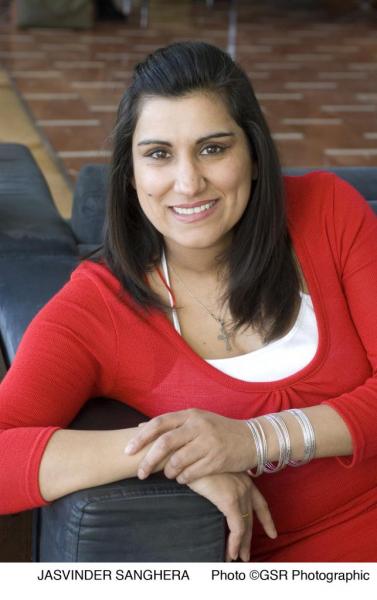
What I am completely against is so-called ‘forced marriages.’ The issue is hardly new, but a recent interview on BBC’s HARDtalk has recently brought the issue to prominence again in the UK. For those that are regular Langa(r)eaders, I have written about Jasvinder Sanghera before:
the founder of Karma Nirvana, “[an organization] with a view to create support project for women who experienced language & cultural barriers.” I have read Sanghera’s memoirs and although her particular story of her parents’ attempt to force her into a marriage and the consequences she experienced is more extreme than most cases, still it echoes the larger problems of “forced marriage” in our community and differences may only vary in degree.
Karma Nirvana, while focused on women, does offer support to men and even employs a man to head the men’s aid project, who himself was forced into a marriage.
Documenting her own story in her autobiography Shame, Jasvinder Sanghera has become a tireless advocate through her group Karma Nirvana to push for help against both men and women that are trapped in forced marriage situations.
The show’s host, at times, attempts to ask ‘hard’ questions that seemed really ridiculous. At times the old British v. Asian divide is exaggerated, as if many don’t have hybrid identities. Or the host’s line of questions that Sanghera’s work has the possibility of painting all South-Asian marriages in such a light. Although to be fair to the host, he may have just been following the logic of a common refrain by her detractors, still even if these are valid, it requires community self-reflection.
I always find it annoying when governments, some media groups, and institutions feign sensitivity to Sikhi or Islam, yet they support human rights violations and atrocities and often discrimination against Sikhs or Muslims. Also if Sikhs and Muslims claim they are offended by the wonderful work of brave individuals such as Jasvinder Sanghera, then I need to ask why we have such skewed standards when the brave seva of members of our own community is more offensive than the perpetrators of this violence.
As Sanghera mentions at the end of the conversation, I, too, hope that others groups in other lands – US, Canada, Punjab, India, and beyond – also take up the challenge to end the practice of ‘forced marriages.’



131 Responses to “Forced Marriages – A Shame on Some Sikhs”


I think the title is some how disturbing to u and probably me too.
It should not have the noun “SIKH ” in it.
I agree with it.
[…] Anytime I have written about Sanghera, I have stirred the anger of some of my brethren (and sistren?), but mostly brethren. So here we go again. ? […]
Dear Colleague,
Welcome to Obiter!
Obiter Training Limited is a new training organisation based in the Midlands, which aims to offer courses in niche areas of law, and that which links it to issues affecting our communities in order to help create change.
It gives me great pleasure to extend to you and your colleagues at the Women’s Networking Hub, an invitation to the launch event of our organisation. Our first seminar will be on the controversial and topical issue of Forced Marriages & Honour-Based Violence.
The seminar will be presented by three highly influential speakers, at St Philips Chambers in Birmingham City Centre on 4th February 2010.
This event is proving popular and spaces are limited – those interested in attending are encouraged to book early.
On behalf of the Obiter Team, may we thank you in advance for your support and we look forward to meeting with you in the very near future! Together, we can create change.
With kind regards
The Obiter team
Dear Colleague,
Welcome to Obiter!
Obiter Training Limited is a new training organisation based in the Midlands, which aims to offer courses in niche areas of law, and that which links it to issues affecting our communities in order to help create change.
It gives me great pleasure to extend to you and your colleagues at the Women’s Networking Hub, an invitation to the launch event of our organisation. Our first seminar will be on the controversial and topical issue of Forced Marriages & Honour-Based Violence.
The seminar will be presented by three highly influential speakers, at St Philips Chambers in Birmingham City Centre on 4th February 2010.
This event is proving popular and spaces are limited – those interested in attending are encouraged to book early.
On behalf of the Obiter Team, may we thank you in advance for your support and we look forward to meeting with you in the very near future! Together, we can create change.
With kind regards
The Obiter team
<a href="http://www.obiter-training.com” target=”_blank”>www.obiter-training.com
http://www.obiter-training.com
I once had a Hindu boyfriend and I am Catholic. Between us, he was the dreamer and believer that
our relationship would work. And so I trusted him and entered into our relationship, and we were happy. Until he has to go back to India for his brother's wedding, and that started our problems.
He said his parents would never accept it, he talked to his relative and his relative said our relatiionship would never worked, because my boyfriend would marry someone that his father would choose. And just like that, my boyfriend dumped me. It's just like being left alone in dark. Just pained so much that he was the one who gave me strenght to have our relationship but at the end left me alone in the battle.
I think most indians are ignorant and one minded. If u want ur daughter to get arranged then stay in INDIA!
Excellent value driven article here. Tons of information. Dating Agency Midlands
I am very glad to see this post.I will definitely share this post with others.Thanks for sharing. Dating Agency Midlands
I am very glad to see this post. I will definitely share this post with others. Thanks for sharing. Dating Agency Midlands