
Why September 11 Didn’t Matter – part 1
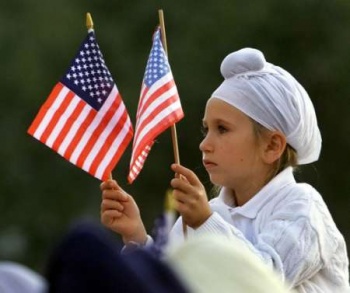 I waited a few days. The title may be sacrilegious, but bear with me and let me explain.
Undoubtedly, for the lives lost in the World Trade Center, for victims such as Balbir Singh Sodhi, for the innocents and “collateral damage” dehumanized and murdered in the hundreds of thousands (and rising) in Iraq and Afghanistan, and to the regime that invokes the “War on Terror” that has led to unethical detention, the promotion of anti-humanist values such as torture (whether conducted in the US or contracted out to other governments), the erosion of that most “American” of constitutional values (i.e. civil liberties enshrined in the Bill of Rights) – September 11, 2011 mattered and will continue to matter. Although, some analysts are even now wondering if it will matter to the future of America.
What I am writing about are the experiences of a Sikh-American.
The narrative in our community goes as following. The world changed on September 11, 2011 (again, that most American quality – to believe that the ‘world’ changed for an event that only occurred in the US). Then, we as Sikhs were attacked “twice” – “double victims”, because as one Sikh civil rights group, SALDEF, writes “[first we were attacked] as Americans and again by those who wished to divide our country based on religion and ethnicity.”
I understand the storyline and it makes sense. But there is something that rankles me here. It is the arrogance of the younger generation.
I write this to try to bring out the actual continuities of the Sikh-American experience and why with a proper scope beyond ‘now-ism’, we can see that while an exacerbation may have occurred, much still remained the same.
I focus on the two most important continuities, despite claims of ‘revolution’ – hate-influenced violence and our institutions.
On Hate-Influenced Violence:
A number of my Sikh sisters and brothers have written various pieces in the last couple of days recollecting their experiences and memories – again it had me thinking so what was really new?
One such writer wrote about his cousin, who stated – “I look like the guy on TV [in reference to Osama Bin Laden].” Another observed “hate crimes were on the rise against Americans who didn’t “look American.”” However, was this new? There is data suggesting a spike in reported hate crimes and hate-related intimidation in the days following 9/11, but again, was this new? They key part in that statement is that we now have data. Did we have data before?
For an older generation of Sikhs here in the 1970s and 1980s, was there a spike following the destruction of the Marine barracks in Lebanon in 1983, killing 241 American service personnel? I have a feeling there was! Even earlier was there a spike in hate crimes and hate-related intimidation after the 1979 Iranian Revolution and the capture and hostage holding of US embassy personnel? I have a feeling there was!
My point is that despite how ‘earth-shattering’ a young vocal generation of Sikh-Americans believe their post-9/11 experiences to be, it is an arrogance and lack of an understanding of the history of our community.
My friend’s father said it best: “In the early 70s, I was a dirty Ay-rab (Arab, referring to the American populace anger over the OPEC oil embargo in 1973 following Israel’s War); in the late 1970s, I became an eye-rAnian (Iranian) and Ayatollah Khomeini (in reference to the Iranian revolution and the hostage-taking of US embassy officials); in the early 1980s, I became God-offi (in reference to Ghaddafi’s role in the bombing of Pan-Am flight 103); in the 90s I became So-damn Hussain (Saddam Hussain in reference to the first Gulf War against the Iraqi invasion of Kuwait); and in the 2000s I became Osama Bin Laden (after 9/11). And throughout I was called raghead and towelhead. So what changed? How is this so different?”
I didn’t have an answer; he was right. We are more vocal now and have a few better means of communicating our responses, but what has fundamentally changed?
In fact whatever our generation has experienced following 9/11, it still pales in comparison to ACTUAL RIOTS against Sikhs, in places such as Bellingham, Washington – mislabeled as the “Anti-Hindu Riots.” Here over 500 townsmen with active collusion with city administrators set upon the Sikhs, endangering their lives and robbing them of their possessions. Not a single person was convicted. In fact it was the Sikh men, who spend the night in jail. Sometimes I believe the present generation of Sikhs in the diaspora either does not know or woefully has forgotten the inhuman racist indignities felt by our predecessors (luckily, @Blighty and others do remind us, at least in the case of England in the 1970s). Nothing even remotely similar to what occurred in Bellingham repeated itself after 9/11.
On Our New Institutions:
There were undoubted changes that occurred. One of the most important has been the birth and evolution of Sikh-American organizations. While SMART (Sikh Media Action Resource Task Force) existed before 9/11, it re-invented itself as SALDEF (Sikh American Legal Defense and Education Fund), shifting from a media watchdog group to one more focused on legal defense and legislative advocacy. From the belly of the post-9/11 beast (New York, NY), the Sikh Coalition was born with a mission largely overlapping that of SALDEF (legal defense and legislative advocacy), but also taking a role in protecting “Sikh civil rights”, which has largely been defined as advocating against bullying. The third group is the United Sikhs. The role of the United Sikhs is a bit more complicated (partially because it is an international Sikh organization in contrast to the two national organizations mentioned earlier). It is engaged with the same issues as SALDEF and Sikh Coalition (legal defense and legislative advocacy), but most famously also supports humanitarian relief efforts, while playing a role in fighting for Sikh rights throughout the world.
So this is the lasting legacy. We are more vocal. We have better channels and systems to engage with state agencies. We have more money devoted. We are more efficient. To put it bluntly, we have better institutions that ‘talk to goray’ for us. Is this all new? Was this all born after September 11?
My answer is a resounding no! Despite limited resources the various Khalistani lobbyists were doing some of this work as well. Dr. Gurmit Singh Aulakh of the Council of Khalistan, Dr. Amarjit Singh of the Khalistan Affairs Center, and even the World Sikh Organization, in addition to their advocacy for a Sikh state, did approach and work with members of Congress on issues of discrimination. They did not have a legal defense fund, as SALDEF and Sikh Coalition have now, but with extremely limited resources they did a remarkable job. It is the arrogance of our young generation that we believe we know more and are “smarter.” They did an admirable job. We may speak English better now, have attended elite universities, understand the American political system better, and have better transparence and accountability through institution building, but none of this work is as new and born after September 11, 2011 as we sometimes think. It is a matter of greater efficiency and resources.
Our parents and grandparents in the United States played an extremely important role in creating the foundations for what we stand upon today.
So while we contemplate the meaning of 9/11 after 10 years, let our community take stock of how far we have come and how far we have to go. While some things have changed, maybe not as much as we first thought. Let us critically reflect on our experiences with a broader view and with less arrogance about our supposed ‘revolutionary-ness.’ The road behind was long and the road ahead is still longer.
Part 2 will be my take on what are the actual ‘novel’ situations we have seen created post 9/11 for Sikh-Americans.



48 Responses to “Why September 11 Didn’t Matter – part 1”


Provocative but I like the historical perspective you shed light on, moving away from nowisms to what's really underneath the problems we face today. There is a global epidemic of hate and its seeds were planted far before 9/11, there is and always has been a pervasive lack of knowledge and understanding across cultures — and not just in the US but perhaps especially so. What Sikh Americans face today and have faced for decades is a symptom of that disease — we have never been exempt nor will we ever be until we take active measures to educate people more deeply and unite with other communities.
I understand this writer is being honored at SALDEF's national gala next month. I expect him to share his profound wisdom and experience of being a REAL grassroots worker from the podium. What have these new arrogant orgs done anyway? His brainchild Jakara Movement has changed the Californian Sikh youth landscape. I have never met more knowledgeable Sikhs in my life. The veterans of Jakara Movement who have been organizing/attending Jakara for the last 10 yrs…and spearhead mass grassroots movement projects all know the names of our 10 gurus ..and that too by heart. Let me see if anyone can contradict this.
Organizations like SALDEF, Sikh Coalition and United Sikhs need to learn from Jakara, how to make a 'real' difference. I am sure when this writer's dastar is taken off by a TSA agent, he'll be calling the Khalistan Affairs Center for help….and yes, he'll never encourage his close friends to go work for any of these arrogant organizations…never!
u mad bro?
You're referring to me Jugraj Singh, not Jodha. Please go to our website and send us an email about how to we can improve our camps. We'd love the feedback.
On a side note, not only have people touched by dastaar (but to be fair, it was never taken off), I have actually been detained by law enforcement officials at BWI (2004) and JFK (2009). You are right, I didn't call the Khalistan Affairs Center but nor did I call SALDEF, Sikh Coalition, or the United Sikhs, despite their wonderful and extremely valuable seva. I threaten to call the Asian Law Caucus and after a few hours (and some extremely ridiculous questions), they released me.
Mewa, just curious why you wouldn't call SALDEF, Sikh Coalition or United Sikhs in that situation?
Sundari, I think in 2004, these groups were still establishing themselves. That was when I made the threat about the ALC, so it didn't really occur to me to think about SC, SALDEF, or US. In 2009, I think I was 'use' to it, so I was less concerned. It was also the nature of the questions in 2009 that led me to think that this detention wasn't going to be as much of a problem.
Sanehval – A little mad my friend after looking at this hypocrisy of our so called youth 'leaders'
Mewa/Jodha – I wonder who is Dr Jekyll and who Mr Hyde among the handles Mewa and Jodha. The split personality disorder is a serious one and not very good for the panth. You really think that you can hide behind this. Ahh such arrogrance! So Jodha criticises the arrogance of the youth running these organizations and Mewa will go humbly accept the honor being bestowed on him by one of these orgs. A conversation about the overriding theme about victim-hood in messaging is a fair one but taking sly snide shots at other organizations while hiding behind different user names is cheap at best. I wish someone could do an independent audit and prove to the wider audience about your hypocrisy at calling out others for sockpupetting while brazenly indulging in it yourself for years. I am sure your Admin Singh avatar will have something to say about this.
Jodha as always an excellent post. On a personal level I wanted to recognize Dr Gurmit Aulakh who literally "single-handedly" educated congressman, senators and members of the executive branch of who Sikhs are. Trust me, before Aulakh spoke to them no one know a thing except that we killed Indira Gandhi.
Sikh Coalition, SALDEF, United Sikhs are organizations post 9/11 that have done wonderful work documenting the hate crimes, bullying ect of Sikhs. I don't want to take away from work they do but I do have a problem with Sikhs accepting this "victim" definition of themselves. Times have ALWAYS been tough for the followers of Guru Nanak. However did Banda Bahudar say he was a victim when he was executed? Did Bhai Taru Singh consider himself a victim of hate crime when he was descalped? Did Satwant Singh (executor of Indira Gandhi) consider himself a victim when he received an unfair trial and was executed? I think not. The Khalsa is NEVER a victim. Yes documenting hate crimes is important and we need to continue to be vigilente but we need to redefine ourselves and live a life of chardhi kala and possibilities.
Totally agree with you rocco. Dr. Aulakh is perhaps one of the unsung heroes of the North America diaspora community. His commitment to the cause and dedication when there was no voice to represent the Sikhs is an inspiration to all who had an opportunity to see him work up close.
The Sikh orgs have done great work post 9-11 but they do fall into the trap of pushing too hard on the victim theme. I don't know what they think but perhaps it is partly a function of their need to create a voice in a space where a particular nature of vocabulary (that ties into broader civil rights themes) gets more work done than a historically accurate portrayal from a Sikh perspective. And/Or they could also be more focused on living in the present and creating a more effective solution for the current set of problems (that they are trying to address) instead of worrying about the overall nature of the messaging. Regardless imho, they can surely do a better job of marrying these two narratives and creating a more holistic war cry. If you ask them I am sure they'll agree with the fact that Khalsa is never a victim.
"They [Khalistani activists] did not have a legal defense fund…but with limited resources they did a remarkable job…"
What civil rights work/discrimination work did these organizations undertake? I am completely unaware.
I can give you one example sanehval, but it should speak to the broader issue. Aulakh (and he shared this with me on a personal level) pushed as hard as he could with his numerous congressional links to support the RFRA. It passed and led to a fascinating case in Livingston, CA on the right of school children to wear kirpans. The fact that it was largely overturned later, is besides the point. So here is one example of the advocacy of legislation.
Also note the ad hoc attempt here sanehwal by Aulakh and I'm sure others as well. SC, SALDEF, and US have institutionalized the process, which is exactly what's needed.
jodha, i hear what you're saying and also appreciate the historical context, as this country has most definitely been over-obsessed with 9/11 in many ways…so in our community work, we should not get caught in the same trap. absolutely. i've also appreciated the phrase, "your 9/11 is our 24/7" that i've been hearing a lot the last few weeks, from the perspective of the global south and parts of the arab world where violence has become the norm (often due to our government's policies…which preceded 9/11 also). but nevertheless, from a US sikh perspective, 9/11/01 definitely was a turning point in many ways. and more than our community just becoming more vocal. it gave birth to a sikh civil rights movement, which really didn't exist in an organized or institutionalized way before then. different sorts of sikh movements existed in this country, as you mention (which began with the sikh ghadarites in northern california over a century ago), but a US sikh civil rights movement is new, and significant. and it's been more necessary than ever, as we've faced more widespread violent racism and discrimination than we ever have in our lifetimes… that's been my experience and that of most turban-wearing sikhs i know… bigotry is nothing new for us, but the intensity of it greatly increased after 9/11. i agree with you that a lot of the struggles we face existed before 9/11, but i do still believe 9/11 was a turning point — to an unprecedented intensity, and mainstream acceptance, of the vilification of muslims, which of course, we face the consequences of, along with our muslim brothers and sisters.
@brooklyn – I agree with you that it was a "turning point" for the youth. But I think this "now-ism" without really speaking to our fathers, mothers, grandfathers, and grandmothers that first came here and felt the brunt of xenophobia is a sort of arrogance and "age-ism" that I, too, am also guilty of.
[As an aside, @Jugraj claimed I was calling the organizations named arrogant, when I would never say anything of the like. I think arrogance has to do with our generation of youth, nothing to do with the wonderful work that the organizations – SALDEF, Sikh Coalition, and United Sikhs are doing.]
I agree there have been greater efficiencies and improvements; I am just arguing against the 'novelty' of it all – in terms of legislative and legal work. Things like the Khalsa Kids conversation is actually 'novel.'
With regards to the "Sikh Civil Rights" movement, I think you we are still in such an incipient phase to make such broad claims. What is the "Sikh Civil Rights" movement? I think we are still defining it. Even on the left, you repeatedly here calls for a "new civil rights movement", especially amongst immigration groups. Yet, they have yet to come to a consensus in terms of what it means. I still think this is true for a "Sikh Civil Rights" movement as well.
I agree the intensity increased for you and me, and people of our generation. I disagree if I think it was markedly worse in the 2000s than it was in the 1970s and 60s. That I believe wreaks of a lack of historical perspective and is the arrogance of our generation. If an African-American should complain about racism, but not ever bother to talk to his/her grandparents, he/she would be at a huge loss. I think the same can be said for Sikhs in the US.
Finally, even on this website I have argued for a particular strain of xenophobia, called Muslimophobia (not Islamophobia). But this was not born in 2001. Read the great Palestinian scholar/academic/humanist Edward Said and he would give you a start date of actually 1967.
We are a historically-conscious community. We always talk about being "less-reactive" and "more pro-active." These are the trite slogans we raise all the time. Key to this is connecting with a broader spectrum of the past – movements, changes, and ideas – for inspiration, lessons, and understandings. We cannot do this if we live in only "now-ism".
Jodha, thanks for your further clarifications. I think your call on our "9/11 generation" to look deeper at our community's history is right on. I was politically active before 9/11/01, but I know that for many like us (especially Sikhs? not sure), 9/11 was a turning point towards activism, movement-building, community organizing, advocacy, etc. Perhaps a wake up call to many.
Of course, we are a generation that has been living through US imperialist wars (nothing so new there, sadly). when I think about post-9/11, war is one of the primary things I think of. The discrimination we face here at home with employment, bullying, etc pales in comparison to the consequences of 9/11 for the average person in Iraq or Afghanistan. And this conversation is one that is left out completely from the civil rights agendas of our Sikh advocacy organizations here in the US.
I think you're right that what this civil rights movement really is is still being figured out. My perception is that it is one that is really focused on freedom of religion for Sikhs in the United States — the freedom to practice Sikhi and not be turned away from a job or harassed at school or attacked on the street. An important focus, indeed, but a question I have grappled with is: Is it ultimately most effective to fight solely for civil rights without fighting for economic rights and human rights globally?
@brooklyn – but here may I ask you a question – you write that you were politically active before 9/11. I was as well. So was Mewa Singh on this blog and I'm sure a host of others.
So when you write – "9/11 was a turning point towards activism, movement-building, community organizing, advocacy, etc." – was it really 9/11 or was it just a natural coming of age? 9/11 was not 1984. 1984 jolted the Sikh nation and created new activists. My experience (and there may be a difference between me being in California and you being in NY) was that in the last 10 years many people have just come of age and 1984 inspires in a way that 9/11 just does not.
no, 9/11 was definitely not 1984, but it absolutely had effects (community members mobilizing, starting orgs, etc) that wouldn't have happened with such urgency otherwise. it's hard to compare the two events (9/11 and 84) because they were so different and had such different consequences. i do think you're right about '84 inspiring in a way that 9/11 does not.
@brooklyn – hmm, through our conversation, I think I need to think about regional variation more.
Although the various Sikh orgs have western US offices and wings, primarily their support and sense of mission comes from an East Coast experience. The heart of 9/11 events impacted NY and DC in a way that the rest of the nation probably cannot completely fathom, and in that bore a unique east coast Sikh consciousness of what matters, and why it matters. (An analagous situation maybe with my conversations with Canadian Sikhs that always have an element that we must present a 'positive media image' in a way that I as a Californian, don't think is as important. However, I understand where that sense of urgency comes from for them – born out of a hateful media that has done nothing but heap abuse on our community there since AI bombing in 1985.)
Maybe that is a point for me to ponder a bit more and be more attentative to my more sensitive east coast sikh sisters/brothers. Thank you for this brother. Gur Fateh!
I'm enjoying this discussion about 9/11 being a call to action and catalyst for many young activists. I do think regional variation is something to consider. However, I have been researching the topic of college based cultural and political activity after 9/11 among second generation Punjabi Sikhs and I have found that instead of coming together politically many young Punjabi Sikhs — especially in the first few years after 9/11 — were coming together in social and cultural events i.e the advent of performance Bhangra teams for second generation Punjabi (mostly Sikhs) that sprang up after 9/11/01. I write about it in my ethnography "From Authenticity to Assimilation: Bhangra in the Lives of second generation Punjabi Sikh youth" in which I argue that in the face of hate crimes and fear of misidentification on two levels 1. fear of misidentification by those outside the community and 2. fear of loosing traditions young people have come together to produce authenticity, form an authentic hypermasculine identity that often excludes the participation of women and put on displays of cultural unity in favor of organizing politically. From my perspective, even 10 years after 9/11/01 the youth involvement in our community is still quite diminished.
I'll qualify youth with young teen to college aged. I do absolutely agree 9/11 has been a catalyst for change and call to action both inside and outside of our community but that it has led to the kind of political activity among youth that some have suggested here I am doubtful.
@Nina – I think you have an intriguing point, but I think it also forgets longer continuities. Again, maybe there are regional variation, but the bhangra competitions you speak of, were born BEFORE 9/11. The two most widely attended in California (Bruin Bhangra and Dhol Di Awaaz) were both born before 9/11. Others including Nach da Punjab and even the now defunct Bhangra By the Bay were all there before as well. So then what changed after 9/11?
With regards to notions of producing 'authenticity', again this was there long before 9/11 as well. I recall competitions from the early 90s. It was in the early 90s that the 'competition' seen was born here in California. One would have to look at Stanford's Bhangra by the Bay, Fresno State's Punjab Night, and Nach da Punjab at San Jose State (this I believe started by the Bhella brothers was the first competition, separating from previous 'culture shows') to get a sense of how bhangra formed produced and reproduced in California).
With regards to hypermasculinity, I think this could be debatable. There are places where this is very much the case, but there are also locations where women have created their own place – whether it be at burgeoning giddha competitions, the growth of Teeyan, or even women's bhangra teams like NBA, etc.
And finally with regards to a lack of political mobilization – I think one would have to place this in greater socioeconomic changes that have occurred since 2000 (if that is where you want your start date due to 9/11) as far as the college campus as a site of resistance. What has traditionally been the place of first generation immigrants? How do Punjabi Sikhs compare to other South Asian groups (i.e. Pakistanis? Gujarati Hindus, etc.)? Are there differences between Punjabi Sikh mobilization in the US vs. Canada vs. UK vs. Punjab, etc?
Hopefully your article addresses these concerns. I'd love for you to send the link, if you get a chance.
Doesn't labeling the behavior as hyper-masculine settle the question? If something is hyper-anything that implies it's a problem. Do you think that there is something wrong with labeling masculinity in Punjabi men as hyper-masculine, if you think about how closely this aligns with the fear of the Other, in this case the male Punjabi Other? Maybe if we shave, talk softly and learn our place we would no longer be a problem. Coincidence that Latino, Black, and White working class masculinity is so often problematized as well? For that matter Native masculinity is problematized as well?
labeling something as hyper-masculine settles the question – if something is hyper-masculine it is excessively masculine and thus not within normal bounds.
Do you think "cultural" organizing is a lower form of organizing? By what standard? The standard used by people who might rather attend a book reading or a candle light march? You don't think having a group of people together to participate in a cultural event are exercising political or civil rights?
@jodha, I am just seeing your reply today!! Wow, this conversation was last year – sorry for missing this and not responding. To answer your question about what changed after 9/11, it is the level of participation, the multitude of bhangra competitions, the meaning they took and attention give after 9/11 that skyrocketed. It's not that they didn't exist before. Regarding authenticity, same issue here, while it was certainly present before 9/11 it became more prominent, a source of more concern and policing among youth groups. The meaning attached to it changed, the importance give to it changed, authenticity has increasingly become much more significant over time – especially so after 9/11. When I publish the 2nd version I will definitely share the link – you'll see the research is tied to interviews with teams and shows this shift after 9/11 regarding authenticity and participation in competitions.
Regarding hypermasculinity, it's true there are women's teams but note that the primary locus of female participation – as you point out, are in their own spaces not with men and when it is with men (or even without men) it is within that same patriarchal construct.
Regarding politicization, great questions, we have very little research on this to date about all South Asian groups, but specifically about Punjabi Sikhs and Punjabi Sikhs in comparison to micro ethnicities within the South Asian American diaspora. We know even less about this in current research as compared to Canada. Again, great questions, I hope this comment actually reaches you.
@Nina – it reached me indeed!
Look forward to your article, but again as a participant in both bhangra competitions and behind-the-scenes in my connections with those that started these competitions (again pre-9/11), I am not really sure if I buy at this time that there was any significant shift. If competitions grew in size, it may have more to do with demography than anything else. The impulse towards 'authenticity' was there before 9/11. What I am suggesting is that this line of 9/11 is your drawing of a political line, where I have not seen compelling evidence. My hunch again is that it was demography and contingency. In fact, others have attempted to place this sort of Punjabi/Jatt-chauvinism connected to post-1984 (not sure if I completely buy that either), although for some a Sikh nationalism does exist within the periphery of these bhangra teams and competitions.
Thanks for your response. I believe the missing link here is the lack of research – you speak from your experience, and yours is a Sikh male perspective. The analysis I have shared with you, though it is only part of the analysis, is based on the research I have done. These are my findings. We have very, very little research about Punjabi Sikh youth culture and especially politicization. In fact, all the research to date on South Asian youth culture is not relevant to our community. There are significant gaps here which prevents us from really understanding these patterns of behavior. I have only met you once, and I can say you have an extremely sharp sense of perception, but I encourage you to get to know the research and consider the gaps in the research before drawing a conclusion based on a hunch. Secondly, I also ask that you consider the extent to which you, and I, and our entire community, has not dealt with the extent of sexism and internalized oppression in our community. The fact that we haven't done so leaves us with the inability to come to clear conclusions and assumptions when it comes to our gendered participation – we simply are not all operating from the level of awareness of Gurus would have wanted and ask of us. I encourage you to challenge me, I appreciate the questions, there is no right or wrong, this has been a fruitful conversation. I thank you, brother! I'll be presenting at SAFAR next month, not on this topic, but hope to see you there if you attend! I'll keep in touch.
@Nina – absolutely right, my thoughts are just anecdotal, but again as a participant in multiple capacities during the formative years of the processes you describe. I have read significant literature on diasporic communities, especially in the US and have always found it lacking and impressionistic.
Here is @sahneval's take on on the topic – http://jakara.nationbuilder.com/sikholars_confere…
(scroll down to Reflections on Bhangra scholarship & North American Bhangra Circuit by Ashveer Singh). Now I have some issues with his lack of history and mistakes, but we can leave that aside for now.
I defer to your charge of male privilege and lens, but I am taking less issue with your gender analysis and much more about the political charges that relates the growth of the 'North American Bhangra Circuit' to a post 9/11 de-politicized (yet still political) impulse.
Regardless, look forward to reading your research! Best wishes!
You imply that because you have done research the validity of your statement rests on some kind of objective basis of truth?
Even in scientific research where presumably there is a greater basis for some kind of objective phenomenon that is being measured (still this is not really absolute either) there are few people who would be able to claim that their research presents objective fact.
In social science research this is even more rickitey logic.
It is great you do social science research, great meaning it gives you the veneer of presenting objective truth. "The research" which you present as if objective and unassaible, is anything but.
You are exchanging on locus of priviledge for another.
Absolute satisfaction thy name is academia.
No expectation that this will stop you or any other acedemics.
Everyone loves them some priviledge. Especially unacknowledged priviledge.
And the sweetest priviledge is the priviledge to accuse others of priviledge while employing your own priviledge with few hinderances.
I find academics to be sure of how everyone else has a blind spot except them.
Is there any research on whether this is true?
E.g. research on the observer effect. Or research on how many principles that bear our in social science research correspond with the political and ideological leaning of the principle researchers?
How many left leaning researchers find that their objective researches disconfirm their inherent bias?
How many researchers convinced of a certain way of looking at the world find and report on data (exteremely loose term in social science) that would be the basis for cognitive dissonance regarding their most firmyl held ideaological bias?
We know that we often find only that which we are looking for as a matter of common sense. Is academia too rarified an activity to yield to this common sense dictum? Have academics slipped loose from the bounds of that which mortals are constrained?
Wonder what is the correct amount of masculinity? Maybe People magazine can teach us to be more like Prince William, that’s how we can get rid all this pesky excess masculinity causing all these problems
Wonder what is the correct amount of masculinity? Maybe People magazine can teach us to be more like Bibi Jagir Kaur, that's how we can get rid all this pesky excess masculinity causing all these problems
uh, sure I guess so.
second thought good reply, point taken.
but, how do you connect that incident you are referring to with Sikh boys and men on bhangra teams, unless you believe in some way that masculinity and Punjabi masculinity in particular is a problem if out of the boundary of some imagined normal level.
I do also think that the prevalent norm of masculinity that is taken for granted, accepted, and sought after in the US (which is the context here more so than a 50-60 year old primarily punjabi speaking women involved in SGPC politics) is middle and upper class WASP. And that there is a desire to reform or change to Punjabi masculinity to mimic this example. Jagir Kaur does not fit into most aspirational models held for Sikh men or boys in the US.
Is there a model in mind by progressive reformers for what Sikh masculinity looks like if it is in the proper level? Does it look like a brown-skinned clone of an middle or upper class WASP? Or?
this is part of my overall point, remaking Sikhi broadly on progressive lines is mostly remaking Sikhi along the lines of norms primarily taken from the inheritors of the progressive movement – middle and upper class protestants originally from Northern and Western Europe. Which is fine, because there is nothing particularly wrong with that, but why not be explicit.
Just like we can all aspire to be brown-skinned Prince William, we can all aspire to more completely become progressives in thought and deed.
By the way, I wonder if when Catholics and Jews assimilated into the dominant Protestant milieu, they had their own progressive activists helping drag them from their their own ignorant and benighted culture producing Jagir Kaurs into the light of progress.
You might want to look at how that view of turning points, major changes bringing about new movements, qualitative and quantitative differences based on single events, all of that fits a progressive view of the world but not a view in which everything cycles of ages. Progressivism is rooted in a world view that includes the coming of a messiah and the preparation and perfection of society. You just are not taking that seriously, but it pervades the articulated politics you express. Not everyone sees the world or recent events as you and that does not make them apolitical or less morally right or wrong. The idea here that Sikhi is a progressive religion is distortion and appropriation and this has real effects on how events, issues, and actions are seen and taken
Kantay I am a bit confused as to your insistence on iterating your distaste for the term 'progressive'. Could you point to the historical or political moments that help shape your understanding of what progressive means? I haven't ever understood progressive attitudes to be predicated on the coming of a messiah, unless that messiah is an active agent of change. In that case, you can think of Jaswant Singh Kalra as a messiah to the victims of state-sponsored murder in Punjab. I don't think there's much wrong in that. I think Sikh ideals encourage us to work towards a better, more egalitarian, and just society. In fact, I would go as far to say that the Gurus endowed us with a responsibility towards that end.
As far as I've seen on this blog, 'progressive' and 'Sikh' have yet to be conflated, but they have indeed been noted as congruent. Granted, we don't have a working definition or consensus on what either of those things mean.
Are you unsettled because you think that a progressive approach is incompatible with the idea that existence and reality are cyclical and not linear? I doubt you do, because the logical conclusion to that reasoning can be found among yogis and mendicants.
And I would add TLH was started intentionally to be a "Progressive Sikh Blog" as it says at the top of your browser — we don't have a narrow view of what that means (as is obvious from the variety of perspectives expressed on the blog), but nevertheless that is an umbrella term that we use to characterize the spirit of the blog.
You are both being way to quick to dismiss the importance of using this term without situating it and undestanding where it comes from. Sahneval, books on the progressive movement are widely available, you can, respectfully read them for yourself. Also read the Mahabharata. I think Sikhi in this realm and others is much more profound movement then a progressive movement, and in this way and others is a resolution of semitic/abhramic and dharmic views. Otherwise it seems the response to my point seems to be that holding fast to the progressive ideology is a badge of honor. I’m familiar enough with left views to see that its become a settled question with the right answer being firmly supported in the name of justice, and beauty. The seeds of an opposing view have been planted hopefully and anyone interested should read on the issue
Kantay, I specifically wrote "we don't have a working definition or consensus on what either of those things [Progressive being one of them] mean" and thus am not using the term as if I understand exactly where it comes from. I'm trying to work through it with you. I am familiar with the progressive era in the United States, the politics that it engendered, and (what I believe to be) the positive changes it made in American society. I was hoping that you could be more specific on what it means to you and why you don't seem to appreciate the term, rather than telling me to go read widely available books.
Your points are becoming harder for me to wade through, and I don't understand what you're getting at with the Mahabharata.
I don't think anybody would disagree with you that Sikhi in "this realm" (which one? political? social? existential?) and others is much more of a profound movement and way to lead life. Thus, as I wrote previously: "As far as I've seen on this blog, 'progressive' and 'Sikh' have yet to be conflated, but they have indeed been noted as congruent."
Maybe the authors of this blog decided to call this a "progressive" blog because of the first part of a definition of progressive that my computer spit back at me: "favoring or implementing social reform or new, liberal ideas." You could put the term 'liberal' in your crosshairs if you like, but I think that distracts from the general point. Maybe these writers are interested in social change…in the meaning of the term 'progressive' in the cheapest sense. Sorry to be blunt here, but we have very serious (which have been repeated ad nauseum) issues affecting our community that you have previously refused to accept: a gender imbalance in the Punjab, caste discrimination, etc. Thus far, the m.o of the Sikhs hasn't been able to address these issues on a large scale. Maybe a progressive movement, which seeks social reform with ideas that are rooted in Sikh thought are what's needed. The ideas (not gutting an infant girl, not cracking someone's skull because she's Mazhbi) might not be new, but implementing them will be.
"I'm familiar enough with left views to see that its become a settled question with the right answer being firmly supported in the name of justice, and beauty. The seeds of an opposing view have been planted hopefully and anyone interested should read on the issue"
I think that I understand what you mean byt the 'left' in a broad sense, but I don't know what you're talking about when you mention beauty. If you're claiming that your posts here on this topic have sown the seeds for an opposing view, I'm sorry to say I simply don't follow, which is likely due to my own deficienciew. I think its best that I leave you alone, since asking you direct questions to help me to tease out what you mean by some statements that I find puzzling yields no useful or lucid answers.
It’s striking that when you don’t understand something its someone else’s problem to help you figure it out. You can just go ahead and not understand all day long, I will not ne able to help you. But do not, do not put words in my mouth about what I do or do not support. That is bush league and the issues you refer to are serious and my views on them are not, are not fodder for your, frankly stupid insinuations. Leave my ideas out of your mouth before you accuse me of anything regarding caste or the rights of anyone.
It’s also hilarious that you say you want to understand but you find it an insult when its suggested you go ahead and read about it. And by hilarious I mean pathetic if you need help understanding.
Start with books on the progressive movement, meaning the historical movement of that name
The Center for American Progress website would be another place to start, but not end
In a line I’m unsettled because we here are discounting a world view with vast amounts to offer for a substitution that is short sided on a grand scale……
[…] my trip, I took note of an interesting take on the effects – or lack thereof – of 9/11 on minorities that was written by writer “Jodha” on the blog, The Langar Hall: Sometimes I believe […]
[…] came 9/11. At one time, I wrote that the Sikh world didn’t really change that much after 9/11, but I wanted to follow up here with how much our language did. Our Sikh organizations and […]