
Guest blogged by Manpreet Kaur
Recently the Sikh American Legal Defense and Education Fund (SALDEF) announced that they will be honoring Gap, Inc. for taking “pride 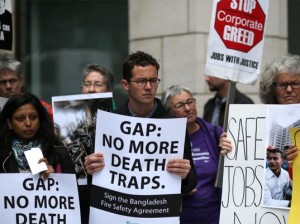 in featuring the Sikh American identity†at their annual gala on October 11th in Washington, DC. As you may remember, last year, the Gap used Sikh actor and designer Waris Ahluwalia in their “Make Love†campaign. The Sikh community gave a lot of praise to Gap over social media posting and re-posting the advertisement as even encouraging Sikhs to purchase from and support the company. This support increased exponentially when Gap responded positively to racist vandalism on an ad in New York City.
While having a Sikh model on a mainstream advertisement might be a positive step especially a year after the Oak Creek tragedy, as Sikhs, how can we, as a community, support a company that has carried out horrific labor practices? Gap’s terrible labor practices in South Asian countries have been widely documented, putting employees in extremely dangerous working conditions with less than minimum compensation.
Gap, Inc. literally has blood on its hands, as 29 trapped garment workers died in a fire in a Bangladesh factory that produced clothing for the company in 2010. United Students Against Sweatshops states:
Human rights activists and labor groups have been calling on Gap to fix the factories in the rest of their Bangladesh supply chain since December 2010, but instead Gap is sticking with its own corporate-controlled voluntary initiative that lacks transparency, accountability, and worker voice. Gap initially promised to sign onto a meaningful fire and building safety agreement, but then backed out, announcing their own, go-it-alone initiative. Gap is using the same self-regulatory approach that they and other brands have used for two decades and that has failed to protect the safety of workers in Bangladesh: factory monitoring controlled entirely by Gap, with no transparency, no role for workers or their trade unions, no commitment to pay prices to suppliers that make it feasible for them operate responsibly, and no binding commitments of any kind.
Guest blogged by Moninder Singh
I am for Palestinian statehood, and at the same time I am for the existence of the state of Israel. I am against rockets fired into civilian areas killing innocents indiscriminately, but I am even more against what can only be seen as purposely targeted air strikes against the children and innocents of Gaza. I am against those who think the existence of Jews and Israel must be challenged, and in the same breath, I am against Zionist and Israeli nationalism that doesn’t recognize the state of Palestine or the right to self-determination of the Palestinian people. It is indeed that simple in my mind.

A recent Palestine solidarity rally in the Bay area. Photo by Gurinder Singh Wadhwa.
It was only a recent photograph of a forward thinking and young Sikh waving a Khalistan flag at a pro-Palestine rally in California  that pushed me to give my views on the topic as well– but as a Sikh and not a wannabe political analyst. For weeks I have been listening to conversations from many within the Sikh community on the issue of Palestinian statehood versus the existence of Israel. The underlying question nobody is really touching on is, why does it have to be one or the other?
This illegal occupation and massacre instigated and carried out by Israel with excuses of Palestinian aggression has nothing to do with the fact that Yasser Arafat (former Leader of the Palestine Liberation Organization) was close to Indira Gandhi or the fact that Israel was instrumental in training Indian law enforcement agencies on dealing with threats to their national security which were also deployed in Punjab against Sikhs throughout the 1990s. These actions do not define the masses or their rights. It defines only misguided leadership and corrupt governments. What is even more troubling is the refusal of many Sikhs to comment on this issue by stating, “I am not an expert in Palestinian/Israeli affairs.” But who said you had to be? If it is only the “experts†that are needed to make decisions on the fate of an entire population, then we as Sikhs should take up shovels for digging graves and hauling carts of wood for funeral pyres because the oppressed peoples of the world who are resisting tyranny like the Palestinians will need them today, and make no mistake that we ourselves will likely need them tomorrow…just like we did yesterday.
A revolution never did and never will need “experts.†A revolution needs nothing but the people. And from them it demands their minds for the ability to think without fear, it demands their voices for the ability to speak without fear, and if needed, it will demand their blood to accomplish their dream to live without fear. It should never be that the oppressed of yesterday becomes the oppressor of today, but when that does happen and as it has happened in the case of Israel oppressing our Palestinian brothers and sisters, we as Sikhs have a duty to uphold the principles of our Gurus and stand in solidarity with and struggle alongside those who are being oppressed.
(more…)
185 Palestinians have been killed, thousands injured, and nearly 1,000 homes destroyed in the last week in Gaza by Israeli airstrikes (underwritten by American tax dollars). My last post about the dangers of Sikh alliances with pro-Israel groups has sparked some important and much needed discussion and debate in our community about this issue.
Many people I talk to (Sikh and non-Sikh alike) explain they feel like they do not know enough about the situation to take a stance or get involved. Or they feel overwhelmed about the complicated history of the conflict. If this sounds like you or anyone you know (or you just want a history refresher), check out this short video put out by Jewish Voice for Peace.Â
And if you don’t understand why this is a Sikh issue, see here, here, or here for more about that.

A rally in Brooklyn, NY in support of the BDS movement on Monday.
Monday evening in Brooklyn, about 50 people gathered to protest Israeli apartheid and encourage the boycott of Israeli goods, a part of the growing boycott, divestment, and sanctions (BDS) movement. Inspired by the effective use of boycott and divestment tactics in the struggle against South African apartheid decades ago, the BDS movement is growing with recent victories such as the Presbyterian Church (USA) and many colleges and universities deciding to stop investing in companies complicit in the oppression of the Palestinian people.
The mood of Monday’s rally was heavy. What was intended to be a celebration of the 10th anniversary of the BDS movement instead was a mourning of the many Palestinian lives taken in recent days by Israeli soldiers/bombs and civilians/settlers alike. Like Muhammad Abu Kheidr, a 16-year-old who was burned alive last week in what is widely assumed to be a revenge lynching by Israeli settlers after the bodies of three missing Israeli teens were discovered (blamed on Hamas without any evidence). Or Muhammad’s cousin Tareq, a 15-year-old Palestinian American who was badly beaten and detained for being at the wrong place at the wrong time (with the wrong ethnicity) a few days later. Or the 31 people in Gaza killed and countless others injured and displaced by 378 Israeli airstrikes in the last two days of its increasingly devastating “Operation Protective Edge.” Or the 10+ killed and over 360 kidnapped in Israel’s “Operation Brother’s Keeper” a few weeks ago in the West Bank, a form of collective punishment on the entire population after the  disappearance of three Israeli boys.
This past weekend was pride weekend in my home of New York City and many other cities around the country and world. I missed many of the festivities because I was traveling but did attend the annual Trans Day of Action last Friday, a march a rally organized by the Audre Lorde Project and many other groups on the historic Christopher Street Pier. It was a beautiful gathering of a very diverse and energetic group of queer people, trans people, and allies. The event was largely led by LGBT (lesbian, gay, bisexual, and transgender) people of color and immigrants, a breath of fresh air given how these individuals are so often invisible/marginalized/excluded in both the mainstream gay movement and in their own communities and families.
Towards the end of the rally, a young desi man came up to me, introduced himself, and asked me about local Sikh activist groups to get involved in. He, like so many others in our community, has not found a Sikh space where he can take action on the various social justice issues he is passionate about — including LGBT rights and justice. We had a nice, short conversation about the activist roots of Sikhi and our Gurus’ radical commitment to equality and liberation. Yet we are all too aware of the rampant homophobia in our community, which I have written about before.
Given this reality, I was happy to see a PSA circulating in the last few days that features a Sikh family speaking out against homophobia. We could certainly use one in Punjabi to reach more members of our community, but this Hindi video is a great start nevertheless.
4) PSA Hindi from Asian Pride Project on Vimeo.
When most of us imagine what the people inside immigration detention centers in the United States look like, we usually do not  think of Sikhs from Punjab. Our Sikh American community — and more broadly South Asian American community — has been reluctant to deeply engage with the harsh realities of immigration policy and detention here in the United States. Too often we have seen this as someone else’s issue or passed quick judgment on those migrants from various parts of the world who overstayed their tourist visas or crossed the border under the radar — in search of work, to feed their families, in hopes of a better life. Papers or not, this hope for freedom is what brings all migrants to the United States.
Right now at least 37 Punjabi migrants, who fled India in search of this illusive freedom, are detained in an Immigration and Customs Enforcement (ICE) detention center in El Paso, Texas. News of these men and others at the El Paso facility protesting their indefinite detentions (they have been detained for over nine months now) came to surface in December. Last week, we learned that 37 Singhs — now known as the El Paso 37 — began a hunger strike.Â
37 young Sikh men — many who are seeking political asylum in the US — have been detained for almost a year in Texas, yet we have heard almost nothing about it in our organizations or gurdwaras. There has been no major news coverage of these men’s plight. Their harsh journey to El Paso reportedly took them through Moscow, Havana, Ecuador, El Salvador, Guatemala, and Mexico. Instead of finding respite, comfort, and safety in the US, they have found prison walls.
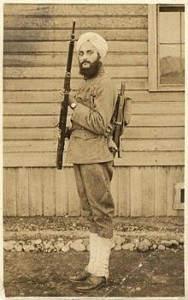 Yesterday, the Washington Post reported that a bipartisan group of 105 Members of Congress sent a letter urging the Department of Defense to end a presumptive ban on devout Sikhs who want to serve in the U.S. Armed Forces.  Over the past several years, civil rights group, The Sikh Coalition, has been working to address the issue of equal opportunity in the Armed Forces allowing all Sikhs to serve.  Since 2009, three Sikh Coalition clients—Major Kamaljeet Singh Kalsi, Captain Tejdeep Singh Rattan, and Corporal Simran Preet Singh Lamba—have received rare and historic accommodations to serve in the U.S. Army with their articles of faith intact.  A timeline of the efforts can be found here.
The Members wrote:
Dear Secretary Hagel,
We respectfully request that the United States Armed Forces modernize their appearance regulations so that patriotic Sikh Americans can serve the country they love while abiding by their articles of faith.
Devout Sikhs have served in the U.S. Army since World War I, and they are presumptively permitted to serve in the armed forces of Canada, India and the United Kingdom, among others. Notably, the current Chief of Staff of the Indian Army is a turbaned and bearded Sikh, even though Sikhs constitute less than two percent of India’s population. Throughout the world, and now in the U.S. Army, Sikh soldiers are clearly able to maintain their religious commitments while serving capably and honorably.
After hearing from their constituents, many Members of Congress who represent large constituencies of Sikhs signed onto this letter representing the importance and value of political engagement. Â Unfortunately, there were also Members of Congress – some who represent Sikh constituents, who fund-raise within the Sikh community and even sit on the American Sikh Congressional Caucus who did not sign this letter. Â This includes my own Member of Congress, Devin Nunes who “represents” (or that’s what we thought) a large constituency of Sikhs in the Central Valley of California. Â Other missing signatories include Congressman LaMalfa and McClintock – who, in the past, have reached out to the Sikh community for support.
It isn’t enough to simply invite Members to our Gurdwaras and offer them saropay. Â We have to hold our Members of Congress accountable once they leave our Gurdwaras and are challenged to support our issues on the Hill. Â Our presence and political engagement will only make a difference when we continue to take a leadership role to address inequity in our society and establish a strong voice on behalf of the Sikh community.
Co-blogged by American Turban and Sundari

San Quentin State Prison, California. (Image: San Quentin News.)
The Sikh Coalition, a civil rights organization, was recently asked to present to a group of inmates at San Quentin State Prison in Northern California.  Organized by the Asian Prisoner Support Committee, which has a weekly class inside San Quentin State Prison called SQ ROOTS (Restoring Our Original True Selves), the organization was asked to make a presentation about the Sikh community.  The class is modeled after Asian American Studies courses, covering topics such as history, culture, personal experiences as well as health and reentry issues.  The class is comprised of Vietnamese, Filipino, Cambodian, Hmong, Lao, Chinese, Mexican in addition to Punjabi Sikh men.
The presentation included a Sikh awareness talk followed by a discussion on the post-9/11 challenges experienced by the Sikh community, including hate crimes, school bullying, religious profiling and workplace discrimination.  It was a unique experience for both the Sikh Coalition volunteers as well as the inmates who noted at the end that they were “grateful†and “thankful†to have learned about the Sikh community and the issues that Sikh Americans were experiencing.  It was a moving experience and pushed us to think about restorative justice and the role of forgiveness within Sikhi.
Many of us on the “outside†have preconceived ideas about what life is like inside the prison system. To be sure, our few hours inside the prison and interacting with the inmates may not be a fully representative view of prison life. Yet, the warm reception we received by inmates before, during, and after our session was eye-opening; the inmates in our class were very engaged, courteous and collegial. We enjoyed the positive and warm atmosphere exuded by each member of our audience, and were touched by the obvious desire by these inmates to learn more about the Sikh community, and to even empathize with some of the issues that Sikhs in this country have faced.
A few weeks ago, the Indian Supreme Court re-criminalized sexual acts between consenting adults of the same sex. The Supreme Court  overturned a 2009 decision by the Delhi High Court to strike down section 377 of the Indian Penal Code, which came directly from a British colonial law from 1861. Section 377, which was just reinstated, states:
377. Unnatural offenses — Whoever voluntarily has carnal intercourse against the order of nature with any man, woman or animal, shall be punished with imprisonment for life, or with imprisonment of either description for a term which may extend to ten years, and shall also be liable to fine.
As Prerna Lal states about the recent ruling, “the Indian Supreme Court has re-criminalized gay sex in India, rendering almost 20 percent of the global LGBT population illegal.” As a result, LGBT Indians and their allies in India and around the world have taken to the streets, signed petitions, and engaged in creative actions through social media, showing their outrage about this backwards decision.
But what has the Sikh response been? I have previously written about the homophobia rampant in our community and how ironic it is, given our Gurus’ deep commitment to equality and social justice. In the days after the ruling on 377, I wondered if any Sikh activists committed to LGBT equality would come out of the woodwork. I also wondered about the Sikh response to the ruling in India and if any Sikh institutions publicly supported or lobbied for this ruling. Embarrassingly, Sikh institutions have publicly campaigned against LGBT equality in the past, including supporting the Defense of Marriage Act (DOMA) in the US a few years back.
Enter Kanwar Saini, aka Sikh Knowledge, a young, openly gay hip hop artist in Toronto. In protest of 377 and as a part of a social media campaign, Saini posted a photograph of him kissing another man on Facebook, which went somewhat viral and led to a lot of discussion and debate about Sikhi and gay rights. Facebook removed the photo from his page for 16 hours, quite possibly due to a whole lot of homophobic Sikhs reporting the picture to Facebook as offensive.
Saini recently appeared on CTV discussing the incident and his response.
Guest blogged by Kirpa Kaur
A few weeks ago, India joined the world in mourning the loss of Nelson Mandela, the former South African president and anti-apartheid revolutionary whose armed resistance and leadership rendered him a “terrorist†and imprisoned for 27 years. Prime Minister Manmohan Singh stated: “A giant among men has passed away. This is as much India’s loss as South Africa’s. He was a true Gandhian. His life and work will remain a source of eternal inspiration for generations to come.â€
It’s been 44 days since a Sikh farmer and activist from Haryana decided to launch a hunger strike unto death at Gurudwara Amb Sahib (Mohali, next door to Chandigarh) to protest the long sentences being served by political prisoners who have been denied any legally mandated review of their cases; and India remains largely silent. BBC Radio yesterday recognized that while the protest has caught momentum around the world, and from various quarters in Punjab, including the oft-vilified Punjabi singers, mainstream India is largely aloof on this issue.
Guest blogged by Jaspreet Kaur
There has recently been a lot of stir in the Sikh community about the GAP’s new “Make Love†holiday campaign. The Gap used  Waris Ahluwalia, a Sikh actor and designer, as a model for one of their promotional pictures. The response from the Sikh and non Sikh community was mixed and social media started buzzing with reactions to the image. A large add of this picture in New York City was recently vandalised and the Gap immediately responded by changing their twitter background to the image. Once again, the Sikh community responded, this time with more positive comments and support for the Gap.
What seems to have been forgotten in all this commotion is that the Gap is a multinational corporation that is only about their bottom line. They are about making money, not love. Their primary interest is to sell a product and by claiming to capture and commodify love, they are selling clothes. While the Gap is being praised for their quick response time and progressive thinking what is dismissed is the understanding that by the time a corporation uses an idea, it is no longer revolutionary. Gap would not have used a Sikh model if it hurt their bottom line. It is already acceptable and that is why the Gap can profit from displaying a turban and beard.
Guest Blogged by Jaideep Singh
As the Sikh American community embarks yet another mobilization against hate attacks— since this latest episode of violence has really hit home with many Sikhs in a way rarely seen since Balbir Singh Sodhi— we would do well to first answer the difficult, necessarily critical questions posed by my sister Nina Chanpreet Kaur in her thoughtful, passionate piece from last year.[1]
Our efforts at “education and outreach†clearly have yielded perilously little success— as measured by the safety of our communities. So education obviously is NOT enough. Reality is far more complex and ugly. A person who would attack a gurdwara is not coming to an open house or community feeding (langar) to abate their hatred. The long list of those in our communities who have been injured and killed, and the homes and gurdwaras defaced, testifies to as much. We cannot advance by hiding in our gated communities, far from the raw racial realities daily faced by our less fortunate sisters and brothers.
Fighting centuries of entrenched, utterly irrational white [and Christian] supremacy is neither an easy task, nor a short term one. Many of us cannot even bring ourselves to admit these forces even exist, let alone how they permanently define Sikhs as racial and religious outsiders. That naïve approach must end, replaced by a sophistication borne of serious historical study of U.S. history.
Guest blogged by Simran Jeet Singh
Last night, I received the kind of phone call that everyone dreads: a close friend was hurt, and on his way to the hospital. But the news got worse, as I learned that my friend, Dr. Prabhjot Singh, a young Sikh American professor at Columbia University, had been brutally attacked on a public street, the victim of a violent hate crime. My brother and I immediately jumped in a taxi and rushed to the hospital, where we finally saw Prabhjot being wheeled in, bloody and bruised, his face swollen from a fractured jaw. He couldn’t speak because many of his teeth had been displaced, but he waved limply to let us know that he was okay.
We joined Prabhjot in his hospital room and were surprised to find it already filled with officers from the NYPD and its Hate Crime Task Force. As he struggled to give his statement, we came to learn that his assailants had taunted him as they beat him, calling him “Osama” and “terrorist.” He described being punched in the face repeatedly until falling to the ground. And then he recalled how the punches to the head continued as he laid on the sidewalk.
I saw Prabhjot shudder as he realized how much worse it could have been. He had just returned from dinner, dropping his wife and one-year-old son at home before going for a walk. He reached from his hospital bed and grabbed his wife’s hand.
He recounted the scariest moment, seeing a young male put his arm inside his coat, as if reaching for a gun. He also remembered people pulling at his long beard. He couldn’t provide any descriptions about his assailants, and it seemed to me that in some way, he didn’t want to remember them.
Prabhjot has dedicated his life to serving the underserved. He is currently the Director of Systems Management at the Earth Institute, and he draws upon his experiences abroad to help improve the health of local communities like Harlem. In addition to serving as an Assistant Professor at Columbia University’s School of International and Public Affairs, he is also a resident physician at Mt. Sinai Hospital. His life’s work has been to help the underprivileged access quality and affordable healthcare, and he believes strongly that his countless hours of service are an investment in improving the health of impoverished communities.

Christina Antonakos-Wallace, filmmaker of with WINGS and ROOTS
Christina Antonakos-Wallace is the filmmaker behind with WINGS and ROOTS, a 90-minute documentary that tells the stories of five people from different immigrant communities living in New York or Berlin, Germany, who have struggled to shape their identity in various ways.
The film features The Langar Hall’s own Sonny Singh, a Sikh living in New York. Part of his story was featured in the well-received short documentary Article of Faith, spawned from the with WINGS and ROOTS project, that portrays Sonny’s activism around bullying of Sikh school children in New York. Another short film, called Where are you from from? was also produced out of this project.
Below, Christina Antonakos-Wallace discusses the film and provides great insight about its intended message regarding the immigrant experience and the search for identity. You can view the trailer for with WINGS and ROOTS at the end of this post.
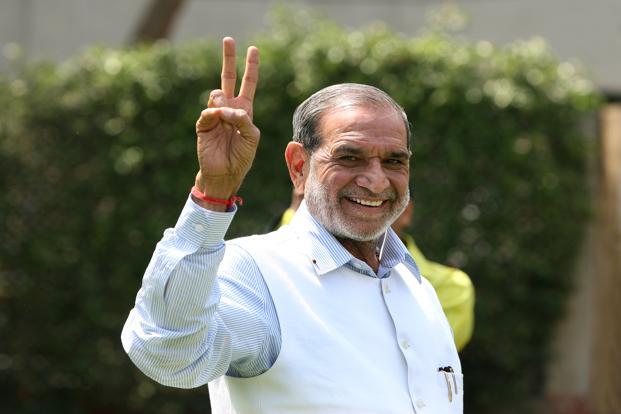
In a process that took three decades, Sajjan Kumar, a leader in India’s Congress Party, was recently acquitted for his well-documented involvement in the anti-Sikh pogroms during November 1984 in which thousands of Sikhs were murdered in three days in the country’s capital city. Five co-accused were convicted. (Source: Live Mint)
About two months ago, I observed the continuing engagement by representatives of the Indian government with the Sikh American community, which in that instance took the form of an exhibition on Sikh heritage in Atlanta, Georgia, sponsored by the Government of India. This exhibit has just recently been presented in Washington, D.C., as well, and it is consistent with increased engagement and activity related to the Sikh American community — be it directly, or through lobbying of US officials — by representatives of India. The increasing effort by Indian officials to promote the Sikh community in the United States is problematic, however, as it runs contrary to India’s track record with the Sikhs in its own borders over the past several decades.
Whether in the aftermath of a hate crime (such as in Oak Creek, Wisconsin, or recently in Fresno, California), or in what appears a deliberate attempt to brand the Sikh identity with Indian nationalism, representatives of the Indian government are insisting that they be the custodians of the Sikh community in the United States.
In 1984, as the Indian government was terrorizing Sikhs in northern India, mass campaigns of state-sponsored extermination were occurring in the Americas as well. The small Central American nation of Guatemala, under the rule of US-backed Efrain Rios Montt, was one such place. While Indira Gandhi’s army was attacking Darbar Sahib with an insatiable thirst for Sikh blood, Guatemala was in the midst of what is sometimes called a civil war. Another name for it might be the deliberate and targeted mass killing of indigenous and poor people. In both cases, though thousands of miles apart geographically and politically, campaigns of state-sponsored genocide were underway.
Yesterday, a Guatemalan court found Rios Montt, now 86 years old, guilty of genocide and crimes against humanity. He came to power in 1982 in a US-backed coup and oversaw “a scorched-earth policy in which troops massacred thousands of indigenous villagers. He entered the court on Friday to boos and cries of ‘Justicia!’ or justice. Prosecutors say Rios Montt turned a blind eye as soldiers used rape, torture and arson to try to rid Guatemala of leftist rebels during his 1982-1983 rule, the most violent period of a 1960-1996 civil war in which as many as 250,000 people.” (link)

Rios Montt awaiting the verdict in Guatemala. (source: New York Times)
The former dictator has been sentenced to 50 years in prison for genocide and 30 more from crimes against humanity. This is the first time in history that a head of state has been found guilty of committing genocide in his or her own country. The significance of this conviction cannot be overstated for the people of Guatemala as well as other parts of Latin America and the world where genocidal tyrants have never been held accountable for their atrocities.
What we’re not hearing much about in the US news coverage of this unprecedented trial is the US government’s role in Guatemala at the time (and earlier, beginning with the CIA coup against Arbenz in 1954, essentially for the benefit of the United Fruit Company). While there is much to celebrate in this conviction, key architects and underwriters of these policies of terror in Guatemala (and other parts of Latin America) have faced no consequences for their instrumental role in the genocide. Efrain Rios Montt was trained by the US Army at the school formerly known as the School of the Americas, infamous for training Latin American soldiers and leaders in the art of torture and repression. Rios Montt was close ally of the Reagan Administration, which considered his leadership style necessary in the so-called fight against communism. Revolutionary struggles were building in Nicaragua and El Salvador, and the Reagan Administration saw to it that they would be crushed as would anything or anyone that posed a real or perceived threat against multinationals corporations exploiting the continent’s rich natural resources. In practice, what this meant in Guatemala (and elsewhere) was if you are indigenous and/or poor, you must be a leftist and thus, you must be silenced, intimidated, and/or killed.
Sound familiar?
Guest Blogged by: JSD
 Today, the government of India has once again proved why it’s claim to being the world’s largest democracy is laughable. Not to mention the media in India, which claims to be fair and democratic in nature, however, this is simply not the case. India’s media is clearly state run and its news outlets make stories that create divides within communities. Why am I saying all this?
Sadda Haq is a fictional movie based on real events surrounding the militancy era in Punjab during the 1980s and 1990s. Showing accounts of “false encounters†and police brutality, the movie aims to show why average citizens were forced to take up arms against the oppressive regime. The movie was set to release worldwide today on April 5, 2013. Although the Indian Government can’t ban the movie worldwide, the Punjab government did manage to ban the movie in Punjab and other parts of India in just a few hours prior to its opening after the movie was privately screened to Punjab Police members and state government officials.
These officials who watched the private screening included the likes of DGP Sumedh Saini. Interestingly enough, the ban comes from the Punjab government run by Parkash Badal of the Akali Party, a party that is supposed to represent Sikh interests, but at the same time has promoted Saini to the ranks of DGP(Deputy General of Police) even after countless human rights claims exist against him for his participation in the post 1984 Punjab genocide of Sikh youth.
Over the past few days the Indian news outlets have been talking about Sadda Haq being a controversial film promoting Khalistan. It is no doubt that Sadda Haq discusses the militancy era, but its aim is to show the truth that has been pushed under the rug by the government and media.
This March marked ten years since the United States invaded Iraq in the name of Iraqi freedom. Ten years later, potentially over one million Iraqi civilian deaths later, where are we now? What are the people of Iraq left with? Aside from extreme instability and near genocide, Iraqis are now dealing with a legacy of cancer and birth defects as a result of our country’s military aggression. A few weeks back on Democracy Now, journalist Dahr Jamail discussed this harrowing reality. He stated:
“[The birth defects] are extremely hard to bear witness to, but it’s something that we all need to pay attention to … What this has generated is from 2004 up to this day, we are seeing a rate of congenital malformations in the city of Fallujah that has surpassed even that in the wake of the Japanese cities of Hiroshima and Nagasaki that nuclear bombs were dropped on at the end of World War II.”
What follows is the clip from the news program. Note that the images in the clip are horrific. This is reality. This is our tax dollars at work.
You will be walking in memory of twenty-eight-year-old Darshan Singh who was a young farmer from Amritsar district. On 9 September 1990, Darshan and two other young men went for a motorcycle ride when a group of police officers suspected them of being militants and shot at them. Darshan, the pillion rider, was hit by a bullet and fell down dead. The police took Darshan’s two companions into custody and reported them dead in alleged encounters.
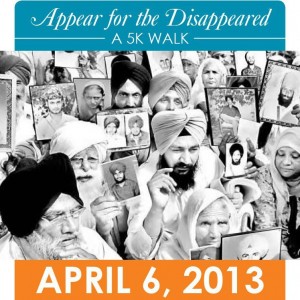 After recently registering for Ensaaf’s Appear for the Disappeared 5K walk, I received the above email with information about the individual in whose memory I would be participating.
Ensaaf has documented thousands of cases of disappearance and unlawful killings in Punjab and in an effort to allow its supporters to connect with victims, Ensaaf is holding a 5k walk, called Appear for the Disappeared, on April 6, 2013 in Fremont, CA. The walk is an opportunity for all participants and virtual donors to commemorate a specific individual who was disappeared in Punjab by Indian security forces from the mid-1980s to late 1990s. Ensaaf’s goal is to commemorate 500 individuals and raise $25,000 to complete documentation efforts.
Between 1984 and 1995, Punjab witnessed thousands of disappearances and unlawful killings, with many victims facing unimaginable torture at the hands of Indian security officials. Rarely were victim families informed of the fate of their loved ones, let alone given a chance to carry out final rites and funeral services. As thousands of men and women disappeared and their families left in the darkness, responsible security officials were awarded promotions and their human rights violations faded into darkness.
Guest blogged by Santbir Singh
I try to imagine the government coming to my house one morning and taking my five year old daughter and eight year old son away to a boarding school hundreds of kilometres away. I try to imagine that at this school, my children’s hair will be cut, their dastars and kakkars will be removed and they will be forcibly baptized as Christians. I try to imagine that they will be beaten for speaking Panjabi, reading Bani or trying to maintain their religious and cultural traditions. I try to imagine that even their basic health needs will not be looked after and they may well die from treatable infections and diseases. And then, I must admit, I am not able to imagine the rest; I can not bear to imagine them being abused, assaulted, beaten and raped.
That is what occurred in this country for one hundred years as the Canadian government, along with government sanctioned church groups, kidnapped First Nations children from their homes and took them to residential schools where unspeakable horrors were committed on them. Of course the history of colonization in the Americas does not begin with the Residential School system but is in fact a legacy going back centuries. It is estimated that 90 to 95% of all indigenous people living in the Americas were killed by smallpox within the first century after European first contact in the late 1400’s. It is difficult to fathom death at that scale. Those that remained had their land stolen and were forced onto reservations to live as non-citizens in their own lands.
As a nation, Sikhs are extremely proud of our own anti-colonial struggle against the British. Yet we have completely failed to acknowledge that in Canada we have succeeded due to the colonial oppression of other nations. This land where we build our homes and businesses was the land of nations that lived here for tens of thousands of years. Yes, one hundred and seventy years ago the British annexed Panjab and ended Khalsa Raj. But the British did not exile us from our own villages and towns. The British did not take our land and build new cities. The British did not migrate to Panjab and force us to live on inadequate reserves.

