
We know there is a sizable Sikh population in Pakistan, despite many Sikhs who were forced to migrate to India during partition. In 2008, the Pakistani Sikh Anand Marriage Act was passed in Pakistani, which allowed Sikhs in their marriage certificates as Sikhs. Currently in India, Sikhs are identified as Hindus in marriage certificates.
Interestingly, I came across this music video by Jassi Singh Lailpura (i.e. Jasbir Singh) , a Pakistani Sikh.
He also gave an interview on a morning Pakistani television show where he talked more abut his music and life. Lailpura believes that a Pakistani is not defined by a religion or race, but by someone who believes it to be their country. It is obvious from the interview that he is a proud Punjabi Sikh from Pakistan. He talks about the impact of Partition on a Sikh woman. You can watch his interview below.

Amarjit Kaur, 39, was critically shot on Wednesday afternoon in Vallejo, California as she sold ice cream out of an ice cream truck near a school. The Bay Area television news reported last night that police believe the reason for the shooting was two fold. First it was a robbery by a 15-year male. Secondly, Kaur’s inability to understand that the English-speaking 15-year old was asking for money caused him to shoot her out of frustration and anger.
As a widowed mother of three and a recent immigrant to the United States, Kaur’s case highlights the struggle that immigrant woman go through to support their families. Her strength to sell ice cream out of a truck while not completely understanding English shows perseverance during adversity but also highlights the risk new immigrants take to build lives for themselves and their families in the United States.
You would imagine that selling ice cream to primarily children would not be high risk. However, Harish Joshi reported that he was held-up twice while operating an ice cream truck in Richmond (California Bay Area).
Kuldeep Malhan, Kaur’s brother-in-law said a fund has been set-up to help support the family at Bank of America, account No. 488019845001. Please donate to help with Kaur’s medical bills and other living expenses while she is unable to work because of her injuries.
Two years ago, a group of friends started this blog to create a platform where we could discuss issues concerning the  Sikh community, in a reflective, self-critical, and progressive way. We envisioned it as a way to continue the conversations that happen in many Sikh conferences around the U.S., between the sporadic and short times that we are able to meet face-to-face.
We wanted to create a safe space for conversations that we felt were critical, but didn’t see happening as much as they were needed.
Since that beginning, our readership has grown, our vision has grown, and now, so too must our capacity.
We are looking for passionate Sikhs who share our dedication to our community and faith, to join in contributing to the broad array of conversations that take place on The Langar Hall’s pages. Do you enjoy writing? Are you interested in engaging in conversation with other Sikhs from throughout the world? If so, send an email to admin@thelangarhall.com and let us know you’re interested.
We don’t always talk about Sikh issues, but instead, share the common thread of being Sikh. Our Sikh heritage shapes our worldview. Our interests and perspectives, however, are as varied as any group of individuals. Whether you’re interested in art, music, literature, politics, movies, or social activism, if you’re rooted in Sikhi, and have an inclination to write, we want to hear from you.
We’d love to have contributors that are as global as our diaspora. In the past, most of our bloggers have been from North America. However, we post about events that happen all over the world. We want to hear from you whether you’re in Australia, Kenya, India, the U.S., or anywhere else in the world. No matter where you are, if you’re interested in blogging for The Langar Hall, let us know! Email admin@thelangarhall.com.
Drug abuse is an epidemic that is hitting Punjab at high rates. We hear about Punjabi men being addicted to drugs and the ramifications of their addiction on them and their families.
Prerna Suri of Al Jazeera reports on the devastating effects of drugs in Amritsar. The city’s location near Pakistan and Afghanistan has made it a primary target for drug trade and abuse. According to the report, seventy percent of youth (15-35 years) in Amritsar are addicted to heroin.
Suri highlights how the drug trade happens, its effects on those who abuse narcotics, and the ramifications of drug abuse for the addicits’ families.

I am a strong believer that Sikhi can play a strong role in both the prevention and recovery from drug abuse. Rather than allow drugs to take over our spiritual capital, we can use our spiritual strength to help heal those who are suffering from drug abuse and prevent others from entering this kind of addiction. You can read about one Sikh’s experience of visiting Akal Charitable De-addiction Centre , a drug recovery program in Sangrur, Punjab.
Where do the elderly fit into India new modern image? Often in South Asian families, caring for the elderly is not a question-it will happen. In West we know of the many stories of how the elderly are mentally, physically, and 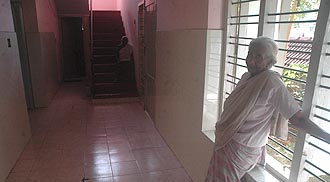 emotionally abused by their children. Often the elderly are forced into starting their life over again in a new country coupled with the strain of supporting themselves at an age when they can no longer work and are socially dependent on their children.
However, in India, we are told it’s not the case. Families care for their elderly-some are even forced to because all the property is in their elderly parents names. But New America Media reports that the number of elderly left to care for themselves in India is skyrocketing and the country has no infastructure to care for them. For example, with an aging population of 80 million, Indian old age homes do not accept patients with dementia. Dementia is a common problem that afflicts the elderly.
Today, January 5th, Sikhs around the globe will come together to celebrate Guru Gobind Singh Ji’s gurpurab. On this day we celebrate our Guru and the gift that was bestowed upon us. Guru Ji’s famous quote tells us that living as a Sikh is as much important as appearing as a Sikh and that with both, hand in hand, we are a Sikh of the Guru.

The shabad below, Nasro Mansoor, was written in persian by Bhai Nand Lal Singh. It’s beautiful! Gurpurab greetings to all!

Wishing all our TLH readers a happy and prosperous New Year! May Waheguru continue to bless you with wisdom and strength in 2010. We appreciate your support. Without your readership TLH would have no real existence. Thank you and always stay in Chardi Kala!
Our resolution this year is to provide thoughtful and engaging posts.
What are your new year resolutions?
Healthcare reform, immigration reform, banking reform, and the list goes on. This past week a diverse coalition lead by Rep. Luis Gutierrez (D-Ill) are laying down the marker in 2009 for comprehensive immigration reform by introducing the Comprehensive Immigration Reform for America’s Security and Prosperity (CIR-ASAP) Act of 2009. This bill has not been passed yet; it has only been introduced.
In a country built on the hard work of immigrants, it is imperative that this group be protected in the United States. Recently, there was a report that 1/3 of Los Angeles’s economy is dependent on immigrants. Also, immigrants are known for their entrepreneurship in small businesses. Tuyet Le, Executive Director of the Asian American Institute, says: “Family-based immigration has long created the foundation for strong, entrepreneurial communities across the country. This bill will reunite immigrants with their loved ones and will also provide some increases in high-skill temporary worker visas.”
This legislation focuses on undocumented students, family reunification, and worker visas-issues affecting our Punjabi Sikh community in America. For example, CIR-ASAP would allow undocumented high school graduates who came to the United States before the age of 16 to attain legal residency. This residency would open up educational and financial aid opportunities. This portion of the bill is modeled after the DREAM Act of 2009, except that it shortens the six-year wait period to three years and removes fines.
Yesterday was International Human Rights Day where people across the globe were asked to recognize and take action against the many forms of human rights abuses that take place in the world. A powerful talk on TED by Sunitha Krishnan brought insight into the grueling ground realities of sex trafficking in India- a human rights abuse that affects millions of women, their children and families. Krishnan addresses both what it looks like and the difficulties of rescuing women and their children from this $10 million industry. Krishnan says, “It’s normal to be raped by 100 men a day and abnormal to live in a shelter. It’s abnormal to get rehabilitated. It’s in that context that I rescue children. I rescue children as young as 3 years and women as old as 40 years.” Krishnan has rescued 3,200 girls.
She highlights how this modern day slavery and third largest form of organized crime affects those of all backgrounds-from middle class IS officers’ daughters to street children. You can watch the talk here (disclaimer: the talk contains graphic images and descriptions of violence).
Her work on commercial sexual exploitation is powerful because of her courageous attitude towards rescuing victims. Krishnan’s tenacious spirit coupled with her collaborative approach of bringing government, NGOs, and corporations together to fight sexual trafficking is unique. While listening to her talk, I found her organization’s approach to moving women in the commercial sex trade industry into new jobs particularly unique. An essential part of these women’s rehabilitation is to gain a new economic skill set that utilizes the power from their pain while harnessing their potential. Thus, girls are being trained as professional welders, carpenters, and mansons instead of working on computers. Often providing technical skill sets in information technology is seen as powerful form of empowerment, particularly in a place like Hyderabad-the technological capital of the world. So, “why welding and not computers?” Krishan says,
“They had an immense amount of courage without any “pardahs” inside of their bodies. They could fight in a male dominated world very easily and not feel shy about it. [By working] as carpenters and masons … as security guards and cab drivers … they are gaining confidence, restoring dignity, and building hope. “
These women excel in their careers and works for large corporations. However, the biggest obstacle they continue to face is not economics but the lack of empathy from civil society. The stigma that these women live with even after moving out of the sexual trade industry forces them to suffer in silence. Krishnan says that civil society has “Ph.D.s on victimizing a victim”. She requests that within our limited worlds, civil society needs to open their minds and hearts to accept these victims of sexual trafficking as human beings. It is an essential part of their rehabilitation as is gaining an economic skill set.
In the coming New Year spend January attending two Sikh events-one in Canada and the other in the United States. The Toronto Sikh Retreat and Surat Sikh Conference will be taking place during the first half of January 2010.
Toronto Sikh Retreat is a 4-day retreat in the outskirts of Toronto in a winter wonderland. It will take place from January 7-10, 2010. Sikhs of various ages from around the world come together to learn, discuss  and reflect on various Sikh issues to better understand ourselves and the world around us from a Sikh perspective. With a limit of 65 spaces, the retreat provides an intimate environment for intellectual and spiritual growth through small group discussions, lectures, kirtan diwans, and creative projects (in-door and outdoor). Visit the retreat website and watch the video for more information. Registration is NOW open- take advantage of the early bird special!
The Surat Sikh Conference will bring together 180 Sikh professionals in New York City & New Jersey during Martin Luther King Jr. long weekend (January 15-18, 2010) to share, learn, and reflect on the theme “A Journey Through Ardas”. Through guest speakers, workshops, and a nonprofit poster session, the goal of the conference is to provide a space of introspection for participants on how to view the world through a Sikh perspective. Participants attend kirtan diwans, have intellectual conversations and enjoy outdoor activities. Visit the conference website and watch the video under the “About” section for more information. Registration will open on December 5th!
 December 1st is World AIDS Day. Each year on this day we take the time to consider the impact HIV and AIDS has had on people around the globe. This year’s focus is on Universal Access and Human Rights. For as long as I can remember, the conversation has focused on the growing number of infections and deaths associated with AIDS. This year, however, the United Nations reports a notable decrease in HIV infections in some of the hardest hit areas of the world. It is clear, then, that the enormous amount of effort by HIV treatment and prevention programs have helped to provide education to raise awareness.
For three decades the world has been living with and responding to AIDS. Our response has often been too late or too little – and often both. But it has also often been unprecedented, groundbreaking and unpredictable. Activists and researchers have found common ground to work side by side to beat this disease. Together, they’ve developed new ways of conducting research and new ways of delivering healthcare in response to the AIDS pandemic. They’ve learned unexpected lessons and developed strategies that work against HIV and against other diseases. They’ve revolutionized public health. [link]
A recent NYTimes article discusses how humans may be born with an urge to help, and it makes me consider how very important this attribute is. Our communities rely so heavily on the help of each other – something we often take for granted. If humans are born with an urge to help, then Sikhi provides us with a strong foundation to make this happen. It is up to each and every one of us to seek out those opportunities. While World AIDS Day is a way to raise awareness about HIV/AIDS, it is also a reminder of the potential we each have to make a change. In Guru Nanak Dev Jis words,

In the midst of this world, do seva.
Many politicians in America and Canada appeal to their Sikh constituents by visiting local Gurdwaras. Sometimes these visits include a brief speech and other times just a saroopa. Regardless, it’s usually an ask for votes.
What I particularly find powerful about Canadian politicians is that they will walk along side their Sikh constituency during Nagar Kirtans and visit the Harmandir Sahib. To me that is representative of the political power the Sikh community has in Canada. Politicians are not only appearing to give a “vote for me” speech or state a “thank you” for the saropoa. They need to do more to get the Sikh vote.
Sam Grewal of the Toronto Star writes:
“The Liberal party took us for granted and is now paying the price,” Gill says. “It would be a mistake for the Conservatives to think that simply appearing at functions is enough to win votes.”
An appearance by the Prime Minister, at the place most revered by Sikhs, may be the exception.
Flu season along with H1N1 are in full swing right now. We worry about catching it at schools, in airports, and work. Often we hear of recommendations for people to stay home if they are sick so they don’t infect their co-workers and give themselves time to get well. However, for some staying home when you are sick comes at a large cost-a day(s) worth of wages. According to the Union Voice, “Thirty-nine percent of us have a difficult choice to make when we’re sick: go to work and risk infecting our co-workers (and risk making our illness worse), or stay home and put our finances and our jobs in jeopardy”. (hat tip: Sonny)
Thus, Senator Chris Dodd and Rep. Rosa DeLauro are pressing forward the passage of the Healthy Families Act, which was first introducted by Senator Edward Kennedy.
The Healthy Families Act would provide 7 paid sick days to all workers at companies with at least 15 employees, and would prevent employers from retaliating against workers who get sick. The bill has 113 sponsors in the House and 21 sponsors in the Senate, and has been endorsed by the Obama administration.
This bill would ensure that 3/4 of workers in the food and service industry who do not get paid sick days will be able to stay home rather than come into contact with their co-workers and the public. Taking action to pass this bill will be a positive step forward in fighting the spread of H1N1.
TAKE ACTION NOW by clicking here and sending your congressional representative an e-mail asking him/her to support this bill.
The role of Sikh women often remembered in 1984 is that of victim. Yes women were raped, killed, and left to care for their families when their male relatives were kidnapped and killed. However, the strength and perseverance to move forward without justice is often glossed over. I find it powerful to hear Sikh women’s stories of “moving on” while continuing to speak out against the horrific injustices of 1984. Often there is talk about how Sikhs have been in a state of “victimhood” for the past 25 years. I believe the stories of the women below show how some Sikhs have empowered themselves to move forward with their daily lives in the past 25 years while living with the pain and not giving up on the demand for justice. This is agency and not victimhood.
Yes institutions, memorials, and marches show how Sikhs are attempting to move forward as a community; however, these women have done something that is far more difficult-picking up the pieces of their lives in the midst of devastation and mending them together as best as they could for themselves, their families, and their community. These women are inspirational and their lives for the past 25 years show why.
Watch the videos below in Hindi to hear their stories (hat tip: Mallika). One of the most powerful reflections of 1984 I have seen.
Domestic violence organizations often use helplines to reach a larger population, while providing an anonymous format to offer help. The Punjab Government implemented a community health helpline 20 days ago to assist in locating ultrasound and abortion centers in a similar endeavour to protect women’s human rights.
The Chandigarh Tribune reports that this helpline (number# 4005252) is part of a pilot project coordinated by the National Rural Health Mission and has already reported a successful intervention. An ultrasound/abortion center in Sirsa, Haryana is being investigated after an anonymous caller reported that a young woman of Mansa village had recently aborted a girl child. Through immediate action, officials found that name/location of the ultrasound and abortion center. Also, they found out that the young woman had been forced to have an abortion by her mother-in-law. Now both the center and mother-in-law are under police investigation. The young woman is not being investigated since she was forced into the abortion by her mother-in-law after already having a 7 month old daughter.
Anurag Aggarwal, mission director, National Rural Health Mission says,
“The hotline gives an opportunity to women to speak up in case they are being forced to get their female fetus aborted. If she is not able to say anything, her relatives or friends can inform us. The caller’s identity is not asked and the whole thing is anonymous.”
The helpline at 4005252 runs from 9am-6pm and gives residents an opportunity to air their grievances and make their suggestions on health services in the state. Through successful implementation, the helpline is a good tool for practical action on the female foeticide issue. I wonder if we could create a similar helpline in various Diaspora communities because the rates of female foeticide are also high outside of South Asia. What do you think?
What’s in the daal at the langar hall that makes it so yummy? Is it the shardhaa with which it is made or how it is allowed to slowly cook? Recently, I heard there was a CNN article on this issue by a South Indian (I am still trying to locate the article and will post the link soon), where the author attested to the speciality of the daal.
Recently, my mom raved about the daal at the Gurdwara. So what makes it special? I think its the shardhaa with which it is made. This shardhaa resonates in the way it is slowly cooked and how the spices are approximated before being thrown into the daal. It is also seen in the way it is served. The shardhaa with which we do any kind of seva, ultimately shows in the outcome. Often I have seen people who are doing tons of seva and wait for the recognition; while others have been doing the same seva for years and have made large leaps and bounds for our community without the same recognition. They never needed an organization, a job title, or a “following”-they just needed to see that fruit of their shardhaa (great work for our community). It is these individuals who should inspire us in doing seva. They fight for social justice issues, make langar for hundreds of Sikhs regularly, and clean the shoes of the sangat. However, you will rarely see them come to the forefront because they find their work more inspirational-it goes beyond who they are as individuals. Shardhaa- it’s that special ingredent that just makes seva extraordinary and unique-be it daal or social services.
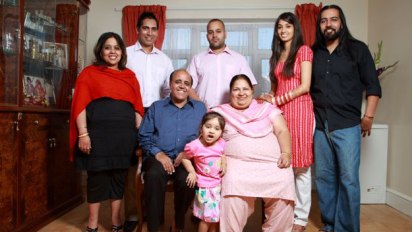 Guess what a British Asian family is hitting the reality TV scene … “Meet The Grewals” will begin filming 24/7 on November 4th in the UK. The three-generation family will be filmed for over eight weeks. Their lives will be aired as part of the iconic series, The Family, on Channel 4.
Director David Clews says: “I think the film captures both the big issues and the intimate moments of family life and I hope everyone will enjoy spending time with the Grewals in the same way I have.”
The bad economy has worried many of us. From losses on investments to lack of jobs, many of us worry about when the economy will turn around. Interestingly, the group most effected by high unemployment is youth. Last week, the Labor Department reported that youth unemployment stands at 18.2%, nearly twice the national average of 9.8%. The percentage of young people without a job is a staggering 53.4 percent, the highest figure since World War II. Those in the age group of 16-24 are most often the demographic who are hired for entry-level positions and groomed to take over high-level positions in the future.
Moreover, youth of color are disportionately effected by high unemployment. Nearly 40% of black youth (ages 16-19) and 30% of Latino youth (16-19) are unemployed versus only 23% of white youth. As youth of color get older, the gap widens-27.1% of black youth between the ages of 20-24 are unemployed versus 13.1% of white youth in the same age rage. This high unemployment rate for young people is startling because without more job opportunities, young people suffer not only in the short-term, but long-term. Their ability to attend college, afford healthcare, purchase homes, and save for retirement leads to long-term problems.
Rinku Sen and Billy Parish suggest in their joint article, that youth of color are the demographic who can most benefit from the new green jobs proposed by the Obama administration. These new jobs are proposed as a solution to both unemployment and saving our environment.

Toronto Star reporter Raveena Aulakh, posing as an expectant mother, is handed bags of pills in an industrial area in Mississauga by Kanwar Bains, news editor of a Punjabi-language newspaper.
Just in case the rest of the world didn’t know what a sorry state Punjab was in with respect to its gender imbalance, there has been two headline reports from Canada’s biggest newspapers in recent weeks. The first deals with the problem in India and the second talks about how the problem has been exported to Canada.
The first from the Globe and Mail entitled “Land of the Rising Son”, examines how India has responded to the decline of female births. There’s two sad learnings from the article. One is that Punjab is still in the worst position with respect to male-female gender ration and the second is that an individual’s level education has does little to reverse generations of discrimination.
All help is needed to locate Karamjit Kaur,16, a Punjabi Sikh teenage girl from Reno, Nevada who went missing on Wednesday evening while r iding her bike. She had arrived from India eight-months ago and recently started learning how to ride her bike. On a hot Wednesday evening around 6:30pm Karamjit went outside in her black top and blue cotton pajamas to ride her bike and never came back home. The Reno police suspect foul play. Karamjit’s bike was found a quarter of mile away from her house by a skateboarding park.
Karamjit is approximately 5’7” tall, 140 pounds, with long black hair and brown eyes. She has a scar on her forehead, and her left canine tooth is longer. She was last seen wearing a black v-neck short-sleeve t-shirt, bright blue cotton pajama bottoms and black flip-flops. Her family is devastated and praying that she returns home soon.
The Reno Police Department is asking for the public’s assistance in locating her. Anyone with information relating to this incident should contact the Reno Police Department at 775-334-2115, Secret Witness at 775-322-4900, or www.secretwitness.com. All calls to Secret Witness remain anonymous, and Secret Witness pays rewards for information on all crimes.

