
The Southall Story
A few months ago, with our first TLH book club, Jodha blogged about Sikhs In Britain. The book was a fascinating insight into how the lives of Sikhs living in England have been shaped over generations. In a similar attempt to historically document the Punjabi Sikh community in the UK, The Southall Story is a project that celebrates a town that has “welcomed new communities throughout the last century, enabling them to excel and influence both the social and political structures of this country.” Through a series of public events, performances, exhibitions and forums, the project aims to educate and inspire people about their heritage.
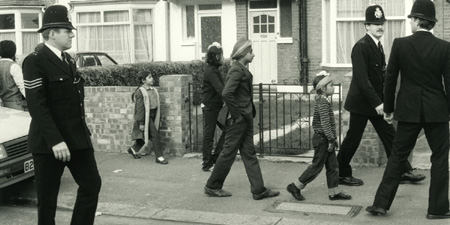
Southall is also a place that has come to be affectionately known as Little India, but for many it is much more than that. Being a port, (Heathrow is a stones throw away), Southall has been a home to such diverse groups as the West Indians, Indians and Pakistanis in the 50’s through to the Ugandan Asians in the 70’s. Most recently, new arrivals include Sikhs from Afghanistan and Somalians.
These settlements invariably have influenced and shaped Southall. Pivotal moments such as the racist murder of teenager Gurdip Singh Chaggar in 1976… meant that as a community issues of race and gender could no longer be avoided. [link]
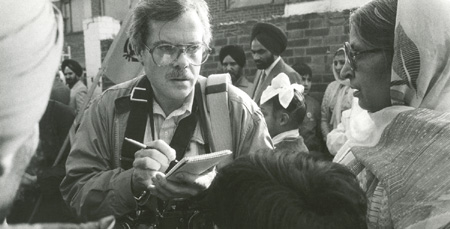 Many people growing up in the UK in the 70s remember the murder of 17-year-old Gurdip Singh. It was a turning point for race relations in Southall (and perhaps a foreshadowing of what was to come across the rest of the nation) and was considered the first racially motivated murder in the area. The Southall Story aims to create an archival, oral and visual documentation which reflects a dynamic heritage. The project’s journey will see a variety of exhibitions, events, film documentaries and sharings taking place throughout 2009, culminating in a publication of a book and DVD.
The project’s mission is to create a long-term sustainable presence by creating a dynamic debate that will be both inspiring and thought-provoking. With a special focus on work in schools, colleges and youth groups, its aim is to bring in the current generation’s view point to engage, explore and embrace this history.
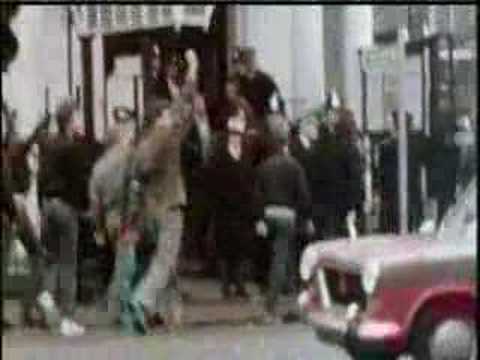
I think it’s a great attempt to pay tribute to a town which ultimately became the home for many generations of Sikhs. I will leave you with an interesting clip about the Southall riots. I’d love to hear from our UK Langarites about their memories of this time.



78 Responses to “The Southall Story”


Thanks for the fascinating video Sundari.
It also seems like just a whole different era when an "Asian" project in the UK was still possible, viable, and had meaning, as opposed to much of the "South-Asian" project in the US.
Thanks for the fascinating video Sundari.
It also seems like just a whole different era when an “Asian” project in the UK was still possible, viable, and had meaning, as opposed to much of the “South-Asian” project in the US.
Hi,
this seems like a great project. I'm originally from Hounslow, now living in the Bay Area in California, & remember these events very well. I actually started clipping articles from newspapers etc. around the time of Gurdip Singh's stabbing in (I think) 1976. I still have these, let me know if you'd like me to scan & share them for the project.
Harbinder
Hey…
I work for an film production company based in Mumbai. We plan to make a film on the backdrop of the Southall Riots. I was wondering if you could please share the articles you have, If you could scan and upload them or forward them to me or any such thing convenient for you, since it would help us in our research. Would really appreciate it.
Thank you…
Just revisited this site after ages & noticed some replies …, I will try & scan the stuff I have then …
Harbinder
Just viewed the video and have to say I think some of the contributors are making things up when they say they were there in Southall 79. The Southall uprising of 1979 was very much an uprising of our mums and dads. My mum worked in the quaker oats factory at that time and she told me how she and all the other auntia clocked off work early that day to do battle with the polse wale on the Broadway. All the uncles too….left work to join the uprising. They all took a beating that day from the SPG. British police never change though. Due to the SPG's heavy handedness they changed their name to TSG but as this months events at the G20 conference showed…they still have their beat everything in sight attitude.
It was 2 years later in 1981 that the sikh youth of Southall had their uprising…..effectively killing off the skinhead movement in the land of its birth. And thats what people need to remember and salute the sikhs of Southall for. In 1979 they rose up and killed off the National Front in the country. In 1981 they rose up and killed off the skinhead movement in the country.
As a Southall boy I am proud of the struggles of my parents. They took their beatings from the policemans truncheon bravely.
I was there. My memmory is that it did occur in 79, involving 2 separate events..the oldies sitting on the streets and protesting…and the older youth in clashes down Broadway
Hi,
this seems like a great project. I’m originally from Hounslow, now living in the Bay Area in California, & remember these events very well. I actually started clipping articles from newspapers etc. around the time of Gurdip Singh’s stabbing in (I think) 1976. I still have these, let me know if you’d like me to scan & share them for the project.
Harbinder
Hey…
I work for an film production company based in Mumbai. We plan to make a film on the backdrop of the Southall Riots. I was wondering if you could please share the articles you have, If you could scan and upload them or forward them to me or any such thing convenient for you, since it would help us in our research. Would really appreciate it.
Thank you…
Just revisited this site after ages & noticed some replies …, I will try & scan the stuff I have then …
Harbinder
Just viewed the video and have to say I think some of the contributors are making things up when they say they were there in Southall 79. The Southall uprising of 1979 was very much an uprising of our mums and dads. My mum worked in the quaker oats factory at that time and she told me how she and all the other auntia clocked off work early that day to do battle with the polse wale on the Broadway. All the uncles too….left work to join the uprising. They all took a beating that day from the SPG. British police never change though. Due to the SPG’s heavy handedness they changed their name to TSG but as this months events at the G20 conference showed…they still have their beat everything in sight attitude.
It was 2 years later in 1981 that the sikh youth of Southall had their uprising…..effectively killing off the skinhead movement in the land of its birth. And thats what people need to remember and salute the sikhs of Southall for. In 1979 they rose up and killed off the National Front in the country. In 1981 they rose up and killed off the skinhead movement in the country.
As a Southall boy I am proud of the struggles of my parents. They took their beatings from the policemans truncheon bravely.
I was there. My memmory is that it did occur in 79, involving 2 separate events..the oldies sitting on the streets and protesting…and the older youth in clashes down Broadway
Nice piece on this project, and like others here, I enjoyed seeing the video clip again. I've linked to your piece in my own quick write up where my own contribution on Southall memories are:
"[Southall] also happens to be the town where my parents first ended up, in 1961, having left the green fields of Punjab, India, and where I spent the first 18 years of my life….It's brought back a lot of memories (see former musing on 1960s Southall cinema), too numerous to write up properly at the moment, but, for now…..
I remember under the ‘The Boyle Law’ being 'bussed out' from Southall to attend primary school in neighbouring Northolt (also known as 'NF country' then); I was also taken by my mother on the march in 1976 following Gurdip Singh Chagger's murder – I have a vivid memory of everyone chanting with great gusto 'Enoch Powell bakara' ('goat') which was obviously a devastating slur! We were also on the march in 1979 which sadly resulted in the death of Blair Peach. In my Southall sixth-form days soon after, the school common room would buzz with tales of the NF 'invading Southall' and various of us dashing off to join various groups. It was where we learned about politics and society."
But, I should have added that there was also the cutting-edge feeling of forging something new – a new hybrid identity. And there was fun too – like inviting the Great Indian Dancers to perform at our school in about 1980 – this was a real novelty at that time and they rocked the school assembly hall!
Nice piece on this project, and like others here, I enjoyed seeing the video clip again. I’ve linked to your piece in my own quick write up where my own contribution on Southall memories are:
“[Southall] also happens to be the town where my parents first ended up, in 1961, having left the green fields of Punjab, India, and where I spent the first 18 years of my life….It’s brought back a lot of memories (see former musing on 1960s Southall cinema), too numerous to write up properly at the moment, but, for now…..
I remember under the ‘The Boyle Law’ being ‘bussed out’ from Southall to attend primary school in neighbouring Northolt (also known as ‘NF country’ then); I was also taken by my mother on the march in 1976 following Gurdip Singh Chagger’s murder – I have a vivid memory of everyone chanting with great gusto ‘Enoch Powell bakara’ (‘goat’) which was obviously a devastating slur! We were also on the march in 1979 which sadly resulted in the death of Blair Peach. In my Southall sixth-form days soon after, the school common room would buzz with tales of the NF ‘invading Southall’ and various of us dashing off to join various groups. It was where we learned about politics and society.”
But, I should have added that there was also the cutting-edge feeling of forging something new – a new hybrid identity. And there was fun too – like inviting the Great Indian Dancers to perform at our school in about 1980 – this was a real novelty at that time and they rocked the school assembly hall!
Mewa Singh – I agree – the mobilization which was seen in the UK during these years was very unique and i find it fascinating to compare it to the mobilization we are experiencing in the US today. In some way, the economic changes that took place in the Punjabi Sikh community during the early years of immigration in the UK and the subsequent cohesiveness led to an increase in political activism. Now – why or how this is different from the US experience – I'm not too sure about…
—
Harbinder – I think it would be great for you to share your clippings. You can contact the Southall Story representatives here.
Jaz – I don't think enough can be said about our parents and the activism they expressed during the 70s and 80s. I too am proud of their generation's revolutionary acts of mobilization and wish more was documented about it.
—
Raven – Thanks for sharing. It's important to remember these events and document them as you have on your blog.
Mewa Singh – I agree – the mobilization which was seen in the UK during these years was very unique and i find it fascinating to compare it to the mobilization we are experiencing in the US today. In some way, the economic changes that took place in the Punjabi Sikh community during the early years of immigration in the UK and the subsequent cohesiveness led to an increase in political activism. Now – why or how this is different from the US experience – I’m not too sure about…
—
Harbinder – I think it would be great for you to share your clippings. You can contact the Southall Story representatives here.
Jaz – I don’t think enough can be said about our parents and the activism they expressed during the 70s and 80s. I too am proud of their generation’s revolutionary acts of mobilization and wish more was documented about it.
—
Raven – Thanks for sharing. It’s important to remember these events and document them as you have on your blog.
Don't believe all that you are told of the 'Riots' in Southall and their cause. I was raised, educated (Dormers) and worked in the town. I well remember the early Asian immigrants and their main place of work (Wolf Rubber). At the age of twenty three I was stationed at Southall as a Police Officer and experienced the times of trouble. I disagree with many of the comments regarding the death of Gurdip Singh Chagger as the incident was not as the result of racism within the town, but more about two small groups of youths clashing with a terrible result. Remember, it could have gone either way. The assailant being arrested very soon after. Unfortunatly, certain groups saw a window of opportunity to promote the incident as racism and stir up trouble.
During my twenty six years as a copper in the area, I always found the town, and it's community, to be very tolerant considering the diversity of it's population and certainly not an area of strong racism.
To hold the National Front meeting in the Town Hall was not the brightest of ideas but that is the price of democracy.
As for the incident involving Blair Peach. He was a man from far away, (Essex I believe) who allegedly travelled, after school, (must have been a fast car) to Southall to demonstrate over the holding of the meeting. He along with others attempted to by-pass the cordons placed along The Broadway by using Orchard Avenue/Beech Avenue with the resultant clash with Police and his sad death.
The later burning of the Hambrough Tavern and wanton damage to other property being of no help to any cause.
Additionally, the period known as 'Pinkie Bashing' that followed was simply (racist?) Asian yobo's jumping on the bandwagon. Southall has always been a good town, don't promote it as the 'Pivot' for change. The town was peaceful until the idiots and activists on all sides decided upon trouble.
Don’t believe all that you are told of the ‘Riots’ in Southall and their cause. I was raised, educated (Dormers) and worked in the town. I well remember the early Asian immigrants and their main place of work (Wolf Rubber). At the age of twenty three I was stationed at Southall as a Police Officer and experienced the times of trouble. I disagree with many of the comments regarding the death of Gurdip Singh Chagger as the incident was not as the result of racism within the town, but more about two small groups of youths clashing with a terrible result. Remember, it could have gone either way. The assailant being arrested very soon after. Unfortunatly, certain groups saw a window of opportunity to promote the incident as racism and stir up trouble.
During my twenty six years as a copper in the area, I always found the town, and it’s community, to be very tolerant considering the diversity of it’s population and certainly not an area of strong racism.
To hold the National Front meeting in the Town Hall was not the brightest of ideas but that is the price of democracy.
As for the incident involving Blair Peach. He was a man from far away, (Essex I believe) who allegedly travelled, after school, (must have been a fast car) to Southall to demonstrate over the holding of the meeting. He along with others attempted to by-pass the cordons placed along The Broadway by using Orchard Avenue/Beech Avenue with the resultant clash with Police and his sad death.
The later burning of the Hambrough Tavern and wanton damage to other property being of no help to any cause.
Additionally, the period known as ‘Pinkie Bashing’ that followed was simply (racist?) Asian yobo’s jumping on the bandwagon. Southall has always been a good town, don’t promote it as the ‘Pivot’ for change. The town was peaceful until the idiots and activists on all sides decided upon trouble.
I myself was a teenager growing up in Southall throughout the 70s.
I had many Asian friends as well as white whilst attending dormers wells high school but…….
It was not without its problems, i do remember clashes between white gangs and asian gangs, there were even problems between the two Asian gangs known as the holy smokes and the tutingnungs as I remember they clashed on a regular basis.
Whilst attending dormers a fight broke out between 2 Asians (one being my friend) and I inter veined to stop the fight (which i did) only to be jumped on by one of the above gangs.
There were approximately 5 Asians aged about 18-20 that jumped out of a ford cortina (MK2) and severely beat me not only with there fists but with weapons, i do remember them using hockey sticks and the chunky bangles they wear.
One of my friends tried to intervene but they just turned on him and they gave him the same treatment.
This was not the end of it they passed me in there car on my way to school and jumped on me again, this time my friends were with me and alerted others, to cut it short they drove away but returned at leaving time with more gang members and as a result a huge clash erupted and loads were arrested.
I'm in my late 40s now married with 1 child and still living in southall, i like the community and the area and wouldn't move for no money, but the problems are still strong this time between the Somalians and the Asians I use to see all sorts of problems whilst I was driving a bus through the town.
The moral behind this story is i believe it takes two too tango both parties are to blame.
I myself was a teenager growing up in Southall throughout the 70s.
I had many Asian friends as well as white whilst attending dormers wells high school but…….
It was not without its problems, i do remember clashes between white gangs and asian gangs, there were even problems between the two Asian gangs known as the holy smokes and the tutingnungs as I remember they clashed on a regular basis.
Whilst attending dormers a fight broke out between 2 Asians (one being my friend) and I inter veined to stop the fight (which i did) only to be jumped on by one of the above gangs.
There were approximately 5 Asians aged about 18-20 that jumped out of a ford cortina (MK2) and severely beat me not only with there fists but with weapons, i do remember them using hockey sticks and the chunky bangles they wear.
One of my friends tried to intervene but they just turned on him and they gave him the same treatment.
This was not the end of it they passed me in there car on my way to school and jumped on me again, this time my friends were with me and alerted others, to cut it short they drove away but returned at leaving time with more gang members and as a result a huge clash erupted and loads were arrested.
I’m in my late 40s now married with 1 child and still living in southall, i like the community and the area and wouldn’t move for no money, but the problems are still strong this time between the Somalians and the Asians I use to see all sorts of problems whilst I was driving a bus through the town.
The moral behind this story is i believe it takes two too tango both parties are to blame.
Don't you feel out of place living in Southall now, John?! I personally would not live in Southall for any money – why live in a town where you feel like you're out of place?!
Don't you feel out of place living in Southall now, John?! I personally would not live in Southall for any money – why live in a town where you feel like you're out of place?!
The most disquieting aspect of the wide spread corruption in India is the fact that it is not any more confined to politicians or the govt. machinery alone. It is prevalent amongst almost every section of the society at every level.
It is the time we the citizens do our bit to uproot corruption from our state. In website www. rtiludhiana.com is our endeavor to create awareness to the public.
The most disquieting aspect of the wide spread corruption in India is the fact that it is not any more confined to politicians or the govt. machinery alone. It is prevalent amongst almost every section of the society at every level.
It is the time we the citizens do our bit to uproot corruption from our state. In website www. rtiludhiana.com is our endeavor to create awareness to the public.
As this is saying my comment is too long, it may well be I am splitting this in three.__Part I__Being a kid in the 70s wasn’t without it’s issues. I rather enjoyed Southall and remember good times for the most part. I currently reside in Vancouver, Canada and I just asked my mum today about the kid who was murdered in Southall and thought I’d see if I could find anything since she couldn’t remember his name(came across this site). I remember the red blood soaked/stained pavement. Seemed to me Sikhs were going to pay respect or something. I also remember the hatred that Enoch Powell was trying to ignite in the people of Britain. I remember him being called a SOB and some. Could be my recollection is off a bit. __Today when I go to Southall – old Southall that is I miss the park that used to house the birds and the fish pond with the beautiful rose bushes. I’ve taken a walk down the corner where the murder took place, maybe I never knew the real reason why someone was killed but I do remember the fear. The fear of riots that I knew happened but wasn’t in the area. Soon after we left for Canada
Part two…looks like it went a bit wonky…
; funny thing is this was where my first encounter with personal racism occurred, blatant in my face racism. I remember hating the colour of my skin for the first time ever. And it wasn’t as if everyone was racist but you knew it was there. Today, people of all colours, creed, race call me beautiful and appreciate me for me– isn’t that a strange turn around? But I remember not being”something”. And today (actually its been a while) is when I am proud of me, my religion and culture (west/eastern). Because I feel after knowing about bits and pieces of other religions the Gurus were pretty advanced in their thinking. If only we could get the people to understand what they meant by Equality.
I appreciate what our parents and grandparents when through for all of us. I do know that kids of today and especially since Canada hasn’t experienced this same assault but other forms of it (Komagata Maru – just as ugly) don’t realize the sacrifices they made and what they went through for us and our “better life”. I, thank you.
Part 3
I also remember good people…Jeffery Bond. The old guy that used to go to Sri Guru Singh Sabha Southall (Havelock Gurdwara)…anybody know where he’s buried because I have asked my dad and he says we could find out- somehow. I’d like to pay my respects to him. Loved the old geezer! Thanks Jeffery for the wads of paper and tiny pencils that used to make my day on Sunday’s at the temple!!! Love you forever! Respect old man.
As this is saying my comment is too long, it may well be I am splitting this in three.__Part I__Being a kid in the 70s wasn’t without it’s issues. I rather enjoyed Southall and remember good times for the most part. I currently reside in Vancouver, Canada and I just asked my mum today about the kid who was murdered in Southall and thought I’d see if I could find anything since she couldn’t remember his name(came across this site). I remember the red blood soaked/stained pavement. Seemed to me Sikhs were going to pay respect or something. I also remember the hatred that Enoch Powell was trying to ignite in the people of Britain. I remember him being called a SOB and some. Could be my recollection is off a bit. __Today when I go to Southall – old Southall that is I miss the park that used to house the birds and the fish pond with the beautiful rose bushes. I’ve taken a walk down the corner where the murder took place, maybe I never knew the real reason why someone was killed but I do remember the fear. The fear of riots that I knew happened but wasn’t in the area. Soon after we left for Canada
Part two…looks like it went a bit wonky…
; funny thing is this was where my first encounter with personal racism occurred, blatant in my face racism. I remember hating the colour of my skin for the first time ever. And it wasn’t as if everyone was racist but you knew it was there. Today, people of all colours, creed, race call me beautiful and appreciate me for me– isn’t that a strange turn around? But I remember not being”something”. And today (actually its been a while) is when I am proud of me, my religion and culture (west/eastern). Because I feel after knowing about bits and pieces of other religions the Gurus were pretty advanced in their thinking. If only we could get the people to understand what they meant by Equality.
I appreciate what our parents and grandparents when through for all of us. I do know that kids of today and especially since Canada hasn’t experienced this same assault but other forms of it (Komagata Maru – just as ugly) don’t realize the sacrifices they made and what they went through for us and our “better life”. I, thank you.
Part 3
I also remember good people…Jeffery Bond. The old guy that used to go to Sri Guru Singh Sabha Southall (Havelock Gurdwara)…anybody know where he’s buried because I have asked my dad and he says we could find out- somehow. I’d like to pay my respects to him. Loved the old geezer! Thanks Jeffery for the wads of paper and tiny pencils that used to make my day on Sunday’s at the temple!!! Love you forever! Respect old man.
I remmember him at the old Havelock Gurdwara!! I never knew his name! Thanks for that Suki, you have bought up a childhood memmory long forgotten!!
Jeffery and I pen-palled for about one or two times…you know how kids are. He sent me a golly (wog at the time) made out of ceramic. I broke it…hated myself for it. But I loved the old man! He was the highlight of my temple days in Southall as you well know kids with short attention spans. I will always remember and cherish his memory. If you know someone who can locate where's he's buried (or whatever happened to him) I would love to know. Because I am in Vancouver I have no clue how the system in England work – I would do it myself but I don't know where to start. There's got to be an archives or something. I would like to visit and lay some flowers or something…maybe even a wog?
Yeah Wog is a negative way of descrbing Black and particularily Indian or Chinese people..so I be carfeul about that
You can try by e-mailing Southall Town Council or Desi radio in Southall
I remmember him at the old Havelock Gurdwara!! I never knew his name! Thanks for that Suki, you have bought up a childhood memmory long forgotten!!
Jeffery and I pen-palled for about one or two times…you know how kids are. He sent me a golly (wog at the time) made out of ceramic. I broke it…hated myself for it. But I loved the old man! He was the highlight of my temple days in Southall as you well know kids with short attention spans. I will always remember and cherish his memory. If you know someone who can locate where's he's buried (or whatever happened to him) I would love to know. Because I am in Vancouver I have no clue how the system in England work – I would do it myself but I don't know where to start. There's got to be an archives or something. I would like to visit and lay some flowers or something…maybe even a wog?
Yeah Wog is a negative way of descrbing Black and particularily Indian or Chinese people..so I be carfeul about that
You can try by e-mailing Southall Town Council or Desi radio in Southall
SORRY..I keep forgetting wogs are racist???? I get stuck in a time warp and just remember it as the long version of gollywog not the golly nor the other part…
SORRY..I keep forgetting wogs are racist???? I get stuck in a time warp and just remember it as the long version of gollywog not the golly nor the other part…
All this talk about Southall evokes strange ,some pleasant and some frightening memories of growing up in Southall in the 70,s early 80,s.Being a 13 year old boy,I must have been one the youngest rioters there throwing bottles and bricks at SPG vans on the broadway,not knowing why I was doing it just that it meant something to the community so it must be important to join in.My family were involved in helping identify Blair Peaches murderer( never found),whom it happens I saw as well but at that age no one asks your opinion and the fact all the coppers looked the same (They loved their moustaches back in the day ! )Luckily 2 minutes before the SPG vans raced down Orchard Ave,off the Broadway,I had reached the safety of my front garden and witnessed the atrocities the Policemen committed on the youths who didn't get away and Blair Beach.
Continued………..
I even rememeber the Police Commissioner of the Meropolitan Police knocking on our door at 3.00 am with 10 police cars outside threatening my family to give witness statements ,not telling us that Blair Beach had died like an hour earlier at Ealing Hospital.It turned out they were trying to cover their backs and were panicking.The funniest thing I ever saw was my Father telling him in an Indian accent very firmly "I know my rights" and slamming the door in his face !
From that day on I never respected authority.Now in my forties and a respected businessman I look around at what Southall has become I realise all those stones I threw were in vain !!
Shaan: Could I speak to you about a documentary we're making about Southall in the late 70's? Priya 07553174745
Shaan, the bottles and bricks you threw at the SPG vans was obviously during the 1981 riots rather than the 1979 one involving Blair peach ?
Cos these days, whenever we have relations over from the Midlands and we want to take them down the pub for a few pints we always struggle to find good old fashioned pubs in Southall, and my dad always remarks how, had he known there would be no decent pubs around, he would never have burn't the Hamborough Tavern down in 1981. 🙂
All this talk about Southall evokes strange ,some pleasant and some frightening memories of growing up in Southall in the 70,s early 80,s.Being a 13 year old boy,I must have been one the youngest rioters there throwing bottles and bricks at SPG vans on the broadway,not knowing why I was doing it just that it meant something to the community so it must be important to join in.My family were involved in helping identify Blair Peaches murderer( never found),whom it happens I saw as well but at that age no one asks your opinion and the fact all the coppers looked the same (They loved their moustaches back in the day ! )Luckily 2 minutes before the SPG vans raced down Orchard Ave,off the Broadway,I had reached the safety of my front garden and witnessed the atrocities the Policemen committed on the youths who didn't get away and Blair Beach.
Continued………..
I even rememeber the Police Commissioner of the Meropolitan Police knocking on our door at 3.00 am with 10 police cars outside threatening my family to give witness statements ,not telling us that Blair Beach had died like an hour earlier at Ealing Hospital.It turned out they were trying to cover their backs and were panicking.The funniest thing I ever saw was my Father telling him in an Indian accent very firmly "I know my rights" and slamming the door in his face !
From that day on I never respected authority.Now in my forties and a respected businessman I look around at what Southall has become I realise all those stones I threw were in vain !!
Shaan: Could I speak to you about a documentary we're making about Southall in the late 70's? Priya 07553174745
Shaan, the bottles and bricks you threw at the SPG vans was obviously during the 1981 riots rather than the 1979 one involving Blair peach ?
Cos these days, whenever we have relations over from the Midlands and we want to take them down the pub for a few pints we always struggle to find good old fashioned pubs in Southall, and my dad always remarks how, had he known there would be no decent pubs around, he would never have burn't the Hamborough Tavern down in 1981. 🙂
That's because the new generation are disconnected from our Punjabi roots…not their fault, we bought them up speaking English…also Somalis are now in Southall and Afghan Bhapay…new communities
I realy shouldn't say this Roop, because in a way I do respect and appreciate the way that the Afghan Sikhs have kept their Sikh identity, coming from quite harsh conditions…but…I really do hate the way that the Afghan Sikh community here deliberately speak to each other in Farsi , Pashtu or dari rather than Punjabi whenever one of us Punjabis is around. I always get the feeling that they're talking about us.
Yeah but being a guy who use to come from Southall, and has seen it now, I agree with you
That's because the new generation are disconnected from our Punjabi roots…not their fault, we bought them up speaking English…also Somalis are now in Southall and Afghan Bhapay…new communities
I realy shouldn't say this Roop, because in a way I do respect and appreciate the way that the Afghan Sikhs have kept their Sikh identity, coming from quite harsh conditions…but…I really do hate the way that the Afghan Sikh community here deliberately speak to each other in Farsi , Pashtu or dari rather than Punjabi whenever one of us Punjabis is around. I always get the feeling that they're talking about us.
Yeah but being a guy who use to come from Southall, and has seen it now, I agree with you
Wow great to read the experinces of other people of southall at that time. I was 11 years old in 1979 and lived in Hamilton Rd in Southall. It was the road opposite the Liberty cinema where the police distributed their riot shields during the day. Also remember a police helicopter flying over the area as well as police mounted on horse. Parents didn't let us out that day so mostly saw and heard the riots whilst looking out of the first floor window.
Wow great to read the experinces of other people of southall at that time. I was 11 years old in 1979 and lived in Hamilton Rd in Southall. It was the road opposite the Liberty cinema where the police distributed their riot shields during the day. Also remember a police helicopter flying over the area as well as police mounted on horse. Parents didn't let us out that day so mostly saw and heard the riots whilst looking out of the first floor window.
"I work for an film production company based in Mumbai. We plan to make a film on the backdrop of the Southall Riots. I was wondering if you could please share the articles you have, If you could scan and upload them or forward them to me or any such thing convenient for you, since it would help us in our research. Would really appreciate it. "
^ Kaashvi, I presume the film you mentioned about the Southall riots is the one they're filming on location in Southall now with Ashkay Kumar…..'Patiala House' ???
If so, the best advice I can give you is to get rid of the role given to Hard Kaur. i.e the role of the typical Southall kuri. I know Hard Kaur is all the rage in Bollywood at the moment but you have to understand that her Birmingham accent is as different to a Southall accent as a Canadian accent is to an Australian one. It's a subject that needs a decent movie to tell it's story. I can't help feeling that the Bollywood version of the Southall Story is going to turn it into a farce.
It will
Doesn't everything Bollywood trying to be English/American/Canadian turn out to be a farce? They all think they know how we think, act, speak and feel, and don’t even try to get the accent or local slang write but they do wear skimpy outfits to a college in England and prance around motorcycles or trees, etc (yeah you know what I'm talking about). One thing I abhor about Bollywood and therefore tend not watch Indian movies much, they make Sikhs look terrible.
Yeah I just saw that last night in a crap film called Blue…If you read my Punjabi writings, they bear no resemblence to Indian perception of the western Indian..certainly Sikh…Bollywood should read the English novels written by Western Asians…but they won't..fault of our people for wtaching the films and encouraging it
i'm currently developing a narrative film about the london youth uprising, set in southhall in the late 70's. my family moved to southhall from kenya and punjab, and as a punjabi/western filmmaker i feel like bollywood in no way has the sensibitlities or understanding it takes to do it justice. but i am curious to see what they do.
it's great to read all the comments. hoping to soon interview my aunties and uncles about their experiences.
"I work for an film production company based in Mumbai. We plan to make a film on the backdrop of the Southall Riots. I was wondering if you could please share the articles you have, If you could scan and upload them or forward them to me or any such thing convenient for you, since it would help us in our research. Would really appreciate it. "
^ Kaashvi, I presume the film you mentioned about the Southall riots is the one they're filming on location in Southall now with Ashkay Kumar…..'Patiala House' ???
If so, the best advice I can give you is to get rid of the role given to Hard Kaur. i.e the role of the typical Southall kuri. I know Hard Kaur is all the rage in Bollywood at the moment but you have to understand that her Birmingham accent is as different to a Southall accent as a Canadian accent is to an Australian one. It's a subject that needs a decent movie to tell it's story. I can't help feeling that the Bollywood version of the Southall Story is going to turn it into a farce.
It will
Doesn't everything Bollywood trying to be English/American/Canadian turn out to be a farce? They all think they know how we think, act, speak and feel, and don’t even try to get the accent or local slang write but they do wear skimpy outfits to a college in England and prance around motorcycles or trees, etc (yeah you know what I'm talking about). One thing I abhor about Bollywood and therefore tend not watch Indian movies much, they make Sikhs look terrible.
Yeah I just saw that last night in a crap film called Blue…If you read my Punjabi writings, they bear no resemblence to Indian perception of the western Indian..certainly Sikh…Bollywood should read the English novels written by Western Asians…but they won’t..fault of our people for wtaching the films and encouraging it
i'm currently developing a narrative film about the london youth uprising, set in southhall in the late 70's. my family moved to southhall from kenya and punjab, and as a punjabi/western filmmaker i feel like bollywood in no way has the sensibitlities or understanding it takes to do it justice. but i am curious to see what they do.
it's great to read all the comments. hoping to soon interview my aunties and uncles about their experiences.
Why NUVIGIL builds on the success of Modafinil…
General Information on Nuvigil and Modalert I think many of us have already experienced conditions of periodic sleepiness during the day……
omg my mum was telling about the Southall Riots, she told me how all the youth asian ran up and down southall trying to do everything they can but the best and beautiful part that i love is that all the indian, black, Pakistanis, etc were working together thats really not common now a days, and just a question does ony one knoe bhinda bhangu, he was well known in southall as he fought for southall he was the tootining side, well all what i want to say i that im proud off all of you andwelldone for sharing ur feelings with us
omg my mum was telling about the Southall Riots, she told me how all the youth asian ran up and down southall trying to do everything they can but the best and beautiful part that i love is that all the indian, black, Pakistanis, etc were working together thats really not common now a days, and just a question does ony one knoe bhinda bhangu, he was well known in southall as he fought for southall he was the tootining side, well all what i want to say i that im proud off all of you andwelldone for sharing ur feelings with us
Latest on Bhinda Bhangu is he recently died of a drug overdose from what I hear,the poor guy obviously lost the will to live even though he had a reputation in southall through th 80s as a tough guy.Towards the end he became a shadow of his former self.
Latest on Bhinda Bhangu is he recently died of a drug overdose from what I hear,the poor guy obviously lost the will to live even though he had a reputation in southall through th 80s as a tough guy.Towards the end he became a shadow of his former self.
"i'm currently developing a narrative film about the london youth uprising, set in southhall in the late 70's"
"I was there. My memmory is that it did occur in 79, involving 2 separate events"
——————————————————–
No. We can't expect any decent story telling of the events if our own people can't even remember the dates and years when it happened. I remember it well because I've been brought up on stories of how my family gained their criminal records and battle scars those days. Our mums, dads and grandparents had their uprising in 1979. The youths had their uprising 2 years later in 1981. As I mentioned before, both these events are highly significant in British political history because the 1979 uprising killed off the right wing National Front party in the UK and the 1981 uprising finished off the skinhead movement in the place of its birth. After what happened in 1981 the skinhead movement finished in England and instead spread out to places such as Germany, USA etc. The Sikh youths of Southall were responsible for finishing them here. Both events have proven to have international significance.
"i'm currently developing a narrative film about the london youth uprising, set in southhall in the late 70's"
"I was there. My memmory is that it did occur in 79, involving 2 separate events"
——————————————————–
No. We can't expect any decent story telling of the events if our own people can't even remember the dates and years when it happened. I remember it well because I've been brought up on stories of how my family gained their criminal records and battle scars those days. Our mums, dads and grandparents had their uprising in 1979. The youths had their uprising 2 years later in 1981. As I mentioned before, both these events are highly significant in British political history because the 1979 uprising killed off the right wing National Front party in the UK and the 1981 uprising finished off the skinhead movement in the place of its birth. After what happened in 1981 the skinhead movement finished in England and instead spread out to places such as Germany, USA etc. The Sikh youths of Southall were responsible for finishing them here. Both events have proven to have international significance.
As my mother was from Southall, I spent every single school holidays there with my Nan, grandad,artns and cousins. I have fond memories of my childhood in Southall. Going to the Oswald rd temple on Sundays was part of our family life. I viewed everything through rose tinted glasses, until at the age of 5 years old I remember very vividly the murder of Gurdip Singh Chaggar the hostile atmosphere growing in Southall, though my family tried to protect my siblings and me from this. I have this horrible memory etched in my memory, my stomach turns every time I think of it, this innocent boys posters on Southall Bridge, eerily looked like my mum's brother. I recall asking my dad why this young boys picture was plastered all over the place, my father hesitated for a while and then told me, that feeling of being frightened and sick will never leave me. Southall has changed considerably over the years and though my grandparents have passed on, and non of the family members live in Southall I will always have a very strong bond with the old place.
My aunts, uncles I meant
hi to everyone my names danny from Vancouver I grew up in southall I know each and every riot there I remember gurdip chagger the guy who killed him his brother went to our school I was there smack bang in the middle of it ,it was a fight that we had to win and we did no thanks to the police I was chased around by the police but as soon as we shook them off we went right back in blair peach was murdered by the police he was found in someones front garden off broadway I went to his funeral in dominion cinema actually the whole town went but the skin heads retrested but were still there living in northholt we could go looking for them here and there throwing stones at each other those were intresting times I could go on and on but those who lived it know how it was
SOUTHALL I HAVE BEEN THERE MANY TIMES AND LOVE IT, ALTOUGH I DID NOT GROW UP IN SOUTHALL, BUT HAVE READ ALOT ABOUT THE SRUGGLES , HOW THE BRAVE PEOPLE FOUGHT THE RACISTS, PEOPLE OF TODAY NEED TO KNOW OF THE STRUGGLES…..
I remember the papers and pencils at that Gurdwara. I'm now in BC, Canada.