
Confusion to Solution: Educating Children about the Sikh Identity
Guest blogged by Navjot Kaur
Usually, I can take quite a lot before something unsettles me. Today, my pressure cooker was whistling.
When you think things can’t get much worse, they have a way of doing just that. When it rains, it pours, right? As I went to pick up my son at the end of his second day in Kindergarten, he appeared at the exit door with his patka almost off his head. I thought to myself, they probably had Gym class. But that wasn’t the case. I was quickly informed that another Kindergartener had pulled my son’s patka off his head while he sat on the carpet. I almost cried but didn’t. I felt angry but held it together for my son’s sake. I questioned whether it had been an action of curiosity? I hoped that the response would be positive but it was not. Bullying, in Kindergarten.
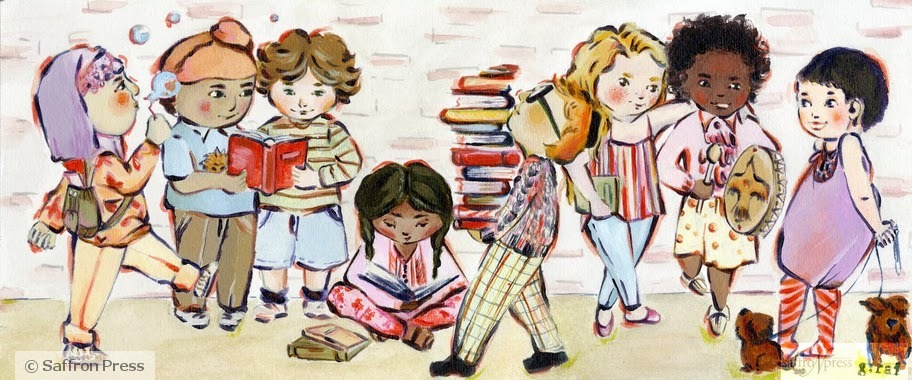 Yes, my son looks different in many ways. He has his visible faith-identity and he also has his deaf identity. He’s smaller than his peers and he has some special challenges but his personality is like the sunshine. Its rays can trickle into even the darkest cracks and brighten up your day. I would not allow this incident to darken his future school days.
We came home and once we had cuddled, I reassured him when he asked, “You’re going to tell [boy’s name] to say sorry to me?” I went into another room and cried. I’m not sure why I felt so defeated for that tiny moment but I did. Nevertheless, after talking to my sister, who works for a non-profit organization lobbying for change on such issues, I gained my strength and prepared next steps.
My son’s teacher handled the situation by approaching the other child’s parent who consequently apologized to us personally which was truly appreciated. The teacher agreed to have me come into the class to present about the Sikh identity since she was honest enough to accept that she was not well informed enough about the identity herself. I was grateful for an opportunity to change my anger at ignorance into a more constructive response.
Although our son was hesitant to return to school, I gave him a day filled with love and cuddles at home before grappling with a year of unknowns. For the first time, I understood why a faith-based school feels safe and secure for immigrant families and even began searching for my local ones. It was a gut reaction. But then, the world is a global encounter and life happens.
Whether you are a member of a visible identity or living with a special challenge, bullying and ignorance hurts. Presenting such an issue to Kindergartners is never easy but they had to be given an opportunity to become solutionaries and so, I tried to be positive and embraced the support from the teachers to do just that.
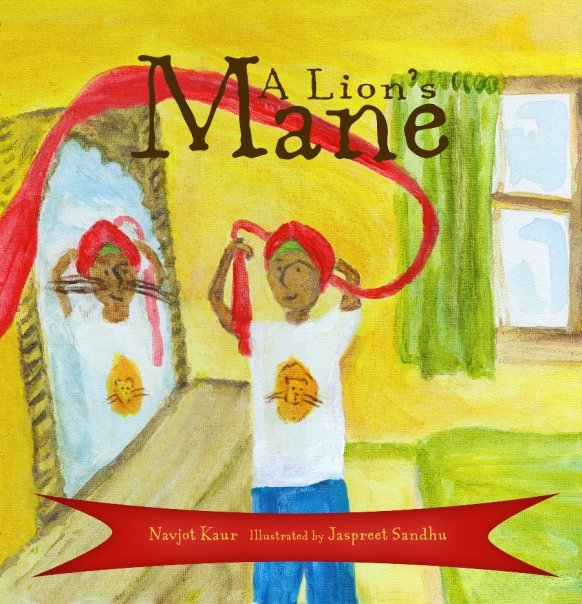 I began with a reading of A Lion’s Mane. I was surprised at how engaged the kids remained with the story. After my presentation, the students were eager to create puppets and “crowns” of their own, and the teacher’s enthusiasm and interest to “learn something new” was genuine. The school day ended with the students wearing their roaring lion masks and proudly wearing their “crowns” alongside my son and his patka. And yes, everyone stared. Not because these children looked different but because these bystanders too wanted to learn something new. My son’s face was the brightest of all and when he told me: “Mummy, thank you for reading A Lion’s Mane to my class,” it made my heart smile. Small people can create big change. Authentic voices are needed but children can be raised to become solutionaries and become the informed leaders we need for tomorrow’s world.
If you are faced with a similar situation or if your child is being bullied, here are a few suggestions:
1. Contact your child’s teacher immediately and discuss your concerns.
2. Ensure that your child feels like his/her voice is being heard. Listen to your child and teach them to say “no”.
3. Schools offer interpreters, so if you are not comfortable handling the situation yourself, approach a community member or group who can advocate for your child.
4. Offer resources to the school to help them understand your child’s needs [link].
5. Encourage visits to local museums (the Sikh exhibit is up for another two years at the Wing Luke Museum of the Asian Pacific American Experience).
6. Find support for yourself and your family.
Do you have other suggestions? Please share if you do. In the meantime, look out for some additional free resources that I’ll be sharing with you soon. If you would like to learn more about my presentation to use in your child’s classroom, please feel free to contact me.
::
Navjot Kaur is the award-winning children’s book author of A Lion’s Mane and Dreams of Hope, published by Saffron Press.



53 Responses to “Confusion to Solution: Educating Children about the Sikh Identity”


Both – timely and touching Navjot Kaur. Thank you for sharing.
Thanks Jodha!
Thanks word is not enough for your Sewa..my friend Amrita Kaur gifted that book to my daughter..she just started her kindergarten..I’m thinking to buy more books for my dtr’s class as a gift..although I have 3 girls..don’t know how they gonna present themselves yet but I still want their surrounding to be aware about their faith..also my thoughts are that Sikh parents should be more active in schools activities..my dtr’s school offer all different kind of volunter work..where u can engage with other parents and staff..and it’s gives you opportunity to share you thoughts..I don’t have that much experience yet since she is my first child going to school but I’m learning..
Shelly, thank you for your kind words. Although the protagonist of A Lion's Mane is a boy, I have used the "Lioness" page to empower girls. There is a complete Teacher's Guide that you can share with your daughters teachers and I'm happy to help you in any way I can. Please feel free to reach out:)
I agree that we as Parents have to be active in school activities. It's all about letting go of fears and doubts and finding respect and understanding for each other.
Navjot, this is very poignantly written piece with a powerful message. I love how the book "A Lion's Mane" uses the Sikh identity to connect with other cultures, which is something I find lacking in these sorts of books. The way you, your son, the other boy's parents, and the school handled the situation is commendable. Often, when the bullying is more subtle, it goes unnoticed, or when these sorts of things are passed off as "kids being kids," it sends the wrong message to everyone involved and encourages this sort of behavior.
I am curious as to your suggestion(s) on handling a situation where either the parents of the bully or perhaps the school authorities don't believe an incident is a result of discrimination, and is simply "kids being kids?" Thank you for this much needed post!
these are great questions navdeep and from my experience (personal and from working with youth around these issues), it's all too common that school administrations don't take these incidents or issues seriously enough. unfortunately, organizations and communities have had to wage advocacy campaigns and get a lot of media attention is some cases in order for the school system to adequately address these concerns. for example, the case of jagmohan singh premi in richmond hill queens (http://www.sikhcoalition.org/advisories/JagmohanHateAssault.htm) — the school did not think what happened to him was a "bias-based" incident until advocates and premi's family came in and explained the significance of the patka. jagmohan speaking out publicly about what happened to him made a huge difference in this case. this ultimately resulted in massive community mobilization that pushed the nyc dept of education to enact a system-wide anti-bullying regulation.
so i guess partially what i am saying is that sometimes we have to fight these issues on a systemic level, as it can be a systemic problem. sometimes in schools where bullying is rampant, it turns out that the administration may be fairly ignorant about these issues or not see them as a priority. or that the school or school system has no standard policy on how to address these incidents when they happen and how to prevent them from happening in the first place– most importantly through education about "diversity" in all its forms for students AND staff.
thank you for an amazing and moving post navjot. it resonates with so many of us. i'll never forget how i felt in the 5th grade when my patka was pulled off for the first time. parents need these tools you're helping to provide.
I agree with your thoughts, Brooklynwala. We do have to make our voice heard if we want to see any constructive action taking place. I was surprised (although I shouldn't have been) at how little the staff knew about the Sikh identity. We just relocated to BC from Ontario and where we were living was not nearly as diverse in terms of a Sikh population as we see here. I think it reminds us that we still have a lot to do as far as raising awareness about the Sikh identity in Canada. I believe school boards need to take their Diversity and Inclusion officers more seriously and not view them as their token diverse staffing statistic. Staff need to be educated – as a teacher myself, I have often experienced this ignorance first-hand and it's been disheartening. I have had the opportunity to teach some great students over the years and children ARE willing to learn something new. They want to be a generation of change-makers so I think it's up to each one of us to help make that happen.
Thank you again for your support!
My view is that the American social contract is that acceptence and diversity are settled facts, and if anyone is out if step with that then they’re the odd ones. It’s a variation on what’s on offer by looking at the situation as needing to fight the system. We are the system. I will not live in a setting in which ignorance is the norm. My heritage is full of great values and I intend to contribute that to my society as much as I can, and part of the return of that is my society respects me and my heritage.
We do not have to place ourselves on the outside looking in. One incredible value of our heritage is that wherever we are is our home. Jithai vee punjabia nai, othai we Punjab vastha.
It really is scary to think about ones child being alienated or feeling less than, so I really commend and thank you for your efforts.
The US is a nation of immigrants and we should be tremendously proud of our heritage and our potential to enhance this society, and ignorant people are sad losers.
I completely agree that it has to be two-fold. Sikh philosophy and history shows us that the road to reformation and revolution is never clear cut. When one method doesn't work effectively, we should avail other avenues. The problem is ignorance to a certain level, but I feel it is much more deep rooted than that.
I remember when I lived in the Middle East, I used to wear a patka, and there was a tremendous amount of bullying because it was just "kids being kids." And it wasn't an ignorance of the Sikh identity. There were other Sikhs with patkas who were bullying other Sikhs with patkas, Indians who knew who the Sikhs were bullying, and the usual discrimination of the fat kid or the effeminate kid, etc. The deep rooted problem was that the administration was apathetic and really thought it wasn't a big deal. So not necessarily an ignorance of the identity, but more of the fact that this is an actual problem. In multicultural societies like the U.S. the problem is two fold. One, they are ignorant about the Sikh identity, and Two, they are ignorant about the fact that there is an actual problem when kids are bullying/bullied. And a lot of times, the third factor is incompetence where even if they understand even one of the first two things, there is no system in place to deal with it.
Thank you, Navdeep! I too have reflected on your thoughts about what happens when the bulling is influenced by indirect social factors and it's interesting that a few people actually gave me that response – "oh, that's just part of growing up." To me, that's the same as being a bystander because you are enabling negative, destructive behaviour.
The Father of the child who pulled my son's patka off took the stance that "it's kids being kids". His actual words were "he just plays rough". That really wasn't acceptable for us and Tej took time to talk to him about the effect of hidden biases. He was extremely uncomfortable during the conversation. I am not sure whether we managed to change his mindset but perhaps he will think twice the next time he meets someone who looks different.
I would hope that by going into the school and either volunteering or presenting to the class would help foster dialogue and raise needed questions. If that does not work, then I suggest documenting such incidents and meeting with the school admin/Board of Education and enlisting the support of an advocacy group. There is usually a Diversity and Inclusion Officer within each school board that you should contact too.
Both you and Brooklynwala make great points that complement each other. As a father to a 2 year old daughter, I hope to instill within her the core beliefs of Sikhi that we have to do something as individuals to stand up for ourselves and also for others. And when that doesn't work, to seek other means of justice through fighting these issues on a "systematic level."
And massive props to your husband, Tej, for speaking to the father in a civilized way. Even if it doesn't seem like you've "changed his mindset," you've started the dialogue and he's seen the human element that people often forget about when they use phrases like "he just plays rough," or "kids being kids." As if this was the natural order of things: to be bullied, which in itself is rooted in some form of discrimination.
There is a reason certain kids are bullied and are miserable in school, and certain kids are left alone to have mundane experiences filled with apathy and boredom, rather than fear and dread. In our multicultural society, it could be the gay kid, the white/black/brown kid, the fat kid, the kid with the "funny" accent, the special needs kid, the Muslim kid wearing the hijab, the Jewish kid wearing a yarmulke, and of course nothing stands out more than the Sikh kid wearing the patka, especially when that daari starts manning him up. Basically, whatever the perception of "the other" happens to be.
Through speaking directly to everyone involved, especially through making presentations at the kindergarten level where their sense of boundaries are just beginning, you are sending a clear message that this is not okay. And even if you didn't manage to change the mindset of the father, you did give him something to think about. And I am sure you made an impact with his son and the other students who listened to the presentation. And the fact that the Lion's Mane is so relatable helps tremendously.
You speak to people with respect if they treat you and your family with respect. I will not personally waste my time on someone who is uncomfortable with teaching his kids to respect others. He needs to get his child prepare to succed in a society that will be pluralistic and if he isn’t going to do it, his kid misses out. We don’t need to coddle that kind of attitude and one can convey that in a dignified way. If a grown man is so insecure about his child that he can’t teach him the right things, he and his child need help. Help I’m not inclined to provide
I really think we need to keep in mind we can set the norm, for example any teacher in BC who is not familiar with Sikhs actually needs to pay Navjot for providing her with skills that are basic to her job.
While this may come across as cantankerous, it can be conveyed in a dignified way. Seriously anybody in the US who can deal with pluralistic society is going to need a lot of luck.
Can not deal with a pluralistic society
I do understand your point, and quite frankly, I don't know how understanding I would be if this happened to my daughter, or how inclined I would be to engage in a civil discussion.
But I commend Tej and Navjot in dealing with the situation, which in my opinion, really is the ideal way of handling a situation like that.
The alternatives to your objections are to a) not engage in dialogue at all and thus not affecting any kind of change, or b) having a shouting match with those involved. Often, this mindset does not come from a place of evil and meanness, but from ignorance or lack of exposure. And the only victim if they had done nothing or gotten into a shouting match would have been their son. Even if no real change takes place, or the change is incredibly slow moving, he at least knows that his parents are looking out for him and knows that having his patka removed or being called a name, or hearing discrimination of others, is wrong and perhaps he will learn to stand up for himself and hopefully others as well.
I do think how it was handled here was superb. I’m just saying in some situations we can just say the equivalent of “don’t do that.’ And we can be respectful but forcefully assert our rights. The tone of the zafarnama sets the tone for those times. Engage on their terms while asserting our absolute right and confidence in being treated justly.
"Small people can create big change. Authentic voices are needed, but children can be raised to become solutionaries and become the informed leaders we need for tomorrow’s world."
I think so often it is really easy to forget this — but in every little thing we do, children are absorbing, learning and forming habits and opinions. I love the word "solutionaries." It really encapsulates the idea that the time to teach our children is now. I can't wait till our daughter Kavya is old enough to embrace the message of "A Lion's Mane."
Thank you, Sona! Maybe I can read it to her one day:)
Really beautiful and productive story.
my sisters son JUST faced this exact issue and my brother faced the exact issue 22 years ago (as we were born and raised here in the US). The exact sentiments – the exact feelings = were present in both generations – either thats a reflection on how things haven't changed in 22 years or how we should all make an effort that more kids aren't faced with this. Your book is inspiring as well as this blog post – thank you!
Thank you kaurpower! I'm sad to hear that your nephew went through a similar situation. I think we need to take a hard look at this – your brother faced this issue 22 years ago, as did mine. Why hasn't anything changed? What is the perception of the Sikh identity in the outside world? Why is it still blurred?
This is one of the reasons why I am fervently passionate about the issue of Diversity in Publishing today. Publishers add the standard "I am a Sikh" book to their catalogues and people think that's enough. It isn't. We as a community have a responsibility to ensure that our children are exposed to a variety of diverse literature from a young age so that literacy is valued and they learn to respect global cultures. When we are valued as consumers, the publishing industry might wake up. We have to value literacy ourselves to ensure that many authors get an opportunity to share their authentic stories with your children. Just yesterday, we were at the Gurdwara and the Tadhi Jatha asked when the last time was that anyone had shared a "lohree" with their child? He said everyone seems so busy today but those moments are cherished into adulthood. We were lucky that our Father was a great storyteller so we have grown up to love books. But I think we all can benefit from a little reminder once in a while to find that time to talk and bond with our solutionaries.
Many of our activists have forgotten our young men and boys because they are not part of the narrative that defines activism as primarily concerned with how Sikh masculinity is a problem.
Absolutely wrong.
Take a moment to examine the sheer amount of resources that are expended to mitigate the bullying of Sikh children in school. Most of the targets publicized are boys, and all of the litigation undertaken has been on behalf of boys.
Getting over the gender bit will stop distracting you from what's really going on.
You have vanquished me
There is still some life left after your mighty blow…you again miss the forest for the trees. I’m not saying that of the bullying work that most might not be focused on boys wearing kesh. I’m saying that this problem gets lost in an activism defined as solving the problems faced not by the community but of the community. I worry about the consequences of this balance becoming skewed.
In the mainstream community progressive activism on problems of the community and if we adopt this focus only, we leave much room for problems faced by the community to go wanting.
You are encouraged to not respond because I have little confidence you’re interested in more than point scoring
My point is that you're wrong to say that activists are forgetting the needs of young men and boys. In fact, the community expends far more resources on programming that implicitly or explicitly targets boys because of the bullying and teasing they face in school.
Your second post is making a point that is completely different from the first one, but I will address it nonetheless.
"Many of our activists have forgotten our young men and boys because they are not part of the narrative that defines activism as primarily concerned with how Sikh masculinity is a problem."
The activist groups most featured on this blog, ones that we are familiar with are the Sikh Coalition (SC), The Sikh Activist Network (SAN), SALDEF, The Jakara Movement (J), and United Sikhs (UN).
As far as I'm aware, SC, UN, SALDEF have all specifically targeted young male keshdari issues in k-12 schools [e.g. SC Khalsa Kids], universities [SALDEF GW i.d. card issue], and even the army [right to serve campaign that was a collaborative effort between all SC, SALDEF, US]. These issues are ones that are not internal to the community, but external. It is fitting for these orgs, because they are civil rights groups that focus almost exclusively on the Sikh community's relationship with society at large.
'Activism' as such in the Sikh world has no specific agenda, or specific MO. Remember, we still don't agree on the meaning of 'progressive'. Each person, each organization has its own idea of what work needs to be done. The civil rights organizations above work on problems faced by the community. They are the organizations with the large budgets, nationwide donation campaigns, the ones that interface with the white house. They are the household names. They collaborate with and also draw manpower from J and SAN.
J and SAN more explicitly focus on problems 'within' the community, so to speak, and are lead by a younger crop of activists. SAN and J have focused on the events of 84, raised awareness, and undertaken campaign work that relates to society at large. Of course they work on problems faced by the community, including the treatment of women. This is not all they do. They hold camps, have meetings, have conferences, have concerts, and educate Sikh Youth on their history and faith. Back to women: SAFAR (collaboratively supported by J and SAN), Laddoos Pink and Blue (J), and HERSTORY (SAN http://sikhactivist.net/?p=2709). Both of these groups treat this particular issue delicately as far as I can tell do not treat patriarchy/(hyper)masculinity as a male issue but a community issue (as I mentioned before in a post that you did not respond to).
Quick and dirty: there is more work going on trying to work on our relationship to others, rather than our relationship to ourselves. Not the other way around. If you disagree show me how rather than grasping for 'progressive activist attitudes.'
But your main concern is hypermasculinity. I'm a lazy keyboard warrior who rarely leaves work and home, but let me guess whats going on with these activists and our community in relation to gender. Fetuses are aborted. Girls get sidelined. Wives get beaten. The specific problem of female sex-selective abortion is very high in the Punjab, and higher among Sikhs vis-a-vis their Muslim and Hindu counterparts (I know, it hurts my Sikhi is awesome ego too). We have few women granthis. Women are "polluted" and can't do seva at Harmandir Sahib, etc. What is the cause? Its not Gurbani (Nikki Guninder Kaur Singh shows how we can use Gurbani beyond gender equality, as an actual tool against abortions http://thelangarhall.com/sikhi/sikh-literature-co…. Its not class, even rich NRIs do it (http://url.ie/dboy). Its not caste (oops that doesn't exist…
3:10). For many activists and scholars, its patriarchy and concomitant hyper-masculinity. I don't think making men effeminate and women more masculine is what's at stake or what's desired. Changing our status quo is. "Waheguru!" at the birth of a daughter instead of tears. You can make the comparisons to other immigrant groups, to other religions, etc., but as far as I'm concerned, they don't have a mandate by the guru to call their women queens, rather than property.
More than anything you want to show you are right and better. I’m over doing my criticism in the hope it will spur a desire to avoid group think. You take that and hammer the status qou home. You really think you’re more than a key board warrior? You are using a key replying board to type all your smiting words now. You’re kind of dense if you can’t see that I’m taking an opposing view on almost every topic.
And by the way that entire post was one long attempt to score as many rhetorical points as possible. You are basically speaking to a like minded group if people telling them what.they.already believe is right.and you think you’re what? Better or more moral? Give me a.break.
And this is my basic point, everyone has biases and no one has a purity of motive. I do not place my faith in any group of activists and any group convinced of the righteousness of their cause, approach, and motivations without being open to investigating their basic assumptions needs is worrisome. If this was some other community, There is a group think mentality here. I don’t think any poster here has significantly strayed from the same basic line of thought
And finally no I don’t recognize my community as one in which women are beaten, featuses are aborted and women are considered polluted. If that’s how so called activists define my community they are not describing what is my experience and I don’t have to simply take that as fact. They can explain their life experience and I’ll take them at their word but they can’t describe my life experience for me
Meaning that a norm is that those things happen. I think its a shibboleth of the left that a “community” shares the same problems no matter who they.are. if anyone needs help or is mistreated or not being treated equal I am for them but.I will not say.that my community or culture how I learned it leads me to think women are polluted, that they should be hit, or that baby girls don’t deserve to live, and I will not accept that some activists will define for me something totally alien to my experience.
And if your community condones those things I’m sorry for you but maybe we are not from the same community
LOL
Keyboard warrior ftw.
BTW maybe progressives.for.could say there are multiple Sikh and Punjabi cultures. That would mean those of us who do not believe for example that women are polluted can feel we are part of the culture. I bet there are some people out there who may believe that but I didn’t need to be educated by activists in order to have.a.different view.
It’s a small change but its key.
Someone amritdhari could feel like a sehajdhari is not part of their community. I don't think that's productive. I get it, your feelings are hurt, but nobody is telling you necessarily that your culture kantay, is creating these problems. But these are issues faced by many people who believe in your Guru whether you choose to accept it or not, and others are working to address those issues because they feel that we are all part of a community because of our affirmation of love towards the Guru.
And on the note of 'scoring rhetorical points etc.', I wrote a long post to detail how incorrect you are. Show me how I'm incorrect and I'd gladly accept it. You don't play the devil's advocate by making baseless claims. Make an actual point (i.e. perhaps we can start talking about multiple Sikh and Punjabi cultures) rather than untrue statements (i.e. many of our activists have forgotten our young men and boys because they are not part of the narrative that defines activism as primarily concerned with how Sikh masculinity is a problem [oops, maybe there are multiple progressive activist narratives, some of which love Sikh masculinity]). When I try to explicitly work through an issue you pose (the last paragraph of my long post) you ignore it. I'm definitely dense in that regard for continuing to go further down the rabbit hole.
It is.a rabbit hole and part of that is your role, look into it.
Maybe my feelings.are hurt but moreso its that I have not been part of a culture in which women are polluted or girls are inferior. No one has had to give me a ladoo to see that.
I made a hyperbolic comment re how much work is done on bullying of Sikh boys.
I also don’t feel most activists are without their own self interest I should have phrased it as a worry.
Further I worry their is an insularity of.Sikh.activists that leds to group think. I’m not inclined to be a Sikh activist myself so on some level I’m just throwing stuff out for consideration or not by those who are
But yes, when progressive activists come to the backwards members of the community maybe they can leave open the possibility that they already have an interest in treating people equally and have sense of morality.
Also, take a look at the Atlantic story.on the.changes coming as the fact that women are more educated than men. That’s occurring in Punjab as well. It’s not always going to be the way its been so I hope we don’t assume we will always have the same view of who needs help progressive activism privileges the groups identified as oppressed so there is a need to be first in oppression Olympics. Maybe young men and boys who are poor and of color can bust through and get the gold and the moral high ground
related http://sikhchic.com/article-detail.php?cat=26&…
Not sure where you are but I would say compared to 20 years ago a bully.in tina.city would think twice about messing with someone’s patka, or he should if he’s smart
Yuba city
It's also important to attend PTA meetings & school board meetings. Even though I don't have kids yet, as a taxpayer, I attend both whenever I can. I really wish that all gurdwaras had weekly discussion forums or groups where parents, kids & others could discuss & take preventative actions on the issues raised in this article & ensuing comments. Unfortunately, we tend to be a reactive people, rather than proactive. Although Sikhs want their kids to maintain a Sikh identity, we don't seem to make it easy for our kids to be Sikhs. Sometimes I doubt if I'll have the strength to raise Sikh kids. I'm also apprehensive about the emotional & psychological toll that I would be inflecting by raising my future kids as Sikhs. I also wonder what kind of help, emotional, psychological or otherwise, will a parent like Navjot or a kid like her's get from our community.
One issue is not enough of our activists are married parents. Single college kids and those just out of college have a certain view of the world and that’s fine but we need more people who are speaking to concerns beyond the hot house of academia and pc politics that don’t play after the world of campus candle light vigils and awareness sessions
And that’s written somewhat tongue in cheek
It's wonderful that you take the time to be involved in community activities like these. I appreciate that there are many fears associated with bringing children up with the Sikh identity (whether people choose to talk about it or not) but one thing I realized long ago is that none of us can predict the future but we can all try our best in the present. There are many challenges we face as parents and not always connected to the visible identity – just universal challenges. I hope that you will have a supportive group of people around you during the years you raise your kids because being a parent is tough. I will say that we do have great friends and family that have been completely supportive of me as a parent and of my son. He is loved dearly by those that matter and that's enough for me.
This is good news for students in California: on Sunday California Gov. Jerry Brown signed Seth's Law, a bill named in memory of Seth Walsh, who was just 13 last year when he committed suicide, reportedly after enduring bullying in school for being gay.
The law, which goes into effect in July, will create an anti-bullying system at all California schools by requiring school districts to institute anti-harassment policies and an online complaint procedure, with shorter timelines for investigating claims of bullying. It would require schools to establish policies to prevent bullying, be responsive to complaints about bullying, train personnel on recognizing and intervening on bullying, and make resources available to victims of bullying.
Beautiful! Thank you Navjot. You are a truly inspiring woman. Please thank your son for me.
Thank you kindly:)
Very well done. We need these kind of exposure for our young kids.Iknow for boys the identity of Dastar but equally important for girls of all ages to keep long here and keep them neet &tidy.Thanks for your great effort.Continue this seva.
I appreciate your support – thank you.
Dear Navjot Kaur, Thank you for your post, creating safe environments for our children is not always easy, but your approach to the bullying and ignorance (which builds the foundation for tomorrow's racism) was proactive and shifted the world for all those children, and most of all for your son. He witnessed his mother approach this challenging situation proactively, with love and kindness, but also a clear message that differences can have a space to exist and be celebrated, and whether we are different or similar, there is still oneness … Ek Onkar. For me, as a fellow mother and a Sikh, you demonstrated the social justice responsibility we hold so dearly as Sikhs, as warrior saints, and your thoughtful approach represents empowerment, interconnectedness, and to be of service. Thank you for not only delivering what was best for this potentially traumatic experience but writing about this, your sevaa will have far more ripples … Thank you.
We often hear that difficult experiences bring some good but you never believe it at the moment in time. I feel truly blessed with the kindness and support shared by so many through this experience – thank you. May we continue to be of service to each other.
agreed, nice story.
very nice post, i definitely enjoy this amazing site, persist with it