
Religion, Poverty and the Group of Twenty
The G20 summit, which will take place in London on April 2nd, will bring together world leaders representing 85% of the world’s output to discuss issues affecting the international financial system. The goal of this summit is to encourage world leaders to make three committments:
- First, to take whatever action is necessary to stabilize financial markets and enable families and businesses to get through the recession.
- Second, to reform and strengthen the global financial and economic system to restore confidence and trust.
- Third, to put the global economy on track for sustainable growth.
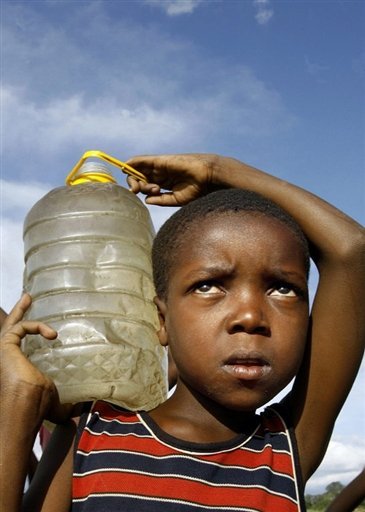 This week, religious leaders in Britain urged the G20 leaders not to forget their commitments to the world’s poorest people in the current economic crisis. In a joint statement, they quoted World Bank figures suggesting 53 million more people may fall into absolute poverty as a result of the crisis, and said the world’s leaders have a duty to help them.
In a communiqué issued in advance of next week’s G20 meeting in London, they call on political leaders to consider the moral issues at the root of the current financial crisis, and to pay special attention to the needs of poor, marginalised and vulnerable people: “to forget their needs would be to compound regrettable past failures with needless future injustices”. [link]
While acknowledging the complexity of the challenge facing politicians, the statement called on the leaders to restore “that lost sense of balance between the requirements of market mechanisms that help deliver increased prosperity, and the moral requirement to safeguard human dignity, regardless of economic or social category“. The statement is signed by Archbishop of Canterbury Rowan Williams, Chief Rabbi Jonathan Sacks and representatives of Muslim, Sikh, Catholic, Hindu and Buddhist communities.
In addition, there will be a focus on delivering ‘real help’ to tackle unemployment by helping get people into work, provide support for the most vulnerable and prioritize skills needed for the future.
Harcharan Singh, an official at India’s Department of Labour and Employment, said that while economic slump had hit India’s export and construction sectors most others had been immune. Asked what he wanted world leaders to deliver on 2 April, he said: ‘At the London Summit we would prefer to stress that workers should get employment in the formal sector not in the informal sector on temporary basis and contract basis’. [link]
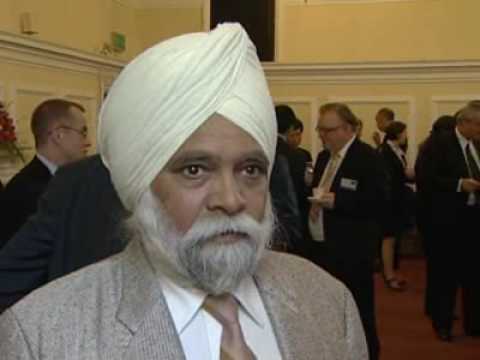
President Obama will be meeting with Prime Minister Manmohan Singh on April 2nd on the sidelines of the G20 summit.



8 Responses to “Religion, Poverty and the Group of Twenty”


the G8 and now G20 meetings have mostly served to protect the interests of the global elite and multinational corporations. it's good to see religious leaders calling for something better from the G20, but we're gonna need a whole different paradigm for actual change to be made. thousands are in the streets of london this week expressing their voices…
http://www.cnn.com/2009/WORLD/europe/03/28/g20.pr…
the G8 and now G20 meetings have mostly served to protect the interests of the global elite and multinational corporations. it’s good to see religious leaders calling for something better from the G20, but we’re gonna need a whole different paradigm for actual change to be made. thousands are in the streets of london this week expressing their voices…
http://www.cnn.com/2009/WORLD/europe/03/28/g20.protests.saturday/index.html
It is nice to read your article and i get many valid points through your post.
Here is the undertaking that's difficult to get excellence through, although every single minimal level assists. Each MONEY you could possibly commit is the assertion. Each organization an individual aid or maybe product you receive could be a rendering of your respective viewpoint along with valuations.
Thanks
By after reading your writing I've come to know some knowledgeable concept about the religion. On this world every country have some problem with religion. But, we need to come out from here and your concept is able to help us.
A thoughtful insight and ideas I will use on my blog. You’ve obviously spent a lot of time on this. Thank you!
Its very protected and use one accessories for the iphone user and I've a good experience with this ottrbox armor series. pay to have paper written