

A rally in Brooklyn, NY in support of the BDS movement on Monday.
Monday evening in Brooklyn, about 50 people gathered to protest Israeli apartheid and encourage the boycott of Israeli goods, a part of the growing boycott, divestment, and sanctions (BDS) movement. Inspired by the effective use of boycott and divestment tactics in the struggle against South African apartheid decades ago, the BDS movement is growing with recent victories such as the Presbyterian Church (USA) and many colleges and universities deciding to stop investing in companies complicit in the oppression of the Palestinian people.
The mood of Monday’s rally was heavy. What was intended to be a celebration of the 10th anniversary of the BDS movement instead was a mourning of the many Palestinian lives taken in recent days by Israeli soldiers/bombs and civilians/settlers alike. Like Muhammad Abu Kheidr, a 16-year-old who was burned alive last week in what is widely assumed to be a revenge lynching by Israeli settlers after the bodies of three missing Israeli teens were discovered (blamed on Hamas without any evidence). Or Muhammad’s cousin Tareq, a 15-year-old Palestinian American who was badly beaten and detained for being at the wrong place at the wrong time (with the wrong ethnicity) a few days later. Or the 31 people in Gaza killed and countless others injured and displaced by 378 Israeli airstrikes in the last two days of its increasingly devastating “Operation Protective Edge.” Or the 10+ killed and over 360 kidnapped in Israel’s “Operation Brother’s Keeper” a few weeks ago in the West Bank, a form of collective punishment on the entire population after the  disappearance of three Israeli boys.
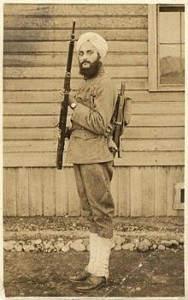 Yesterday, the Washington Post reported that a bipartisan group of 105 Members of Congress sent a letter urging the Department of Defense to end a presumptive ban on devout Sikhs who want to serve in the U.S. Armed Forces.  Over the past several years, civil rights group, The Sikh Coalition, has been working to address the issue of equal opportunity in the Armed Forces allowing all Sikhs to serve.  Since 2009, three Sikh Coalition clients—Major Kamaljeet Singh Kalsi, Captain Tejdeep Singh Rattan, and Corporal Simran Preet Singh Lamba—have received rare and historic accommodations to serve in the U.S. Army with their articles of faith intact.  A timeline of the efforts can be found here.
The Members wrote:
Dear Secretary Hagel,
We respectfully request that the United States Armed Forces modernize their appearance regulations so that patriotic Sikh Americans can serve the country they love while abiding by their articles of faith.
Devout Sikhs have served in the U.S. Army since World War I, and they are presumptively permitted to serve in the armed forces of Canada, India and the United Kingdom, among others. Notably, the current Chief of Staff of the Indian Army is a turbaned and bearded Sikh, even though Sikhs constitute less than two percent of India’s population. Throughout the world, and now in the U.S. Army, Sikh soldiers are clearly able to maintain their religious commitments while serving capably and honorably.
After hearing from their constituents, many Members of Congress who represent large constituencies of Sikhs signed onto this letter representing the importance and value of political engagement. Â Unfortunately, there were also Members of Congress – some who represent Sikh constituents, who fund-raise within the Sikh community and even sit on the American Sikh Congressional Caucus who did not sign this letter. Â This includes my own Member of Congress, Devin Nunes who “represents” (or that’s what we thought) a large constituency of Sikhs in the Central Valley of California. Â Other missing signatories include Congressman LaMalfa and McClintock – who, in the past, have reached out to the Sikh community for support.
It isn’t enough to simply invite Members to our Gurdwaras and offer them saropay. Â We have to hold our Members of Congress accountable once they leave our Gurdwaras and are challenged to support our issues on the Hill. Â Our presence and political engagement will only make a difference when we continue to take a leadership role to address inequity in our society and establish a strong voice on behalf of the Sikh community.
Quebec is at it again. Just a few months after the Quebec Soccer Federation reversed its ban on turbans and other religious headwear on the field after a whole lot of public outcry, officials in Quebec have introduced a proposal to ban “conspicuous religious symbols” from public sector workplaces. These so-called symbols include the turbans, hijabs, and even yarmulkes.
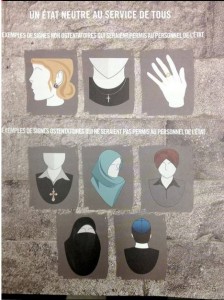
The proposed policy in Quebec would allow public service employees to wear the kinds of “symbols” on the top row but not the bottom five.
The proposal is drawing lots of criticism, including from federal government officials in Canada. Minister of Employment, Social Development and Multiculturalism Jason Kenney stated, “we are very concerned about any proposal that would discriminate unfairly against people based on their religion and based on their deepest convictions,” and promised to put any law that passes through constitutional review.
Ironically, two years ago, Kenney, not particularly concerned about people’s deepest spiritual convictions, announced a ban on burqas from citizenship ceremonies, citing women’s liberation as part of the justification. The new proposed policy in Quebec also includes a burqa ban:
The proposal also requires people receiving state services “to make their faces completely visible,” a measure aimed at banning the burqa, a traditional head-to-toe garment worn by some Muslim women.
Quebec premier Pauline Marois had told a Quebec newspaper that, for her, a day care teacher wearing a head scarf carries a “connotation of a certain gap between the respect of equality between men and women, of a sort of submission.” (link)
Co-blogged by Sundari and The Sikh Love Stories Project
Each year, International Women’s Day is celebrated to honor women’s economic, political and social achievements. As individuals around the world celebrate this day – in both big ways and small – I am left to consider how we can work to honor the achievements of Sikh women not only today but on an ongoing basis.  Sikh women have contributed in such meaningful ways, and yet much of that dialogue is often missing from our history.
In this post, we will be sharing some images with you and discuss various ways Sikh women have been witness to and engaged in our history both locally and globally.  We know this post will not be comprehensive – there is much to unearth about Sikh women’s contributions – but we hope it’s a starting point that will encourage us to keep this valuable history in our minds. Many of the following images each depict a different element of Sikh women in history.
Stories often begin with immigration and this first image shows Sikh women pioneers in Canada who were part of an immigrant labor force recruited in the early years of the twentieth century.
Mill Town Pioneers. Most of Canada’s early Sikh immigrants found work in lumber mills throughout the Pacific Northwest.
Canada’s largest mill community, Fraser Mills in New Westminster, BC, had between 200 and 300 Sikhs living and working there in 1925.
In this photograph from that period, three Sikh women stand in front of company houses at the mill. [link]
One of them wears a traditional embroidered shawl called ‘phulkari’. The phulkari played an important role in the lifecycle rituals of women in Punjabi villages at times of birth, marriage and death.
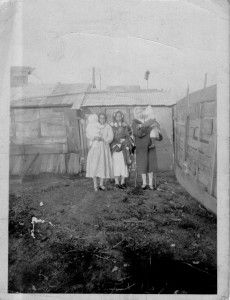 Mill Town Pioneers. Most of Canada’s early Sikh immigrants found work in lumber mills throughout the Pacific Northwest.
Co-blogged with Nina Chanpreet Kaur
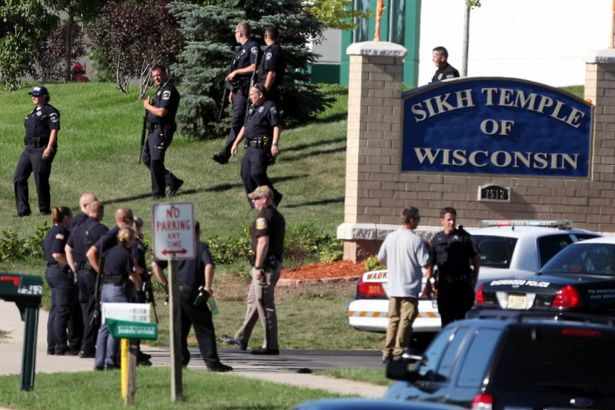
(source: Daily Record and Sunday Mail)
“All the talking is done and now it’s time to walk the walk / Revolution’s in the air 9mm in my hand / You can run but you can’t hide from this master plan.” (Song lyrics by Wade Michael Page’s band End Apathy)
A few weeks ago, the Federal Bureau of Investigation (FBI) closed its investigation into the mass shooting that occurred at the Sikh Temple of Wisconsin in August, in which six Sikhs were murdered and wounded four others, including Lieutenant Brian Murphy of the Oak Creek Police Department, and Punjab Singh, who is still in a long-term care facility receiving treatment.
The FBI’s conclusion does not bring any closure. In the wake of Oak Creek, the specter of a growing white supremacist movement has not been adequately addressed by the media, policy makers, nor law enforcement agencies. This frames the issue of hate crimes against Sikhs as something almost incidentally perpetrated by independent murderers, and the stalling by the FBI to accurately and consistently report anti-Sikh and other hate crimes as well as link it to domestic terrorism reinforces the sense that the white supremacy movement is something federal, state and local government are not taking seriously or prioritizing. Historically, the white supremacist movement at-large has perpetrated heinous crimes fueled by hate and bias often in the guise of a member gone rogue as we saw in Oak Creek in August 2012.
Co-blogged by Sundari and AmericanTurban
Last week, in the context of the significance of California’s 9th Congressional District to Sikh Americans, we sent the major candidates of California’s 9th Congressional District — incumbent Representative Jerry McNerney and challenger Ricky Gill — a questionnaire to learn more about their positions about Sikh American-related issues (see previous post here). Both candidates responded. However, the nature of the responses received were quite different.
Rep. Jerry McNerney’s campaign responded to the questionnaire and Ricky Gill’s campaign declined to answer. As we had stated in our earlier post, both responses will be printed verbatim and are below.
Co-blogged by Sundari and AmericanTurban
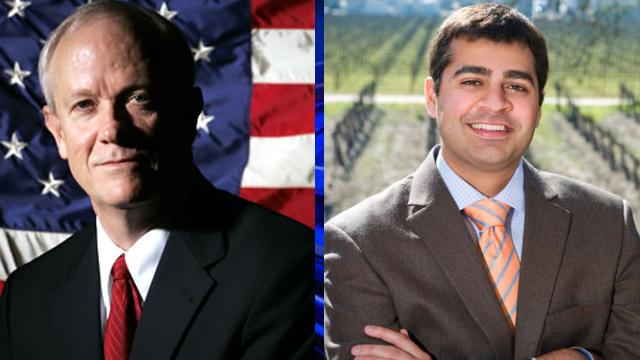 Of recent and recurring discussion on The Langar Hall and American Turban has been the election race in California’s 9th Congressional District. For Sikh Americans, this district’s race is significant.Located in northern California, the 9th Congressional District contains America’s oldest and one of its largest Sikh American communities. The oldest Gurdwara in the United States (which only a couple of weeks ago celebrated its centennial anniversary) is located in this District in Stockton, California. America’s first Asian American and Sikh American member of Congress, Dalip Singh Saund, once resided in this area, and one of the candidates currently running is himself a Sikh American.Given the unique character of the District, we are interested to know the thoughts of the main candidates of the district on the issues affecting their current and potential Sikh American constituents, many of whom have been active in supporting each of the candidates. It is our plan to publish these answers by each candidate to learn more about their positions on issues affecting Sikh Americans.With election day in the US nearing, we have asked the main candidates — incumbent Representative Jerry McNerney and Republican challenger Ricky Gill — to offer their thoughts on Sikh American issues. We are aware that important concerns of the general public on issues like jobs, healthcare, or social issues are often already asked of the candidates, but that their positions on Sikh American issues are not asked of them. Accordingly, these questions reflect Sikh American concerns that do not get the same attention from mainstream media.
The questions that we have sent to the campaigns of Jerry McNerney and Ricky Gill are below the fold, and on Tuesday, October 30, we will publish the responses from each campaign.
Over the last month since the horrific tragedy in Oak Creek, WI, Sikh civil rights organizations and other leaders in the community seem to have come to a consensus on what our collective demand should be to move forward — getting the FBI to track hate crimes against Sikhs. A few weeks ago Valarie Kaur wrote an op-ed in the Washington Post entitled, “Sikhs deserve the dignity of being a statistic,” in which she convincingly articulates the basic argument that many are making:
The FBI tracks all hate crimes on Form 1-699, the Hate Crime Incident Report. Statistics collected on this form allow law enforcement officials to analyze trends in hate crimes and allocate resources appropriately. But under the FBI’s current tracking system, there is no category for anti-Sikh hate crimes. The religious identity of the eight people shot in Oak Creek will not appear as a statistic in the FBI’s data collection. As a Sikh American who hears the rising fear and concerns in my community, I join the Sikh Coalition and Sikh American Legal Defense and Education Fund (SALDEF) in calling for the FBI to change its policy and track hate crimes against Sikhs.
We’ve all probably gotten numerous action alerts to sign petitions, call our Senators, and, most recently, to attend tomorrow’s Senate hearing on hate violence in Washington, DC. The Sikh Coalition’s email advisory today about tomorrow’s hearing begins, “Be Present and Request that the FBI Track Hate Crimes Against Sikhs.”
It seems like a sensible request. The FBI is a government agency responsible for investigating hate crimes, so of course they should be looking specifically at attacks targeting Sikhs and have a category to enable them to do so. While I am sympathetic to this cause, I am a bit troubled by it, or have some questions about it, as well.
While I am not necessarily against the idea of a Sikh box for the FBI to check in the case of a hate attack against a Sikh, I am very skeptical of the FBI being an agency capable of working in the best interests of our community. To put it directly, I don’t trust them. And I’m not sure there is any reason for our community at large to trust them. Isn’t trust a prerequisite to inviting someone with a whole lot of power and resources into your homes, your schools, your houses of worship?

Ricky Gill is the son of Sikh parents and is running to represent California’s 9th Congressional District (photo: Ricky Gill campaign website)
I have written several times in the past about Ranjit “Ricky” Gill, the Republican Party candidate for Congress in California’s 9th Congressional District. Gill is challenging Democratic Party incumbent Jerry McNerney for the seat.
Gill, 25, is the son of Sikh physicians in the Stockton, California area. Much of the donations to his campaign have come from the Sikh community, as well as interests in the healthcare and agricultural industries. The northern California constituency for which Gill is contesting is an area that has a sizable Sikh population and is, in fact, home to the first and oldest Gurdwara in the United States (the Gurdwara is celebrating its 100-year anniversary this year).
There have been a variety of questions about Gill’s candidacy, particularly based on his age and lack of experience, and claims that he is downplaying his party affiliation (indeed, the fact that he is running as a Republican is not immediately transparent on his campaign website).
In April, I wrote about the emerging perception that Ricky Gill was also distancing himself from his Sikh background:
Much like South Carolina Governor Nikki Haley did when she ran for the Governor’s seat, Gill is reportedly distancing himself from his Sikh heritage in his campaign and emphasizing a Christian background. As Haley endorsed Gill late last year, perhaps it should not be a surprise that he is following her playbook, but it is nonetheless disappointing that a Sikh American is choosing to obscure his own background for the sake of an election.
Shortly afterwards, I contacted Gill’s campaign to offer the opportunity to address this issue. I did not receive a response.
Fast forward to today, Gill’s minimal response to the attack at the Oak Creek, Wisconsin Gurdwara has reinforced the belief that Gill is dissociating himself from his religious background.
Guest blogged by ResistSingh
As the month of June has passed, Canadian Sikhs, along with human rights activists and their allies, are recovering from yet another campaign of misinformation by the Indian High Commission and a recent wave of visceral and unfounded attacks.
Twenty-eight years after the Indian Army Invasion of the Darbar Sahib Complex during Massacre Bluestar, the Government of India has continued its assault by attempting to deny Canadian citizens an opportunity to engage in the healing and reconciliation process as they deal with the wounds inflicted upon them during the invasion.
With the recent attempts by the Government of India to undermine unity and reconciliation in the Diaspora amongst all South Asians in Canada, it has given rise to some serious questions one must consider: how and why is India interfering in the lives of Canadian citizens and their democracy?; is there any substance to the claims they are making?
While conducting an analysis of India’s response to the Leader of the NDP, Tom Mulcair’s statement of solidarity with the Sikh community, a basic review of the Indian High Commissions claims has shown many nuances and problematic statements have been made, lacking independent validation. Additionally, beyond the factually incorrect statements that have been identified, the language of the Indian High Commissioner has unfortunately been mirrored by members of Canada’s unelected, patronage-appointed Senate.
Of particular concern, a published article by Conservative Senator Asha Seth titled “Building walls, spreading hate” contains many sentences that resemble those in a letter written by the Indian High Commissioner, along with claims that are simply, factually incorrect.
Co-blogged by Sundari and American Turban
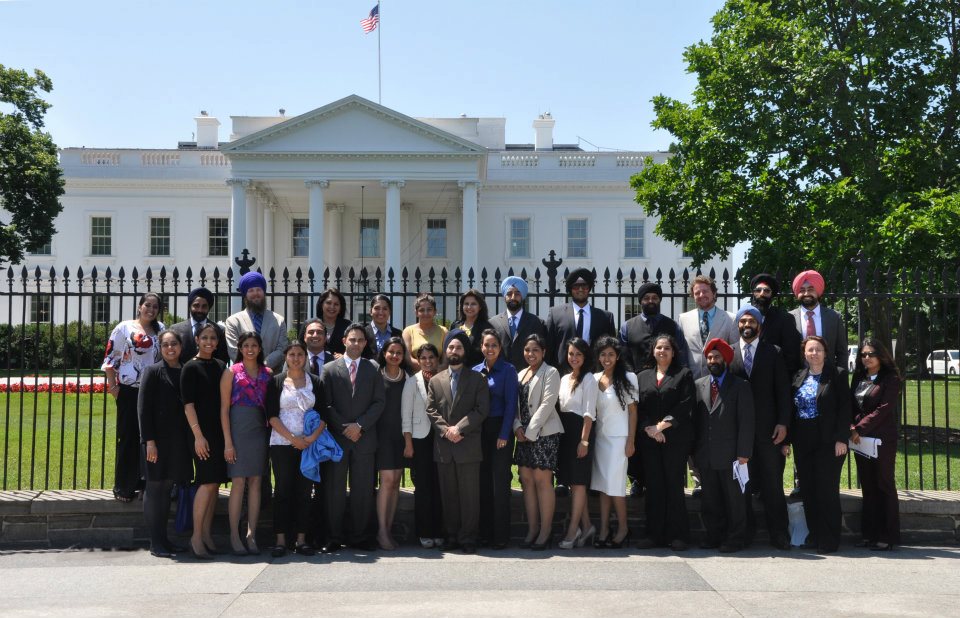
Courtesy: The Sikh Coalition
Likely unbeknownst to many Sikhs, last Friday marked a historic moment for America’s Sikh community.
Around 7:30am on that day, about 50 people representing Sikh communities from across the country – California, Texas, Indiana, Ohio, Michigan, Georgia, New York, New Jersey – gathered at the East Wing for a special tour of the White House. These members of the community walked through the historic center of the country, seeing with their own eyes notable places such as the room in which President Thomas Jefferson first held cabinet meetings and the Blue Room which remains the reception room of the White House. Following the tour, community members joined White House administrators for the first-ever White House briefing on Sikh civil rights issues.
For those of us in the audience, it was a deeply moving moment – particularly when the briefing started out with Bole So Nihaal, Sat Sri Akal. Yes, a jakara in the White House!
There was something symbolic in that moment. Once, a long time ago, Sikhs would have made the jakara call while raising their flag at the Red Fort in Delhi, the symbolic capital of India, as Jassa Singh Ahluwalia was proclaimed Sultan-e-Quam (‘king of the nation’) – a gesture in which Sikhs laid claim to their sovereignty as a people in 19th century India. Now, under certainly different circumstances in a land separated by time and distance, Sikhs were making a similar call to claim to their legitimacy as Americans.
WARNING: This is long!
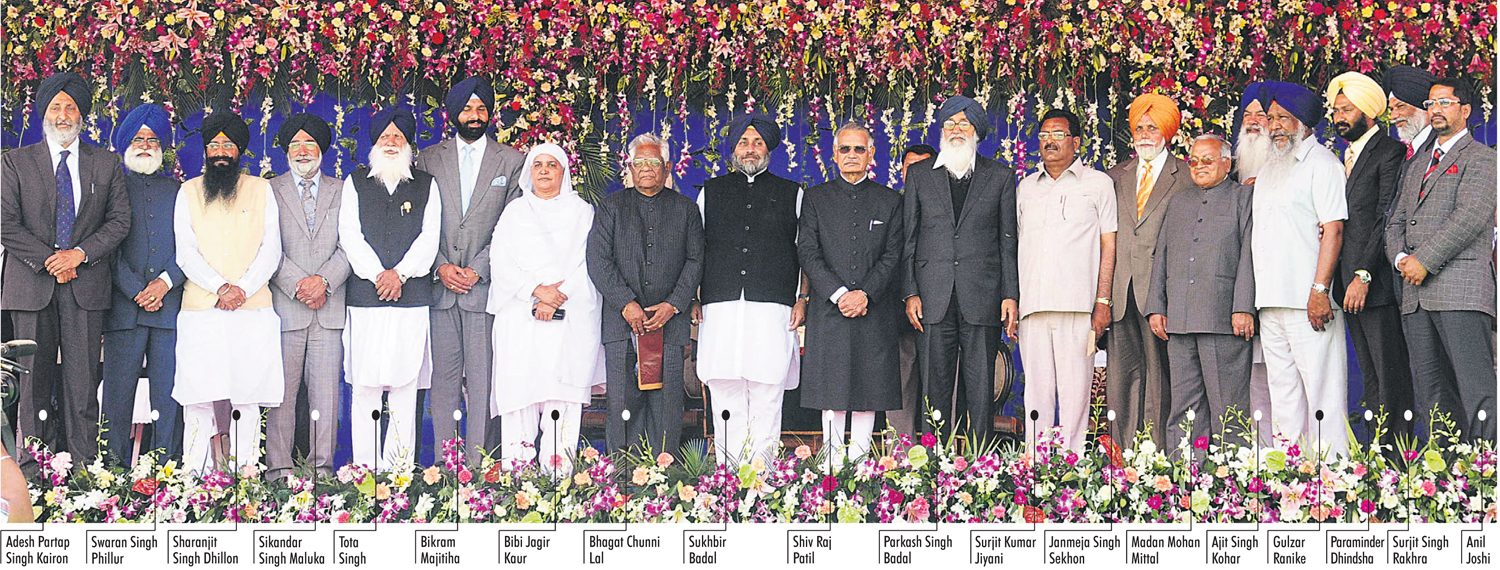
Last week, the Punjab election results surprised many. Most pundits had believed the cycle of anti-incumbency would continue and the Shiromani Akali Dal (Badal) would fall to the Congress Party, under Captain Amrinder Singh’s leadership. The results were stunning and after the final count the Akali Dal (56) combined with the BJP (12) had a majority (68) of the 117-member Punjab Legislative Assembly. The Congress Party had finished with a dismal 46 and 3 seats were claimed by Independents. The much-heralded (at least in the diaspora and on the internet) Punjab People’s Party of Manpreet Badal finished even worse than expected, with the main leader himself finishing in 3rd place in the two constituencies he contested.
Now the debate has shifted to making sense of the elections. In the diaspora, laments such as that of my fellow langa(w)riter decrying corruption and the social ills that have been broadcasted – farmer suicides, drug addiction, etc. Writers in Punjab, such as Yadvinder Curfew saw the victory not as that of the Akali Dal-BJP combine, but of a new ‘experiment’ by Sukhbir Badal and the shift in politics from issue based politics to one of media and money. The Badal family has control of both. Friends across social media spaces have provided their own analysis – from the business classes aligning with Sukhbir now that the populism of his father is dead [pagh salute @VehlaComrade] to swing voters, especially cash voters (aligning with the ruling AD-B) and ‘educated netizens’ (splitting between PPP and Congress) [pagh salute @askang – not the singer, mind you!] tilting votes in favor of the Akali Dal.
Now I get to add my voice. Hopefully in doing so, it will also help diasporic Sikhs and Punjabis understand the politics of Punjab and understand why seemingly irrational choices (those that everyone knows are corrupt) can still be rational.
I turn to political science explanations, although I am no political scientist, in order to help understand the results and the specificities of the politics of Punjab. I cite some of the most common explanations and offer some rambling comments, criticisms, and reflections. Hopefully in the comments section, you will add yours and we can have a great discussion.
Guest post by Nirbhau Kaur
[Admin note: This post was penned by the author the morning after election results were made public in Punjab.]
 Pain. Disgust. Hurt. Dread. Longing. Connect, then Disconnect.
For the first time I felt these feelings in relation to Punjab – a land where I was not born, a land where I was not raised, a land that I didn’t truly experience until my early 20’s. Nonetheless, it is my father’s land, my Nana Ji’s land, my ancestors’ land. It is my land.
Today, there were countless social media updates reminding me of the five years of horror that Punjab is about to experience. For a small group of people, today was victorious. For a state full of people, today was just another reminder of their dark future. As the Badal family begins another five years of power in Punjab, the socially aware predict increased farmer suicides, increased drug and alcohol addictions, increased poverty. And the most grave prediction of them all, an end to Punjab, Punjabi, and Punjabiat.
Today, we express our disgust with the Badals and our sorrow for the future of Punjab. Not just today, but whenever there is an event to remember or increase awareness of any tragic situation in Punjab, be it farmer suicides or the despair in which the families of the shaheeds are surviving, we, as diasporic Punjabis, express deep sympathy. We speak of a need for change, we inspire, and we become inspired, but only in the appropriate setting. Shortly afterward, most of us move onto focus on our lives here, outside of Punjab.
As many of us in the US and around the world have been celebrating the beginning of a new year this past week as well as  the Gurpurab of Guru Gobind Singh, a new draconian law has been brought upon us in the United States with near silence from the mainstream media. On New Year’s Eve, President Obama signed into law the National Defense Authorization Act, which includes provisions that allow the US military to round up and indefinitely detain people, including US citizens, without any charge or trial.
Obama himself originally threatened to veto the bill if the language of indefinite decision wasn’t taken out. Yet he proceeded to sign the bill into law as we move into 2012, perhaps giving him the legacy, as Human Rights Watch director Kenneth Roth states, ” as the president who legalized indefinite detention without trial or cause.”
The American Civil Liberties Union (ACLU) states:
We are extremely disappointed that President Obama signed this bill even though his administration is already claiming overly-broad detention authority in court. Any hope that the Obama administration would roll back those claims dimmed today. Thankfully we have three branches of government, and the final word on the scope of detention authority belongs to the Supreme Court, which has yet to rule on the scope of detention authority. But Congress and the president also have a role to play in cleaning up the mess they have created because no American citizen or anyone else should live in fear of this or any future president misusing the NDAA’s detention authority.
Last week the US military officially ended “Don’t Ask Don’t Tell” (DADT) after President Obama signed a repeal of the 18-year-old anti-gay policy last December. Gay, lesbian, and bisexual service members (note the absence of transgender people, who are still not allowed to serve openly) and advocates of gay rights have been celebrating the repeal as a civil rights victory.
The day the repeal went into effect, President Obama stated:
Patriotic Americans in uniform will no longer have to lie about who they are in order to serve the country they love. Our armed forces will no longer lose the extraordinary skills and combat experience of so many gay and lesbian service members. And today, as Commander in Chief, I want those who were discharged under this law to know that your country deeply values your service.
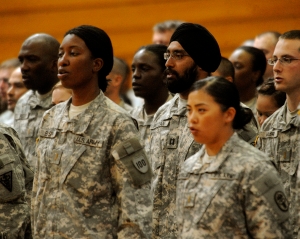
Captain Tejdeep Rattan at his graduation from the US Army basic training
This issue hits close to home for the US Sikh community, since the Pentagon’s uniform policy has not allowed Sikhs to serve with their kesh and dastaar since 1981. Similar to DADT, this is blatant discrimination and is an unacceptable policy for any employer, especially the federal government, which sets a powerful precedent for the rest of society.
Just as rights advocates have been fighting to end DADT for years (and finally succeeded), Sikhs launched a “Right to Serve” campaign in 2009, led by the Sikh Coalition and a Sikh doctor and dentist who were told by the Army to cut their hair when they report for basic training. The impressive efforts of Sikh cadets fighting for their rights and the tireless work of their advocates have resulted in the Army granting accommodations to three Sikhs, who are now serving with their turbans and unshorn hair in tact. The overall policy of the military nevertheless remains discriminatory.
As the 10th anniversary of the 9/11 attacks on the World Trade Center and Pentagon approaches, I am filled with a whole  mess of thoughts and emotions. 9/11 was a turning point in the United States–and the world–in so many ways. I need not explain what it has meant for us Sikhs in the United States and beyond, but in the coming days and weeks we will try to highlight some of the important initiatives taking place in commemoration of the 10th anniversary that go beyond jingoistic patriotism and provide opportunities for reflection, dialogue, and moving toward healing and justice.
Today, I was pleasantly surprised to read a compelling, heartfelt column in the Huffington Post about post-9/11 torture practices by the US government — written by a Sikh. In the piece, Satpal Singh, of the World Sikh Council, states:
I must shed the tears that I have been holding back for seven years. It was 1 a.m. on April 29, 2004, and I could not sleep. The beacon that I had always looked up to had gone dark.
I had just heard about Abu Ghraib. It shook my faith in my country’s ability to uphold its values. Admittedly, it takes the strongest of the strong to face the evil that we were facing, and the highest of morality to face it without losing one’s own morality. But now, even America, the mightiest of the mighty, the champion of human rights, the unquestioned upholder of morality, had blinked in the face of evil. The terror had seized us. Faced with evil, we had abandoned our own values.
One of the many tragedies of the American post-9/11 era is that torture has become a routine tactic in the treatment of terrorism suspects. While these policies began during the Bush Administration (see a new report by Human Rights Watch on the subject here), there seems to be much less protest of their continuation under Obama’s presidency. While Obama promised to closed down the infamous Guantanamo detention center during his presidential campaign, it still remains as do Bush/Cheney era interrogation tactics.
Guest blogged by Eren Londonwala
Each day I walk down Ferry Lanein Tottenham to my workplace. On Friday 5 August a police cordon blocked my usual route. I learned later that police had shot dead 29 year-old alleged gang-member Mark Duggan the night before. The precise facts remain unclear but early reports suggesting an exchange of fire between police and the dead man have been undermined – Duggan’s gun wasn’t discharged. This was a tragedy I thought and perhaps another instance of excessive force by police in a poor London borough with a large black population. Few anticipated what was to come.
On the next day members of Duggan’s family – who by then had still not been contacted by police – and other locals went to Tottenham Police Station for answers and to stage a peaceful vigil. Senior police ignored the group and around this time a young female, remonstrating, was apparently “set upon by police with their batons”. Unlike a previous contributor to this blog, who described this incident as “relatively minor”, given the understandably heightened passions live then in Tottenham, I feel the police action was heavy-handed and incendiary. I invite readers to view the evidence and make up their own minds. It was after these events that Tottenham, and in subsequent days other areas in London and England, erupted into the worst civil unrest for a generation.
Then, the causes were unmistakeable – racist policing of ethnic minority communities and social deprivation. So, like some others, I viewed the outbreak of recent violence as a reaction to the continuation of unresolved problems, sparked by the suspicious killing of Duggan – an understandable, and even legitimate, rebellion in other words. The fact that police cars were among the first targets of the Molotov bombs seemed to confirm this. Yet, as the days unfolded, and disorder spread throughout the capital and country, a distinction between the two eras became apparent: 2011 was marked, to a far greater degree than 1981, by opportunist looting which came to devastate as many small independent businesses as insured corporate chains and, amid the chaos, most tragically, led to further loss of life with Duggan’s death being all but forgotten.
I have shared my views on Manpreet Badal and the PPP in the past. I still stand by my analysis, but as the election draws nearer, the youth of Punjab are making their voices heard.
Recently Manpreet Badal has been visiting the US this month and gaining more and more popularity among the non-voting NRPs (Non-Resident Punjabis), but if this show of support can be capitalized in Punjab is yet to be seen. His campaign has had a few major hiccups recently, with supporters such as Rajya Sabha member, Varinder Singh Bajwa, being re-wooed by Punjab’s greatest snake-oil seller, Parkash Badal. This loss comes soon after Manpreet had lost the support of his former “right-hand man”, Charanjeet Brar. It has been a long few weeks.
Still amongst a large number of Punjabi youth, they are still showing their support and hope, through creating videos on youtube to help galvanize the youth.
Here is one such example, a parody of rapper Wiz Khalif’a’s celebration of his native Pittsburgh – Black and Yellow. Here the artists – Sugar Cane Records and Jogi – ask who to vote for – Chitta (the color associated with the Congress Party) or Neela (the color associated with the Akali Dal). Both are thieves, the difference only the color.

Guest blogged by Dilpreet Kaur
Mere days before Osama bin Laden’s capture and death, the Arizona state legislature had set into motion legislative steps to remove a 9/11 hate crime victim’s name from the state’s memorial in Phoenix. At the time, the bill’s original sponsor, Rep. John Kavanaugh (R), claimed that Mr. Balbir Singh Sodhi was “not a victim of 9/11.” Adding insult to injury, along with stripping the late Mr. Sodhi’s name from the memorial, the legislation even enumerated that the removed plaque to be sold to a scrap metal dealer.
Like many others who stumbled across the news of this puzzling piece of legislation, I instantly wondered how and why something so insensitive and outrageous could pass. Four days after 9/11, on September 15, 2001, Balbir Singh Sodhi, a Sikh American, was brutally murdered outside of his Chevron gas station in Mesa, Arizona by Frank Roque, a man who wanted to ‘kill a Muslim’ in retaliation for the terrorist attacks. He had selected Mr. Sodhi simply because he had a beard and wore a turban in accordance with his Sikh faith. An Arizona jury later found Frank Roque guilty of first-degree murder for his hate crime murder of Mr. Sodhi, along with five other charges, including attempted murder and reckless endangerment related to drive-by shootings at other individuals he perceived to be Middle Eastern that same day in 2001.
Balbir Singh Sodhi was the first of hundreds of hate-crimes against Sikh Americans and other minorities related to post-9/11 hate violence. His death as a Sikh American brought national attention to the issue of anti-Muslim and anti-Arab violence following 9/11. At the time, many Arizona state representatives and citizens of all backgrounds rallied around the Sodhi family and the Sikh American community in support, with over 3,000 people attending Mr. Sodhi’s memorial service.
A few years ago I was putting up some flyers on street poles and bulletin boards in Williamsburg, Brooklyn promoting an upcoming concert for my band. If you’re from New York City, you know Williamsburg is a neighborhood covered with concert flyers and band logos, and the home of dozens of music venues filled with indie rock-loving, skinny jeans-wearing hipsters (for the record, this has nothing to do with me nor my old band).
After a few minutes of putting up a bunch of flyers with tape, I was suddenly surrounded by 4 police cars and their flashing sirens. One of the cops approached me, while the others stayed close behind. He had one of our flyers in his hand and asked if I put it up. I said yes. He informed me this was “graffiti” and was illegal. I apologized and said I was not aware of that. He took my ID, talked to his colleagues, and the next thing I know I’m being aggressively handcuffed and put into the back of a police car without any explanation.
To make a long story short, I was arrested because a few years prior to the flyering incident, I got stopped and cited for riding my bicycle for a few feet on a sidewalk (in the rain) and never appeared in court for this egregious violation of the law and disturbance to the peace.
But this isn’t a story about why I got arrested and how ludicrous it is that these cops arrested me rather than asking me to please not put up flyers on street poles (which were already covered with flyers). This isn’t a story about racial or religious profiling and about if these (white) cops were driven by bias or if they were paying special attention to a turbaned, bearded brown man walking down a gentrified, newly predominantly white hipster block of Brooklyn.
This is a story about incarceration.
When I was taken to the precinct, still not knowing why I was arrested or what the hell was going on, I was aggressively and invasively patted down (more like groped) and searched by the officer who arrested me. After a few conversations with other officers at the precinct, I started putting the pieces together in my head as to why I was arrested, and they assured me that I’d be out of there in a few hours. I felt a bit relieved, though still anxious. I was hopeful that I could keep my head up and make it through this with my self-respect and dignity in tact.

