
Pardha
Guest blogged by Gurlene Kaur
Foreword: This piece was conceived in the pages of my journal but is now born for the public eye because of a line I read in Japji Sahib the other day:
ਚà©à¨ªà©ˆ ਚà©à¨ª ਨ ਹੋਵਈ ਜੇ ਲਾਇ ਰਹਾ ਲਿਵ ਤਾਰ ॥ By remaining silent, inner silence is not obtained, even by remaining lovingly absorbed deep within.
How many times have I recited this line? The other day, something clicked. With all that is coming out into the open about violence and judgment, I came to a realization. I can either keep my thoughts and experiences to myself and be a part of the silence or I can be a part of mitigating that silence. I choose to be a part of the latter.
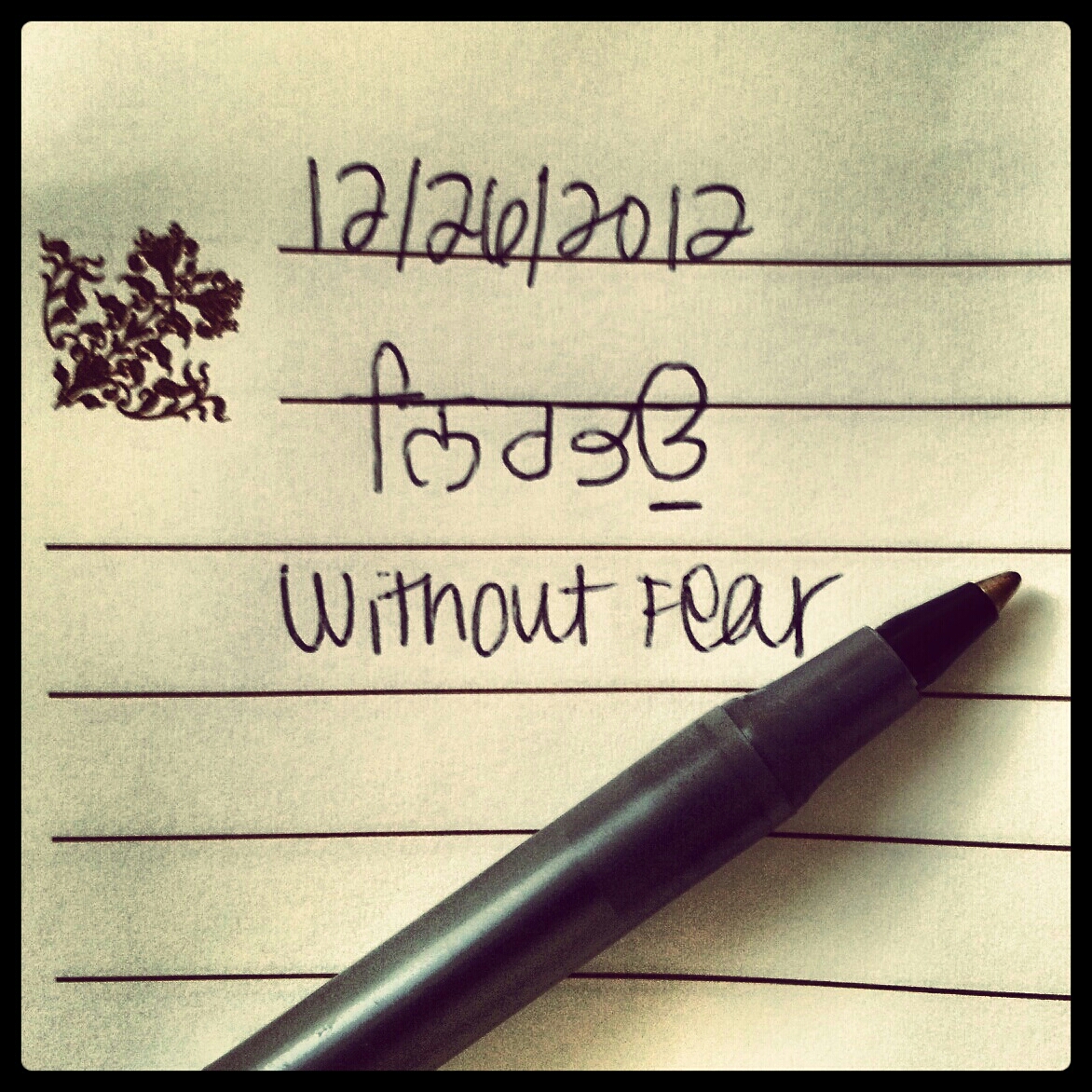 Why does our society detest and judge those who expose their inner being in an outward manner? Silent judgment in particular sickens me to my stomach. While I am no saint in this regard, this general predicament has always left a sour taste in my mouth. Those of us who once believed in keeping our thoughts and emotions trapped inside have learned the importance and utmost necessity of sharing our emotions and our stories to those who will listen. Foolish are my actions, or so I have been told, time and time again. However, if we cannot allow ourselves to be vulnerable and to share our stories, how do we expect to trust, love, and build bridges in relationships and across our community? How long must we use this veil, this pardha, to delude those around us? Trust me when I tell you, it is exhausting and distances us from achieving peace for ourselves. I have always held on to this aas, this hope that perhaps I am not alone. Deep inside I knew that there was someone else out there as well, who, like me, just needed to hear that they are not fighting alone in this world.
A little over a month ago, I read a status update on the Facebook page of a Sikh sister, which is still etched in my mind. She stated,
So many Punjabi families are going through hard times but don’t tell anyone because they don’t want people to judge them. But if we can’t support each other, who will? A Sikh is accepting, loving and shows compassion. God looks after us so we can help look after all.
I know what it feels like to walk about the world with a painted smile, suppressing inner depths of adversity. However, through growth and guidance in college, I discovered how truly unhealthy it is to keep my emotions inside, but what was I to do? That’s just “how our society is.” If I uttered even a word of what I was going through, the world began to judge, to look at me differently.



3 Responses to “Pardha”


Amazing Gurleen. You can actually imagine the beautiful person that this young woman is through her words, that's some powerful writing! Her truthfulness & honesty are as genuine in this post as they are in her heart =) Hats off to you Gurleen. To know the fake shell of a person, the created image of a person, is sometimes even disrespectful towards your family & friends because it sends the message that you don't trust that person. Vulnerability is a key factor in the growth of relationships and this girl has described that beautiful growth well.
Being willing to share ourselves with others is the first step in learning from each other. It also shows an acceptance of the self. Living up to others fake images of us, as a result of the pardha we keep up, is only saying "this created person is a better version of me than my genuine self."
Gurlene, thank you for sharing your journal pages. I wish our gurdwaras were sources of support and fellowship, rather than fake smiles and soulless politics. I wonder why are our gurdwaras so resistant to things like discussions, support groups, book clubs, Guru Granth Sahib study groups, etc., and sometimes I'm envious of friends that attend places of worship that allow and provide for such things. However, your article gives me hope that there may be others in my sangat who are tired of the silence in our gurdwaras. Thank you again for sharing your inspirational thoughts!
Very thought provoking Gurlene. I very much agree with "dallas kuri" as to why our Gurudwara's are so resistent to meaningful debate. I think you've touched on a very important thing here- we tend to have this notion of unification and likemindedness within the Sikh community. This is precisely the "pardha" you refer to in your article and it deters us from engaging in meaningful discussion.
If we could convince the greater Sikh community that meaningful debate is a vital component of progression, we could begin to heal the broken political components of our Gurudwaras.